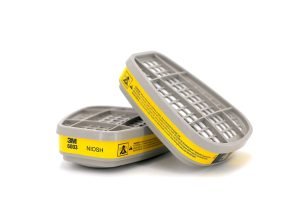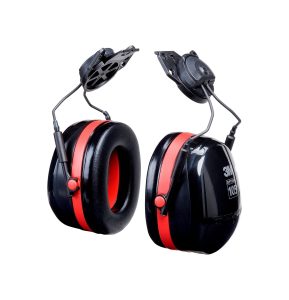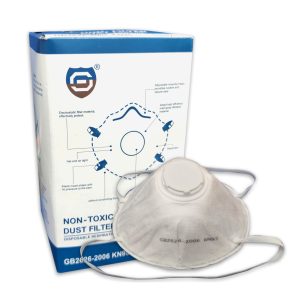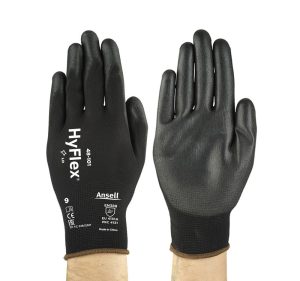
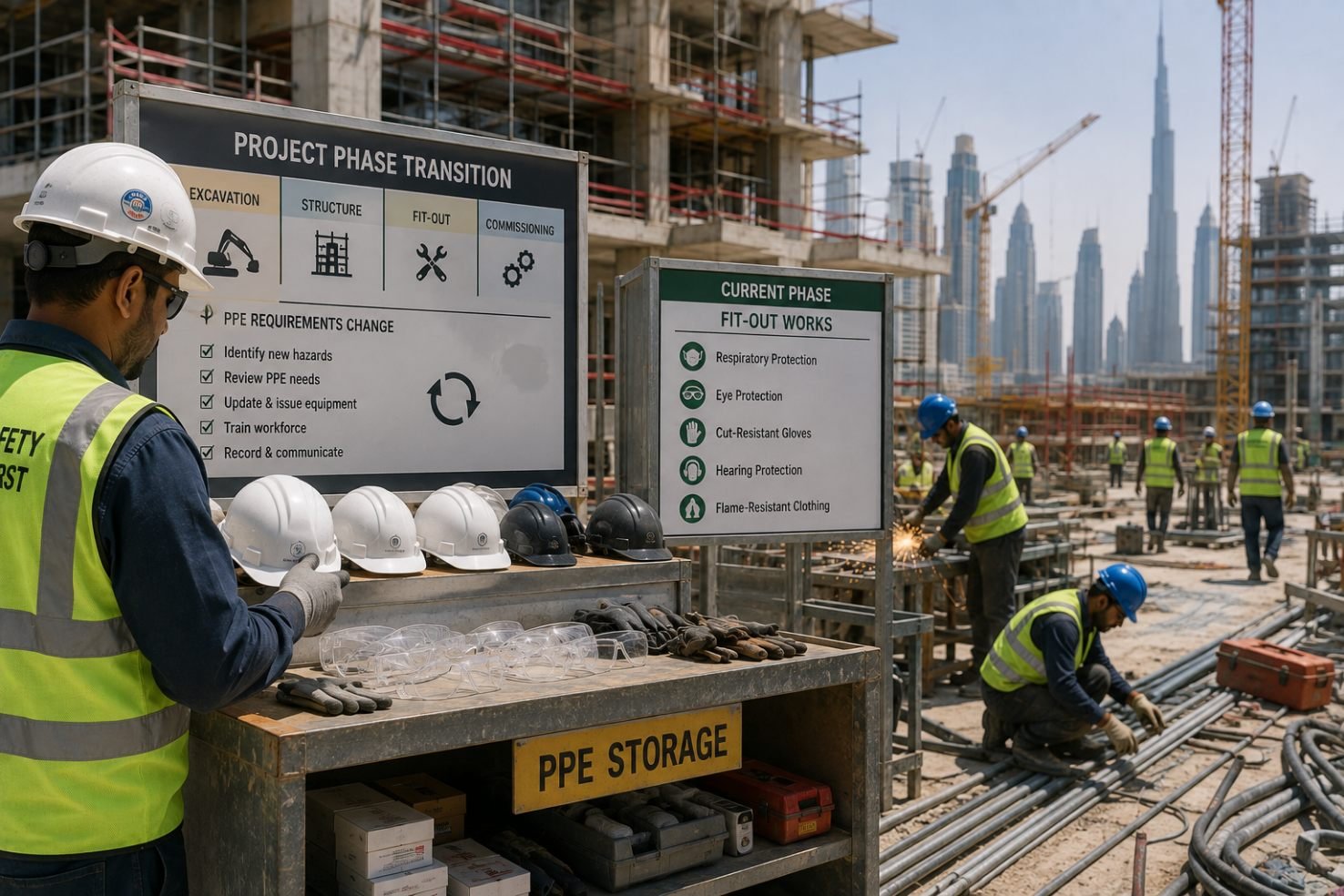
A Dubai tower finishes its structure phase and moves into mechanical and electrical fit-out. The groundworks crew leaves, the welders and electricians arrive, and the dust changes from concrete to metal and solvent. The store still holds the helmets and gloves that suited the concrete pour. The new crews pick up what is on the shelf, which is the wrong respiratory rating for solvent fumes and the wrong gloves for hot work. The project moved on. The PPE did not.
Every phase of a build carries its own mix of hazards. Excavation brings collapse and plant risk. Structure brings work at height and falling objects. Fit-out brings fumes, hot work, and cuts. Commissioning brings live systems and confined spaces. The crew changes, the tasks change, and the gear that protected the last phase becomes a poor fit for the next. The danger is not that the site lacks equipment. It is that the equipment lags the phase, sitting one step behind the work.
UAE law ties protection to the hazard in front of the worker, which changes as the project changes. The federal labour law on workplace health and safety and the supporting framework expect employers to match equipment to the current task, not the one finished last month. That makes how safety equipment is handled when shifting between project phases a planned step, not a reaction once a crew is already exposed. This guide sets out that process.
Moving a project from one phase to the next across the Emirates? A supplier that holds depth in certified PPE for every trade keeps the right gear ready for each phase in Dubai, Abu Dhabi, and Sharjah. Speak to the team about phase-based supply.
Why each phase carries different hazards
How safety equipment is handled when shifting between project phases shows whether a site plans protection against the work ahead or reacts to the crew already on the deck. Each phase rewrites the dominant risks, and the gear has to be ready before the phase starts.
The hazard mix turns over
A phase change swaps one set of risks for another. Concrete dust gives way to solvent fumes, ground-level work gives way to height, manual tasks give way to live systems. The kit that suited one phase rarely suits the next.
The crew changes with the phase
New trades arrive for each phase, often with no exposure to the last one. Across Dubai, Abu Dhabi, and Sharjah, a phase transition is where a fresh crew meets stale gear unless someone plans the handover.
What UAE law expects as phases change
Before building a process, ground it in the rules across the Emirates. The duty tracks the current hazard, whatever phase the project sits in.
Protection matches the current task
The private sector labour law requires suitable protection for the risk a worker faces now. The duty set out in Federal Decree Law No. 33 of 2021 does not freeze at the start of the build. As the phase changes the hazard, the suitable protection changes too.
Ministry oversight
The Ministry that enforces workplace safety for most private sites publishes worker protection guidance. An inspector visiting mid-build may ask how safety equipment is handled when shifting between project phases and whether the gear matches the work underway.
Emirate-level frameworks
Abu Dhabi runs its occupational health system through the Abu Dhabi public health authority. Dubai Municipality sets its own site requirements. Sharjah aligns with the federal rules. A project spanning emirates needs one process that meets the strictest of them.
Map the PPE needs to each phase
A plan starts with the phases laid out and the gear mapped to each. Mapping ahead is what stops a new crew meeting the wrong kit.
Build a phase-by-phase PPE map
Take the project program and list the dominant hazards for each phase, then the gear each one calls for. The map tells you what to order, when, and in what mix.
The table below shows how phases shift the hazard and the core gear.
| Phase | Dominant Hazard | Core PPE |
|---|---|---|
| Excavation and groundworks | Collapse, plant movement | Helmet, vest, boots, plant awareness |
| Structure | Work at height, falling objects | Harness, lanyard, helmet with strap |
| Mechanical and electrical fit-out | Fumes, hot work, cuts | Respirator, flame gear, cut gloves |
| Finishing | Dust, splash, chemicals | Goggles, chemical gloves, mask |
| Commissioning | Live systems, confined space | Detector, respiratory, arc-rated gear |
Order ahead of the transition
Gear for the next phase should arrive before the phase starts, not after the new crew is on the deck. Lead time planning turns the transition into a non-event.
Reassess the hazards at each transition
The map is a plan, and the transition is where you check it against reality. A phase rarely lands exactly as drawn.
Confirm the hazards on the ground
Walk the site at the transition and confirm the hazards the next phase brings. A program is a forecast, and the real sequence often overlaps or shifts.
Account for the UAE environment
Heat sits on top of every phase, and an outdoor structure phase in summer raises it further. Breathable, ventilated gear suited to the conditions across the Emirates matters as much as the phase-specific risks. Respect the midday work ban periods across Dubai and Abu Dhabi.
Set the standard kit per phase
Lock the standard kit for the incoming phase the same way you set it for any task. This keeps the transition fast and consistent instead of a scramble each time.
Scale stock to the phase crew mix
Phases do not just change the gear. They change how much of each item you need, because the crew mix changes with the phase.
Match quantity to the crew
A structure phase may need many harnesses and few respirators. A fit-out phase flips that. Scale the order to the incoming crew mix, not the headcount of the phase leaving.
The table below shows how to handle each item at a transition.
| Item Type | At Phase Transition |
|---|---|
| General kit (helmet, boots, vest) | Carry over, recheck stock and fit |
| Outgoing phase gear | Recover and store or redeploy |
| Incoming phase gear | Issue against the new hazards |
| High-value gear (detector, harness) | Inspect, log, reissue to the phase |
Avoid over-ordering for the phase leaving
A common waste is reordering the last phase’s gear out of habit. Order against the phase ahead, and redeploy what the finished phase no longer needs.
Shifting a Dubai or Sharjah build into a new trade-heavy phase? A supplier that delivers certified, trade-matched PPE fast across the Emirates means the respirators arrive before the fit-out crew does. Send your phase program for a supply plan.
Recover and redeploy phase-specific gear
A phase ending leaves gear behind. Recovering and redeploying it cuts waste and keeps the store lean.
Recover the outgoing gear
Specialist gear for the finished phase comes back to the store, not into a forgotten corner. Recovered gear feeds the next phase or the next project.
Redeploy where it fits
Some recovered gear suits the next phase or a sister site. Route it where it is needed rather than reordering the same item. You can source trade-matched PPE to fill the gaps, rated to EN and ANSI references for sites across the Emirates.
Inspect before redeployment
Recovered items rejoin circulation only after a check. Fall arrest gear needs inspection by a competent person, which matters whenever a later phase brings work at height back on Dubai and Abu Dhabi projects.
Issue and brief for the new phase
The incoming crew needs the gear and the knowledge before the phase task begins. Timing decides whether the protection lands or lags.
Issue before the phase task starts
A fit-out crew gets the right respirators and the seal check before they touch solvent, not at the end of the first shift. Reassignment that lags the phase leaves a gap where the new risk lives.
Brief the new crew on phase hazards
A crew new to the phase needs the hazards and the gear use shown. Language gaps are common across UAE sites, so a physical demonstration carries further than a notice on the wall.
Treat the transition as a fresh handover
The phase change is a handover in its own right, with its own records and briefing. Do not lean on an induction that never mentioned the new phase tasks.
Update the site PPE plan at each phase
A phase change should update the live PPE plan, not just the store shelf. The plan is what proves the gear tracked the work.
Refresh the PPE matrix
Update the site matrix of role, hazard, and gear for the incoming phase. An out-of-date matrix points crews at the wrong protection.
The table below shows fields worth holding in a phase transition record.
| Field | Why It Matters |
|---|---|
| Phase and start date | Sets the active hazard set |
| Incoming gear and standard | Proves cover for the new phase |
| Recovered or redeployed gear | Tracks what moved or returned |
| Crew briefed and trained | Shows competence to use it |
| Sign-off | Confirms the transition was managed |
Keep the format current
A board suits a small Sharjah site. A spreadsheet or app suits a company running a large Dubai build through many phases. A plan that lags the phase protects nobody.
Inspect and store gear between phases
Gear held between phases still ages and still needs care. Storage that supports the next phase keeps it findable and fit.
Store by phase need
Sort the store so the next phase’s gear is ready and the finished phase’s gear is set aside cleanly. A clear split stops the wrong-phase shortcut.
Protect from heat and damage
Heat degrades webbing, filters, and plastics in storage. A store out of direct sun protects shelf life in the UAE climate. Fire and evacuation readiness feeds into site safety too, and the Dubai authority for fire and civil protection sets site expectations across every phase.
Clean recovered shared items
Recovered helmets, goggles, and ear defenders that will pass to the next crew need cleaning first, since the Abu Dhabi public health authority treats hygiene as part of workplace health.
Common mistakes in how safety equipment is handled when shifting between project phases
Most transition failures repeat a few errors. Designing around them closes the gap.
Letting gear lag the phase
The new crew arrives and the store still holds the last phase’s kit. Order and issue against the phase ahead, before the crew lands.
Reordering the phase that ended
Buying the finished phase’s gear out of habit wastes budget and crowds the store. Match the order to the incoming crew mix.
Skipping the transition briefing
A crew new to a phase handed gear without a briefing does not know the new hazards. The handover briefing rides with the transition.
Leaving recovered gear idle
Specialist gear not recovered sits unused while the store reorders the same item. Recover and redeploy after a check.
Not updating the PPE plan
A matrix frozen at phase one points later crews at the wrong protection. Refresh it at every transition.
Storing gear without inspection
Gear pulled from one phase and held for the next degrades unchecked. Inspect and clean before it rejoins circulation.
Planning PPE across a full build cycle in the UAE? A supplier that holds certified stock for every phase and trade keeps each transition covered in Dubai, Abu Dhabi, and Sharjah. Request a quote for phase-based supply.
Frequently Asked Questions
It means mapping PPE to each phase, reassessing hazards at the transition, scaling stock to the incoming crew mix, recovering and redeploying outgoing gear, and issuing and briefing for the new phase before it starts. The process meets the employer duty set out under Federal Decree Law No. 33 of 2021.
Before the new phase task begins. Order the incoming gear ahead of the transition so the new crew finds the right protection on day one, not at the end of the first shift.
Yes. Excavation, structure, fit-out, finishing, and commissioning each bring different dominant hazards. The respiratory, hand, and fall protection that suits one phase often does not suit the next.
Recover it to the store, then redeploy what suits the next phase or a sister site and retire what is worn or out of date. Inspect recovered gear before it rejoins circulation.
Match the quantity to the incoming crew mix, not the headcount of the phase leaving. A structure phase leans on harnesses, while a fit-out phase leans on respirators and cut gloves.
Yes. Refresh the site matrix of role, hazard, and gear at every transition. A matrix frozen at the first phase points later crews at the wrong protection.
Look for recognised marks such as EN or ANSI references suited to each phase hazard. A harness to EN 361 for the structure phase or a respirator rated for fit-out fumes tells you the gear performs as claimed.
Yes. AAA Safe supplies certified safety equipment across the Emirates for every phase and trade, including harnesses, respirators, flame and cut gear, and detectors. As a supplier, it helps companies manage how safety equipment is handled when shifting between project phases by holding depth for Dubai, Abu Dhabi, and Sharjah. You can reach the team to plan phase-based supply.
Closing Thoughts
A phase transition looks like a scheduling milestone, a line on the program where one trade hands to the next. On the deck it is a hazard change, and the gap between the new phase and the old kit is where a fresh crew gets exposed to a risk the store never stocked for.
Companies that get how safety equipment is handled when shifting between project phases right plan the gear against the work ahead. A phase PPE map, an order placed before the transition, recovery and redeployment of what the last phase leaves, a briefing for the incoming crew, and a plan that updates at every step. The law across Dubai, Abu Dhabi, and Sharjah ties protection to the hazard underway today, not the one finished last month. The inspector will check whether the gear matches the phase in front of them. The fit-out crew that opens the first solvent drum already in the right respirator is the sign the system holds. Plan the phases once, stay a step ahead of the work, and the transition stops being the moment protection falls behind.
Disclaimer
This article is for general information and does not replace legal, regulatory, or professional safety advice. AAA Safe Dubai is a supplier of safety equipment and PPE and does not provide installation, inspection, or consultancy services. Employers remain responsible for compliance with all applicable UAE laws and standards.
Regulatory requirements change. Confirm current obligations with the relevant authorities before acting on any guidance here. Useful references include the UAE Government Portal for Federal Decree Law No. 33 of 2021, the Ministry of Human Resources and Emiratisation, Dubai Municipality, the Abu Dhabi Public Health Centre, and Dubai Civil Defence.
Product standards and inspection intervals vary by manufacturer. Always follow the instructions supplied with each item. Any tables in this article give general guidance and not product-specific direction.
The mention of standards such as EN, ANSI, and ISO is for reference and does not imply endorsement by any standards body. Verify the marking on each product against the current published standard.
This content reflects general practice at the time of writing. It may not cover every project phase, site condition, or hazard. A competent safety professional should assess your specific workplace.
AAA Safe Dubai accepts no liability for actions taken based on this article. Use it as a starting point and seek qualified advice for your circumstances.