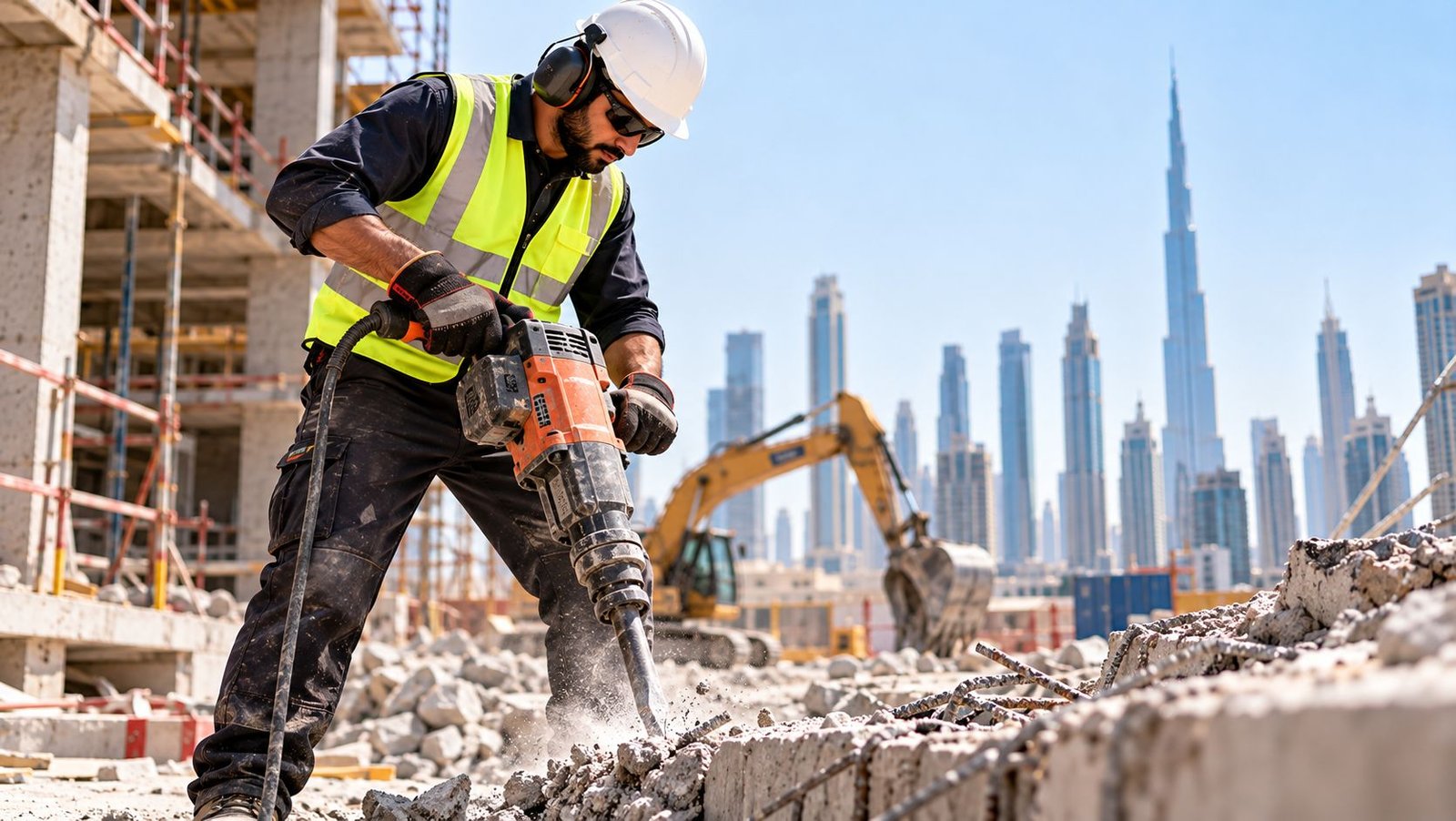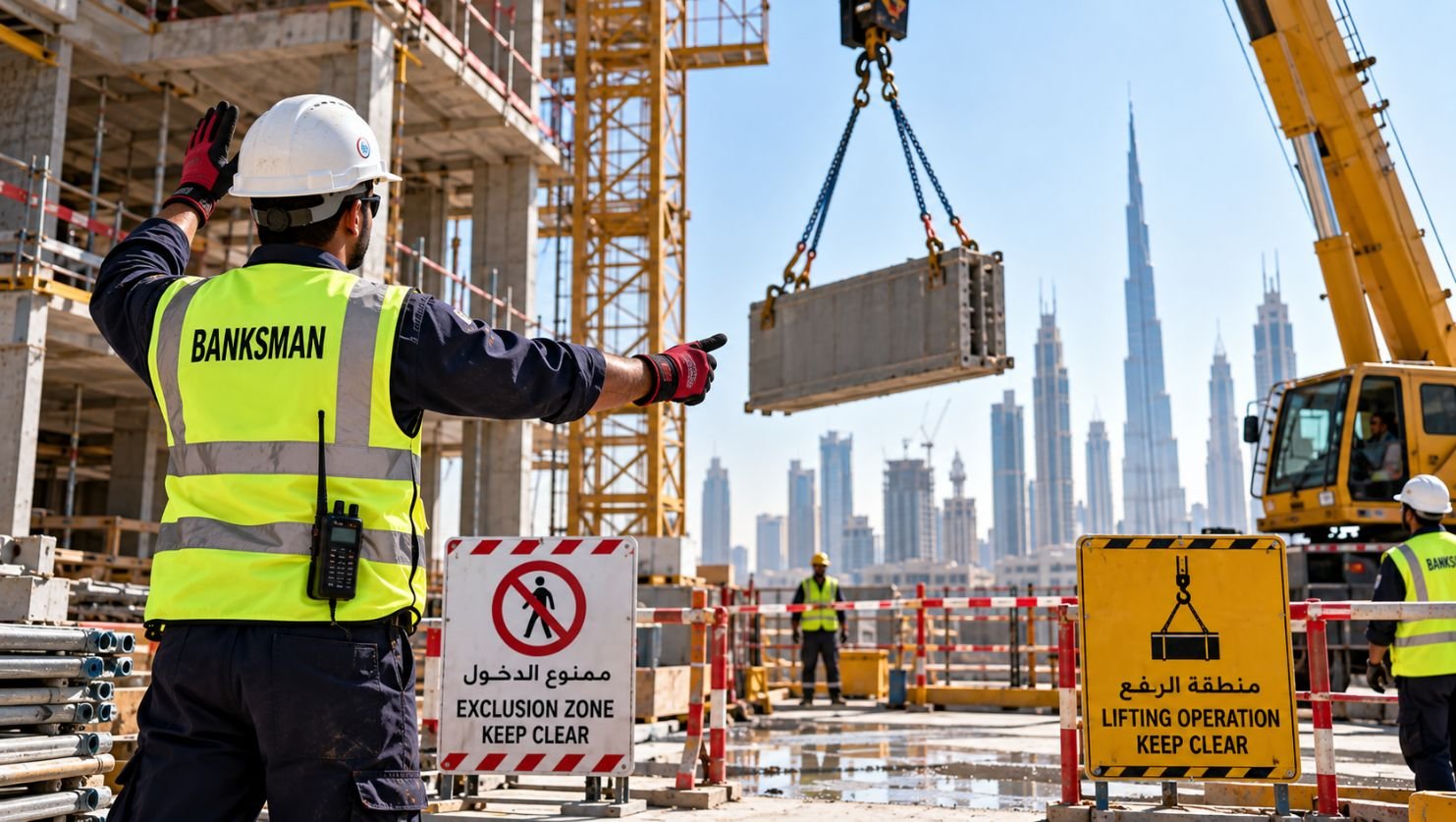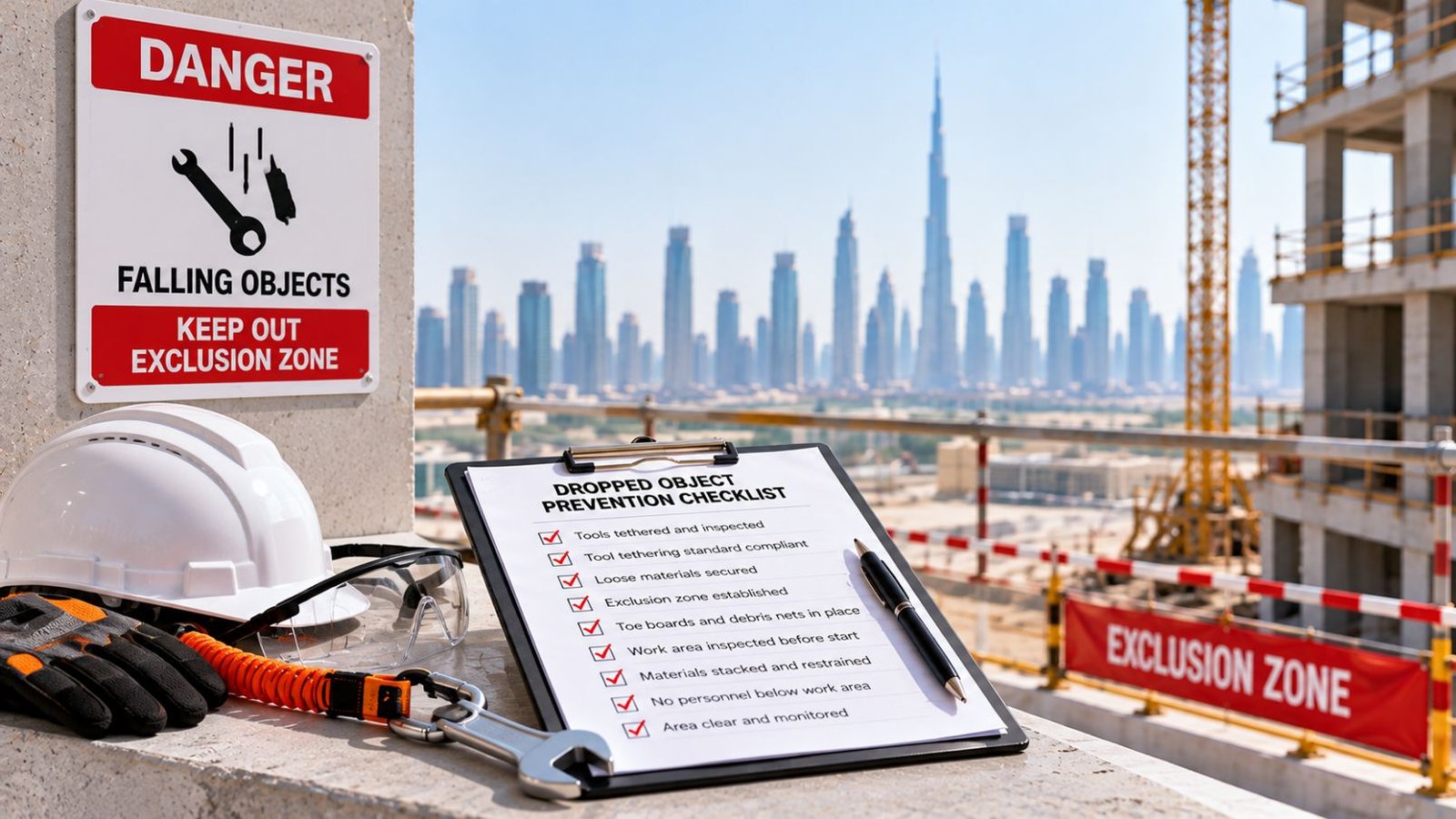
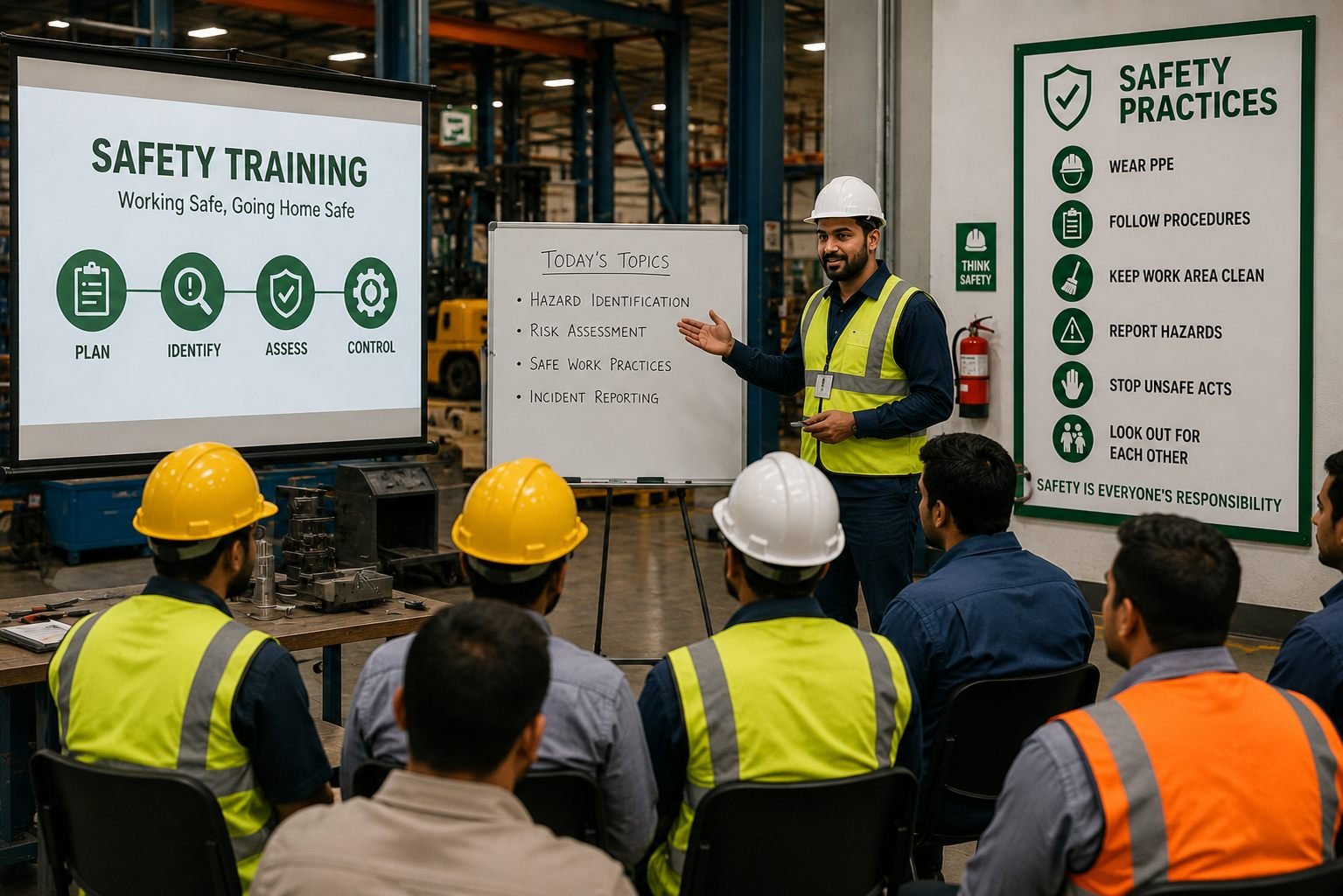
Workplace safety culture describes how a company behaves when nobody is checking. It shows in whether a supervisor stops a lift because the sling looks worn, or whether a worker reports a cracked helmet instead of returning it to the rack. Across the UAE, companies with strong safety culture record fewer lost-time injuries and pass regulatory inspections with fewer corrective notices.
Federal Decree Law No. 33 of 2021 places a direct duty on UAE employers to protect worker health and safety. Dubai and Abu Dhabi add their own frameworks above it. Meeting those rules on paper is one thing. Building a workplace safety culture that holds up on a Thursday afternoon in August is another.
What Workplace Safety Culture In practice Means
Culture is the gap between the written procedure and the observed behaviour. A company can hold a safety policy binder and still run an unsafe site.
The three visible signals
You can read a company’s safety culture in three places. Look at how quickly hazards get reported. Look at whether damaged equipment stays in circulation. Look at whether supervisors follow the same rules they enforce.
Why culture beats compliance
Compliance answers the question of what the law demands. Culture answers what the team does when the law is silent. UAE sites face conditions no regulation fully anticipates, from summer heat loads to multilingual crews rotating across projects. Culture fills those gaps.
Step 1. Make Leadership Visible on the Floor
Workers copy what managers do, not what managers say. A site manager who walks a construction site without a helmet has cancelled every toolbox talk delivered that month.
Set the standard from senior level
Senior staff should wear the same safety helmets as the crew, in the same condition, every time they enter a work zone. Visitors included. No exceptions for short visits.
Walk the site on a schedule
Fix a weekly walk. Bring the HSE officer. Stop and ask workers what nearly went wrong last week. Record the answers. Publish what changed as a result.
Fund what you ask for
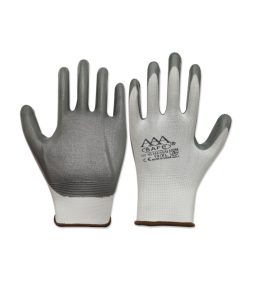
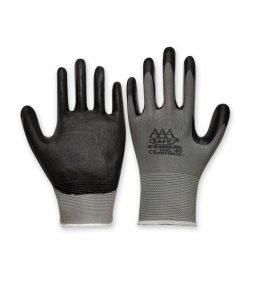
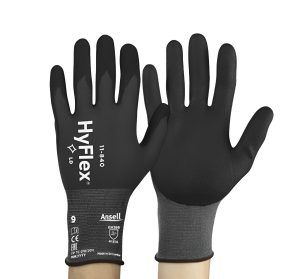
If the policy says cut-resistant gloves for glazing work, the store must hold them. A worker told to improvise has learned that the policy is decorative. Companies running construction safety equipment programmes across multiple UAE sites should budget stock levels against headcount, not against last year’s spend.
Step 2. Build a Reporting System Workers Trust
Under-reporting is the single clearest sign of weak safety culture. Workers stay quiet when reporting brings blame.
Separate reporting from discipline
Hazard reports and near-miss reports should never trigger punishment. Write that into policy and repeat it at every induction. Deliberate rule-breaking is a separate matter handled through a separate route.
Remove the language barrier
UAE workforces commonly span Hindi, Urdu, Malayalam, Bengali, Tagalog, Arabic and English speakers. A form in English only will collect English-only reports. Use pictograms, allow verbal reports to a supervisor, and post bilingual notices at the reporting point.
Close the loop publicly
Nothing kills a reporting system faster than silence. Post what was reported, what was investigated, and what changed. A worker who sees a guardrail installed after their report will report again.
| REPORTING ELEMENT | WEAK CULTURE | STRONG CULTURE |
|---|---|---|
| Report volume | Few reports, mostly injuries | Many reports, mostly near misses |
| Response time | Weeks or never | Days, with feedback |
| Report source | HSE staff only | Workers at all levels |
| Outcome visibility | Not shared | Posted on site |
AAA Safe Team supplies bilingual signage, tags and marking materials for UAE sites building out reporting and hazard-marking systems. Contact our technical team for site-specific recommendations.
Step 3. Train for the Job, Not for the File
Generic annual training produces generic results. Training that mirrors the actual task changes behaviour.
Run task-specific inductions
A worker joining a scaffolding crew needs scaffold-specific instruction, not a general safety video. Match the content to the hazard the person will meet that morning.
Use short and frequent formats
Fifteen-minute toolbox talks delivered daily outperform a four-hour session delivered annually. Retention rises and the topic stays connected to current site conditions.
Test understanding, not attendance
A signature on a register proves attendance. Ask three questions at the end of the talk and record the answers. Where understanding is thin, repeat the topic the next day.
Refresh after incidents
Every incident should generate a training update within a week. Detail on structuring that follow-up sits in our guide to site supervisor safety responsibilities.
Step 4. Treat Equipment Condition as a Culture Signal
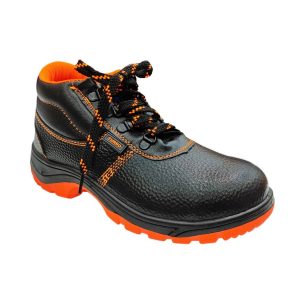
Worn, wrong or missing protective equipment tells workers exactly how seriously the company takes safety.
Inspect on a fixed cycle
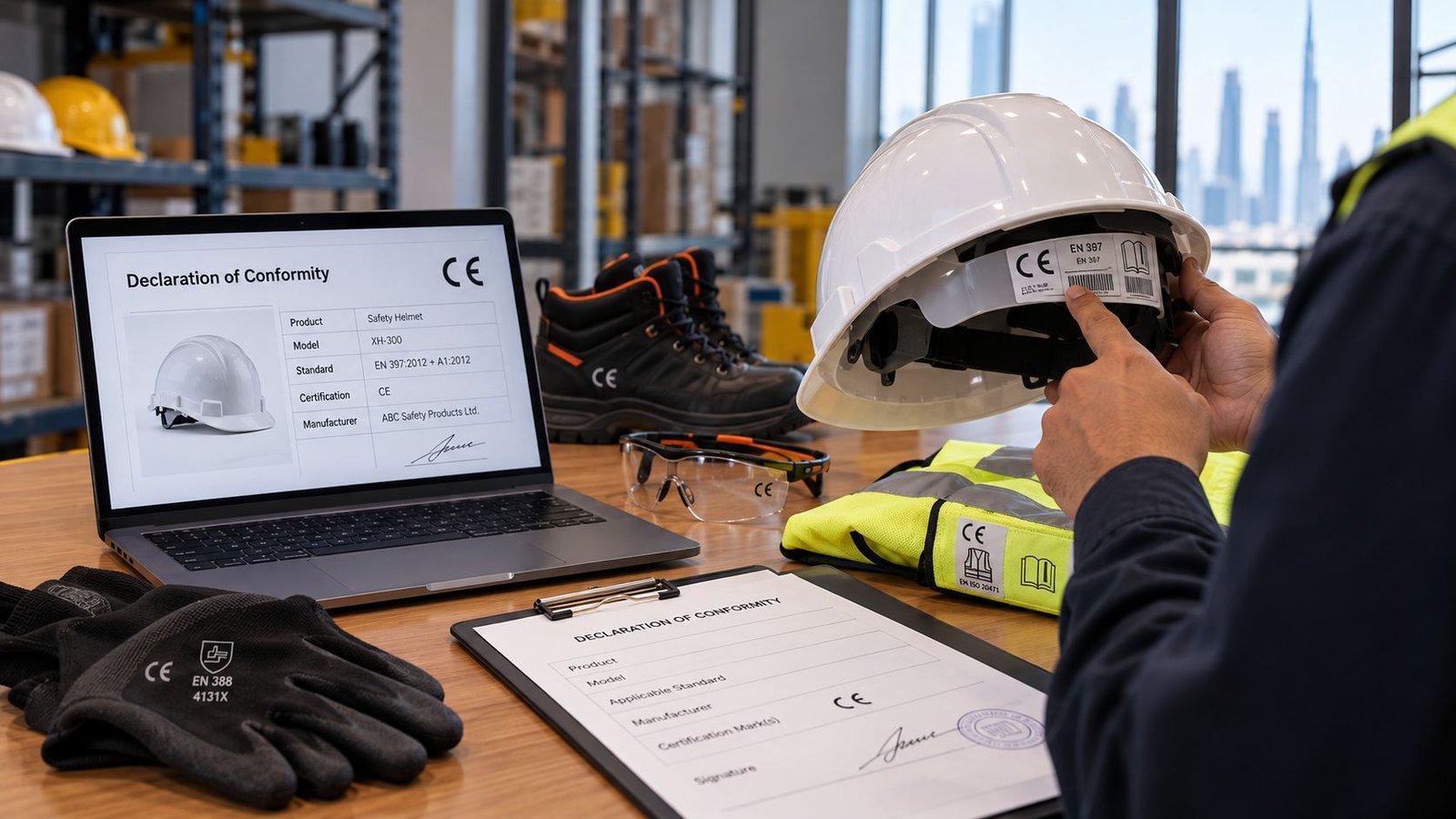
Monthly inspection of issued equipment catches degradation before it becomes exposure. Our monthly PPE inspection procedure sets out a repeatable format that works across UAE sites.
Replace instead of repair
Harnesses, helmets and respirators are not repairable items. A helmet that has taken an impact goes in the bin. Sun exposure alone degrades polyethylene shells across a UAE summer, and a faded shell is a warning sign worth acting on.
Match the equipment to the hazard
High-visibility clothing works when it fits the environment. Mesh construction suits summer outdoor work. Solid polyester suits cooler months and dusty conditions. The range across our safety jacket collection covers both.
Standardise across sites.
Workers rotating between projects should meet the same equipment standard everywhere. Mixed standards teach workers that rules depend on location.
Step 5. Hold Everyone to the Same Line
Accountability applies upward as well as downward.
Define consequences before they are needed
Write down what happens after a first, second and third breach. Apply it consistently. Selective enforcement destroys credibility faster than no enforcement.
Measure predictive indicators
Injury counts tell you what already went wrong. Track near-miss reports, closed corrective actions, inspection findings and training completion instead. These move before injuries do.
Recognise good behaviour
A worker who stops an unsafe lift has protected the company from a costly incident. Say so publicly. Recognition costs nothing and travels quickly across a site.
| INDICATOR TYPE | EXAMPLE METRIC | REVIEW FREQUENCY |
|---|---|---|
| Predictive | Near-miss reports closed | Weekly |
| Predictive | Toolbox talks delivered | Weekly |
| Predictive | Equipment inspections completed | Monthly |
| Outcome | Lost-time injury frequency | Quarterly |
| Outcome | Regulatory notices received | Quarterly |
The Cost of Weak Safety Culture in the UAE
A weak workplace safety culture carries consequences beyond injury.
Regulatory exposure
MOHRE inspections, Dubai Municipality site visits and Abu Dhabi OSHAD audits all examine records and observed practice. Gaps between the two attract scrutiny. Understanding where liability sits is covered in our note on employer liability for workplace injuries.
Commercial exposure
Main contractors across Dubai and Abu Dhabi increasingly pre-qualify subcontractors on safety record. A poor record removes bidding opportunities.
Workforce exposure
Skilled workers leave sites they consider unsafe. Replacement and retraining cost more than the equipment that would have kept them.
Building the Culture Step by Step
Culture change moves at the pace of consistent action, not at the pace of announcements.
Start with one measurable habit
Pick daily toolbox talks or weekly leadership walks. Run it for eight weeks without missing one. Then add the next habit.
Give it a year
Meaningful shift in workplace safety culture takes three to four quarters. Companies that abandon the effort at month three usually restart from zero.
Equip the programme properly
AAA Safe Team supplies personal protective equipment, signage, marking systems and emergency provisions to companies across Dubai, Abu Dhabi, Sharjah and the wider UAE. Our team provides itemised quotations covering equipment and delivery for projects of any scale. Browse the full safety equipment range or contact our specialists to discuss requirements.
Frequently Asked Questions
Workplace safety culture is the shared set of beliefs and behaviours that determine how a company handles risk when no supervisor or inspector is watching. It shows in reporting rates, equipment condition and whether supervisors follow their own rules.
Track predictive indicators such as near-miss report volume, corrective actions closed, inspection findings and training completion. Rising near-miss reports with falling injuries usually indicates improving culture.
The culture itself is not defined in law, but the outcomes are. Federal Decree Law No. 33 of 2021 requires employers to protect worker health and safety, and Emirate-level authorities inspect against that duty.
Expect three to four quarters of consistent effort before behaviour shifts visibly. Short campaigns produce short-lived results.
Senior leadership owns it. HSE staff advise and measure, but workers take their cue from what managers do on site.
Compliance is meeting the documented legal minimum. Culture is what the workforce does beyond that minimum, including in situations the rules do not cover.
Summer heat introduces fatigue, dehydration and shortcuts. Companies that adjust schedules, provide shaded rest and supply appropriate clothing signal that the rules bend to protect workers, not to speed work.
Yes. Workers read equipment condition as a statement of how much the company values them. Worn or missing protective equipment undermines every safety message delivered verbally.
Disclaimer
This article provides general information on workplace safety culture for companies operating in the UAE. It does not constitute legal, regulatory or engineering advice, and it does not replace a site-specific risk assessment.
Requirements vary by Emirate, by sector and by project. Regulations change. Verify current obligations with the relevant authority before making compliance decisions.
Engage a qualified health and safety professional for assessment of your specific workplace.