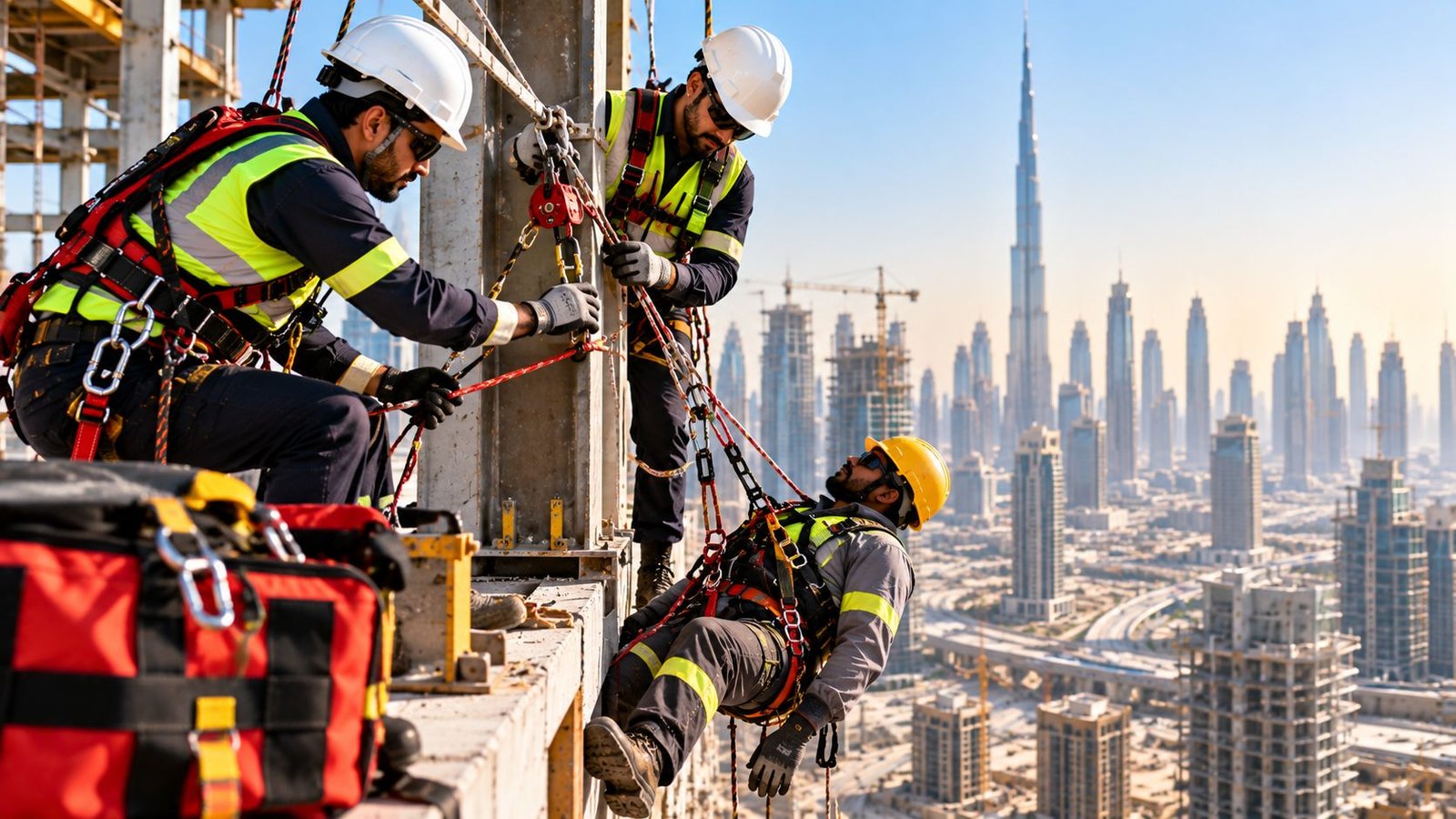
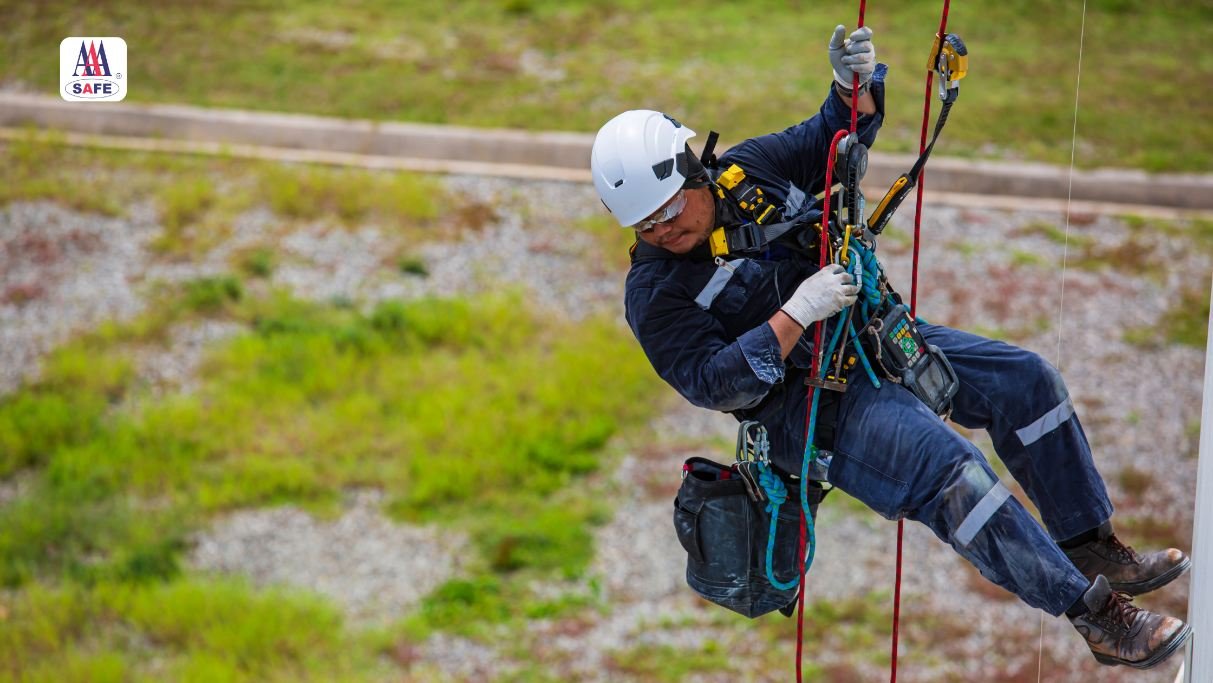
Fall protection equipment fails in two distinct ways. The first is mechanical failure where components break under load. The second, far more common, is operational failure where workers do not use equipment because it interferes with their ability to work. A roofer tied off with a 2-metre lanyard to a point 3 metres behind him cannot reach the edge to perform his task. He disconnects. A maintenance worker climbing a vertical ladder with a rope grab that requires constant manual repositioning gives up adjusting it. He climbs unprotected.
Self-retracting lifelines solve the operational failure problem that makes workers abandon other fall protection systems. These devices automatically extend and retract their lifeline cable or webbing as workers move, maintaining constant tension without requiring manual adjustment. Workers can move freely throughout the work area while remaining continuously protected. The lifeline extends when they walk away from the anchor point and retracts when they return, never creating slack that would allow dangerous free fall distances.
For contractors managing work at height across Dubai, Abu Dhabi, and Sharjah, self-retracting lifelines represent the intersection of regulatory compliance and practical usability. Federal Decree Law No. 33 of 2021 requires fall protection for work above 2 metres. OSHAD-SF in Abu Dhabi establishes specific fall protection equipment requirements. Dubai Municipality enforces fall protection standards during construction site inspections.
This article covers self-retracting lifelines from selection through maintenance. It examines device types, application requirements, inspection protocols, and the regulatory framework governing fall protection equipment across the Emirates.
Equip Your Height Workers with Reliable Fall Protection
AAA Safe supplies self-retracting lifelines meeting international fall protection standards for construction and maintenance operations across Dubai, Abu Dhabi, and Sharjah. Our range includes cable and webbing models with varying lengths and capacities, helping contractors protect workers at height while maintaining operational efficiency.
How Self-Retracting Lifelines Work
Self-retracting lifelines (SRLs), also called self-retracting lanyards or retractable fall arresters, incorporate mechanical systems that manage lifeline deployment and arrest fall forces automatically.
Basic Operating Principles
The core component is a spring-loaded drum inside a housing. Lifeline cable or webbing wraps around this drum. As a worker moves away from the anchor point, the lifeline pays out against spring tension. When the worker moves closer, the spring retracts the lifeline, taking up slack.
Under normal working movements, the drum rotates freely allowing smooth extension and retraction. The spring maintains slight tension preventing excess slack from accumulating.
A fall triggers a locking mechanism that stops drum rotation within centimetres. The sudden acceleration when a worker begins to fall activates a centrifugal brake, velocity-sensitive clutch, or inertial mechanism that engages immediately. Once locked, the lifeline cannot extend further, arresting the fall.
Energy absorption happens through controlled deformation of internal components or through a shock absorber built into the system. This limits the forces transmitted to the worker’s body and anchor point, keeping both within safe limits.
Cable vs Webbing Lifelines
Self-retracting lifelines use either steel cable or synthetic webbing as the lifeline material. Each offers specific advantages.
Cable SRLs use galvanized or stainless steel cable, typically 3-5mm diameter. Cable provides superior abrasion resistance, making it suitable for environments with sharp edges, rough surfaces, or exposure to sparks and heat. Cable SRLs typically offer longer lifeline lengths, with models available up to 30-60 metres. The trade-off is weight. Cable SRLs are heavier than equivalent webbing models.
Webbing SRLs use synthetic fiber webbing (typically polyester or nylon). Webbing is lighter than cable, reducing the load on anchor points and making devices easier to transport. Webbing incorporates better energy absorption characteristics than cable. Some webbing SRLs include tear-away energy absorbers built into the webbing itself.
Webbing offers less abrasion resistance than cable. Exposure to sharp edges or abrasive surfaces can damage webbing through cutting or accelerated wear. Most webbing SRLs have shorter maximum lengths, typically 6-20 metres.
The following table compares key characteristics:
| Characteristic | Cable SRLs | Webbing SRLs |
|---|---|---|
| Abrasion Resistance | Excellent | Good (requires edge protection) |
| Weight | Heavier (2-8 kg typical) | Lighter (1-4 kg typical) |
| Maximum Length | 30-60 metres available | 6-20 metres typical |
| Energy Absorption | Through shock absorber | Built into webbing or shock absorber |
| Sharp Edge Tolerance | Better | Lower (requires leading edge rating) |
| Typical Applications | Extended reach, abrasive environments | General construction, frequent moves |
Leading Edge vs Standard Applications
Standard self-retracting lifelines assume the anchor point is at or above the worker’s harness attachment point. The lifeline extends downward or at slight angles, never passing over sharp edges.
Leading edge applications involve work where the lifeline extends over a roof edge, building corner, or structural steel edge that could cut or damage the lifeline during a fall. Leading edge rated self-retracting lifelines incorporate reinforced materials and design features preventing edge damage from compromising device integrity.
Types and Mounting Configurations
Self-retracting lifelines come in several configurations designed for different anchor point orientations and work situations.
Overhead Mounted SRLs
Overhead mounting represents the most common configuration. The device attaches to an anchor point above the worker’s head. The lifeline extends downward as the worker moves around the work area.
Overhead mounting provides the shortest potential fall distance since the anchor point is already above the worker. If a fall occurs, the worker drops only the distance the SRL extends during the brief moment before the brake engages (typically 0.5-1 metre) plus harness stretch.
This configuration works well for flat roofs, platforms, elevated work areas, and anywhere fixed overhead anchors exist or can be installed.
Overhead mounting requires careful attention to anchor point capacity. The anchor must support the SRL’s weight plus the dynamic arrest forces generated during a fall. Most standards require 5,000 pounds (22.2 kN) anchor strength.
Leading Edge Mounted SRLs
Leading edge mounted self-retracting lifelines attach to anchor points at or below the working surface level. The lifeline extends upward and over an edge to reach the worker. This configuration addresses situations where overhead anchor points are impractical.
Leading edge work includes roofing where anchors mount at roof level rather than above, building facades accessed from roof edges, and maintenance on structures lacking overhead tie-off points.
Standard SRLs used in leading edge applications can fail because the lifeline contacts and drags across edges during falls. Leading edge rated units prevent this failure through reinforced materials.
Portable and Retrieval-Capable SRLs
Portable self-retracting lifelines are compact, lightweight units workers carry and connect as they move between work locations. These units typically have shorter lifeline lengths (3-10 metres) and weigh 2-4 kg.
Portable SRLs suit maintenance workers, technicians, and trades performing tasks at multiple locations throughout a shift.
Some self-retracting lifelines incorporate retrieval mechanisms allowing raising or lowering of an incapacitated worker. Retrieval-capable SRLs include hand cranks, motorized winches, or descent control devices. These features eliminate the need for separate rescue equipment and allow faster response when falls occur.
AAA Safe supplies both standard and retrieval-capable self-retracting lifelines suitable for construction and maintenance applications throughout the Emirates.
Selecting Self-Retracting Lifelines for Specific Applications
Choosing appropriate self-retracting lifelines requires matching device characteristics to work environment conditions, worker tasks, and hazard profiles.
Work Area Geometry and Required Reach
Assess the distance between potential anchor points and the work area perimeter. Workers need sufficient lifeline length to reach all necessary work locations while remaining protected.
Add lifeline length requirements including horizontal distance from anchor to work area edges, vertical distance if working below anchor level, and additional length for harness attachment offset (typically 0.5-1 metre).
For example, a worker on a 10-metre wide roof with a central anchor point needs approximately 5-6 metres of reach to access roof edges.
Environmental Conditions and Hazard Exposure
Work environment characteristics influence SRL type selection. Most SRLs function reliably in temperature ranges from -30°C to +70°C, but verify specifications for specific units.
Moisture, humidity, and corrosive atmospheres require corrosion-resistant components. Stainless steel cable SRLs and units with sealed housings perform better in chemical plants, marine environments, and industrial facilities with corrosive exposures.
Spark and explosion hazards necessitate non-sparking components. Some cable SRLs generate sparks when the brake engages. Webbing SRLs or specially designed non-sparking cable units suit refineries, chemical plants, and environments with flammable atmospheres.
Worker Weight Capacity and Anchor Point Orientation
Self-retracting lifelines specify maximum and minimum user weight capacities. The device must accommodate the worker’s weight plus clothing, tools, and equipment carried during work.
Standard capacity SRLs typically accommodate workers up to 130-140 kg total weight. Heavy-duty units extend capacity to 180-200 kg. Using an SRL beyond its rated capacity can prevent proper brake engagement.
Minimum weight requirements exist because SRL braking mechanisms depend on fall velocity to trigger. Most SRLs specify minimum weights around 50-60 kg.
Identify existing or planned anchor points before selecting SRLs. Overhead anchors accommodate standard overhead-mounted SRLs. Leading edge situations require leading-edge rated units.
Fall Clearance Calculations and Swing Fall Prevention
Proper use of self-retracting lifelines requires understanding fall clearance requirements and swing fall hazards.
Total Fall Distance Components
Total fall distance determines how much vertical clearance must exist below the work surface to prevent workers striking lower levels during fall arrest.
Fall distance includes free fall distance (how far the worker drops before arrest, typically 0.5-1 metre), deceleration distance (additional distance while the SRL slows the fall, typically 0.5-1.5 metres), harness stretch (approximately 0.3-0.5 metres), and worker height from harness attachment to feet (typically 1.5-2 metres).
The following table shows approximate total fall distances:
| SRL Configuration | Free Fall | Deceleration | Harness Stretch | Worker Height | Total Fall Distance |
|---|---|---|---|---|---|
| Overhead mounted (standard) | 0.5-1m | 0.5-1m | 0.3-0.5m | 1.5-2m | 3-4.5 metres |
| Overhead mounted (compact) | 0.3-0.6m | 0.3-0.8m | 0.3-0.5m | 1.5-2m | 2.4-3.9 metres |
| Leading edge (at work level) | 1-2m | 1-1.5m | 0.3-0.5m | 1.5-2m | 4-6 metres |
| Leading edge (below work level) | 2-3m | 1-2m | 0.3-0.5m | 1.5-2m | 5-8 metres |
Always consult manufacturer specifications and add safety margin (typically 1 metre) when determining minimum clearance requirements.
Swing Fall Hazard Recognition and Mitigation
Swing falls occur when workers move laterally from their anchor point. If a fall happens while the worker is offset from directly below the anchor, the arrested worker swings back toward a point under the anchor. This swing can cause the worker to strike structural members, equipment, or other obstacles.
Minimize swing falls by positioning anchor points directly above or in line with work areas. Use multiple anchor points for large work areas. Horizontal lifeline systems spanning the work area provide continuous anchor points reducing offset distances.
When swing falls cannot be prevented, identify all obstacles in potential swing paths. Clear the swing zone of equipment and hazards. Add padding to unavoidable obstacles.
Inspection, Testing, and Maintenance Requirements
Self-retracting lifelines require regular inspection and documented maintenance to ensure reliable operation.
Pre-Use Inspection Procedures
Workers must inspect SRLs before each use. Visual inspection identifies obvious damage, wear, or contamination.
Check the housing for cracks, dents, or deformation. Inspect the lifeline cable or webbing for fraying, cuts, kinks, abrasion, or discoloration. Pull out the full lifeline length to inspect areas normally hidden inside the housing.
Test the locking mechanism by sharply pulling the lifeline to simulate fall acceleration. The brake should engage immediately. If the lifeline continues extending under sharp pull, the device has failed and must be removed from service.
Check the connector for proper gate closure, cracks, deformation, and smooth operation. Verify labels remain legible and attached.
Annual Inspection and Competent Person Requirements
In addition to pre-use checks, qualified inspectors must perform detailed annual inspections. A competent person with training in fall protection equipment inspection conducts these evaluations.
Annual inspection includes examining internal components for wear, corrosion, or damage. Test the braking mechanism function and energy absorber condition. Verify all moving parts operate smoothly.
Document inspection results including date, inspector identification, findings, and actions taken. Maintain inspection records for the equipment life plus retention periods (typically 5 years minimum).
Service Life and Retirement Criteria
Self-retracting lifelines have finite service lives. Manufacturers specify maximum service life from date of first use, typically 10-15 years for quality units maintained per specifications.
The following table provides replacement guidance:
| Condition | Action Required | Notes |
|---|---|---|
| Arrested a fall | Immediate retirement | Single-use policy unless manufacturer allows return after factory inspection |
| Structural damage to housing | Immediate retirement | Cracks, severe dents, deformation |
| Lifeline cuts or excessive wear | Immediate retirement | Fraying, abrasion, UV damage |
| Failed functional testing | Immediate retirement | Brake does not engage on sharp pull |
| Missing or illegible labels | Immediate retirement | Cannot verify compliance |
| Reached manufacturer service life | Retirement per schedule | Typically 10-15 years from first use |
Used SRLs arrest real falls only once. Fall arrest forces can damage internal components in ways not visible externally. Most manufacturers prohibit returning arrested SRLs to service without factory inspection and recertification.
AAA Safe helps contractors develop inspection programmes for fall protection equipment and can provide replacement units maintaining continuous site protection across Dubai, Abu Dhabi, and Sharjah.
Regulatory Requirements and Standards Compliance
Multiple authorities establish requirements for fall protection equipment including self-retracting lifelines across the Emirates.
Federal Occupational Safety Requirements
Federal Decree Law No. 33 of 2021 requires employers to protect workers from fall hazards through guardrails, safety nets, or personal fall arrest systems. Work at heights exceeding 2 metres triggers fall protection requirements.
Personal fall arrest systems must include full-body harnesses, anchorage points capable of supporting required loads, and connectors limiting free fall distance and arrest forces to safe levels.
Ministry of Human Resources and Emiratisation enforces workplace safety requirements through inspections. Inspectors verify that fall protection equipment meets applicable standards and is used properly.
OSHAD-SF Requirements in Abu Dhabi
OSHAD-SF establishes comprehensive fall protection requirements for construction and maintenance work in Abu Dhabi. Code of Practice elements address fall protection system selection, installation, use, inspection, and training.
OSHAD requires written fall protection plans for work at heights. Plans must identify fall hazards, specify protection methods, detail rescue procedures, and establish training requirements.
The Abu Dhabi Public Health Centre oversees OSHAD implementation. Facilities achieving OSHAD certification demonstrate systematic fall protection management through audited safety programmes.
International Equipment Standards and Training
Self-retracting lifelines typically comply with ANSI Z359.14 (American standard), EN 360 (European standard), or CSA Z259.2.2 (Canadian standard). These standards establish performance requirements including arrest force limits, static strength, corrosion resistance, and operating temperature ranges.
Devices meeting these standards bear certification markings. Contractors purchasing SRLs should verify certification markings and request compliance documentation from suppliers.
Workers using self-retracting lifelines require training covering device operation, inspection procedures, anchor point selection, fall clearance calculation, and emergency response. Training must occur before workers use equipment and annually thereafter.
Training should include hands-on practice with actual equipment workers will use. Document all training with attendance records, topics covered, and competency verification.
Common Mistakes with Self-Retracting Lifeline Use
Inadequate fall clearance. Failing to calculate total fall distance and verify sufficient clearance below work areas. Always calculate fall distance using manufacturer data and verify adequate clearance exists.
Using SRLs beyond rated capacity. Attaching multiple workers to one SRL or using devices with workers exceeding weight ratings. SRLs are single-user devices unless specifically rated for multiple attachment.
Incorrect anchor point selection. Connecting to anchor points lacking adequate strength or positioned improperly. Verify anchor capacity meets 5,000 pound requirement and position anchors to minimize swing fall potential.
Continuing use after fall arrest. Returning arrested SRLs to service without manufacturer inspection and recertification. Remove arrested units from service immediately.
Modifying equipment. Altering SRL components or replacing parts with non-manufacturer items. Modifications void certifications and create unpredictable performance.
Skipping inspections. Neglecting pre-use or annual inspections, or continuing to use equipment with identified deficiencies.
Using wrong SRL type for application. Installing standard SRLs in leading edge applications. Device ratings must match actual use conditions.
Frequently Asked Questions
A self-retracting lifeline is a fall protection device containing cable or webbing on a spring-loaded drum inside a housing. As workers move, the lifeline extends and retracts automatically, maintaining slight tension without manual adjustment. During a fall, velocity-sensitive braking mechanisms engage within centimetres, arresting the fall quickly while energy absorption components limit forces on the worker and anchor point.
Cable SRLs use steel cable offering superior abrasion resistance, longer available lengths (30-60 metres), and better durability in harsh environments. Webbing SRLs use synthetic fiber webbing, providing lighter weight, better energy absorption characteristics, and lower cost. Cable suits abrasive environments and extended reach applications. Webbing suits general construction where weight matters more than abrasion resistance.
No. Self-retracting lifelines are single-user devices unless specifically rated and labeled for multiple attachment. The braking mechanisms, energy absorbers, and anchor point calculations assume one user. Connecting multiple workers overloads the device and can cause complete system failure during falls.
Clearance requirements depend on SRL configuration. Overhead mounted SRLs typically require 3-4.5 metres total fall distance clearance. Leading edge applications require 4-8 metres depending on anchor position. Always consult manufacturer specifications and add 1 metre safety margin when calculating minimum clearance.
Workers must perform visual inspection before each use. A competent person must conduct detailed annual inspections examining internal components, testing mechanisms, and documenting findings. More frequent inspection is required for harsh environments or intensive use. Remove deficient units from service immediately.
Standard SRLs assume the lifeline never contacts sharp edges during use or fall arrest. Leading edge rated SRLs incorporate reinforced materials and design features allowing the lifeline to contact and drag across edges during falls without damage. Use leading edge rated units whenever the lifeline might contact building edges or structural steel during work or fall arrest.
Most SRLs are designed for overhead mounting with the lifeline extending downward. Horizontal use (anchor at same level as worker) increases free fall distance and requires leading edge rated units. Some manufacturers produce SRLs specifically rated for horizontal use. Verify the device is rated for horizontal application before using in this configuration.
Manufacturers typically specify service life of 10-15 years from first use for SRLs maintained per specifications and not subjected to fall arrest. Retire SRLs immediately if they arrest falls, show damage during inspection, fail functional testing, or reach manufacturer-specified expiration dates.
Yes. AAA Safe supplies both cable and webbing self-retracting lifelines meeting international fall protection standards. Our range includes overhead-mounted, leading edge rated, and retrieval-capable models. We help contractors select appropriate SRLs based on work environments and worker requirements across Dubai, Abu Dhabi, and Sharjah.
Closing Thoughts
Self-retracting lifelines represent fall protection technology that workers actually use because it does not prevent them from working. The automatic extension and retraction eliminates the constant manual adjustments required with other fall arrest systems. Workers can move freely, perform tasks efficiently, and remain continuously protected.
This usability advantage only delivers actual protection when contractors select appropriate devices for specific applications, ensure proper installation and anchor points, verify adequate fall clearance, and maintain inspection programmes. A poorly selected SRL, inadequate anchor, or lack of clearance creates the illusion of protection while offering none.
Training matters as much as equipment. Workers who understand how self-retracting lifelines function, can identify suitable anchor points, calculate fall clearance, perform inspections, and recognize when devices have failed bring critical judgment to fall protection implementation.
For contractors managing work at height, self-retracting lifelines should be the default fall arrest system for applications where guardrails or safety nets are impractical. The improved worker acceptance, continuous protection during movement, and reduced fall arrest forces justify the investment in quality devices and proper training.
Disclaimer
The information provided in this article is intended for general educational purposes only and should not be treated as a substitute for professional fall protection engineering, comprehensive hazard assessment, or regulatory compliance consultation. While every effort has been made to ensure accuracy, self-retracting lifeline selection and use requirements vary by specific work conditions, regulatory jurisdiction, equipment manufacturer, and worker characteristics. Readers are encouraged to verify all technical and regulatory information with qualified fall protection professionals and relevant government bodies, including the Abu Dhabi Public Health Centre, Dubai Municipality, and the UAE Ministry of Human Resources and Emiratisation. Equipment specifications, fall clearance calculations, and inspection requirements referenced represent general industry guidance and may vary by manufacturer and model. AAA Safe does not guarantee specific performance outcomes and recommends that all fall protection systems be designed, installed, and maintained with input from qualified safety engineers or certified fall protection specialists. Individual equipment selection should be based on thorough site-specific hazard assessment, fall clearance verification, anchor point engineering, and rescue planning. Always consult current safety standards (ANSI Z359, EN 360, CSA Z259), manufacturer specifications, and qualified professionals for definitive guidance.