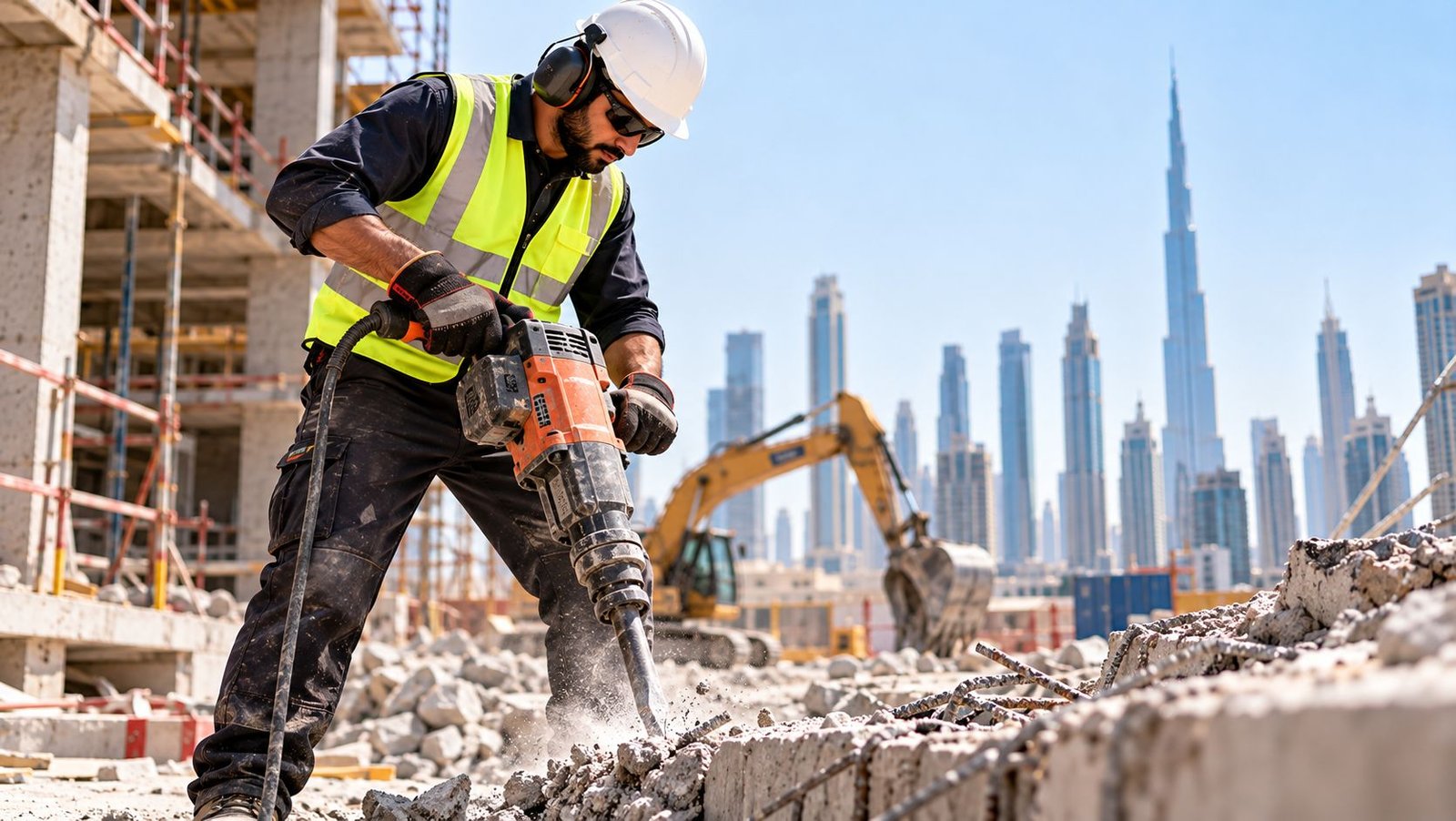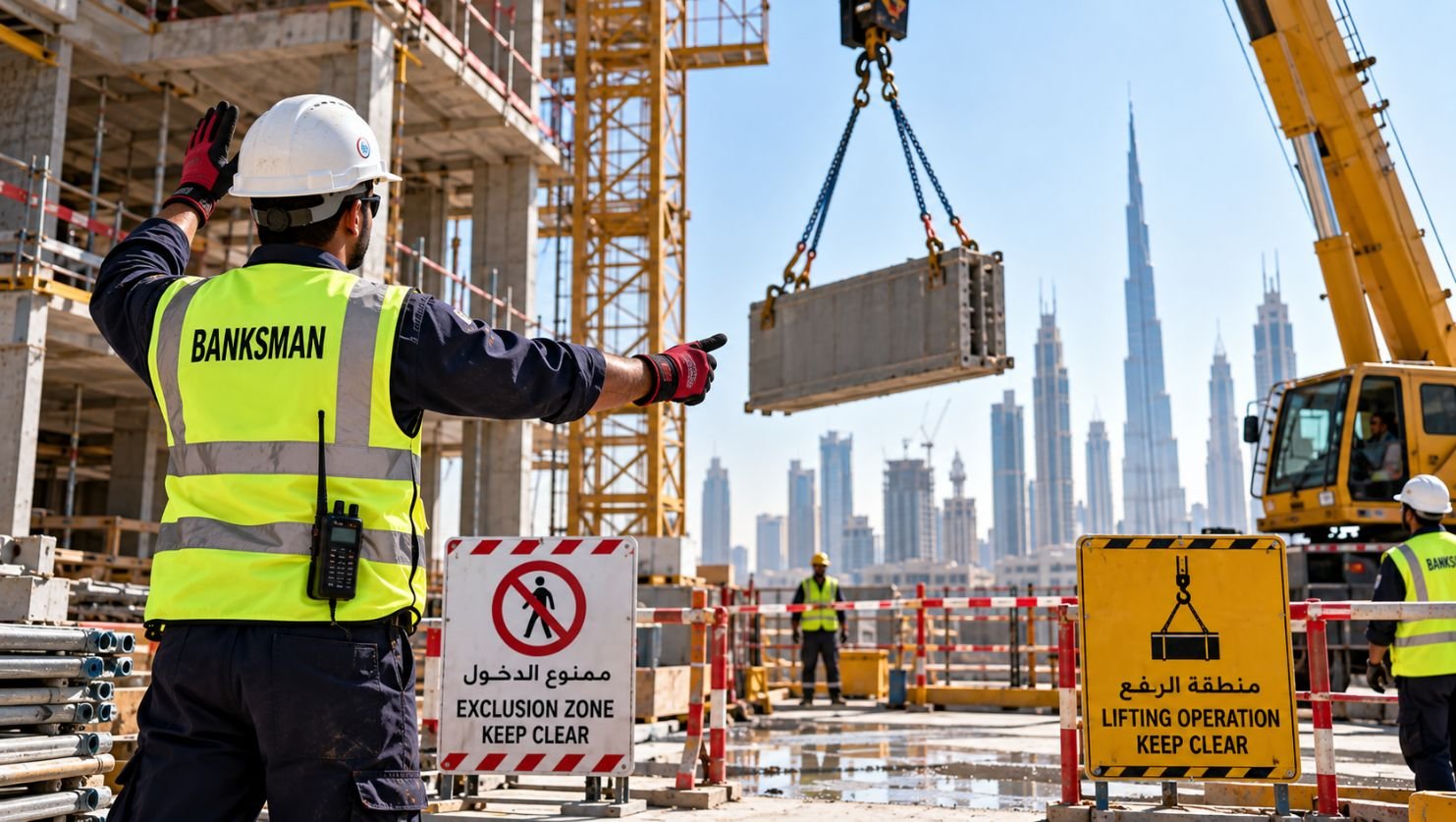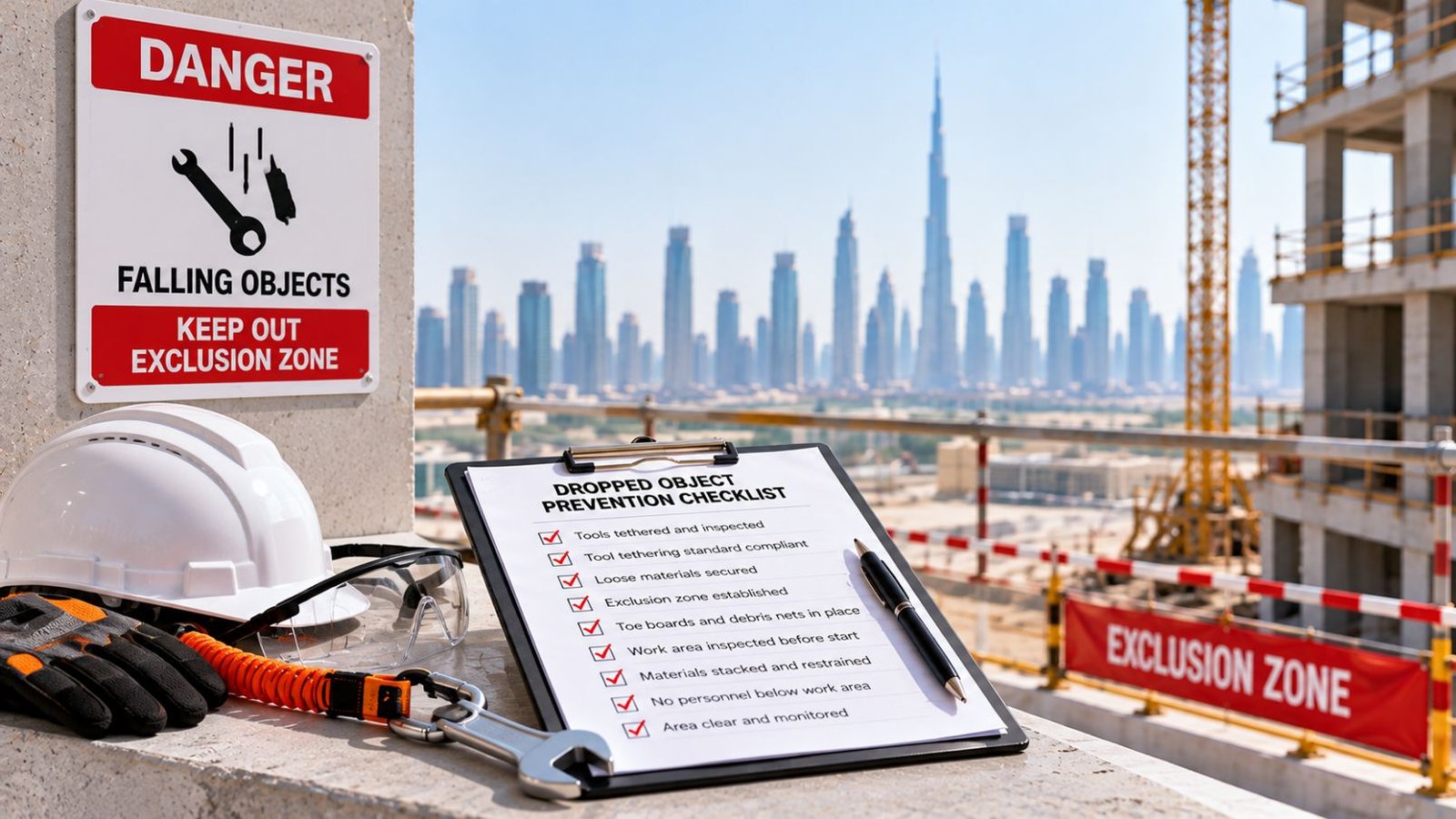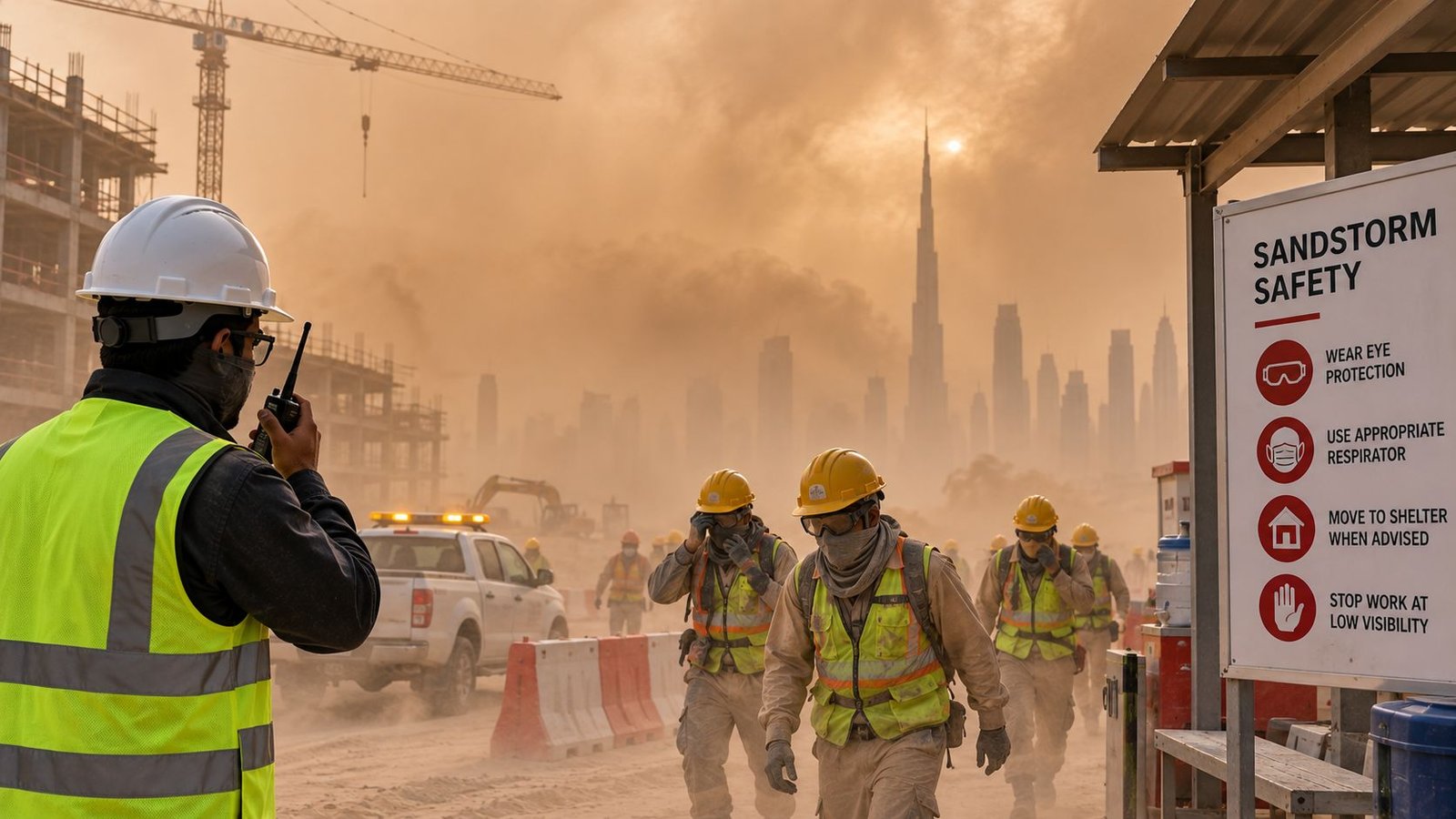
A construction site foreman posts a warning sign in English near a trench excavation. Three workers from the Pakistani crew walk past the sign and enter the restricted area. They cannot read the warning. The sign may as well not exist. This scenario repeats thousands of times daily across workplaces in Dubai, Abu Dhabi, and Sharjah where workforce demographics create language barriers that standard English-only signage cannot bridge.
The case for bilingual safety signs extends beyond convenience into legal obligation and operational necessity. Workplaces employing workers who do not read English fluently cannot rely on English-only signs to communicate hazards, provide directions, or establish safety protocols. When a worker cannot understand a warning sign, that sign provides no protection. The illusion of compliance exists, but actual hazard communication fails.
For facility managers and contractors operating across the Emirates, understanding when and how to implement bilingual safety signs determines whether safety programmes protect all workers or just those who read English. Federal Decree Law No. 33 of 2021 requires employers to provide safety information in forms workers understand. OSHAD-SF in Abu Dhabi mandates hazard communication in languages workers comprehend. Dubai Municipality enforces workplace safety standards including signage requirements during inspections.
This article examines why workplaces need bilingual safety signs, covers legal requirements, demonstrates effectiveness compared to English-only signage, and provides implementation guidance for multilingual work environments.
Source Compliant Bilingual Safety Signage
AAA Safe supplies bilingual safety signs in Arabic-English and other language combinations for workplaces across Dubai, Abu Dhabi, and Sharjah. Our range includes warning signs, mandatory action signs, prohibition signs, and emergency information formatted for multilingual workforce comprehension and regulatory compliance.
Understanding Workforce Language Demographics
The case for bilingual safety signs begins with recognizing actual language capabilities in workforces across the Emirates.
Workforce Composition and Language Capabilities
Construction sites, warehouses, manufacturing facilities, and industrial operations throughout Dubai, Abu Dhabi, and Sharjah employ workers from South Asia, Southeast Asia, Africa, and the Middle East. Indian, Pakistani, Bangladeshi, Filipino, Nepalese, Sri Lankan, and Egyptian workers comprise significant portions of manual labor workforces.
English proficiency varies dramatically within these populations. Some workers possess functional English reading skills. Many others have limited or no English literacy despite speaking conversational English adequate for basic workplace interaction. The distinction matters because reading comprehension differs from verbal communication ability.
A worker who can understand spoken English instructions from a supervisor may struggle to read and comprehend written English safety warnings. The vocabulary, sentence structure, and technical terminology in safety signage differ from conversational language patterns.
Arabic represents the official language across the Emirates, yet many expatriate workers do not read Arabic. Hindi, Urdu, Tagalog, Bengali, Tamil, Malayalam, and other languages serve as primary languages for significant worker populations.
The pragmatic solution involves bilingual safety signs pairing English with Arabic, the two languages with broadest comprehension across diverse worker populations. Where specific language groups dominate particular work areas, targeted signage in those languages supplements the English-Arabic baseline.
Literacy Levels and Reading Comprehension
Language capability encompasses more than just which languages workers speak. Literacy levels within language groups affect sign effectiveness regardless of language choice.
Some workers possess limited literacy even in their native languages. They cannot read safety information regardless of what language it appears in. These workers require alternative hazard communication methods including pictograms, safety symbols, color coding, and verbal instruction.
However, dismissing bilingual signage because some workers cannot read any language ignores the larger population who can read in languages other than English. A worker literate in Urdu, Hindi, or Arabic but not English gains no benefit from English-only signs yet would immediately understand bilingual signs including their language.
The goal is maximizing the percentage of workers who receive hazard information through written signs rather than requiring verbal translation for every posted warning. Bilingual safety signs dramatically increase the percentage of workers who can read and understand posted safety information without assistance.
Legal Requirements for Multilingual Safety Communication
Multiple regulatory frameworks establish requirements for safety communication in languages workers understand.
Federal Occupational Safety Requirements
Federal Decree Law No. 33 of 2021 establishes employer obligations for workplace safety including hazard communication. The law requires employers to inform workers about workplace hazards, safety procedures, and emergency protocols.
The law does not explicitly mandate bilingual safety signs in all circumstances, but it establishes the principle that safety information must reach workers in forms they comprehend. An English-only sign that workers cannot read fails to fulfill the hazard communication obligation the law establishes.
Ministry of Human Resources and Emiratisation enforcement includes verifying that workers understand safety requirements and hazard warnings. During inspections, labor inspectors may question workers about hazards and safety procedures. If workers cannot demonstrate understanding due to language barriers, inspectors can cite inadequate safety communication.
The legal standard is not whether signs exist, but whether workers understand the information signs convey.
OSHAD-SF Requirements in Abu Dhabi
OSHAD-SF establishes explicit requirements for hazard communication in languages workers understand. Code of Practice elements addressing safety signage specify that signs must be comprehensible to workers who will see them.
OSHAD requires safety management systems to address language barriers in safety communication. Documented procedures must show how employers ensure non-English speaking workers receive and understand safety information including posted warnings.
The Abu Dhabi Public Health Centre conducts conformity assessments evaluating safety management system implementation. Auditors examine whether signage matches workforce language capabilities. Facilities employing non-English speaking workers without corresponding bilingual signage face non-conformance findings.
OSHAD certification demonstrates systematic safety management including effective hazard communication across language barriers. Bilingual safety signs represent visible evidence that facilities recognize and address workforce language diversity.
Industry Standards and Best Practices
International safety standards including ANSI Z535 (American standard) and ISO 3864 (international standard) establish safety sign design principles. While these standards do not mandate specific languages, they emphasize that signs must communicate effectively to target audiences.
The standards recognize that effective communication requires matching sign language to reader language capabilities. A technically perfect sign in the wrong language communicates nothing.
Major international contractors operating in the Gulf region routinely implement bilingual safety signs recognizing legal obligations and practical necessity. This practice has become expected standard rather than optional enhancement in construction and industrial facilities with diverse workforces.
Effectiveness of Bilingual Safety Signs
Research and practical experience demonstrate that bilingual safety signs improve hazard recognition and safety compliance compared to English-only signage in multilingual workplaces.
Comprehension Testing Results
Studies examining safety sign comprehension among non-native English speakers consistently show that bilingual signs pairing English with workers’ native languages produce significantly higher comprehension rates than English-only signs.
Workers tested on hazard recognition from English-only warning signs demonstrate comprehension rates of 30-50% when English is not their primary language. The same workers tested with bilingual signs including their native language show comprehension rates of 80-95%.
The comprehension gap widens for complex messages beyond simple warnings. Procedural instructions, emergency response directions, and multi-step safety protocols communicated through English-only signage produce comprehension rates below 20% among non-English readers. Bilingual versions raise comprehension to 70-85%.
Even workers with conversational English skills benefit from bilingual signs. Reading technical safety terminology in English requires higher language proficiency than daily workplace conversation.
Response Time and Safety Compliance
Comprehension speed matters as much as comprehension accuracy. A worker who eventually figures out what an English sign means after staring at it for two minutes while mentally translating may understand the message, but the delayed comprehension reduces sign effectiveness.
Bilingual safety signs produce immediate comprehension in workers’ native languages. Workers glance at signs and immediately grasp the message without translation delay. This immediate comprehension particularly matters for warning signs alerting workers to immediate hazards.
Safety compliance rates increase when workers can read signs in their own languages. Workers cannot comply with instructions they do not understand. Prohibition signs forbidding entry, mandatory action signs requiring PPE, and directional signs indicating emergency routes all depend on worker comprehension.
Observational studies in multilingual workplaces show that safety compliance increases 40-60% when bilingual safety signs replace English-only signage.
The following table compares effectiveness metrics:
| Metric | English-Only Signs | Bilingual Signs (Arabic-English) | Improvement |
|---|---|---|---|
| Initial comprehension rate (non-English speakers) | 30-50% | 80-95% | +50-65% |
| Time to comprehend message | 45-120 seconds | 2-5 seconds | 90%+ faster |
| Compliance with mandatory actions | 40-55% | 75-90% | +35-50% |
| Hazard recognition accuracy | 35-60% | 85-95% | +50% |
Types of Bilingual Safety Signs Required
Different sign categories serve different safety communication functions. Workplaces need bilingual versions across all categories.
Warning Signs for Hazard Communication
Warning signs alert workers to specific hazards including electrical dangers, chemical exposures, fall risks, moving equipment, hot surfaces, confined spaces, and environmental hazards. These signs typically use yellow backgrounds with black text and symbols.
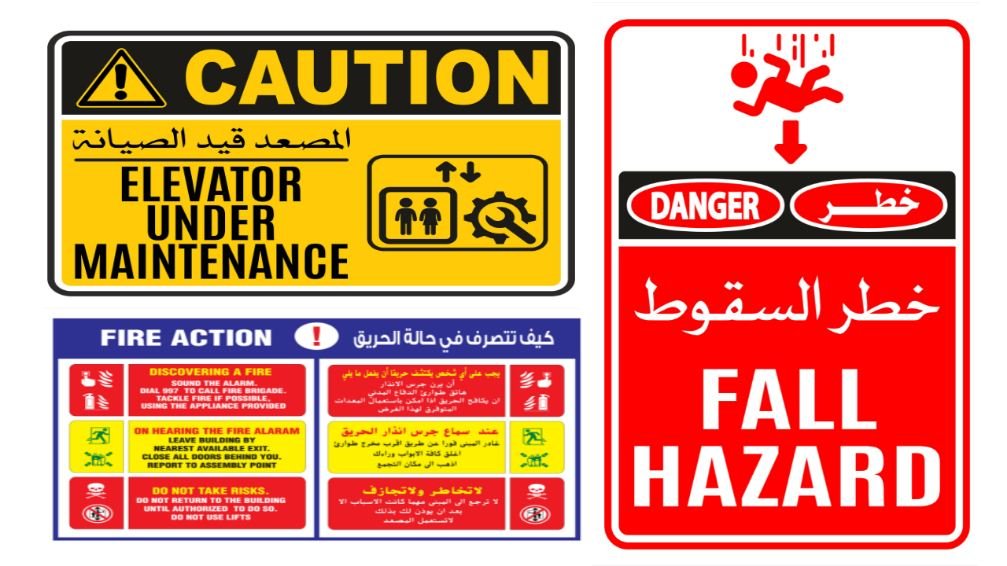
Bilingual warning signs must communicate both the nature of the hazard and the consequence of exposure. “Danger: High Voltage” becomes ineffective if workers cannot read it. The Arabic equivalent “خطر: جهد كهربائي عالي” paired with the English text ensures Arabic readers understand the electrical hazard.
Warning signs benefit from standardized safety symbols supplementing text. The electrical hazard symbol (lightning bolt), radioactive trefoil, skull and crossbones for toxic materials, and flame symbol for flammable materials provide visual hazard communication. However, symbols alone prove insufficient. Workers need text confirming hazard identity.
Mandatory Action Signs for PPE and Procedures
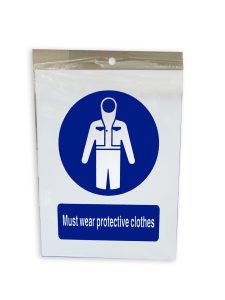
Mandatory action signs specify required behaviors including wearing PPE, following procedures, or taking specific actions before entering areas. These signs typically use blue backgrounds with white text and symbols.
Common mandatory signs include requirements to wear hard hats, safety glasses, hearing protection, safety footwear, high-visibility clothing, or respiratory protection. Procedural signs require actions like “Wash Hands,” “Report to Supervisor,” or “Obtain Permit Before Entry.”
Bilingual mandatory signs ensure workers understand what actions they must take. “Safety Helmet Must Be Worn” paired with “يجب ارتداء خوذة السلامة” communicates the requirement to Arabic readers.
Prohibition Signs for Restricted Actions
Prohibition signs forbid specific actions or deny access to unauthorized persons. These signs use red circles with diagonal bars over black symbols on white backgrounds.
Common prohibition signs include “No Smoking,” “No Entry,” “Do Not Operate,” “No Food or Drink,” and “Authorized Personnel Only.” Bilingual versions ensure all workers understand what activities are forbidden.
“No Smoking” appears straightforward to English readers, but workers who cannot read English may not recognize the prohibition. Adding “ممنوع التدخين” ensures Arabic readers understand the restriction.
Emergency Information and Evacuation Signs
Emergency signs provide critical life-safety information including evacuation routes, assembly points, emergency equipment locations, and emergency procedures. Green backgrounds with white text and symbols mark emergency information signs.
Emergency exit signs, evacuation route diagrams, assembly point markers, first aid station locations, emergency shower positions, and fire extinguisher locations all require bilingual text ensuring all workers can find safety equipment and follow evacuation procedures.
“Emergency Exit” becomes “مخرج الطوارئ” in Arabic. “Assembly Point” translates to “نقطة التجمع”. During actual emergencies, workers under stress revert to their native languages for cognitive processing. Bilingual emergency signs ensure workers can follow life-saving directions in crisis situations.
AAA Safe provides complete bilingual safety sign sets covering warning, mandatory, prohibition, and emergency categories formatted for workplace installation across Dubai, Abu Dhabi, and Sharjah.
Design Principles for Effective Bilingual Signs
Proper design ensures bilingual safety signs communicate effectively without creating confusion or visual clutter.
Language Placement and Formatting
The most common format places English text above Arabic text, reflecting reading direction preferences and international convention. Alternative designs position languages side by side, which works well for shorter messages but becomes unwieldy for longer text.
Both languages should use equivalent font sizes ensuring neither language appears subordinate. Arabic text requires slightly larger point sizes than English to achieve equivalent visual weight due to character complexity.
Maintain consistent language order throughout a facility. Switching between English-above-Arabic and Arabic-above-English between different signs creates confusion. Pick one format and apply it uniformly.
Symbol Integration and Color Standards
Safety symbols should appear prominently and remain consistent with international standards (ISO 3864, ANSI Z535). Symbols provide language-independent hazard communication supplementing text in both languages.
Color coding follows established standards: yellow for warnings, blue for mandatory actions, red for prohibitions, green for emergency information. These colors carry meaning across cultures and reinforce sign categories beyond text content.
The following table provides bilingual sign design specifications:
| Sign Category | Background Color | Symbol Color | Text Color | Symbol Size |
|---|---|---|---|---|
| Warning | Yellow | Black | Black | 25-35% of sign area |
| Mandatory | Blue | White | White | 25-35% of sign area |
| Prohibition | White with red circle | Black with red bar | Black | 30-40% of sign area |
| Emergency | Green | White | White | 20-30% of sign area |
| Information | Blue or white | Varies | Black or white | 15-25% of sign area |
Message Simplification and Clarity
Bilingual signs require careful message editing. Long sentences in one language become even longer in translation, creating text-heavy signs workers will not read.
Keep messages concise. “Danger: High Voltage – Severe Shock Hazard – Authorized Electricians Only – Lock Out Power Before Work” contains too much information for quick comprehension. Adding Arabic translation doubles the text volume, creating an unreadable sign.
Simplify to essential information: “Danger: High Voltage” with the electrical hazard symbol communicates the critical message. Supplementary information belongs in training and work permits, not on the warning sign itself.
Prioritize messages. The hazard identification (what can hurt you) matters most. Consequence (how it hurts you) ranks second. Avoidance action (what to do) ranks third.
Visibility and Placement Standards
Bilingual signs require adequate size for both languages to remain legible at expected viewing distances. A sign readable at 5 metres in English may become illegible in Arabic if the Arabic text uses the same size as English.
Standard workplace signs should be readable from 7-10 metres for general hazard warnings and 3-5 metres for detailed instructions. Emergency exit signs require visibility from maximum possible distances within rooms and corridors, typically 15-30 metres.
Position signs at eye level (1.4-1.7 metres above floor) where possible. Overhead mounting works for directional signs but reduces readability for detailed safety messages.
Ensure adequate lighting. Signs in dark areas require photoluminescent materials or supplementary illumination. Emergency exit signs must remain visible during power failures.
Implementation Strategy for Bilingual Signage
Converting existing signage or establishing new bilingual sign programmes requires systematic planning.
Assessing Current Signage and Language Needs
Begin by inventorying existing signs cataloging location, message content, condition, and language. Identify which signs communicate critical safety information versus general information or wayfinding.
Survey workforce demographics documenting language capabilities. Simple questionnaires asking workers to identify their primary language and rate their English reading ability provide sufficient data for planning purposes.
Match language needs to sign locations. Production areas with predominantly Urdu-speaking workers benefit from Urdu-English signs. Warehouse sections staffed primarily by Filipino workers might use Tagalog-English signs.
The baseline should be Arabic-English bilingual signs throughout the facility given Arabic’s status as the official language. Supplement with additional languages in specific areas based on workforce composition.
Prioritizing Sign Replacement and Installation
Not all signs require immediate replacement. Prioritize based on safety criticality and current comprehension gaps.
High priority includes warning signs marking immediate hazards (electrical panels, chemical storage, confined spaces, moving machinery), emergency information (exits, assembly points, emergency equipment), and mandatory PPE requirements.
Medium priority covers prohibition signs, directional signs within work areas, and procedural instructions posted at equipment or workstations.
Low priority includes general information signs, wayfinding outside work areas, and administrative notices.
Replace high-priority signs immediately. Address medium-priority signs within 3-6 months. Schedule low-priority updates during routine facility updates.
Quality Control and Compliance Verification
Professional translation services should translate safety messages, not automated translation tools. Safety terminology requires accurate technical translation that machine translation cannot reliably provide.
Verify translations with native speakers who work in similar industries. Industrial safety terminology has specific meanings that general translators might miss.
Ensure compliance with applicable standards. If signs must meet ANSI, ISO, or other specifications, verify that bilingual versions maintain required colors, symbols, dimensions, and formatting.
Document signage programmes showing sign locations, languages used, installation dates, and replacement schedules. Maintain records demonstrating systematic approach to multilingual safety communication.
AAA Safe provides professionally translated bilingual safety signs with quality verification ensuring accurate safety communication across Dubai, Abu Dhabi, and Sharjah facilities.
Common Objections to Bilingual Safety Signs
Several arguments against bilingual signage arise repeatedly. Understanding and addressing these objections helps justify implementation.
“English is the business language, workers should learn it”
The expectation that workers will learn English before they can work safely is unrealistic and dangerous. Learning a language takes months or years. Workers start employment immediately. They face hazards from day one, not after completing English courses.
Safety cannot wait for language education. Workers need hazard information now, in languages they currently understand. English training can proceed in parallel, but it does not replace the immediate need for comprehensible safety communication.
“Signs with multiple languages look cluttered”
Well-designed bilingual signs do not appear cluttered. They appear professional and inclusive. The perception of clutter often comes from poorly designed signs attempting to cram too much information into limited space.
The solution is better design, not abandoning bilingual communication. Simplify messages. Use larger signs when needed. Professional sign designers create bilingual signs that are clear, readable, and compliant with safety standards.
“We have too many languages to make signs for all of them”
The goal is not creating signs in every language workers speak. The goal is maximizing comprehension through strategic language selection.
Arabic-English bilingual signs provide broad coverage given Arabic’s official status and English’s widespread use. This baseline reaches significant portions of most workforces. Supplement with additional languages in specific areas where particular language groups concentrate.
“Bilingual signs cost more than English-only signs”
Bilingual signs typically cost 20-40% more than equivalent English-only signs. This incremental cost represents a minor fraction of total safety programme costs.
The cost of NOT having bilingual signs includes regulatory non-compliance, incidents caused by workers not understanding hazard warnings, and liability exposure when accidents occur in situations where workers could not read safety information.
The investment delivers clear value given comprehension improvements of 50-65% and compliance increases of 35-50%.
Frequently Asked Questions
Federal law requires safety information be provided in forms workers understand, establishing a functional requirement rather than explicit bilingual sign mandate. OSHAD-SF in Abu Dhabi specifically requires hazard communication in languages workers comprehend. Practically, workplaces employing workers who cannot read English cannot fulfill hazard communication obligations through English-only signage.
Arabic-English represents the standard combination given Arabic’s official status and English’s widespread use. This pairing provides broad coverage across diverse workforces. Supplement with additional languages based on specific workforce composition in particular areas or departments.
Yes. Bilingual signs must comply with the same safety sign standards (ANSI Z535, ISO 3864) as English-only signs regarding colors, symbols, formatting, and visibility. Adding a second language cannot compromise standard compliance. Both languages should use equivalent font sizes and integrate with required safety symbols.
Pictograms and safety symbols provide valuable language-independent communication and should be included on safety signs. However, symbols alone prove insufficient for comprehensive safety communication. Many hazards, procedures, and instructions cannot be conveyed through symbols alone. Bilingual text paired with appropriate symbols provides the most effective communication.
Conduct monthly visual inspections checking for fading, damage, obscured visibility, or missing signs. Replace damaged or illegible signs immediately. Plan replacement of outdoor signs every 3-5 years due to UV degradation. Indoor signs typically last 5-10 years before requiring replacement.
Some workers have limited literacy even in their native languages. These workers require alternative hazard communication including verbal instruction, hands-on training, consistent use of recognizable symbols, and buddy systems. However, many workers who cannot read English can read other languages. Bilingual signs reach these workers even if additional methods are needed for truly illiterate workers.
Yes. Emergency evacuation diagrams, assembly point markers, and emergency procedure instructions should include both Arabic and English text. During emergencies, workers under stress revert to their primary languages for cognitive processing. Bilingual emergency information ensures all workers can follow life-saving directions.
No. Safety terminology requires accurate technical translation that automated translation tools cannot reliably provide. Use professional translation services with experience in industrial safety terminology. Verify translations with native speakers familiar with workplace safety contexts before producing signs.
No. Bilingual signs improve hazard communication but do not replace comprehensive safety training. Signs supplement training by providing constant visual reminders and information at point of hazard. Workers still require initial training, refresher sessions, and task-specific instruction.
Yes. AAA Safe produces custom bilingual safety signs with company-specific messages, locations, procedures, or branding. Our services include professional translation, design layout, standard compliance verification, and production in various materials and sizes. We help facilities across Dubai, Abu Dhabi, and Sharjah develop comprehensive bilingual signage programmes matching workforce language needs.
Closing Thoughts
Bilingual safety signs represent more than regulatory compliance or inclusive gestures. They represent the difference between safety information that workers can use and safety information that exists only for English readers while leaving others unprotected.
A workplace posting English-only signs in front of workers who cannot read English has not communicated safety information regardless of how many signs hang on walls. The signs create an illusion that hazard communication has occurred, but the actual communication has failed completely for non-English readers.
The evidence shows bilingual safety signs dramatically improve hazard recognition, procedure compliance, and safety outcomes in multilingual workplaces. Comprehension rates increase 50-65%, response times drop 90%, and safety compliance improves 35-50% when workers can read signs in their own languages.
The modest incremental cost of bilingual signs compared to English-only versions is easily justified by improved safety communication effectiveness. The alternative is accepting that significant portions of workforces cannot understand posted safety information, which creates liability exposure and makes injuries more likely.
For facilities operating in Dubai, Abu Dhabi, Sharjah, and across the Emirates where workforces include workers from dozens of countries speaking dozens of languages, bilingual safety signs are not optional enhancements. They are fundamental requirements for effective safety communication.
Disclaimer
The information provided in this article is intended for general educational purposes only and should not be treated as a substitute for professional safety communication consultation, regulatory compliance advice, or comprehensive hazard assessment. While every effort has been made to ensure accuracy, bilingual safety sign requirements vary by specific workplace hazards, workforce composition, regulatory jurisdiction, and applicable standards. Readers are encouraged to verify all technical and regulatory information with qualified safety professionals and relevant government bodies, including the Abu Dhabi Public Health Centre, Dubai Municipality, and the UAE Ministry of Human Resources and Emiratisation. Sign design specifications, language requirements, and effectiveness data referenced represent general industry guidance. AAA Safe does not guarantee specific safety outcomes and recommends that all signage programmes be developed with input from qualified safety professionals and professional translation services. Always consult current regulations, international standards (ANSI Z535, ISO 3864), and qualified professionals for definitive guidance.