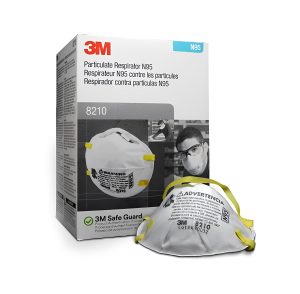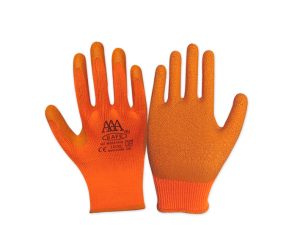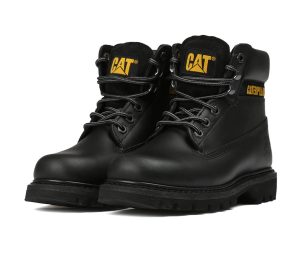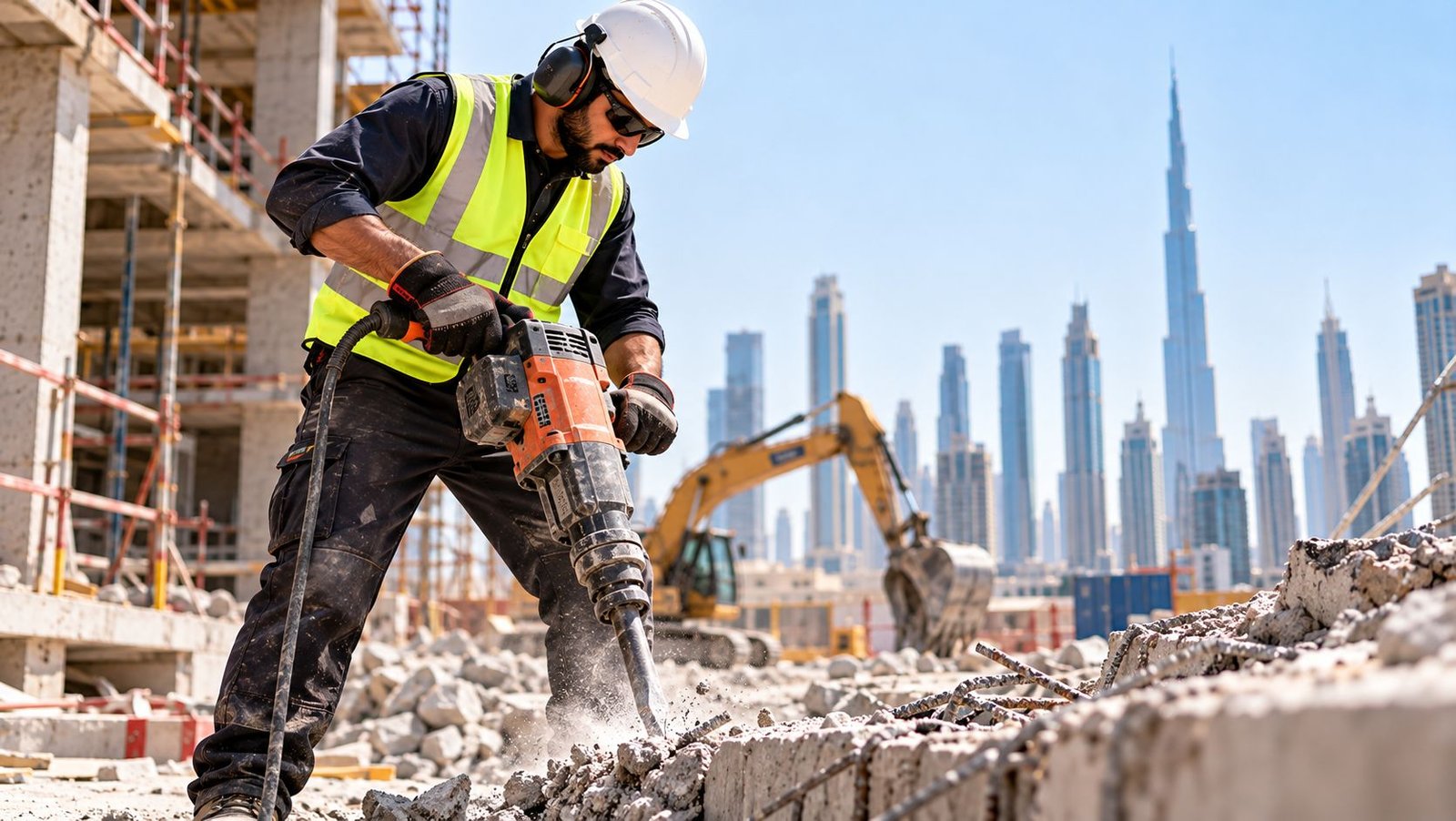
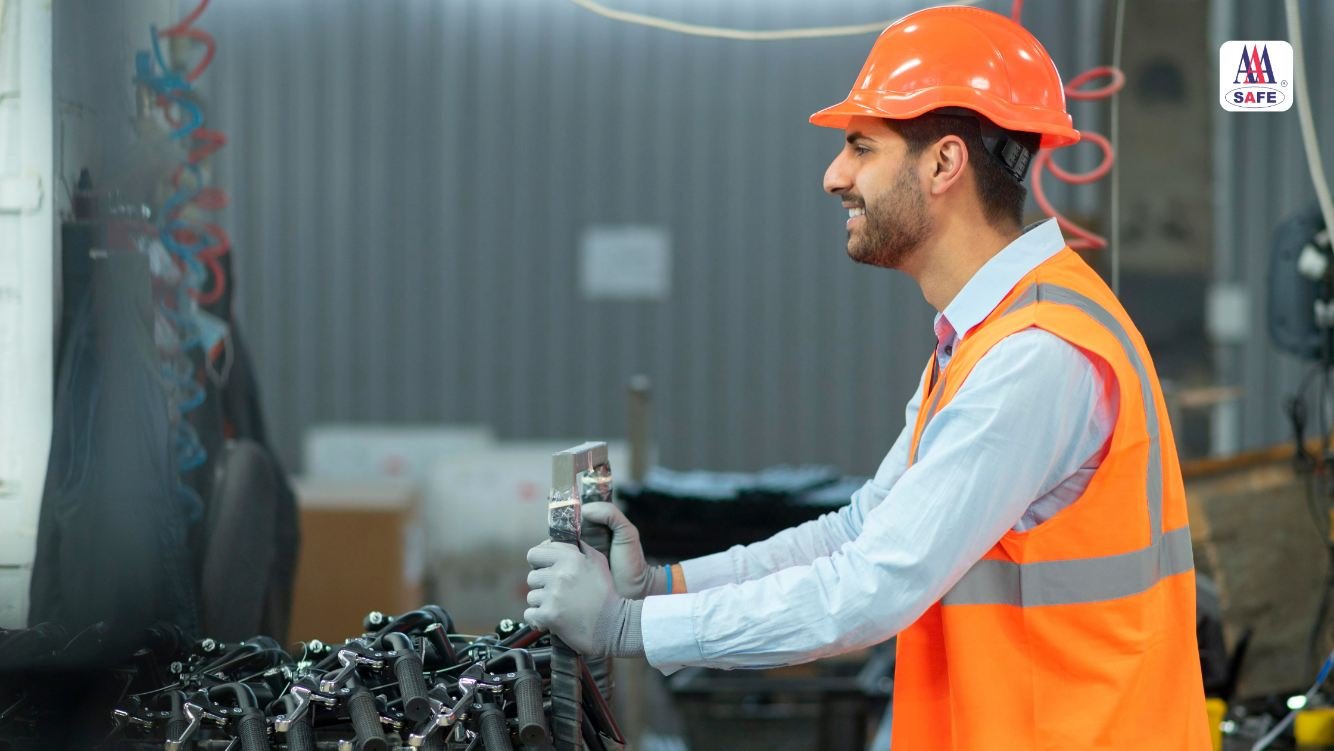
UAE automotive workers need specific protective gear including hand protection (cut-resistant and chemical-resistant gloves), eye protection (safety glasses with UV shields and welding helmets), respiratory protection (air-supplied respirators for painting, N95 for dust), hearing protection (earplugs or earmuffs for 85+ dB environments), heat-resistant clothing, and steel-toed boots. Workers face unique challenges from extreme heat, UV exposure, and combined industrial hazards requiring comprehensive protection programs meeting UAE Ministry standards.
What safety equipment needed to prevent injuries in automotive industries actually makes a difference when UAE automotive workers face hazards from heavy machinery, chemical exposure, and extreme heat operations daily? If you work in automotive manufacturing in Dubai, Abu Dhabi, or Sharjah, understanding the right protective gear becomes essential for workplace survival.
The automotive sector in UAE presents unique challenges where proper equipment literally saves lives and careers. From assembly lines in Dubai Industrial City to repair shops across the Emirates, knowing which safety gear prevents which injuries becomes critical. Both employers meeting UAE Ministry of Human Resources and Emiratisation requirements and workers protecting themselves during every shift need this knowledge.
Let me walk you through what actually protects automotive workers in UAE from the industry’s most common injuries.
Understanding Automotive Industry Injury Risks in UAE
What injuries happen most often in UAE automotive settings?
The data paints a clear picture for automotive facilities. Research shows the most common injuries in automotive manufacturing are sprains and strains (39% of total), lacerations (22%), and contusions (15%). These aren’t minor incidents either. Nearly half result in one or more lost workdays. A full 25% result in seven or more lost or restricted workdays.
Why do injury rates vary between UAE facilities? Even within similar plant types in Dubai and Abu Dhabi, injury rates can vary significantly. This variation proves that proper protective measures work. The right protective equipment can substantially reduce accident rates in UAE facilities when properly selected and used.
Common injury types requiring protective equipment
- Hand and finger injuries from sharp tools and machinery
- Eye injuries from flying debris and chemical splashes
- Heat-related injuries from UAE’s extreme summer temperatures (40-50°C)
- Burns from hot components and welding operations
- Hearing damage from prolonged noise exposure
- Respiratory issues from fumes and dust
- Musculoskeletal injuries from repetitive motions
What’s the most serious trend? Amputations, hernias, and fractures are most likely to result in work loss. Meanwhile, sprains and strains account for 65% of all lost workdays. This data shows why comprehensive protective gear matters for both preventing severe injuries and maintaining workforce productivity in UAE automotive facilities.
How do UAE automotive hazards differ from other regions?
UAE automotive workers face unique combinations of hazards not found in most other locations. They regularly encounter chemical exposures, extreme temperatures, heavy machinery, sharp metal edges, and loud noise levels all within single shifts.
What makes UAE automotive particularly challenging? According to the UAE Ministry of Human Resources and Emiratisation, workers handle hazardous chemicals like motor oil, brake fluid, refrigerants, and battery acids while operating heavy machinery in extreme heat. They work with sharp metal components simultaneously. This multi-hazard environment requires comprehensive protection rather than single-purpose gear. Additionally, outdoor work in UAE requires special consideration for heat stress and UV exposure.
Need help selecting the right protective equipment for your UAE automotive facility? AAA Safe Dubai specializes in workplace assessments across Dubai, Abu Dhabi, and Sharjah. They help employers and managers identify hazards and select appropriate gear meeting UAE Ministry requirements and international best practices.
Hand Protection for UAE Automotive Workers
Which gloves prevent common hand injuries in UAE conditions?
Hand injuries represent one of the most frequent automotive workplace accidents in UAE. Workers constantly handle sharp tools, hot components exposed to extreme ambient heat, chemicals, and heavy parts. The right glove selection depends on specific task hazards and UAE climate considerations.
Task-specific hand protection for UAE automotive work
| Work Activity | Recommended Glove Type | Protection Against | Replacement Schedule |
|---|---|---|---|
| Metal handling | Cut-resistant gloves | Sharp edges, burrs | When cut or torn |
| Chemical exposure | Chemical-resistant nitrile | Oils, solvents, cleaners | Daily for heavy use |
| Welding operations | Heat-resistant leather | Burns, sparks, extreme heat | When stiffened or damaged |
| Heavy machinery | Impact-resistant gloves | Crushing, pinching | Monthly inspection |
| Outdoor work | UV-resistant materials | Sun exposure | When degraded |
Can you use one glove type for everything in UAE? Absolutely not. Using the wrong glove type for a task can actually increase injury risk. For example, loose gloves near rotating machinery can cause serious entanglement injuries. Additionally, UAE’s heat requires breathable materials that don’t cause excessive hand sweating and loss of grip.
What about dexterity versus protection in hot conditions?
Here’s a common dilemma in UAE automotive work. Heavier protective gloves reduce dexterity and trap heat. This makes workers tempted to remove them for detailed tasks or comfort. What’s the solution? Modern cut-resistant gloves now offer both protection and flexibility. They use materials like Kevlar that maintain dexterity while preventing lacerations and allowing heat dissipation.
How do you know when to replace gloves in UAE conditions? Inspect gloves daily for tears, punctures, or degradation. UV exposure in UAE accelerates material breakdown faster than other regions. Chemical-resistant gloves lose effectiveness after prolonged exposure to solvents and heat. Cut-resistant gloves should be replaced immediately after any significant cut.
Eye and Face Protection Requirements for UAE Climate
Which eye protection handles UAE automotive hazards?
UAE automotive workers face multiple eye hazards. These include flying debris, chemical splashes, harmful UV rays during welding, intense desert sunlight, and bright lighting systems. Standard safety glasses don’t provide adequate protection for all these hazards, especially in UAE’s high-UV environment.
Comprehensive eye and face protection for UAE automotive work
- Safety glasses with UV protection and side shields for debris and dust
- Sealed goggles for chemical handling operations
- Face shields for grinding and welding tasks
- Welding helmets with proper shade ratings
- Tinted safety glasses for outdoor work in intense sunlight
Why aren’t regular safety glasses enough in UAE? They don’t provide sealed protection against chemical splashes. They don’t offer adequate coverage for grinding operations that generate high-speed particles. UAE’s intense sunlight requires additional UV protection beyond standard specifications. Tasks like grinding or welding require face shields in addition to safety glasses for comprehensive protection.
How do you select proper eye protection for UAE welding?
Welding in UAE presents special challenges requiring specific protection. Workers need auto-darkening welding helmets with appropriate shade numbers based on welding amperage. These protect against intense UV radiation, infrared radiation, and flying sparks. According to Dubai Municipality occupational health guidelines, ambient brightness in UAE requires helmets with higher shade numbers than cooler climates.
What’s the most common eye protection mistake in UAE? Workers removing protective eyewear between tasks or when moving between indoor and outdoor areas. This leaves them vulnerable during transitions and exposes eyes to intense UV radiation. Safety experts recommend keeping eye protection on whenever you’re in work areas, not just during active tasks.
Respiratory Protection for UAE Automotive Chemical Exposure
When is respiratory protection required in UAE automotive work?
UAE Ministry of Human Resources and Emiratisation regulations require respiratory protection for automotive workers. Workers face exposure to fumes from solvents and paints, dust from sanding, and gases from engine exhaust. UAE’s heat intensifies chemical vapor release, increasing exposure risks.
Respiratory protection by exposure type in UAE conditions
| Exposure Hazard | Protection Needed | Example Applications | UAE Consideration |
|---|---|---|---|
| Paint spray and fumes | Air-supplied respirator | Paint booth operations | Heat stress management |
| Welding fumes | P100 particulate filter | Metal fabrication | Increased ventilation needs |
| Sanding dust | N95 or better | Body work preparation | Desert dust infiltration |
| General solvent use | Organic vapor cartridge | Parts cleaning | Higher vapor concentrations |
What do UAE regulations actually require? According to the UAE Ministry of Human Resources and Emiratisation, automotive facilities must maintain written respiratory protection programs. They must conduct medical evaluations and perform fit testing. They must provide proper respirator cleaning and maintenance. Simply providing respirators without these supporting programs creates compliance violations.
How do you ensure respirators work in UAE heat?
Fit testing isn’t optional under UAE regulations. Respirators that don’t properly seal allow contaminants to bypass filtration. This negates their protective value. Workers must be clean-shaven where the respirator seals against the face. Fit testing must be repeated annually or whenever facial characteristics change.
Which respirator types work for UAE automotive tasks? For spray painting, air-supplied respirators provide the highest protection and help with heat management. For sanding and grinding, N95 or P100 particulate respirators filter dust. For solvent cleaning, respirators need organic vapor cartridges specific to the chemicals used. Heat stress from respirator use in UAE requires regular breaks and hydration.
Hearing Protection Standards for UAE Facilities
Why is hearing protection critical in UAE automotive facilities?
Pneumatic tools, engine testing equipment, and loud machinery easily expose UAE automotive workers to noise levels exceeding safe limits. Prolonged exposure without protection leads to permanent hearing damage or loss that’s irreversible.
What noise level triggers protection requirements in UAE? UAE Ministry regulations require hearing protection when noise levels exceed 85 decibels. According to Abu Dhabi OSHAD regulations, many automotive operations in Dubai and Abu Dhabi facilities regularly exceed this threshold. This makes hearing protection mandatory rather than optional.
Hearing protection options for UAE automotive workers
- Disposable foam earplugs (NRR 29-33 dB)
- Reusable silicone earplugs (NRR 25-27 dB)
- Earmuffs (NRR 25-31 dB)
- Electronic earmuffs allowing communication while protecting
Which type works best in UAE? This depends on the work environment and temperature. Earplugs provide better protection in hot UAE environments where earmuffs cause excessive discomfort and sweating. Electronic earmuffs allow workers to communicate while still protecting against loud impact noises, but require consideration for heat buildup.
Looking to implement a comprehensive hearing conservation program meeting UAE requirements? AAA Safe Dubai provides workplace noise assessments tailored to UAE automotive facilities. They ensure compliance with UAE Ministry requirements while protecting worker hearing for the long term in challenging climate conditions.
Body Protection and Protective Clothing for UAE Climate
What clothing prevents injuries in UAE automotive work?
UAE automotive tasks involve exposure to harmful chemicals, hot materials, extreme ambient temperatures, and physical hazards requiring full body protection. Regular work clothes don’t provide adequate safeguarding against these hazards, especially in UAE’s climate.
Body protection essentials for UAE automotive workers
- Lightweight, breathable flame-resistant coveralls for welding in hot conditions
- Chemical-resistant suits with ventilation for paint and solvent work
- Heat-resistant aprons for hot work
- Cut-resistant sleeves for metal handling
- Cooling vests for outdoor automotive work in summer
- UV-protective clothing for outdoor operations
Why are coveralls important even in UAE heat? Loose clothing presents serious entanglement hazards around rotating machinery. Proper coveralls fit closely enough to prevent catching while still allowing movement and heat dissipation. Modern materials designed for hot climates provide protection without excessive heat buildup.
How do flame-resistant garments work in extreme heat?
UAE automotive welding and hot work require flame-resistant clothing. These garments won’t ignite or continue burning when exposed to flames or sparks, even in high ambient temperatures. They’re treated with special chemicals or made from inherently flame-resistant materials that prevent serious burn injuries while managing heat stress.
What about chemical protection in UAE conditions? Chemical-resistant suits protect against splashes during painting, parts cleaning, and fluid handling. The suit material must be compatible with specific chemicals used and provide adequate ventilation for UAE’s climate. According to Emirates Authority for Standardization and Metrology (ESMA) guidelines, some chemicals become more volatile in high heat, requiring enhanced protection.
Foot Protection Requirements for UAE Automotive Facilities
Which footwear prevents workplace injuries in UAE conditions?
Foot injuries are common in UAE automotive environments. Workers risk heavy objects falling, sharp objects puncturing soles, or slipping on oil and fluid spills on hot surfaces. Proper footwear addresses these multiple hazards while managing heat and comfort in UAE climate.
Essential footwear features for UAE automotive workers
- Steel or composite toe caps protecting against 75 pounds of impact
- Slip-resistant soles effective on oil-covered and hot floors
- Puncture-resistant midsoles preventing nail penetration
- Electrical hazard protection for electrical work
- Chemical resistance for fluid exposure
- Breathable materials for heat management
- Heat-resistant soles for hot ground surfaces
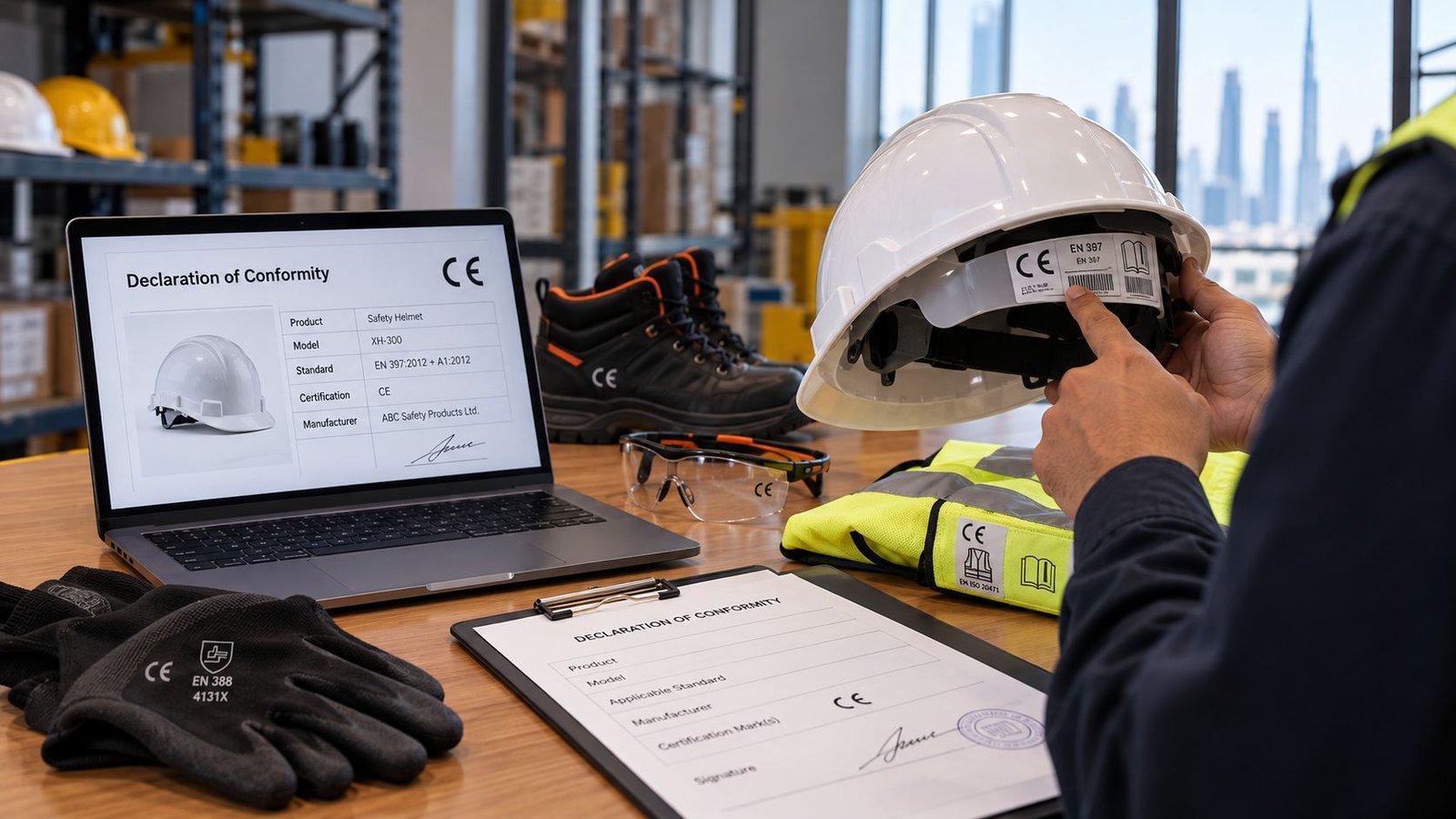
Can regular work boots provide adequate protection in UAE? Only if they meet ESMA (Emirates Authority for Standardization and Metrology) or international ISO standards for impact and compression resistance. Fashion work boots without ratings don’t protect against the crushing forces from dropped automotive components. Additionally, boots must handle UAE’s extreme temperatures without sole degradation.
What about specialized footwear for UAE automotive work?
Welders in UAE require additional protection from sparks and molten metal. Welding-specific boots feature metatarsal guards and high-top designs that prevent burns. However, these must be balanced with heat management needs. Workers in chemical areas need boots made from materials resistant to specific chemicals they encounter, with consideration for heat-accelerated chemical reactions.
Head Protection in UAE Automotive Facilities
When is head protection required in UAE facilities?
Automotive manufacturing plants in Dubai and Abu Dhabi, especially press shops, require helmets for protection from overhead cranes and machinery. This matters when moving and maintaining dies. Most automotive assembly lines require bump caps due to numerous overhead hazards from hanging air tools and when working under vehicles.
What’s the difference between hard hats and bump caps for UAE use? Hard hats protect against falling objects and high-impact hazards in manufacturing plants. They must be light-colored to reflect UAE’s intense sun during outdoor tasks. Bump caps provide protection against minor head bumps. They’re lighter and more comfortable for assembly line work where workers frequently work under vehicles in hot conditions.
Head protection selection for UAE automotive facilities
- Manufacturing plants need full hard hats meeting ESMA or ISO standards
- Assembly lines need industrial bump caps for overhead tool hazards
- Welding areas need welding helmets with proper eye protection
- Maintenance work needs hard hats when working under suspended loads
- Outdoor work requires light-colored, UV-resistant head protection
Why do UAE workers resist wearing head protection? Comfort and heat concerns make lighter bump caps preferable where full hard hats aren’t required. Modern bump caps offer lightweight protection with ventilation that workers will actually wear consistently in UAE’s hot climate.
PPE Selection and UAE Compliance Standards
What UAE standards apply to automotive facilities?
UAE Ministry of Human Resources and Emiratisation establishes specific requirements for automotive facilities. These cover hazard communication, PPE provision, training, and maintenance. According to UAE labour law, employers must provide appropriate protective equipment and ensure workers use it properly.
Core UAE requirements for automotive facilities
- Hazard assessment determining required PPE per UAE Ministry guidelines
- Provision of appropriate equipment at no cost to workers
- Training on proper selection, use, and maintenance
- Regular inspection and replacement programs
- Written programs for respiratory and hearing protection
- Heat stress management protocols for outdoor work
- Compliance with OSHAD requirements in Abu Dhabi
What happens if UAE facilities don’t comply? Ministry violations result in citations, fines, and potential facility closure. The most frequently cited violations in UAE automotive include inadequate respiratory protection, insufficient eye protection, improper heat stress management, and inadequate machine guarding.
How do you conduct proper hazard assessments in UAE?
UAE Ministry requires written hazard assessments identifying workplace dangers. These must specify appropriate protective gear for each hazard. This assessment must be documented and reviewed whenever new equipment, processes, or materials are introduced. In UAE, assessments must specifically address heat stress and UV exposure risks.
What should UAE assessments cover? Every work area and task in Dubai, Abu Dhabi, or Sharjah facilities. Identify chemical hazards, impact hazards, penetration hazards, compression hazards, heat hazards (both equipment and climate), UV radiation exposure, and harmful dust. The assessment results determine which specific protective equipment each job function requires in UAE conditions.
Safety Equipment Maintenance and Training Programs for UAE
How often should protective equipment be inspected in UAE conditions?
Daily inspections by workers before each shift catch damage that could compromise protection. UV exposure and heat in UAE accelerate equipment degradation. Employers must also conduct regular programmed inspections of all gear. Specific schedules depend on equipment type and UAE climate impact.
Inspection and replacement schedules for UAE automotive facilities
| Equipment Type | Daily Check | Scheduled Inspection | UAE Replacement Cycle |
|---|---|---|---|
| Safety glasses | Scratches, UV damage | Monthly | When scratched or UV-degraded |
| Gloves | Tears, heat degradation | Each use | Task-specific, heat-accelerated |
| Respirators | Seal, straps, cartridges | Before each use | Cartridges more frequently in heat |
| Hearing protection | Condition, seal | Weekly | Disposable daily, reusable monthly |
| Hard hats and bump caps | Cracks, UV damage | Monthly | Every 3 years in UAE (vs 5 elsewhere) |
Why is UAE maintenance more critical? Damaged or worn equipment provides false security while offering little actual protection. UV exposure in UAE degrades plastics and elastomers faster than temperate climates. Heat causes accelerated material breakdown. Scratched safety glasses reduce visibility and don’t protect against impacts as effectively as undamaged lenses.
What training ensures effective PPE use in UAE?
UAE Ministry requires comprehensive training. This covers when PPE is necessary, what PPE is necessary, and how to properly don and doff equipment in hot conditions. Training must address limitations, proper care and maintenance in UAE climate, and heat stress recognition. Training must be documented and repeated when new hazards or equipment are introduced.
How do you verify training effectiveness in UAE facilities? Workers must demonstrate proper use, not just attend training sessions. Practical demonstrations during training and regular spot checks during operations ensure workers actually apply what they’ve learned. Special attention to heat stress management and hydration protocols is essential for UAE automotive facilities.
Ready to develop comprehensive training programs for your UAE automotive facility? AAA Safe Dubai offers customized training specifically designed for automotive facilities in Dubai, Abu Dhabi, and across the Emirates. They provide hands-on instruction ensuring workers understand both how to use equipment and why it matters for their protection in UAE’s unique climate.
Cost-Benefit Analysis of Protective Equipment Investment in UAE
Does quality equipment really reduce costs in UAE automotive facilities?
Absolutely. While quality protective gear costs more upfront, the return on investment comes through reduced injury rates. You save on lower workers’ compensation costs, decreased downtime, and improved productivity in UAE operations.
What are the hidden costs of inadequate protection in UAE? Beyond direct medical costs and workers’ compensation, injuries result in lost productivity. You pay overtime for replacement workers, spend money training new workers, face UAE Ministry fines, and deal with increased insurance premiums. A single serious injury can cost UAE facilities tens of thousands of dirhams beyond immediate medical treatment.
Investment comparison example for UAE automotive facilities
- Quality cut-resistant gloves cost AED 55-90 per pair
- Average hand laceration treatment costs AED 11,000-29,000
- Lost productivity from hand injury runs AED 18,000-55,000 per week
- Prevention ROI shows one prevented injury pays for gloves for entire department
- Additional savings from avoiding Ministry fines and facility shutdowns
How do programs impact productivity in UAE? Workers using proper protective gear work more confidently and efficiently. This actually improves productivity while reducing injury rates, even in challenging UAE climate conditions. Comprehensive workplace protection pays for itself through avoided costs and improved operations.
Frequently Asked Questions About Safety Equipment in UAE Automotive Industries
UAE automotive facilities must provide safety glasses with UV protection, gloves appropriate for tasks and climate, hearing protection when noise exceeds 85 dB, and respiratory protection for chemical and particulate exposure. Steel-toed boots meeting ESMA standards, protective clothing for chemical and heat hazards, and heat stress management equipment are required according to UAE Ministry requirements. The specific equipment depends on job tasks and hazards present in Dubai, Abu Dhabi, or Sharjah facilities.
Replacement in UAE occurs more frequently due to heat and UV exposure. Safety glasses should be replaced when scratched or showing UV degradation. Gloves require replacement when torn, punctured, or after significant chemical exposure and heat damage. Respirator cartridges must be replaced more frequently in UAE heat. Hard hats and bump caps need replacement every three years in UAE versus five years in temperate climates, or sooner if damaged.
UAE Ministry requires employers to provide necessary PPE at no cost to workers. While workers may prefer personal equipment, employers remain responsible for ensuring all gear meets ESMA or international standards and is properly maintained. Some exceptions exist for ordinary clothing and personal prescription frames for glasses, but all equipment must meet UAE requirements.
Manufacturing facilities in Dubai Industrial City or Abu Dhabi typically face higher hazard levels requiring more comprehensive protection. This includes full hard hats, heat-resistant clothing for welding operations, and respiratory protection for spray operations. Repair shops across Emirates focus more on hand protection, eye protection, and protection against occasional chemical exposure. However, all facilities must address UAE-specific heat stress and UV exposure risks regardless of type.
Select properly fitted, breathable gear designed for hot climates that workers will actually wear. Modern equipment offers significantly better comfort and heat management than older designs. Involve workers in selection processes and provide multiple size options. Explain how equipment prevents specific injuries they might experience. Implement cooling breaks and hydration protocols. Regular training reinforcing the importance of consistent use also improves compliance in UAE conditions.
Spray painting requires air-supplied respirators or powered air-purifying respirators (PAPRs) due to high solvent exposure levels. Simple cartridge respirators don’t provide adequate protection for spray booth operations. Additionally, UAE facilities must provide ventilation appropriate for hot climates, written respiratory protection programs, medical evaluations, and fit testing per UAE Ministry requirements. Heat stress management during respirator use is critical.
UAE follows Federal Law No. 8 of 1980 and UAE Ministry regulations, with additional OSHAD requirements in Abu Dhabi. Other GCC countries have similar frameworks through GSO (GCC Standardization Organization) standards. Multinational automotive companies in UAE typically adopt the most stringent applicable standards across all GCC facilities to ensure consistent worker protection. ESMA standards apply across all Emirates.
Since sprains and strains account for significant injuries, ergonomic equipment and proper lifting devices prevent more injuries than any single PPE type. However, for preventable traumatic injuries in UAE, cut-resistant gloves, safety glasses with UV protection, and heat stress management equipment prevent the most frequent acute injuries. Hydration systems and cooling equipment are uniquely important in UAE conditions.
Important Notice This guide provides general information about workplace safety equipment in UAE automotive industries based on UAE Ministry requirements and international best practices. Always conduct facility-specific hazard assessments and consult with professionals familiar with UAE operations. Requirements may vary based on specific processes, chemicals, and equipment used in Dubai, Abu Dhabi, and other Emirates. Verify current regulations at mohre.gov.ae and dm.gov.ae for official requirements.
mohre.gov.ae and dm.gov.ae for official requirements.
Understanding protective equipment requirements in UAE goes beyond simple compliance with regulations. Automotive workers in UAE face unique combinations of industrial hazards and extreme climate conditions. This makes comprehensive protection essential rather than optional. The right combination of hand protection, eye and face protection with UV ratings, respiratory protection, hearing protection, climate-appropriate protective clothing, and proper footwear addresses the multiple hazards UAE automotive workers encounter daily.
Success in UAE automotive workplace protection requires systematic hazard assessment addressing both industrial and climate risks, appropriate equipment selection for hot conditions, comprehensive training including heat stress management, regular maintenance accounting for accelerated degradation, and ongoing monitoring to ensure continued effectiveness. Quality protective equipment provides returns through reduced injury rates, lower workers’ compensation costs, improved productivity, and most importantly, workers who return home safely at the end of every shift in Dubai, Abu Dhabi, and across the Emirates.
Ready to ensure your UAE facility has appropriate protective equipment for automotive workplace hazards?
Consult with certified professionals who understand UAE-specific automotive hazards, climate challenges, and can recommend equipment solutions meeting UAE Ministry requirements and your facility’s unique operational needs in the Emirates.