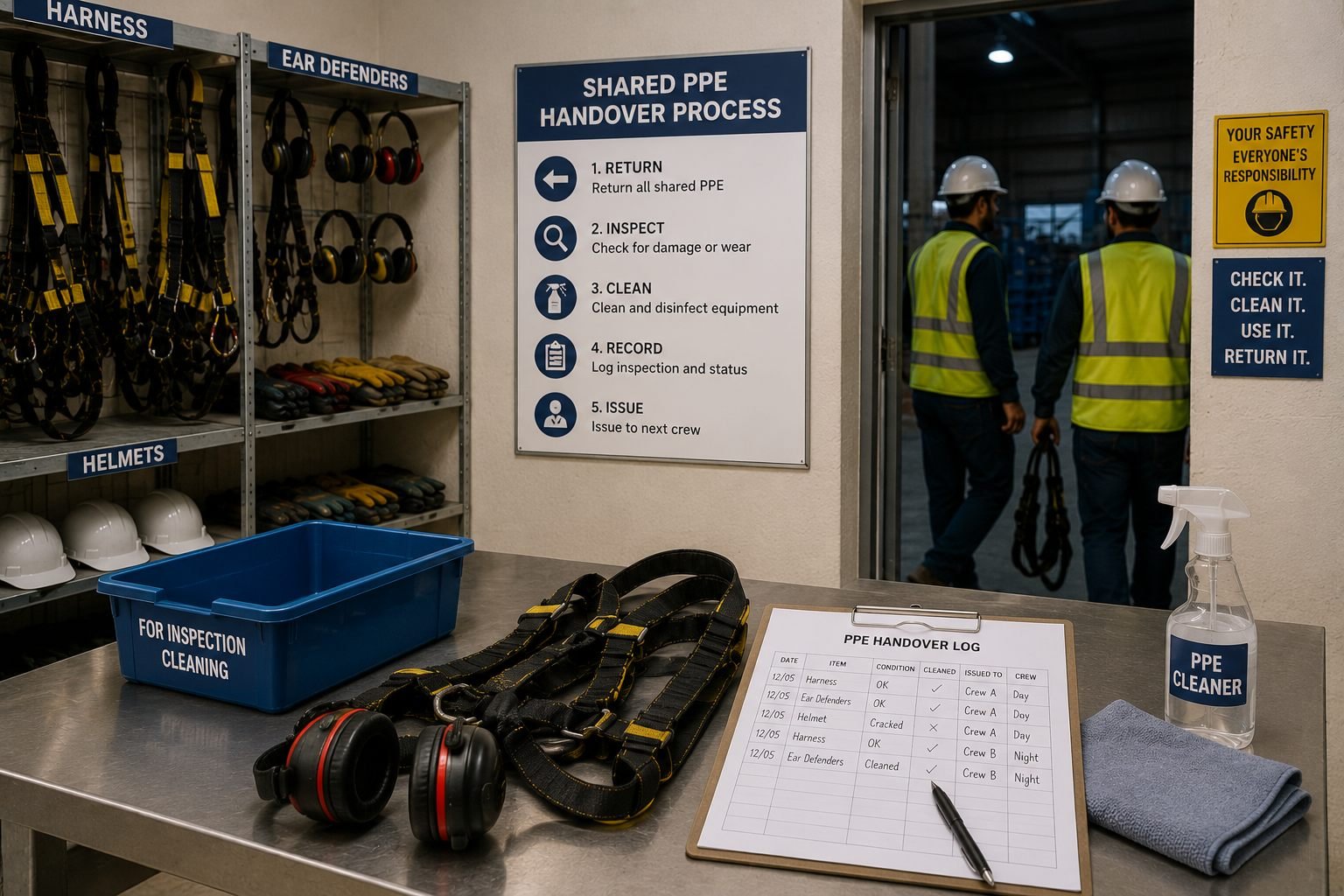
A day crew finishes a shift at a warehouse in Dubai and drops the harnesses and ear defenders into a bin by the door. The night crew picks them up an hour later. Nobody checked the gear in between. One harness took a shock load earlier that day when a worker slipped and the lanyard caught him. It looks fine. The night worker clips into it at height. The webbing that already absorbed one fall is the only thing between him and the floor.
Shared equipment fails in ways personal kit does not. When one person owns a helmet, they notice the crack and report it. When a helmet passes between four crews a week, the damage hides in the handover. Nobody feels responsible for gear that belongs to everyone, so the daily checks slide, the cleaning slides, and the worn item stays in service long after it should have left. The protection erodes quietly.
UAE law does not lower the bar because the gear is shared. The federal labour law on workplace health and safety and the supporting framework expect employers to keep protective equipment in working condition for every worker who uses it. To handle shared safety equipment between work crews, a business needs a system that fixes accountability, cleans between users, inspects at each handover, and tracks the gear across shifts. This guide sets out that system.
Running multiple crews off the same equipment in the Emirates? A supplier that stocks durable, certified PPE built for shared use keeps depth ready across Dubai, Abu Dhabi, and Sharjah. Speak to the team about a shared equipment setup.
Why shared equipment is a different problem
How a business chooses to handle shared safety equipment between work crews shows whether its system depends on individuals or on process. Personal issue relies on the owner. Shared use has no owner, so the process has to carry the weight.
No single person feels responsible
A worker protects gear they think of as theirs. Gear that belongs to the company and passes through many hands gets treated as nobody’s job. The system has to assign the responsibility that ownership would otherwise supply.
Damage hides in the handover
A fault that one user would spot and report slips through when the item changes hands without a check. Across Dubai, Abu Dhabi, and Sharjah, the gap between shifts is where worn equipment stays in service. Closing that gap is the whole task.
What UAE law expects when crews share gear
Before building a system, ground it in the rules across the Emirates. The duties sit in federal law and emirate-level frameworks.
The federal duty of care
The private sector labour law requires employers to provide a safe environment and protection kept fit for use. The duty set out in Federal Decree Law No. 33 of 2021 covers shared gear in full. Equipment that degrades unchecked breaches the same duty as no gear at all.
Ministry oversight
The Ministry that enforces workplace safety for most private sites publishes worker protection guidance. An inspector may ask how you handle shared safety equipment between work crews and whether handovers and inspections are logged.
Emirate-level frameworks
Abu Dhabi runs its occupational health system through the Abu Dhabi public health authority, which treats hygiene as part of workplace health. Dubai Municipality sets its own site requirements. Sharjah aligns with the federal rules. A business working across emirates needs one system that meets the strictest of them.
Close the accountability gap
The core failure of shared gear is that no one owns it. Fix that first, before any cleaning or tracking.
Name an owner for the system
The gear has no personal owner, so the system needs a named one. A shift lead or store keeper signs the equipment out, takes it back, and runs the check. Responsibility moves from the worker to the role.
Decide what should be shared at all
Some items suit sharing and some do not. The table below sorts common gear by whether sharing fits.
| Equipment | Shared or Personal |
|---|---|
| Hard hats (cleaned between users) | Shared with hygiene control |
| Ear defenders | Shared with cleaning |
| Disposable earplugs | Personal, single use |
| Fall harness | Shared with documented inspection |
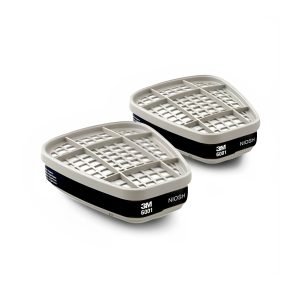
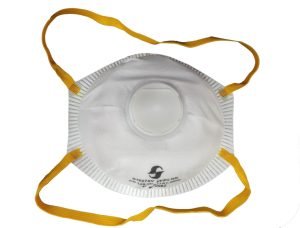
| Respirator face piece | Personal where possible |
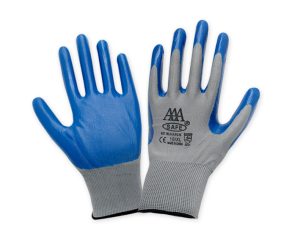
| Cut gloves | Personal where possible |
| High visibility vest | Shared with cleaning |
Match sharing to the hazard
A vest passing between crews carries low risk. A harness passing between crews carries high risk and needs a documented check every time. Tie the control to the consequence of failure.
Set up a shared equipment system
A clear system to handle shared safety equipment between work crews turns a chaotic bin by the door into a controlled handover. Build it around a single point of sign-out.
Sign out, sign in
Run the gear through a store or a board where each item is signed out to a crew and signed back at the end of the shift. This single step creates the record and the accountability that sharing otherwise lacks.
Mark and number the items
Give each shared item an ID so it can be traced through the log. A numbered harness links to its inspection record. An unmarked one disappears into the pool. You can source certified, reusable PPE rated to EN and ANSI references for sites across the Emirates.
Brief every crew on the rules
A worker who uses shared gear needs to know the check, the clean, and the report rule. Language gaps are common across UAE sites, so a short physical demonstration carries further than a notice on the wall.
Manage hygiene between users
Shared gear touches skin, hair, and breath. Hygiene is part of the protection, not a nicety.
Clean by item type
Different items need different cleaning. The table below shows a workable approach.
| Item | Hygiene Approach |
|---|---|
| Hard hats | Wipe sweatband and shell between users |
| Ear defenders | Wipe cushions, use hygiene covers |
| Vests | Launder on a schedule |
| Shared respirators | Clean face piece, replace filter |
| Goggles | Wipe and anti-fog between users |
Use disposables where they fit
Disposable hair nets under shared helmets and single-use earplugs remove the hygiene worry on items that touch sensitive areas. They cost little against the alternative.
Set a cleaning owner
Name who cleans and when, the same way you named who signs the gear out. Hygiene that depends on goodwill fails on a busy Dubai shift.
Managing hygiene across rotating crews in Dubai or Sharjah? A range of helmets, ear defenders, and vests suited to cleaning and reuse covers shared setups, with disposables to match. Send your crew details for a recommendation.
Inspect at every handover
The handover is where shared gear either gets checked or gets ignored. Make the check part of the exchange, not an afterthought.
A quick check on every exchange
When gear changes hands, the person signing it out gives it a visual check. A cracked shell, a frayed strap, a torn glove comes out of service on the spot. This catches the damage that hides between shifts.
Documented inspection for high-risk gear
Fall arrest equipment needs documented inspection by a competent person at set intervals, on top of the daily check. A harness that took a shock load comes out of service whether or not it looks damaged. This matters for any work at height on Dubai and Abu Dhabi projects.
Pull and tag faulty items
Track shared gear with records
A rotating pool makes records harder and more important. Records are how you prove you handle shared safety equipment between work crews to a standard. If it is not written down, you cannot show the gear was fit when the crew used it.
Log the handover
Record which crew held which item across which shift. For high-risk gear, log the inspection result too. This links each item to a crew and a date.
The table below shows useful fields for a shared equipment log
| Field | Why It Matters |
|---|---|
| Item ID | Traces the specific piece |
| Crew or shift | Names who held it |
| Date and time out and in | Tracks the handover |
| Condition check result | Flags damage early |
| Inspector signature (high-risk) | Confirms the formal check |
Keep the format current
A board works for a small Sharjah site. A spreadsheet or app suits a business running several Dubai sites with crews moving between them. A log that lags reality protects nobody.
Build shift handover protocols
Shared gear lives or dies at the shift change. A clear handover routine keeps the protection intact across the boundary.
Hand over the gear, not just the bin
The outgoing shift lead and the incoming one run the handover together where the schedule allows. The gear, the log, and any flagged items pass across with a word, not in silence.
Flag what happened on shift
If a harness took a load or a helmet took a knock during the shift, that note travels with the gear. The next crew should never inherit a hidden incident.
Restock for the next crew
Top up disposables and clean items so the incoming crew finds the pool ready. A pool that runs short becomes the reason someone skips the gear.
Store shared equipment to support reuse
Storage that supports sharing keeps the gear findable, clean, and in date. A heap in a corner does the opposite.
Organise by item and size
Sort the store so a crew finds the right size fast at shift change. Hunting for a medium helmet while the shift waits invites the wrong-size shortcut.
Protect from heat and damage
Heat degrades webbing and plastics. A store out of direct sun protects shelf life, which matters in the UAE climate, and ventilated helmets and breathable vests suit the conditions across the Emirates. Fire and evacuation readiness feeds into site safety too, and the Dubai authority for fire and civil protection sets site expectations.
Separate clean from used
Keep returned, unchecked gear apart from cleaned, ready gear. A clear split stops a dirty or faulty item going straight back out.
Common mistakes when businesses handle shared safety equipment between work crews
Most shared gear failures repeat a few errors. Designing around them closes the gap.
Leaving gear in a free-for-all bin
A bin with no sign-out has no accountability and no record. Run shared gear through a controlled handover instead.
Skipping the handover check
Gear that changes hands without a check carries hidden damage into the next shift. The quick check belongs in every exchange.
Ignoring hygiene
Shared helmets and ear defenders that never get cleaned spread skin and ear problems across a crew. Set a cleaning owner and a schedule.
Reusing harnesses without inspection
A harness that took a shock load looks fine and is not. Documented inspection and a strict out-of-service rule are not optional for fall gear.
Keeping no log
Without a handover log, you cannot say which crew used which item or whether it was fit. The gap surfaces during an incident review.
Mixing clean and faulty stock
A faulty item dropped back in the pool gets grabbed by the next crew. Tag it out and store it apart.
Setting up a shared equipment system across your UAE sites? Certified PPE built for reuse comes in the quantities, sizes, and disposables a multi-crew operation needs across Dubai, Abu Dhabi, and Sharjah. Request a quote to match stock to your crews.
Frequently Asked Questions
It means running pooled gear through a controlled system that fixes accountability, cleans between users, inspects at each handover, and logs the movement across shifts. The process meets the employer duty set out under Federal Decree Law No. 33 of 2021.
Items like helmets, ear defenders, and vests can be shared with cleaning and checks. Items that touch sensitive areas, such as disposable earplugs and respirator face pieces, suit personal issue. Harnesses can be shared only with documented inspection.
Name a role to own the system, such as a shift lead or store keeper, who signs the gear out, takes it back, and runs the check. Responsibility moves from the individual to the role.
Wipe sweatbands and ear cushions between users, use hygiene covers and disposable hair nets, and launder vests on a schedule. Name a cleaning owner so hygiene does not depend on goodwill.
Yes, with control. A shared harness needs documented inspection by a competent person and a strict rule that any harness which took a shock load comes out of service, whether or not it looks damaged.
Log each handover by item ID, crew, date and time, condition check, and inspection result for high-risk gear. The record links each item to a crew and shows it was fit when used.
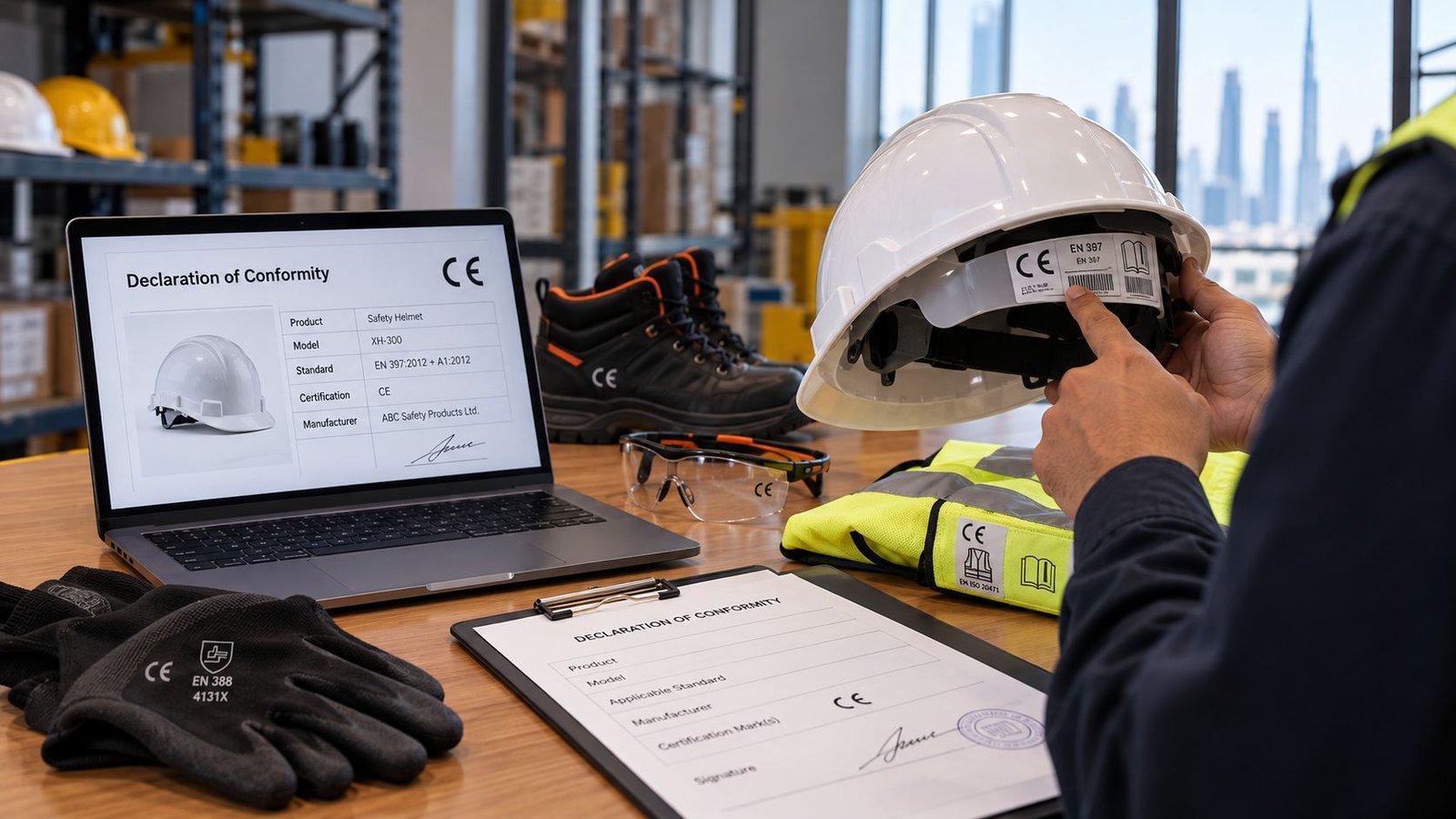
Look for recognised marks such as EN or ANSI references suited to each hazard. A helmet to EN 397 or a harness to EN 361 tells you the gear performs as claimed.
Yes. AAA Safe supplies certified safety equipment across the Emirates, including durable helmets, ear defenders, vests, and harnesses suited to reuse, plus disposables for shared setups. As a supplier, it helps businesses handle shared safety equipment between work crews with the right stock and sizes. You can reach the team to plan a setup.
Closing Thoughts
Shared gear saves cost and creates a quiet risk at the same time. The harness with a hidden fall, the helmet nobody cleaned, the cracked shell that passed through four crews unreported. Each one traces back to the same root, gear that belongs to everyone and so to no one.
Businesses that handle shared safety equipment between work crews well replace ownership with process. A named owner, a check at every handover, a clean between users, a log that travels across shifts. The law across Dubai, Abu Dhabi, and Sharjah expects the gear to stay fit for whoever wears it next. The inspector will ask how you prove it. The crew that clips into a harness someone checked an hour ago is the reason the system is worth running. Build it once, hold the routine through every shift change, and shared gear stops being the weak point in your site safety.
Disclaimer
This article is for general information and does not replace legal, regulatory, or professional safety advice. AAA Safe Dubai is a supplier of safety equipment and PPE and does not provide installation, inspection, or consultancy services. Employers remain responsible for compliance with all applicable UAE laws and standards.
Regulatory requirements change. Confirm current obligations with the relevant authorities before acting on any guidance here. Useful references include the UAE Government Portal for Federal Decree Law No. 33 of 2021, the Ministry of Human Resources and Emiratisation, Dubai Municipality, the Abu Dhabi Public Health Centre, and Dubai Civil Defence.
Product standards and inspection intervals vary by manufacturer. Always follow the instructions supplied with each item. Any tables in this article give general guidance and not product-specific direction.
The mention of standards such as EN, ANSI, and ISO is for reference and does not imply endorsement by any standards body. Verify the marking on each product against the current published standard.
This content reflects general practice at the time of writing. It may not cover every site condition, crew structure, or hazard. A competent safety professional should assess your specific workplace.
AAA Safe Dubai accepts no liability for actions taken based on this article. Use it as a starting point and seek qualified advice for your circumstances.