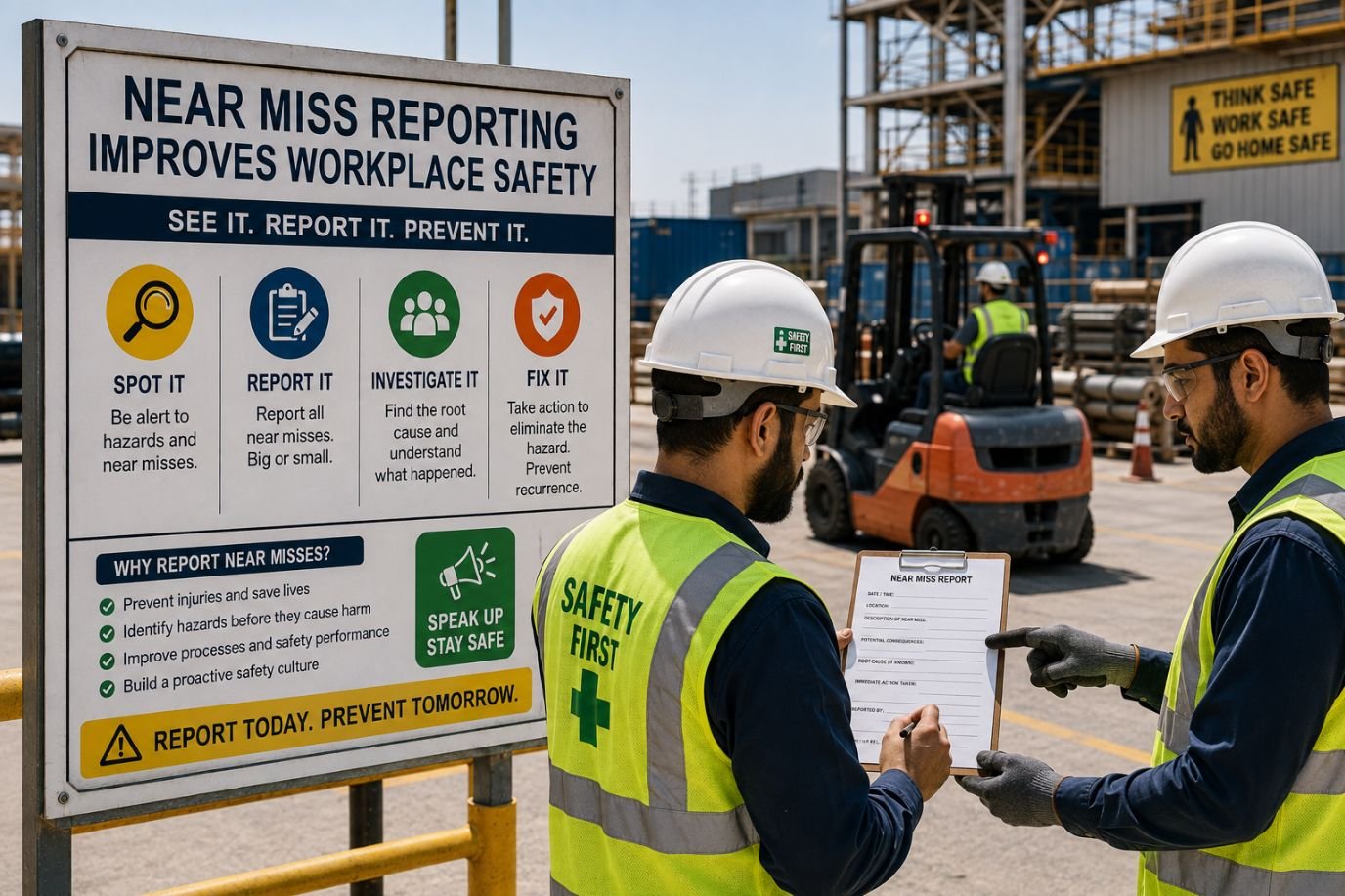
A near miss is an unplanned event that could have caused injury or damage but did not. A dropped spanner that lands beside a worker instead of on them. A forklift that stops a metre short. Near miss reporting turns those moments into data instead of luck.
Sites across the UAE that log near misses consistently find hazards weeks before those hazards produce injuries. Sites that do not log them discover the same hazards through incident reports. The difference between the two approaches is a functioning reporting system and a workforce willing to use it.
Why near miss reporting changes outcomes
Injuries are rare events. Near misses are common ones. Studying the common event gives you far more information than waiting for the rare one.
The volume advantage
A UAE construction site might record two lost-time injuries in a year. The same site could record two hundred near misses in the same period if reporting works. Two hundred data points reveal patterns that two cannot.
The cost advantage
Fixing a hazard identified through near miss reporting costs the price of the fix. Fixing the same hazard after an injury adds medical cost, lost production, investigation time and possible regulatory action.
The regulatory advantage
MOHRE and Emirate-level inspectors look for evidence of active hazard management. A live near miss log with closed corrective actions is stronger evidence than a clean injury record alone.
Practice 1. Define What Counts Before You Ask for Reports
Workers cannot report what they cannot recognise. Vague definitions produce vague reporting.
Write a plain definition.
State it in one sentence. Any event that could have caused injury, illness or damage but did not. Post that sentence at the reporting point in English and Arabic, plus the main languages spoken on site.
Give worked examples.
Abstract definitions fail. Concrete examples work. A tool falling from height into an empty area. A worker stepping onto a floor opening covered by loose board. A chemical splash caught by a face shield instead of skin.
Separate near miss from hazard observation.
A near miss involves an event. A hazard observation involves a condition. Both matter, and both should be reportable, but mixing them makes analysis harder. Keep two boxes on the same form.
Practice 2. Remove Every Barrier to Reporting
Every extra step between the worker and the report costs you data.
Cut the form to one side of paper.
Name optional. What happened. Where. When. What could have gone wrong. That is enough for triage. Detail comes during investigation.
Allow anonymous submission.
Some workers will only report anonymously, particularly where subcontractor relationships complicate things. Accept the loss of follow-up detail in exchange for the report.
Put reporting points where work happens.
A box in the site office serves the site office. Put boxes at rest areas, at the gate and at each work front. Where sites use marked hazard zones, keep reporting points beside the signage board installations already in place.
Accept verbal reports.
A supervisor writing down what a worker says is a valid report. Insisting on written submission from a workforce with mixed literacy levels loses the reports you need.
Practice 3. Guarantee No Blame in Writing
This is the practice that determines whether the other six matter.
State the guarantee in policy.
Write that near miss reports will not be used for disciplinary purposes. Have senior management sign it. Repeat it at every induction and every toolbox talk on the topic.
Handle wilful breaches separately.
Deliberate rule-breaking still requires a disciplinary route. Keep that route entirely separate from the reporting channel and explain the distinction clearly.
Test the guarantee publicly.
The first time a report implicates a supervisor is the moment your system either survives or dies. Handle it without blame, visibly, and reporting volume will rise.
Practice 4. Classify Reports Consistently
Unclassified reports become an unread pile. Classification turns them into a hazard profile.
| CATEGORY | EXAMPLE | TYPICAL CORRECTIVE ACTION |
|---|---|---|
| Fall from height | Unprotected edge, missing guardrail | Physical barrier, harness issue, permit review |
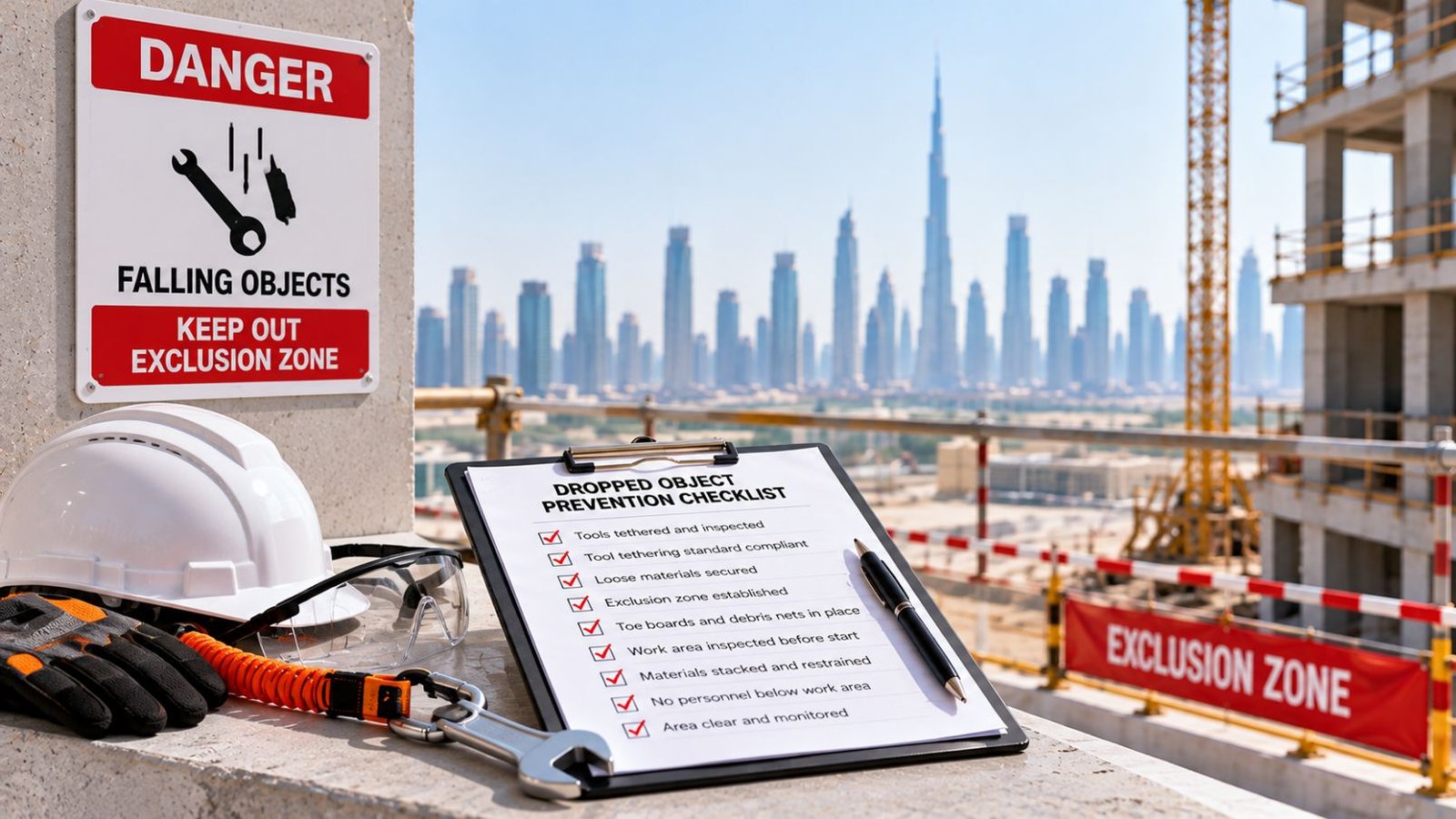
| Dropped object | Tool falls from scaffold level | Tool lanyards, exclusion zone, netting |
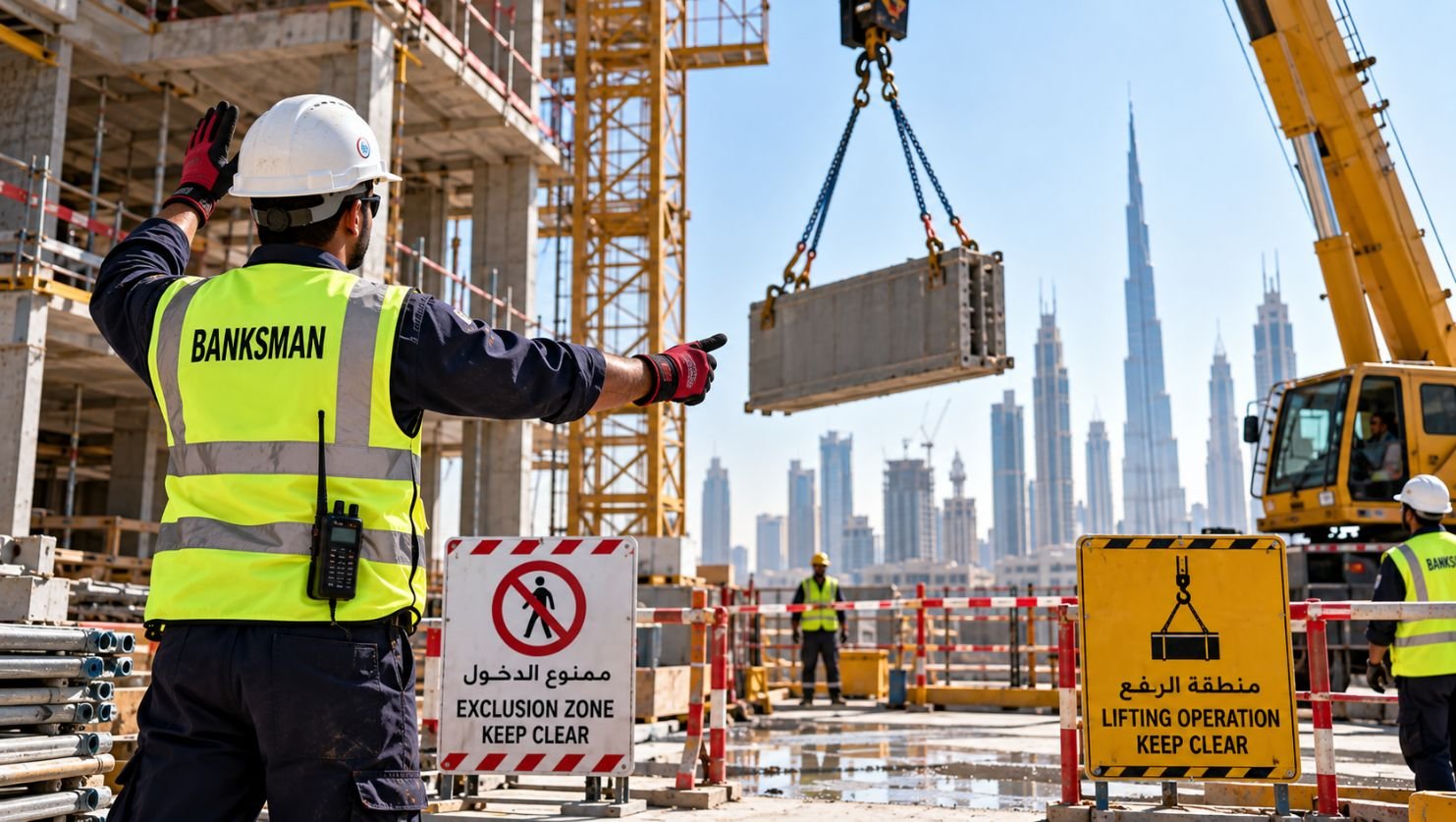
| Struck by | Reversing vehicle stops short | Banksman, traffic plan, high-visibility clothing |
| Slip trip fall | Cable across walkway | Cable covers, housekeeping, floor marking |
| Electrical | Live panel found unlocked | Lockout tagout review, panel labelling |
| Chemical | Splash caught by face shield | Containment, decant procedure, eye protection |
| Manual handling | Load slips during lift | Mechanical aid, two-person lift, grip gloves |
| Confined space | Entry without gas check | Permit enforcement, detector calibration |
Practice 5. Investigate to Cause, Not to Blame
The purpose of investigation is a corrective action, not a name.
Ask why five times.
A worker tripped on a cable. Why was the cable there. Why was it not covered. Why were covers unavailable. Why was stock not replenished. Why was the reorder trigger never set. The fifth answer is where the fix lives.
Match investigation depth to potential severity.
A near miss that could have killed someone deserves the same investigation rigour as an actual injury. A minor near miss needs a five-minute review. Grade the response.
Record the actual fix.
Corrective actions that read “reminded workers to be careful” are not corrective actions. Record a physical change, a procedural change or a training change with an owner and a date.
Practice 6. Close the Loop and Show the Result
Reporting systems die of silence.
Publish weekly.
A single notice board showing reports received, actions taken and actions closed keeps the system visible. Photographs of the fix work better than text for multilingual crews.
Feed near misses into toolbox talks.
Last week’s near miss is this week’s talk topic. Nothing holds attention like an event the crew recognises.
Report upward too.
Site leadership should see near miss trends monthly. Rising reports with falling severity is the pattern you want. Guidance on structuring that review sits alongside our structuring a monthly equipment review.
| MISTAKE | EFFECT | CORRECTION |
|---|---|---|
| Setting reporting targets | Invented reports, useless data | Encourage without quotas |
| Chasing zero reports | Hides a reporting failure | Treat a sudden drop as a warning |
| Letting actions age | Teaches workers reporting achieves nothing | Owner and deadline on every action |
| Excluding subcontractors | Highest exposure group goes unheard | Extend system at onboarding |
Practice 7. Review Trends Quarterly and Act on Them
Individual reports fix individual hazards. Trends fix systems.
Look for repeat categories.
Three dropped-object near misses in a quarter on the same level points to a system gap, not three unlucky workers.
Look for repeat locations.
Cluster reports by area. A single stairwell generating slip reports needs anti-slip treatment, not repeated warnings.
Compare across sites.
Companies running several sites across Dubai, Abu Dhabi and Sharjah can benchmark reporting rates. A site with far fewer reports than its peers usually has a reporting problem, not a safety advantage.
Feed findings into procurement.
If chemical splash near misses keep appearing, review eye and face protection specification. Trends should influence what you buy, and equipment selection across manufacturing safety equipment categories should follow the hazard profile the reports reveal.
Common Mistakes and How to Equip the Programme
Setting reporting targets
Target-driven reporting produces invented reports. Encourage reporting without quotas.
Chasing zero
Zero near miss reports means zero reporting, not zero hazards. Treat a sudden drop as a warning.
Letting actions age
An open corrective action list that never shrinks teaches workers that reporting achieves nothing.
Ignoring subcontractors
Subcontracted crews often face the highest exposure and report the least. Extend the system to them explicitly, and cover it during onboarding as described in our worksite inspection preparation guide.
Equipping the programme
A reporting system needs physical infrastructure. Reporting boxes, bilingual notices, hazard marking, barrier systems and the corrective-action equipment that follows investigation.
AAA Safe Team supplies signage, tapes, marking systems, barriers and personal protective equipment across the UAE, with delivery to Dubai, Abu Dhabi, Sharjah and the northern Emirates. Our team provides itemised quotations covering equipment and installation. Browse the signage and marking product range or contact our specialists to discuss your requirements.
Frequently Asked Questions
A near miss is an unplanned event that had the potential to cause injury, illness or damage but did not. It differs from a hazard, which is a condition instead of an event.
Offer anonymity as an option. Named reports allow follow-up questions, but some workers will only report anonymously, and those reports are worth having.
Federal and Emirate-level regulation requires employers to identify and control workplace hazards. Near miss reporting is a recognised method of meeting that duty instead of a separately mandated procedure.
Investigation depth should match potential severity. A supervisor can close a minor report. Events with serious potential warrant HSE involvement and formal root cause analysis.
Guarantee no blame in writing, keep the form short, accept verbal and anonymous reports, and publish what changed as a result. Visible outcomes drive repeat reporting.
An incident caused harm or damage. A near miss did not, despite having the potential to. Both should be investigated, with depth matched to severity.
Present trends instead of individual reports. Show report volume, category distribution, location clusters and the status of corrective actions.
Disclaimer
This article offers general guidance on near miss reporting for workplaces in the UAE. It is not legal or regulatory advice and does not substitute for a site-specific risk assessment carried out by a competent person.
Reporting obligations and inspection expectations vary by Emirate and by sector, and regulations change over time. Confirm current requirements with the relevant authority.
Consult a qualified health and safety professional when designing or auditing a reporting system.