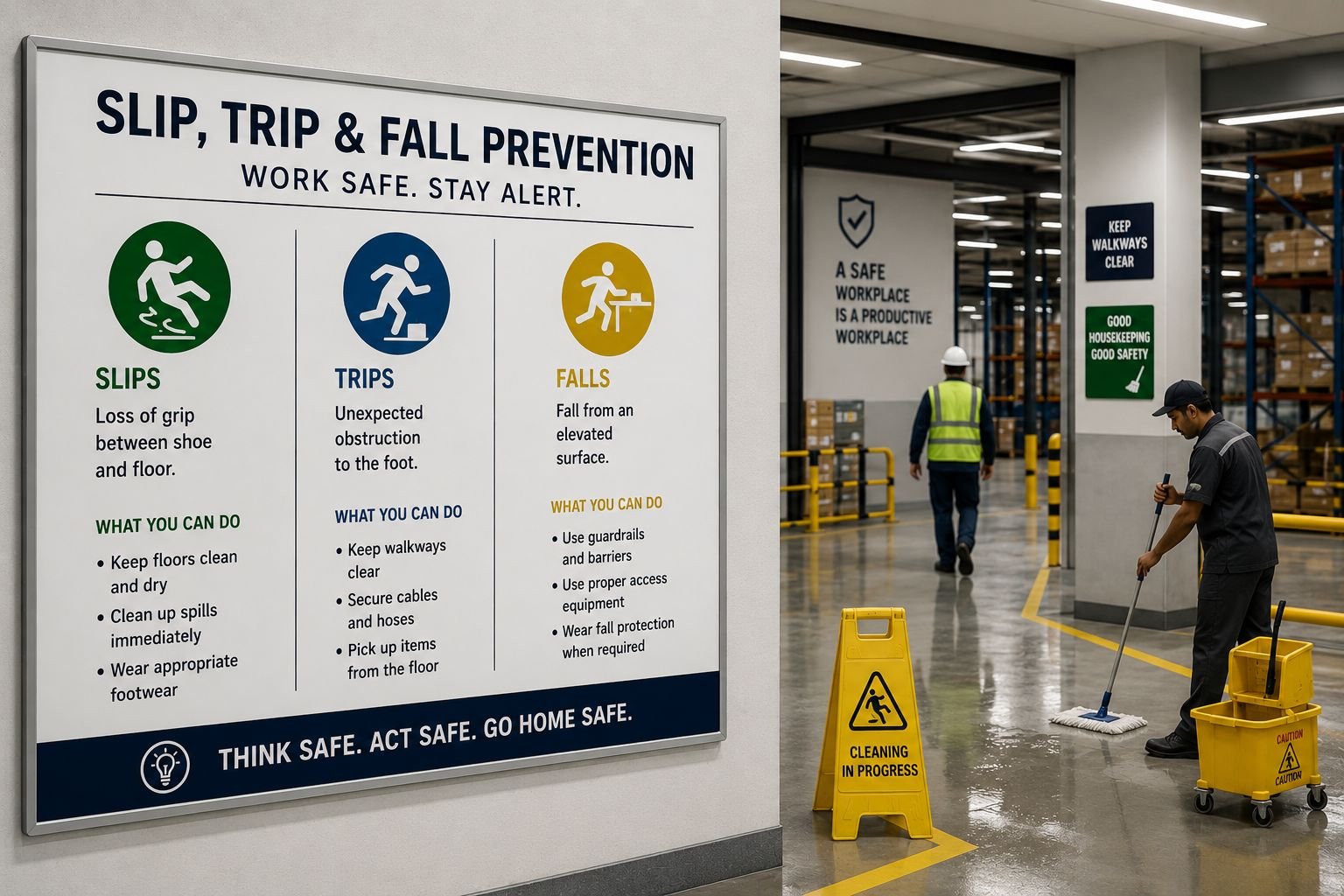
Slip trip and fall prevention gets treated as one problem. It is three. A slip is a loss of grip between shoe and floor. A trip is an unexpected obstruction to the foot. A fall from height is a different hazard class again. Each has its own cause and its own fix, and programmes that lump them together tend to miss two out of three.
Across UAE warehouses, retail floors, kitchens and workshops, these incidents account for a large share of lost-time injuries. They rarely make headlines because individual cases look minor. In aggregate they cost more downtime than the dramatic incidents.
Understanding the Three Failure Modes
Slips
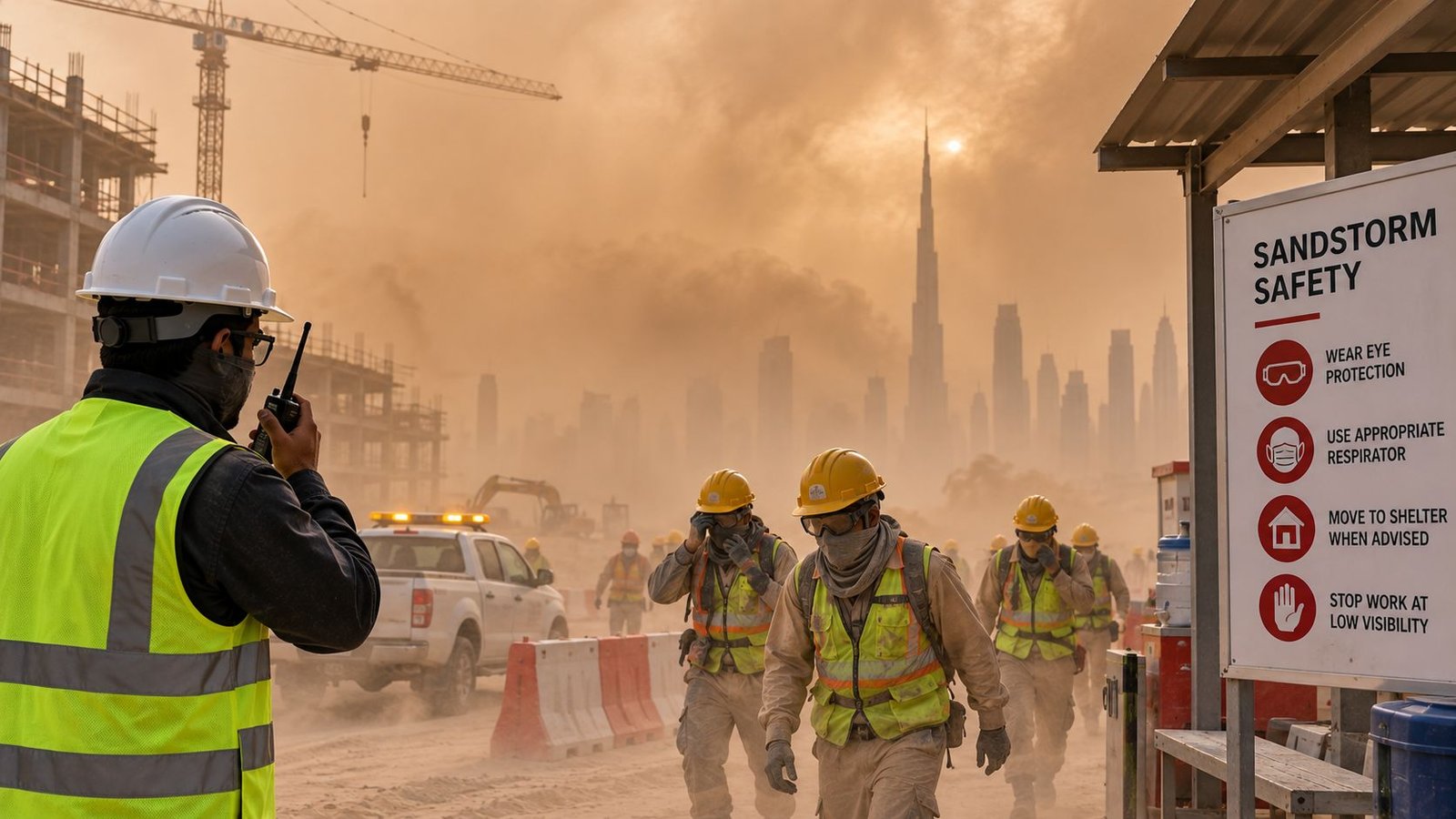
Slips happen when available friction between footwear and floor drops below what the movement demands. Water, oil, dust, sand and worn sole tread all reduce it. In the UAE, fine wind-blown sand on a polished floor is a common and underestimated contributor.
Trips
Trips happen when the foot meets an obstruction it did not expect. Cables, pallet corners, raised thresholds, uneven joints and stored material in walkways cause a large share of them.
Falls from height
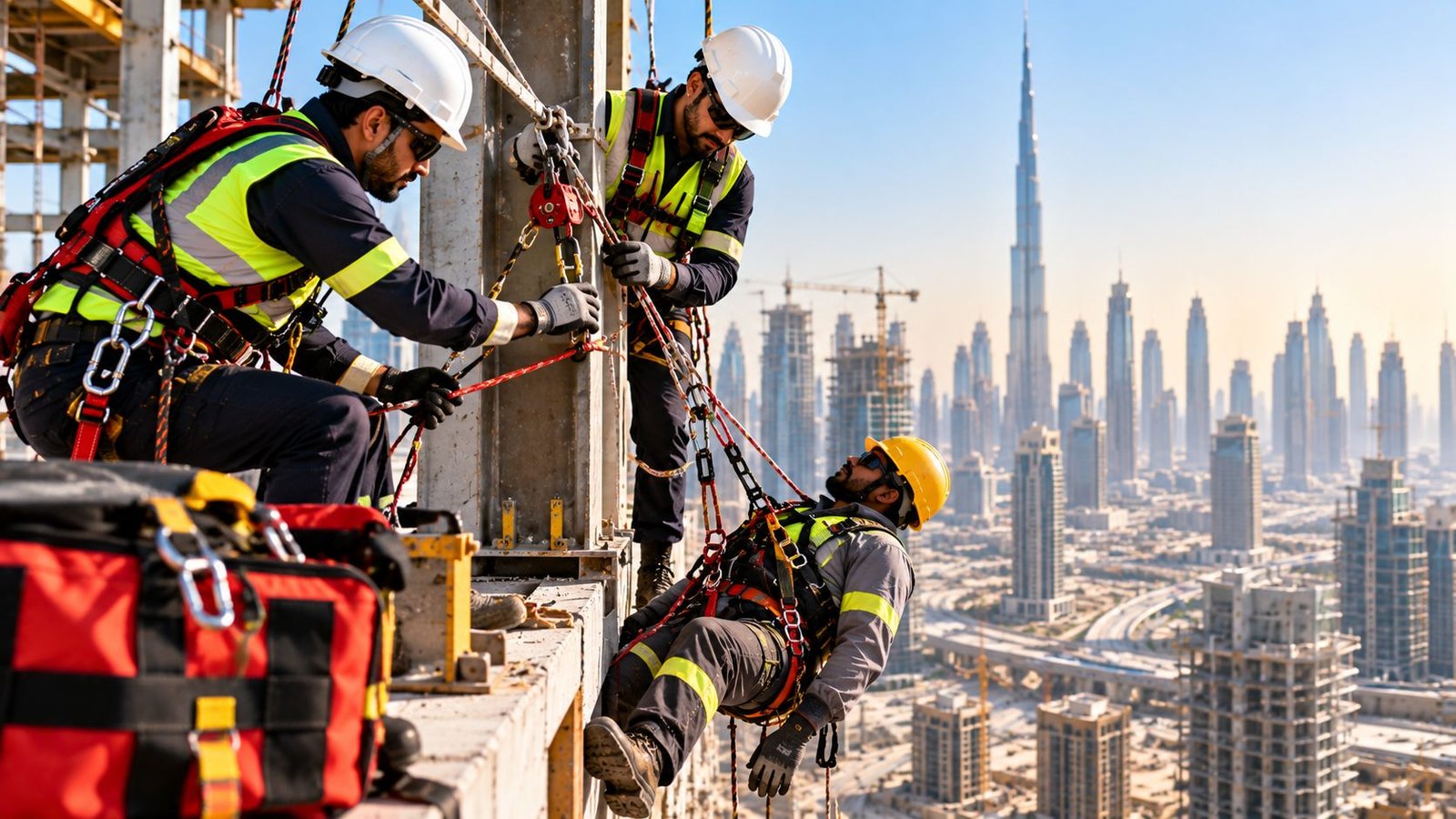
Falls from ladders, platforms, vehicles and edges cause the severe injuries in this group. They belong in a fall protection programme, and equipment for that sits across our fall protection range.
| FAILURE MODE | COMMON CAUSE | PRIMARY CONTROL |
|---|---|---|
| Slip on wet floor | Spill, cleaning, condensation | Spill response, anti-slip surface, correct footwear |
| Slip on dust or sand | Wind-blown ingress, process dust | Entry matting, sweeping schedule, tread selection |
| Trip on cable | Temporary power, tools | Cable covers, routing plan |
| Trip on stored material | Overflow from racking, staging | Marked storage zones, housekeeping |
| Trip on level change | Threshold, ramp edge, damaged floor | High-contrast marking, repair |
| Fall from ladder | Wrong ladder, poor footing, overreach | Ladder selection, inspection, training |
Strategy 1. Fix Housekeeping as a Standing Discipline
Housekeeping is the highest-return control and the first to slip when work gets busy.
Assign areas to named people
Shared responsibility becomes nobody’s responsibility. Each zone gets an owner and a daily check.
Clear at the end of every shift
A five-minute clear-down at shift end prevents the accumulation that makes the next shift hazardous.
Give every item a home
Material left in a walkway is usually material with nowhere to go. Fix the storage before blaming the placement.
Deal with spills immediately
A spill response kit within reach of the spill risk, not in a distant store. Every worker should know where it is and be authorised to use it without asking permission.
Strategy 2. Mark Walkways and Hazards Clearly
Marking directs movement and warns of change.
Define pedestrian routes physically
Painted or taped walkways separate people from vehicle movement. In busy warehouse operations this single change removes a whole hazard category. Sites building out marked routes should review the broader warehouse safety equipment options alongside floor marking.
Highlight level changes
Steps, ramps and thresholds need high-contrast marking on the front edge. Yellow against grey concrete reads well under typical site lighting.
Cordon hazards during work
Cleaning, maintenance and spill response all create temporary hazards. Caution tape marking do not enter closes the area until the hazard clears.
Keep marking maintained
Faded or peeling marking is worse than none because workers stop reading it. Inspect marking monthly and refresh on a cycle.
Strategy 3. Treat Surfaces Where Grip Is Marginal
Some surfaces cannot be kept dry. Treat them instead.
Apply anti-slip treatment to known problem areas
Stair treads, ramps, loading dock edges, kitchen floors and wash-down areas. Self-adhesive anti-slip tape applied to stair nosings and ramp surfaces is a fast, low-disruption fix that requires no floor closure.
Match the treatment to the contaminant
Water, oil and dust each behave differently. Coarse-grit tape suits outdoor and oily areas. Finer grades suit indoor foot traffic where comfort matters.
Control ingress at entrances
Matting at every external door captures sand and water before it reaches the internal floor. This is a particular issue on UAE sites where fine sand travels constantly.
Repair instead of patch
Damaged floor joints, cracked tiles and lifting vinyl generate trips indefinitely until they are repaired. Log them and schedule the work.
Strategy 4. Select Footwear Against the Actual Surface
Safety footwear is chosen for toe protection and rarely for grip. That is backwards for slip prevention.
Check the slip resistance rating
Footwear carries slip resistance markings tested against specific surface and contaminant combinations. Match the rating to the floor the worker stands on.
Match sole compound to environment
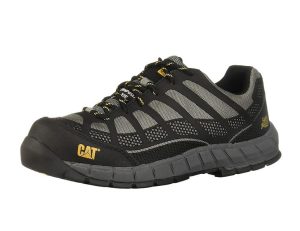
Oil-resistant compounds for workshops and kitchens. Heat-resistant for hot work areas. General-purpose compounds for dry warehousing. Options across our slip resistant footwear options cover the main environments found on UAE sites.
Choose dedicated anti-slip footwear where the risk is high
Kitchens, wash-down areas and wet processing floors warrant footwear specified for the purpose. Anti-slip safety shoes built for those conditions outperform general-purpose soles substantially.
Inspect tread wear
A worn sole loses grip long before the upper looks finished. Add tread depth to the monthly inspection, following the format in our checking issued equipment each month.
Enforce replacement
Workers keep comfortable worn shoes. Set a wear threshold and replace against it instead of against a calendar date alone.
Strategy 5. Remove Cables and Hoses from Walking Routes
Temporary services cause a large share of trips.
Route above or below, not across
Overhead routing or floor ducting removes the hazard entirely.
Cover what must cross
Where a crossing is unavoidable, a cable protector ramp creates a shallow, visible transition instead of a raised trip line.
Plan temporary power in advance
Cables run in a hurry end up in walkways. Include cable routing in the work plan.
Remove services when work ends
A cable left after the job finishes becomes a permanent hazard nobody owns.
Strategy 6. Light the Work Area Properly
Workers trip on what they cannot see.
Check lighting levels where people walk
Stairwells, corridors, loading bays and external routes often fall below what the task needs, particularly after dark.
Replace failed fittings promptly
A single failed fitting over a stairwell creates a hazard until it is replaced. Log failures and fix within days.
Address glare and shadow
Strong contrast between bright and dark areas hides level changes. Even lighting reads better than bright lighting.
Provide task lighting for maintenance
Workers entering plant rooms and voids need portable lighting instead of the fixed installation.
| SURFACE | LIKELY CONTAMINANT | FOOTWEAR SOLE PRIORITY |
|---|---|---|
| Warehouse concrete | Dust, wind-blown sand | General purpose, deep tread |
| Workshop floor | Oil, coolant | Oil-resistant compound |
| Commercial kitchen | Water, grease | Dedicated anti-slip specification |
| Wash-down area | Standing water, detergent | Anti-slip with open tread pattern |
| External yard | Sand, rain, spilled fuel | Coarse tread, oil-resistant |
Strategy 7. Control Ladder and Step Use
Falls from short heights produce serious injuries regularly.
Match the ladder to the task
A step ladder is not a leaning ladder. An A-frame used against a wall is unstable. Provide the right type instead of relying on improvisation with aluminium step ladders sized to the working height.
Inspect before every use
Check stiles, rungs, feet and locking mechanisms. Damaged ladders come out of service immediately, not at the next scheduled inspection.
Enforce three points of contact
Two feet and one hand, or two hands and one foot. Carrying material up a ladder breaks this and causes falls.
Set the ladder correctly
Firm level base, correct angle for leaning ladders, secured at the upper end where possible. Sand and loose surfaces need a stable board underneath.
Ban overreaching
Move the ladder instead of stretching. Overreach shifts the centre of gravity outside the base and topples the ladder.
Protecting racking and structure from impact damage matters too, since a struck upright can shed load into a walkway. Wall and corner protectors absorb forklift contact in high-traffic aisles.
AAA Safe Team supplies anti-slip materials, floor marking, cable protection, barrier systems, safety footwear and access equipment across Dubai, Abu Dhabi, Sharjah and the wider UAE. Our team provides itemised quotations covering equipment and delivery. Contact our specialists to discuss your site requirements.
Frequently Asked Questions
A slip is a loss of grip between footwear and the floor surface. A trip occurs when the foot strikes an unexpected obstruction. They have different causes and require different controls.
Water and cleaning residue on hard floors, oil and process fluid in workshops, and fine wind-blown sand on smooth internal surfaces. Sand ingress is often underestimated.
Check the slip resistance rating on the footwear and match it to the surface and contaminant present. Oil-resistant compounds suit workshops and kitchens, while general-purpose soles suit dry warehousing.
Replace when tread depth is worn, when the sole shows separation or cracking, or when the toe protection has taken an impact. Wear condition matters more than age alone.
Anti-slip tape is durable but consumable. It wears with foot traffic and needs periodic replacement. It suits stair nosings, ramps and localised problem areas instead of large floor areas.
Monthly inspection works well for busy sites. Faded marking loses its effect because workers stop registering it, so refresh on a planned cycle instead of waiting for complaints.
Requirements depend on the task and the applicable standard for the building type. The practical test is whether a worker can see level changes and obstructions clearly at walking pace.
A correctly sized cable protector creates a shallow, high-visibility ramp that is far safer than an exposed cable. Choose one rated for the cable diameter and the traffic type crossing it.
Disclaimer
This article provides general guidance on slip trip and fall prevention for workplaces in the UAE. It is not legal, regulatory or engineering advice and does not replace a site-specific risk assessment carried out by a competent person.
Flooring specification, lighting levels and access equipment requirements depend on the building, the process and the applicable standards. Requirements vary by Emirate and change over time.
Consult a qualified health and safety professional for assessment of your specific workplace.