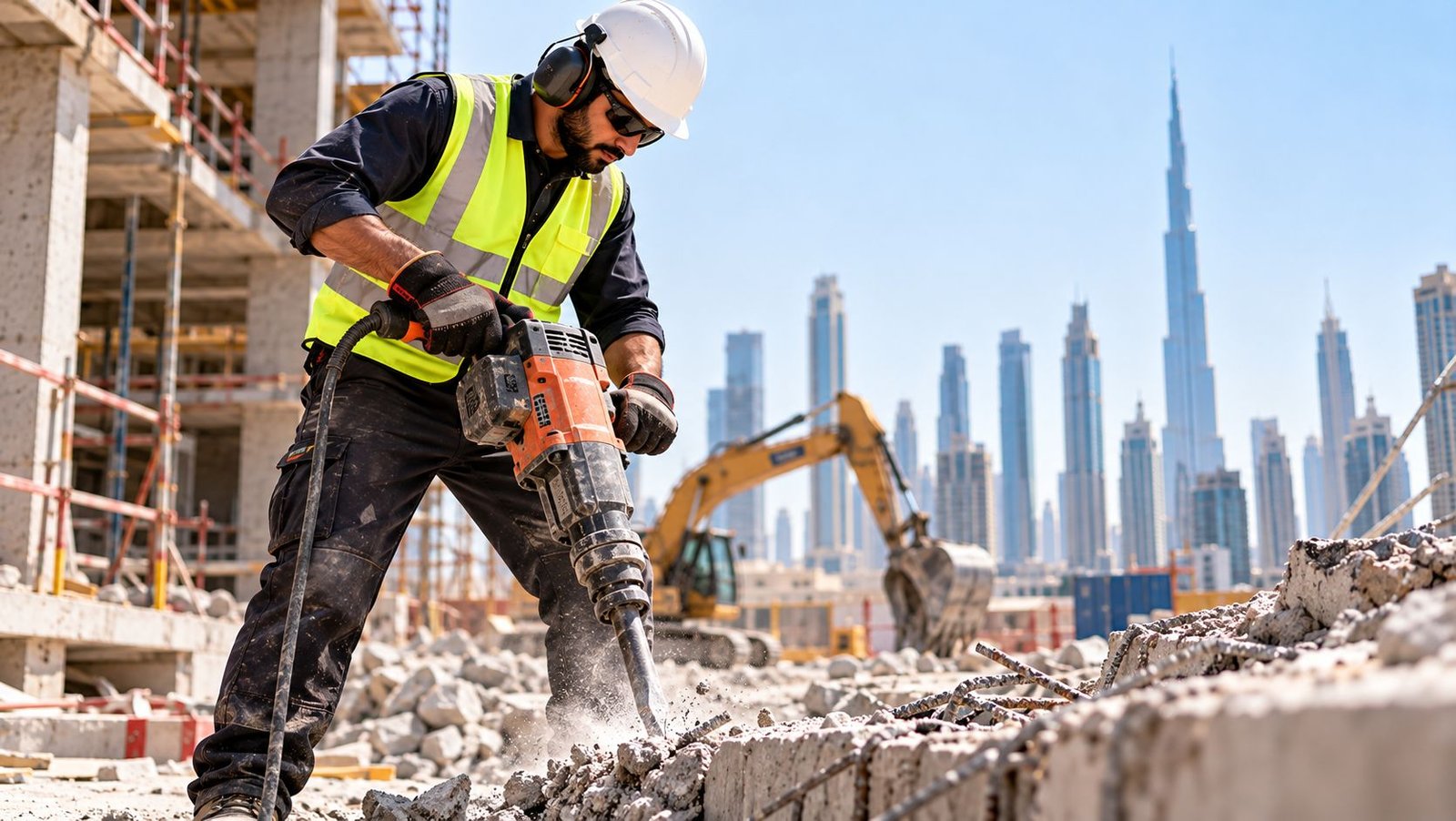
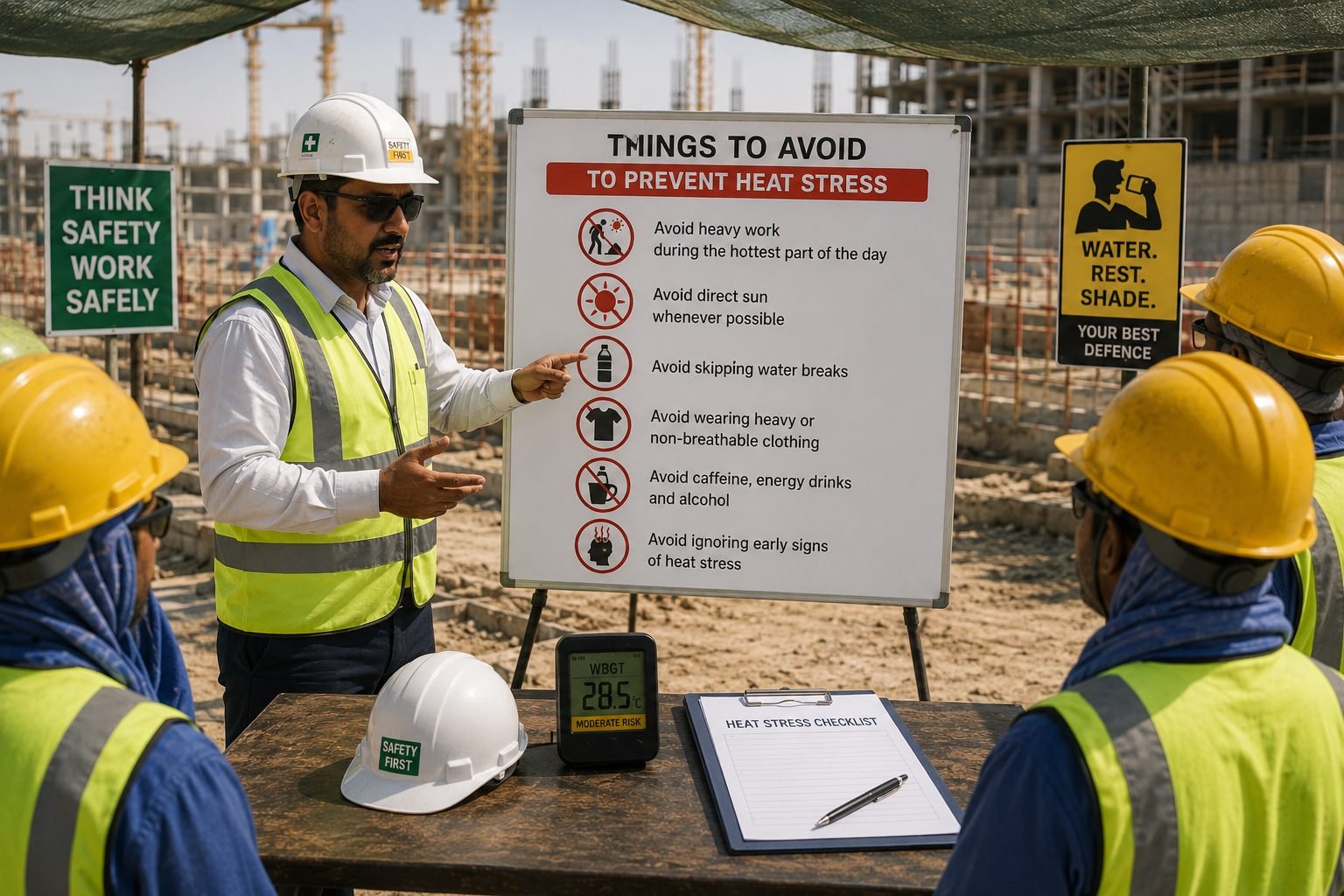
Summer temperatures across the UAE push outdoor work into a high risk zone for several months each year. A heat stress toolbox talk gives construction supervisors a short, repeatable way to brief crews before a shift begins. These five to ten minute briefings turn written policy into action that workers remember on the scaffold and in the trench.
This guide gives UAE supervisors a ready structure for the talk, a printable checklist, and the regulatory context that shapes summer work across Dubai, Abu Dhabi, and Sharjah. The aim is a briefing your team can deliver every morning without reading from a script.
Why a heat stress toolbox talk matters on UAE sites
Heat illness builds quietly. A worker can move from mild discomfort to heat exhaustion within an hour when humidity sits high and shade is scarce. A short morning briefing catches the early signs before they escalate.
The UAE construction calendar runs through the hottest months of the year. Sites in Dubai and Abu Dhabi record long stretches above 40 degrees Celsius from June through September. Supervisors who run a daily heat stress toolbox talk keep prevention front of mind during exactly the weeks when bodies struggle most.
What a toolbox talk does that a manual cannot
A written heat stress management plan sets the standard. The talk delivers it. Workers rarely reread a policy document, yet they absorb a face to face briefing that names the day’s heat risk and the response steps.
The talk also lets the supervisor read the crew. A worker who looks tired before the shift starts is a worker to watch. That judgment happens in person, not on paper.
How this fits your wider safety system
This briefing sits alongside your formal heat stress management plan rather than replacing it. The plan defines roles, thresholds, and reporting. The talk is the daily touchpoint that keeps the plan alive on site across the UAE.
The UAE midday work ban and what supervisors must know
The Ministry of Human Resources and Emiratisation sets a midday break rule that applies across the Emirates each summer. Work under direct sun stops during the hottest afternoon window for a defined period that MOHRE announces yearly. Supervisors carry responsibility for enforcing the break on their section.
The ban is a baseline, not a ceiling. Heat illness can occur outside the banned hours when humidity is high or workers are dehydrated. A good toolbox talk treats the ban as one layer inside a broader prevention approach.
Checking the current year requirements
MOHRE confirms the exact dates and hours before each summer. Supervisors should verify the current window through official channels rather than relying on last year’s memory. The MOHRE midday work ban requirements reference page explains how the rule applies on construction sites.
Penalties and accountability
Non compliance carries fines and possible suspension of work. The accountable party is usually the employer, but on site enforcement falls to supervisors. Naming this responsibility during the talk keeps everyone clear on who acts when the break window opens.
Building your heat stress toolbox talk structure
A reliable talk follows the same shape every day. Repetition helps workers internalise the steps. The structure below runs in roughly seven minutes.
Open with today's conditions
Start by stating the forecast high and the humidity level. Numbers make the risk concrete. A worker hears 44 degrees and adjusts their pace differently than when they hear a vague warning about heat.
Name the banned hours for the day. Confirm where the shaded rest area sits and where water stations are placed across the work zone.
Cover the warning signs
Walk through the early symptoms in plain language. Heavy sweating, headache, dizziness, and muscle cramps signal that a worker needs to stop and cool down. Confusion, a stop in sweating, and hot dry skin signal a medical emergency.
Ask the crew to watch each other. A worker often misses their own symptoms while a colleague spots them.
State the response steps
Give the crew a clear sequence for a suspected case. Move the person to shade, give water if they are conscious, loosen clothing, and call the first aider. For emergency signs, call 998 or 999 without delay and keep cooling the worker while help arrives.
Close with the day's PPE and hydration plan
Confirm what each worker wears today and remind them of the drinking schedule. A short close fixes the practical actions in memory before the crew disperses.
Heat stress toolbox talk checklist for supervisors
The checklist below converts the talk into a tick sheet. Supervisors can print it and complete one per shift as a record of the briefing.
| Checklist item | Confirmed |
|---|---|
| Forecast high and humidity stated to crew | |
| Banned hours for the day announced | |
| Shade and water station locations confirmed | |
| Early warning signs reviewed | |
| Emergency response steps stated | |
| Buddy watch system assigned | |
| Hydration schedule confirmed | |
| PPE for the day checked | |
| First aider on site identified by name | |
| Emergency numbers posted and visible |
AAA Safe Dubai supplies cooling vests, hydration stations, and shaded rest shelters suited to UAE summer conditions. Contact our technical team for a site assessment matched to your crew size and work zone.
Hydration management across the work zone
Dehydration is the engine behind most heat illness. A worker who arrives already short on fluids reaches danger faster. The talk should set a drinking schedule rather than leaving intake to thirst, because thirst lags behind the body’s actual need.
Setting a drinking schedule
A practical rule is small amounts at regular intervals throughout the shift. Cool water placed within short walking distance of the work face removes the friction that stops workers from drinking. Stations spread across large UAE sites cut the time a worker spends away from the task.
Electrolyte balance
Heavy sweating strips salts as well as water. For long outdoor shifts, electrolyte replacement helps workers hold fluid rather than passing it straight through. Supervisors should confirm what the site provides and where workers collect it.
Signs of poor hydration
Dark urine, headache, and fatigue point to a worker falling behind on fluids. The talk can remind crews of these self checks so they correct intake before symptoms worsen.
Personal cooling and PPE selection for heat
PPE protects against site hazards, yet heavy gear traps heat. The supervisor balances protection against thermal load when choosing the day’s kit. Personal cooling equipment closes part of that gap.
Cooling vests and their use
Cooling vests lower the core temperature load on outdoor workers. They suit roles where the worker stays in direct sun for long stretches. The guide on personal cooling vests for outdoor workers explains the types available and how to fit them to a UAE work pattern.
Breathable workwear
Light coloured, breathable fabric reduces heat absorption compared with dark heavy cloth. Where the task allows, breathable workwear keeps the worker cooler without dropping the protection level.
Head and neck protection
Direct sun on the head and neck speeds heat gain. Wide brim attachments and neck shades reduce that exposure for workers in open ground across Dubai and Abu Dhabi sites.
AAA Safe Dubai stocks personal cooling equipment, breathable workwear, and sun protection accessories. Browse the personal protective equipment range or request an itemised quote for your project.
Rest and shade planning on UAE construction sites
Shade is a control, not a comfort. A shaded rest area lets the body shed heat during breaks and during the banned hours. Planning shade placement before summer begins avoids scramble once temperatures climb.
Locating rest areas
Rest shelters sit close to the active work zone so workers reach them quickly. On large sites across the Emirates, several smaller shaded points work better than one distant shelter that workers skip to save walking time.
Scheduling breaks around peak heat
Beyond the mandatory midday break, supervisors can shift heavy tasks to cooler morning hours. Lighter work fills the afternoon edges of the shift. This pacing reduces total heat exposure without losing output.
Acclimatisation for new workers
A worker new to UAE summer conditions needs time to adapt. Gradual exposure over the first days lowers their early risk. The talk can flag which crew members are new and assign closer watch on them.
Emergency response and first aid readiness
Even with strong prevention, a heat emergency can occur. The site’s readiness decides the outcome. The toolbox talk confirms that readiness every morning rather than assuming it.
First aid provision
A trained first aider should be reachable on every shift. The talk names that person so workers know who to call. First aid kits stocked for heat illness sit at the rest area and the site office.
Cooling the casualty
Rapid cooling saves lives in severe cases. Moving the worker to shade, applying cool water to the skin, and fanning the body lower core temperature while professional help travels to the site.
Calling for help
UAE emergency numbers are 998 for ambulance and 999 for police. Posting these numbers at the rest area and confirming them in the talk removes hesitation in a crisis. Sharjah, Dubai, and Abu Dhabi all use the same federal emergency lines.
Recording and improving your toolbox talks
A signed checklist becomes a record that the briefing happened. Over a summer, these records show a pattern of consistent prevention across the UAE site.
Keeping the daily record
File each completed checklist with the date and the supervisor’s name. This log supports compliance reviews and gives the safety team a way to confirm coverage across every crew.
Gathering worker feedback
Workers on the work face spot gaps that a plan misses. A quick question at the end of the talk surfaces problems such as a water station running dry or a shelter sitting too far from the task.
Adjusting for changing conditions
A heat wave or a shift in humidity changes the risk level. The talk adapts each day to the conditions rather than repeating a fixed script. Linking back to your heat stress management plan keeps the daily talk aligned with the formal standard.
For more safety briefings and seasonal guidance, the AAA Safe Dubai blog hub carries related material for UAE supervisors. Contact our specialists to discuss heat protection equipment for your site.
Frequently Asked Questions
A heat stress toolbox talk is a short safety briefing a supervisor delivers to a crew before an outdoor shift. It covers the day’s conditions, warning signs, response steps, and the hydration and PPE plan. The talk usually runs five to ten minutes.
Run the talk before every shift during the hot months across the UAE. Daily repetition keeps prevention current as conditions change. A single briefing at the start of summer fades from memory within days.
MOHRE sets the exact banned hours and dates each year before summer. Work under direct sun stops during the announced afternoon window. Supervisors should verify the current year’s hours through official MOHRE channels.
Early signs include heavy sweating, headache, dizziness, muscle cramps, and fatigue. A worker showing these signs needs to stop, move to shade, and rehydrate. Confusion, a stop in sweating, and hot dry skin signal a medical emergency.
Workers should drink small amounts at regular intervals through the shift rather than waiting for thirst. Cool water placed near the work face encourages steady intake. Electrolyte replacement helps on long shifts with heavy sweating.
Cooling vests lower the heat load on workers who stay in direct sun for long periods. They suit open ground roles across Dubai and Abu Dhabi. Fit and type should match the work pattern and the worker’s task.
The employer holds legal responsibility, while supervisors enforce the rules on their section. This includes the midday break, hydration, and PPE. The toolbox talk is the supervisor’s daily tool for that enforcement.
Call 998 for an ambulance and 999 for police across the UAE. These federal numbers apply in Dubai, Abu Dhabi, and Sharjah. Post them at the rest area and confirm them during the talk.
Yes. A signed checklist creates a record that the briefing happened and what it covered. These records support compliance reviews and help the safety team confirm coverage across all crews.
Yes. High humidity, dehydration, and heavy exertion can cause heat illness at any time of day. The banned hours are a baseline control, not a full guarantee of safety. Prevention continues across the whole shift.
Disclaimer
This article provides general guidance on heat stress prevention for construction supervisors in the UAE. It does not replace a site specific risk assessment or professional occupational health advice. Heat safety requirements vary by site, task, and current weather conditions.
The information here reflects general practice and does not constitute legal advice on labour regulations. Supervisors and employers should confirm current requirements directly with the relevant authorities.
For binding rules and current year requirements, consult the Ministry of Human Resources and Emiratisation, Dubai Municipality, and the Abu Dhabi Public Health Centre. For workplace safety frameworks, refer to the applicable OSHAD and Dubai Municipality guidance.