An electrical technician opens a panel for routine maintenance at a Dubai manufacturing facility. The air fills with blinding light, temperatures exceeding 19,000°C, and a pressure wave strong enough to throw a person across the room. This is an arc flash, and it happens in less than one second.
Research indicates that 5 to 10 arc flash incidents occur every day in the United States alone. Industry estimates suggest approximately 7,000 burn injuries, 2,000 hospitalizations, and 400 fatalities result from these incidents annually.
For electrical workers across Dubai, Abu Dhabi, Sharjah, and throughout the UAE, understanding arc flash PPE category levels is the difference between walking away from an incident and suffering life-altering burns.
This guide explains the four arc flash PPE category levels, the standards behind them, and how UAE electrical workers can select appropriate protection.
What Causes Arc Flash Incidents
An arc flash occurs when electrical current leaves its intended path and travels through the air from one conductor to another or to ground. This uncontrolled release of energy creates an explosive event lasting fractions of a second.
Common Triggers
Equipment failure from worn insulation, corrosion, or manufacturing defects creates pathways for unintended current flow. Dust, debris, or condensation inside electrical enclosures can provide a conductive path between energized components.
Human factors play a significant role. Dropped tools, accidental contact with energized parts, and failure to follow proper work procedures account for many incidents. Studies indicate that nearly half of workers involved in arc flash incidents failed to recognize the hazard before it occurred.
Hazard Characteristics
The arc flash event produces multiple hazards simultaneously. Thermal radiation can cause severe burns at distances of several meters. Temperatures at the arc point reach 19,000°C, instantly vaporizing solid copper conductors.
The pressure wave can exceed 100 kg per square meter, capable of throwing workers and rupturing eardrums. Molten metal projectiles travel at high velocity. Intense ultraviolet light causes flash blindness. Sound levels exceed 140 decibels, well above the threshold for immediate hearing damage.
Understanding Arc Flash PPE Category Levels
Arc flash PPE category levels provide a standardized system for matching protective equipment to incident energy exposure levels. The system originates from NFPA 70E, the Standard for Electrical Safety in the Workplace, which is recognized internationally and referenced by UAE regulatory frameworks.
The NFPA 70E Category System
NFPA 70E establishes four arc flash PPE category levels based on minimum arc rating requirements. Each category corresponds to specific incident energy levels measured in calories per square centimeter (cal/cm²).
The arc rating represents the amount of thermal energy a fabric can withstand before the wearer faces a 50% probability of receiving second-degree burns. Higher category numbers require higher arc ratings and more protective equipment.
AAA Safe Dubai supplies arc flash PPE meeting all four NFPA 70E category levels. Our electrical safety specialists help workers across Dubai, Abu Dhabi, Sharjah, and the UAE select appropriate protection. Contact us for arc flash hazard assessments and PPE recommendations.
PPE Category 1 Requirements
Category 1 represents the lowest level requiring arc-rated PPE. Workers face incident energy exposures up to 4 cal/cm².
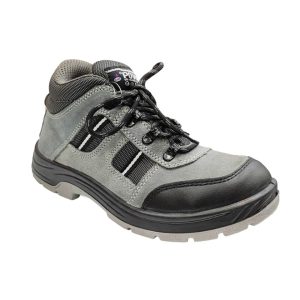
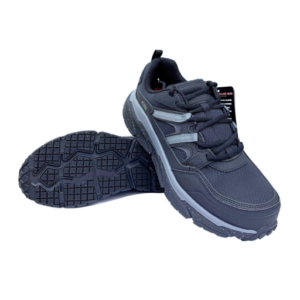
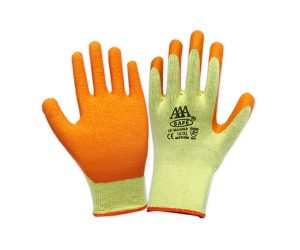
Required equipment includes arc-rated long-sleeve shirt and pants or coverall with minimum 4 cal/cm² rating. Face protection consists of an arc-rated face shield with wrap-around guarding or an arc flash suit hood. Workers also need a hard hat, safety glasses, hearing protection, heavy-duty leather gloves, and leather footwear.
Category 1 tasks typically include work on 240V single-phase or 208V three-phase equipment where fault current levels result in calculated incident energy below 4 cal/cm².
A single layer of arc-rated PPE typically meets Category 1 requirements.
PPE Category 2 Requirements
Category 2 covers incident energy exposures from 4 cal/cm² up to 8 cal/cm². This category applies to a substantial portion of commercial and light industrial electrical work.
Required clothing includes arc-rated shirt and pants or coverall with minimum 8 cal/cm² rating. Head and face protection requires either an arc flash suit hood or an arc-rated face shield combined with an arc-rated balaclava.
Category 2 work includes panel boards, motor control centers, and switchboards where calculated incident energy falls within the 4 to 8 cal/cm² range.
PPE Category 3 Requirements
Category 3 addresses incident energy exposures from 8 cal/cm² up to 25 cal/cm². This category requires multiple layers of arc-rated PPE.
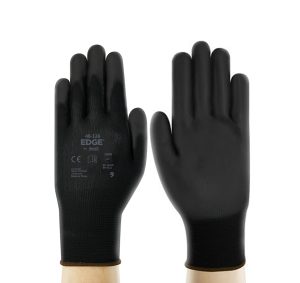
Required clothing includes an arc-rated flash suit jacket and pants or coverall with minimum 25 cal/cm² system rating. The flash suit hood is mandatory. Arc-rated gloves are required rather than heavy-duty leather gloves.
Category 3 tasks typically involve work on medium-voltage equipment and large motor control centers where significant fault current is available.
PPE Category 4 Requirements
Category 4 represents the highest protection level with minimum arc rating of 40 cal/cm². This category covers incident energy exposures from 25 cal/cm² up to 40 cal/cm².
Required equipment includes a complete arc flash suit system with jacket, pants, coverall, inner layers, and hood. Arc-rated gloves complete the ensemble. The system arc rating of all layers combined must meet or exceed 40 cal/cm².
Category 4 work includes high-voltage switching operations, outdoor substation maintenance, and work on large transformers.
Beyond Category 4
NFPA 70E states that when incident energy calculations exceed 40 cal/cm², no available PPE provides adequate protection. At these energy levels, the pressure wave causes injuries regardless of thermal protection.
When calculations indicate incident energy exceeding 40 cal/cm², the equipment must be de-energized before work proceeds.
Arc Flash PPE Category Levels Complete Requirements
| Category | Min Arc Rating | Clothing | Face and Head | Hands |
|---|---|---|---|---|
| 1 | 4 cal/cm² | AR shirt and pants OR AR coverall | AR face shield with wrap-around OR hood | Heavy-duty leather |
| 2 | 8 cal/cm² | AR shirt and pants OR AR coverall | AR hood OR AR face shield with AR balaclava | Heavy-duty leather |
| 3 | 25 cal/cm² | AR flash suit jacket and pants, AR coverall | AR flash suit hood required | AR gloves required |
| 4 | 40 cal/cm² | AR flash suit jacket and pants, AR coverall, AR inner layers | AR flash suit hood required | AR gloves required |
IEC 61482 International Standard
While NFPA 70E originates from the United States, international standards govern arc flash protective clothing in European and Middle Eastern markets. IEC 61482 specifies requirements and test methods for protective clothing against electric arc thermal hazards. Understanding both NFPA 70E arc flash PPE category levels and IEC 61482 classifications helps UAE workers navigate international project requirements.
Open Arc Test Method
The Open Arc Test Method under IEC 61482-1-1 determines the Arc Thermal Performance Value (ATPV), Energy Breakopen Threshold (EBT), or Incident Energy Limit Value (ELIM) of materials.
ATPV represents the incident energy level at which there is a 50% probability of second-degree burn without fabric breakopen. EBT indicates the energy level at which the fabric has a 50% probability of breaking open.
The lower of ATPV or EBT becomes the effective arc rating. Higher values indicate better protection.
The ELIM Rating
The 2019 revision introduced ELIM as a more conservative rating. While ATPV and EBT are based on 50% injury probability, ELIM represents the maximum incident energy with effectively zero burn probability.
ELIM values are always lower than ATPV or EBT for the same material because they eliminate the 50% injury probability.
Box Test Method
The Box Test under IEC 61482-1-2 provides pass or fail classification rather than a specific cal/cm² rating.
Arc Protection Class 1 (APC 1) indicates protection against 4 kA arc current for 0.5 second. Arc Protection Class 2 (APC 2) indicates protection against 7 kA for 0.5 second.
AAA Safe Dubai stocks arc flash protective clothing meeting both NFPA 70E categories and IEC 61482 requirements. Our technical team helps UAE electrical workers navigate international standards. Contact us for certified arc flash PPE across all protection levels.
Arc Rating vs. Flame Resistance
All arc-rated clothing is flame resistant, but not all flame-resistant clothing provides arc flash protection.
Flame Resistant Clothing
Flame resistant (FR) clothing resists ignition and self-extinguishes when the ignition source is removed. FR garments prevent clothing from contributing to burn injuries by continuing to burn after exposure.
However, FR testing does not measure the material’s ability to block the intense thermal energy of an arc flash from reaching the wearer’s skin.
Arc Rated Clothing
Arc rated (AR) clothing undergoes additional testing to determine its specific protection level. The ASTM F1959 test exposes fabric samples to a controlled electric arc and measures heat transfer through the material.
This testing produces the ATPV or EBT rating in cal/cm². Arc rated garments must also be flame resistant since clothing that ignites during an arc flash would continue burning.
For UAE electrical workers, standard FR workwear is not acceptable for arc flash protection. Only garments with documented arc ratings meeting or exceeding required values provide appropriate protection.
Arc Flash Boundaries
Arc flash PPE category levels determine what protection workers must wear when crossing specific boundaries around energized equipment.
Arc Flash Boundary
The arc flash boundary defines the distance from energized equipment where incident energy would reach 1.2 cal/cm², the threshold for second-degree burn on exposed skin. Anyone crossing inside this boundary must wear arc-rated PPE appropriate for the calculated incident energy.
Limited Approach Boundary
The limited approach boundary is a shock protection boundary. Inside this limit, an electric shock hazard exists. Unqualified persons must not cross unless escorted by a qualified person.
Restricted Approach Boundary
The restricted approach boundary indicates increased likelihood of electric shock due to arc-over combined with inadvertent movement. Only qualified persons with specific training and protective equipment may cross.
The shock protection boundaries and arc flash boundary are independent of each other. Workers must observe whichever boundary applies to the specific hazard.
UAE Regulatory Framework
The UAE electrical safety framework draws from multiple authorities depending on emirate and sector.
Federal Requirements
UAE Federal Decree Law No. 33 of 2021 establishes employer obligations for providing safe working conditions and appropriate protective equipment. The Ministry of Human Resources and Emiratisation (MOHRE) sets national-level occupational safety requirements.
Abu Dhabi OSHAD Requirements
The OSHAD System Framework includes Code of Practice 15.0 covering Electrical Safety. This code requires that workers possess competency gained from training, technical knowledge, and experience before working on or near electrical equipment.
Dubai Requirements
Dubai Municipality enforces workplace safety regulations through site inspections. DEWA establishes regulations for electrical installations that reference IEC standards.
NFPA 70E, while not directly adopted in UAE regulations, is widely recognized for arc flash hazard analysis and PPE selection. Many international contractors apply NFPA 70E requirements as an industry standard.
AAA Safe Dubai understands regulatory requirements across Dubai, Abu Dhabi, Sharjah, and all UAE emirates. Our team helps employers develop compliant electrical safety programs. Contact us for guidance on meeting OSHAD, Dubai Municipality, and federal requirements.
Arc Flash PPE Materials
The protective performance of arc flash PPE depends on materials and construction.
Inherent vs. Treated FR Materials
Inherent FR materials contain flame-resistant properties within the fiber’s molecular structure. These materials cannot lose FR properties through washing or wear because protection is integral to the fiber.
Treated FR materials begin as flammable fabrics that undergo chemical treatment. Modern treated FR fabrics maintain protection through expected service life when properly laundered.
Fabric Weight and Arc Rating
Arc rating increases with fabric weight for any given material type. A heavier fabric provides more thermal insulation between the arc flash and the wearer’s skin.
Single-layer garments in 4.5 to 7 ounce weights typically achieve ratings from 4 to 12 cal/cm², suitable for Category 1 and 2. Category 3 and 4 protection requires heavier fabrics or tested multi-layer systems.
System Arc Rating
When multiple arc-rated layers are worn together, the system arc rating exceeds the sum of individual ratings due to air gaps providing additional insulation.
Manufacturers must test specific layer combinations to determine actual system ratings. Workers cannot add individual garment ratings to calculate system protection. Only documented, tested combinations should be relied upon for Category 3 and 4.
Selecting Arc Flash PPE for UAE Conditions
The UAE climate presents challenges for workers wearing arc flash protective equipment.
Heat Stress Considerations
Arc flash PPE adds thermal insulation that impedes heat dissipation. In UAE summer conditions exceeding 40°C, this creates significant heat stress risk for workers in high-category protection.
Work-rest cycles become essential for Category 3 or 4 arc flash suits in hot conditions. Hydration protocols must account for increased fluid loss.
Practical Selection
Lighter weight fabrics achieving required arc ratings reduce heat burden. Moisture-wicking base layers help manage perspiration. These base layers must also be arc rated when worn under arc flash clothing.
Garments with quick-release closures allow workers to minimize time in full protection. High-visibility features address the need to see and be seen on UAE worksites.
Arc Flash PPE Pricing Guide
| PPE Component | Category 1-2 | Category 3 | Category 4 |
|---|---|---|---|
| AR Coverall | 350-800 AED + VAT | 800-1,500 AED + VAT | 1,200-2,500 AED + VAT |
| AR Shirt | 200-450 AED + VAT | 400-800 AED + VAT | 600-1,200 AED + VAT |
| AR Pants | 250-500 AED + VAT | 450-900 AED + VAT | 700-1,400 AED + VAT |
| Arc Flash Hood | 400-800 AED + VAT | 800-1,500 AED + VAT | 1,200-2,500 AED + VAT |
| AR Face Shield | 150-400 AED + VAT | N/A | N/A |
| Complete Flash Suit Kit | 1,500-3,500 AED + VAT | 3,500-7,000 AED + VAT | 6,000-15,000 AED + VAT |
Contact AAA Safe Dubai for current pricing on specific products.
Building an Arc Flash Safety Program
Hazard Assessment
Document arc flash hazard assessments for all equipment where electrical work occurs. Update assessments when system changes affect fault current levels or protective device coordination.
PPE Selection Procedures
Establish written procedures for selecting arc flash PPE based on assessment results or equipment labels. Document approved products meeting minimum arc rating requirements for each category level.
Training Requirements
Train all electrical workers on arc flash hazards, protection boundaries, and PPE requirements. Document training completion. OSHAD and MOHRE requirements mandate documented competency for workers exposed to electrical hazards.
Inspection and Maintenance
Inspect arc flash PPE before each use. Check for damage, contamination, or wear. Define replacement criteria based on manufacturer guidance. Document inspection results.
AAA Safe Dubai partners with UAE electrical contractors and facility owners to develop arc flash safety programs. From hazard assessments through PPE selection and training, our team provides expertise for effective electrical safety. Contact us to discuss your arc flash protection needs across Dubai, Abu Dhabi, Sharjah, and throughout the Emirates.
Frequently Asked Questions
Older NFPA 70E versions used Hazard Risk Categories (HRC). The 2015 edition replaced this with PPE Categories to emphasize that categories define required equipment rather than hazard severity. Protection requirements remained the same.
Multiple arc-rated layers provide increased protection, but you cannot add individual ratings to calculate system protection. Only manufacturer-tested combinations should be used for Category 3 and 4 requirements.
Replace arc flash PPE when inspection reveals damage, contamination, or excessive wear. Replace suits after any direct arc flash exposure. Typical service life ranges from two to five years under normal conditions.
Arc flash PPE protects against thermal hazards only. Shock protection requires separate measures including voltage-rated insulating gloves and proper work procedures.
No PPE category provides adequate protection above 40 cal/cm². Equipment must be de-energized before work proceeds.
The UAE does not have a specific national arc flash standard. UAE frameworks reference IEC 61482 and recognize NFPA 70E methodologies. OSHAD, Dubai Municipality, and other authorities accept compliance with recognized international standards.
Arc flash PPE includes permanent labels displaying the arc rating in cal/cm², standards certification, manufacturer information, and care instructions. Request test documentation from suppliers.
Standard FR workwear is not acceptable unless tested and assigned a specific arc rating. Only clothing with documented ATPV or EBT values provides verified protection.
UAE regulations require demonstrated competency. Training should cover hazard recognition, PPE selection, donning and doffing procedures, inspection requirements, and emergency response.
Select lighter weight fabrics achieving required ratings. Implement work-rest cycles. Schedule high-category work for cooler hours. Ensure access to cooling, shade, and hydration.
Conclusion
Arc flash PPE category levels provide a systematic framework for protecting electrical workers. From Category 1 requiring basic arc-rated clothing through Category 4 demanding comprehensive flash suits, the system ensures workers have protection matched to hazard levels. Proper application of arc flash PPE category levels reduces burn injuries and saves lives.
For UAE electrical workers across construction sites, industrial facilities, and utility operations, understanding these requirements is essential for returning home safely.
AAA Safe Dubai supplies the complete range of arc flash protective equipment for UAE electrical workers. Our technical team understands NFPA 70E categories, IEC 61482 standards, and UAE regulatory requirements. With experience serving electrical contractors, facility maintenance teams, and utility workers throughout Dubai, Abu Dhabi, Sharjah, and across the Emirates, we provide expertise for selecting appropriate arc flash protection. Contact our electrical safety specialists to discuss your requirements.
Disclaimer
This guide provides general information about arc flash PPE category levels for educational purposes. Product specifications, standards, and regulations change over time. Always verify current requirements with manufacturers, regulatory authorities, and qualified safety professionals.
Arc flash PPE reduces but does not eliminate injury risk. PPE selection must be based on documented arc flash hazard assessments for each specific work task and equipment location. No PPE provides adequate protection when incident energy exceeds 40 cal/cm².
Electrical work carries inherent risks of shock, electrocution, and arc flash injury. Only qualified persons with appropriate training should perform work on or near energized electrical equipment. De-energization remains the preferred method of hazard elimination.
For current UAE regulatory requirements, consult MOHRE, the Abu Dhabi Public Health Centre, and Dubai Municipality. This information does not constitute legal or professional engineering advice.