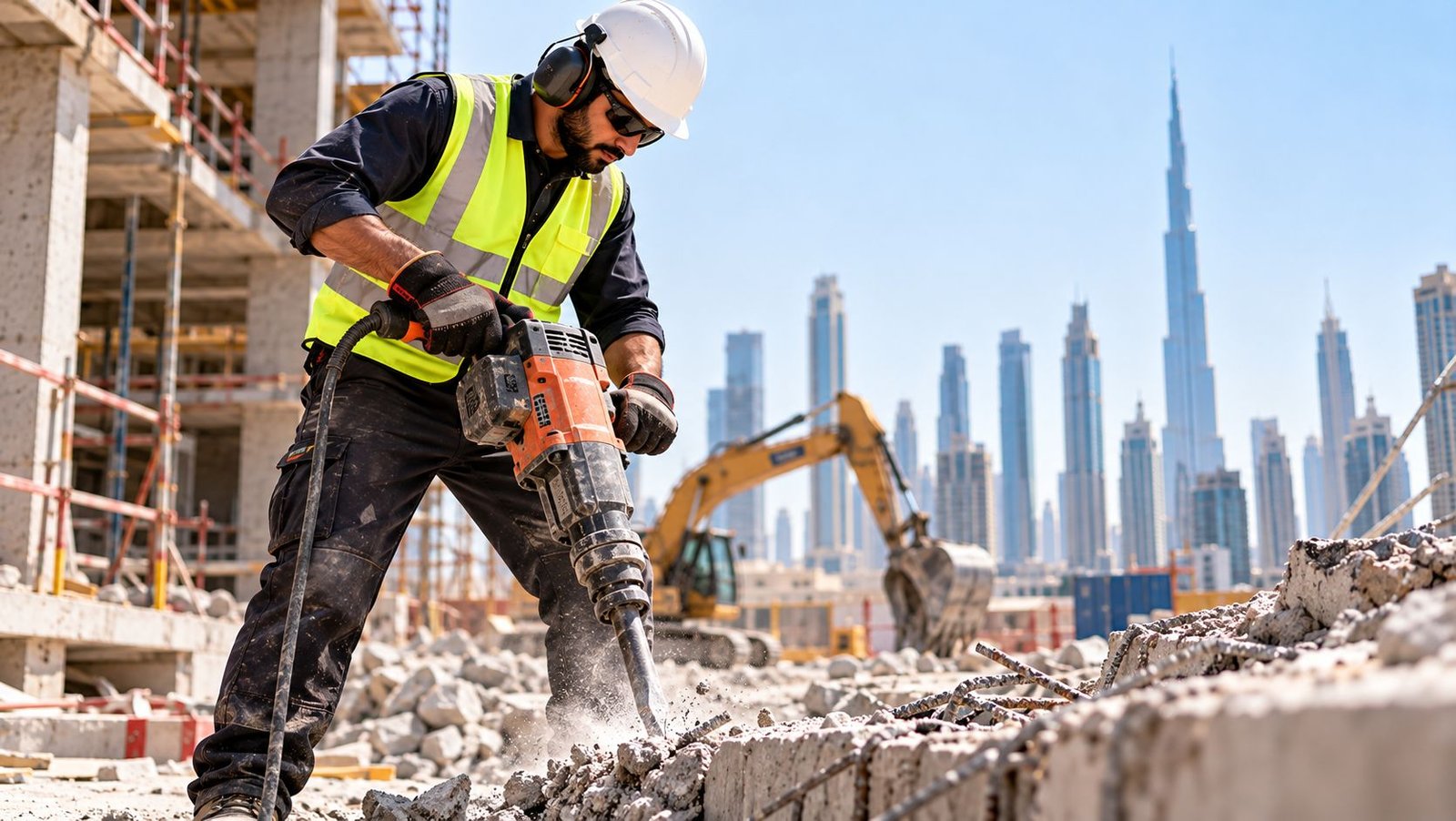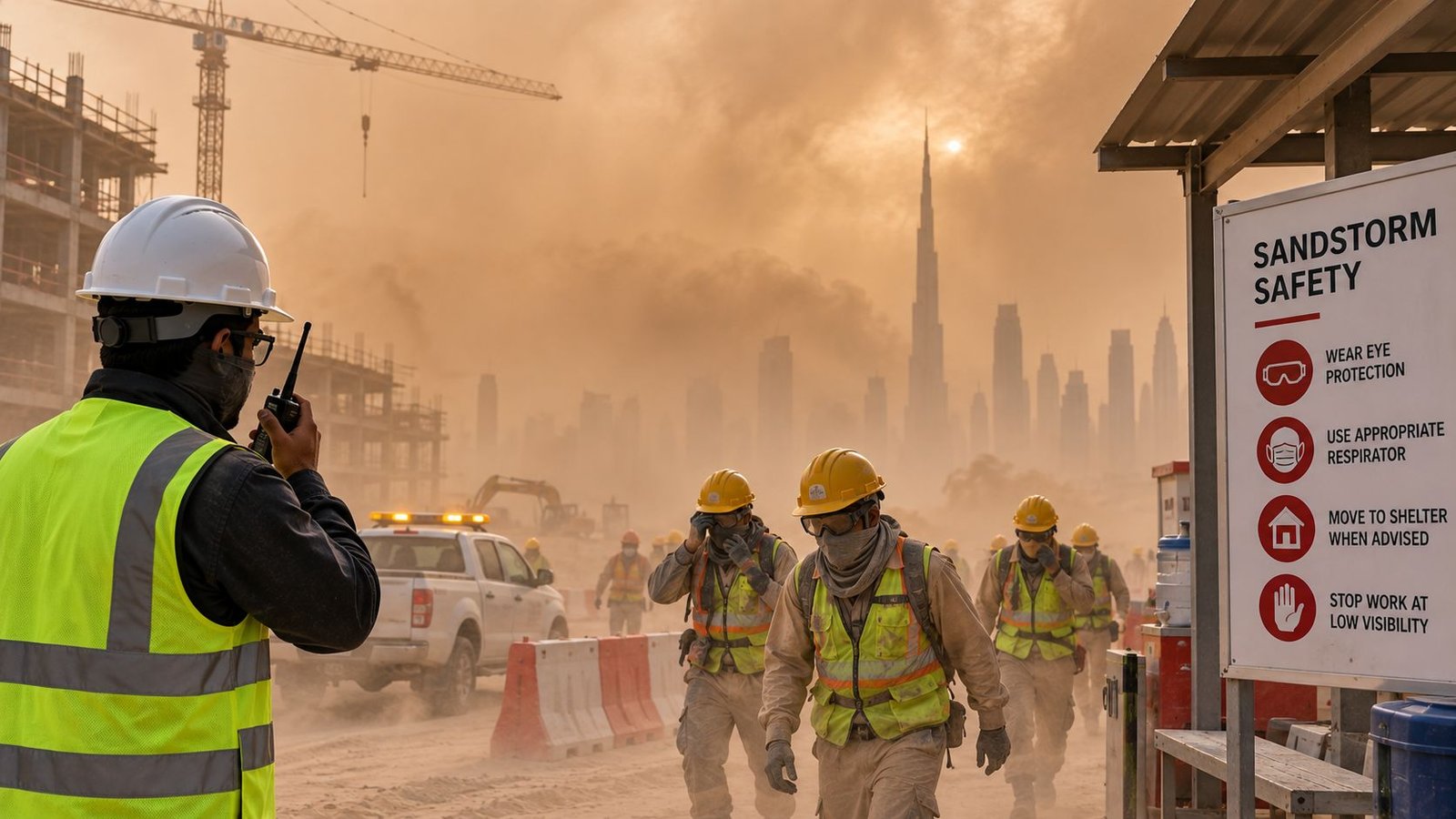

Every summer, the UAE enforces one of the most significant worker protection measures in the Gulf region. The Ministry of Human Resources and Emiratisation (MoHRE) prohibits all outdoor work under direct sunlight and in open-air spaces between 12.30 pm and 3.00 pm, from 15 June to 15 September each year. Now in its 21st consecutive year, this regulation is backed by real penalties, active field inspections, and a public reporting system that holds employers accountable.
Yet every year, some companies scramble to comply at the last minute. Others misunderstand the exemptions and assume their operations are excluded when they are not. For employers who manage outdoor workforces in construction, landscaping, road maintenance, delivery services, oil and gas, or facility management, understanding the full scope of MOHRE midday work ban requirements is not optional. It is the difference between a smooth summer operation and fines that can reach AED 50,000.
This article lays out everything UAE employers need to know. It covers the exact rules, employer obligations, exemptions, penalties, reporting channels, and practical steps to prepare before the ban period begins.
Does Your Workforce Have the Right Heat Protection Gear?
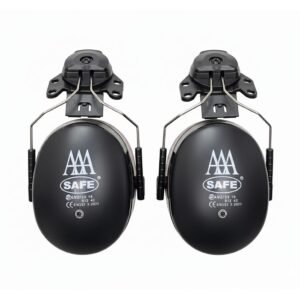
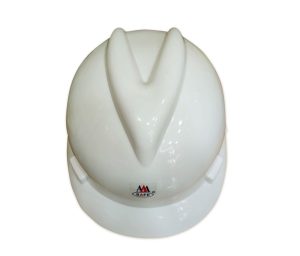
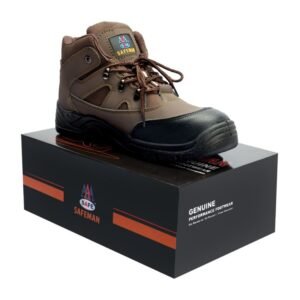
AAAsafedubai supplies sun protection equipment, cooling vests, hydration supplies, and safety gear that help UAE employers meet midday work ban obligations. From shaded rest area accessories to first aid kits, we stock what your site needs for summer compliance.
What the Midday Work Ban Actually Requires
The midday work ban is formally known as the Occupational Heat Stress Prevention Policy. It is not a suggestion or a guideline. It is a binding regulation issued through ministerial resolution and enforced by MoHRE inspectors across every emirate.
Here are the specific rules every employer must follow.
Dates. 15 June to 15 September, every year. These dates have remained consistent since the policy was introduced in 2004.
Restricted hours. 12.30 pm to 3.00 pm daily, including weekends and public holidays.
Restricted activities. All outdoor work performed under direct sunlight or in open spaces exposed to high temperatures. This applies to every industry, not just construction.
Working hour limits. Daily working hours during the ban months must not exceed eight hours, split between morning and evening shifts. Any hours worked beyond eight in a 24-hour period count as overtime and must be compensated with additional pay as required under Federal Decree Law No. 33 of 2021.
Work schedule posting. Employers must display the daily work schedule in a prominent location at the worksite. The schedule must be written in Arabic and in a language the workers understand.
These are the core MOHRE midday work ban requirements that apply to every private sector company operating in the UAE. There are no regional exceptions. Whether your site is in Dubai, Abu Dhabi, Sharjah, Ajman, Ras Al Khaimah, Fujairah, or Umm Al Quwain, the same rules apply.
What Employers Must Provide During the Ban Period
Meeting the midday ban obligations goes beyond simply stopping work at 12.30 pm. MoHRE has defined four specific duties that employers must fulfill throughout the entire ban period, including during exempted work.
Shaded Rest Areas
Employers must provide shaded spaces where workers can rest during the midday break and during any permitted work that continues under exemption. This means physical structures like shade canopies, tented areas, or indoor rest rooms. A tree or a building shadow does not count as an employer-provided shaded area.
Many private sector companies in recent years have gone beyond the minimum by setting up fully air-conditioned rest stations equipped with seating, water coolers, and fans. MoHRE has publicly encouraged other companies to follow this approach.
Cooling Equipment
Worksites must have appropriate cooling devices. This includes industrial fans, misting systems, portable air coolers, or access to air-conditioned rest rooms. The type and capacity of cooling equipment should match the number of workers and the conditions at the site.
Drinking Water and Hydration Supplies
Employers must ensure sufficient cold drinking water is available for all workers. Beyond water, they must also provide rehydration supplements such as electrolyte salts or similar products approved for use by local authorities in the UAE. Dehydration is one of the fastest paths to heat exhaustion and heatstroke. Providing water alone is not enough during peak summer conditions.
First Aid at the Worksite
Every worksite must have accessible first aid equipment. This includes a stocked first aid kit, trained first aid personnel, and a clear protocol for handling heat-related emergencies. Workers showing signs of heat exhaustion, including dizziness, confusion, excessive sweating, or muscle cramps, need immediate attention before the condition worsens to heatstroke, which can be fatal.
Exemptions from the Midday Work Ban
The ban does allow for a small number of exemptions, but they are narrow and strictly defined. Employers cannot self-declare an exemption. The work must fall into one of the following categories.
- Asphalt and concrete work that cannot be delayed. Laying asphalt mixtures or pouring concrete where the technical process requires continuous work and completing the task after the break would compromise the quality or safety of the finished product. This exemption exists because asphalt and concrete have limited working times once mixed.
- Emergency repairs affecting public services. Work required to address hazards or repair damage that directly impacts public welfare. This includes repairs to water supply lines, sewage systems, electrical infrastructure, gas pipelines, and situations that cause traffic disruption on public roads.
- Government-permitted work affecting public life. Activities that require a specific permit from a competent government authority because of their direct impact on public mobility or essential services. This is not a blanket exemption for government projects. The work must have an active permit.
Even when work continues under exemption, employers must still provide all safety requirements listed above. Shaded areas, cooling equipment, cold drinking water, hydration supplements, and first aid must all be in place. The exemption allows work to continue during the restricted hours. It does not exempt the employer from protecting the workers performing that work.
Penalties for Violating the Midday Work Ban
MoHRE takes enforcement seriously. Compliance has exceeded 99% in recent years, but for the companies that violate the rules, the consequences are significant.
- Financial penalties. AED 5,000 per worker found working during the restricted hours. If multiple workers are involved, fines can reach a maximum of AED 50,000 per violation event.
- Administrative consequences. Depending on the severity and frequency of violations, MoHRE may suspend the company’s labour file or downgrade its classification within the Ministry’s labour system. A downgraded classification can restrict the company’s ability to hire new workers, renew permits, or access government tenders.
- Full employer liability. The fine applies to the employer and any individual found directing workers to operate during the banned hours. The worker is not penalised. Accountability sits entirely with the employer and the person giving the instruction.
These penalties apply equally across all emirates and all industries. The midday work ban rules do not distinguish between a small landscaping company and a major construction contractor. The enforcement is the same, and the fines are the same.
How MoHRE Monitors Compliance
MoHRE uses a multi-layered monitoring system to enforce the midday work ban across the entire country.
- Field inspections. MoHRE inspection teams conduct unannounced visits to worksites and labour accommodations throughout the ban period. These inspections check whether outdoor work has stopped, whether rest areas are available, whether water and cooling provisions are in place, and whether the work schedule is posted as required.
- Public reporting channels. MoHRE actively encourages the public to report violations. Reports can be made through three official channels.
- MoHRE call centre at 600590000
- MoHRE smart application (using the “Add Report” feature, available on Apple and Google Play stores)
- MoHRE official website (using the “Add Report” feature)
Reports can be filed by anyone, not just workers. Community members, residents, and other businesses can report violations they observe.
- Awareness campaigns. MoHRE conducts awareness drives in partnership with government and private entities. These include visits to labour accommodations, distribution of educational materials in multiple languages, and coordination with delivery service platforms to ensure their riders are also protected.
Preparing Your Worksite for MoHRE Inspections?
AAAsafedubai supplies first aid kits, cooling equipment, shade canopies, high-visibility safety signage, and hydration supplies that help employers meet midday ban compliance obligations. Our team delivers across Dubai, Abu Dhabi, Sharjah, and the Northern Emirates.
Practical Steps Every UAE Employer Should Take Before 15 June
Meeting the midday ban rules is not difficult, but it does require advance planning. Employers who wait until mid-June to prepare often face gaps that can trigger penalties during surprise inspections. Here is a practical preparation checklist.
- Adjust your work schedules. Restructure morning and evening shifts so that no outdoor work is scheduled between 12.30 pm and 3.00 pm. Post the revised schedule at every worksite in Arabic and the languages your workers read. Print copies before 15 June so they are visible on day one.
- Set up rest areas. Install shade structures, canopies, or tented rest zones at every active worksite. If possible, provide air-conditioned containers or portable cooling units. Ensure there is enough seating capacity for the full outdoor workforce during the break period.
- Stock water and hydration supplies. Order cold drinking water in quantities that cover the entire ban period. Purchase electrolyte sachets, rehydration salts, or approved supplements. Set up water stations at accessible points across the worksite. Assign someone to refill and monitor water availability daily.
- Prepare first aid provisions. Inspect and restock all worksite first aid kits. Ensure you have trained first aid responders on every shift. Brief supervisors on the symptoms of heat exhaustion and heatstroke, and establish a clear escalation protocol for medical emergencies.
- Brief your supervisors. Hold a toolbox talk or safety briefing with all site supervisors, foremen, and team leaders before 15 June. Make sure they understand that the ban is absolute during the restricted hours (except for narrow exemptions), and that they personally share liability if workers are directed to continue outdoor work.
- Review your exemption status. If your work involves asphalt, concrete pouring, or emergency infrastructure repairs, confirm whether the specific task qualifies for exemption. Do not assume the exemption applies to your entire operation. Even for exempted tasks, all safety provisions must still be in place.
- Document everything. Keep records of your work schedules, rest area setup, water procurement, first aid kit inspections, and training sessions. If MoHRE inspectors visit your site, documentation is the fastest way to demonstrate compliance.
Heat-Related Risks That Make the Midday Ban Necessary
The midday work ban is not bureaucratic overreach. It exists because UAE summer conditions are genuinely dangerous for outdoor workers. Between June and September, afternoon temperatures in Dubai, Abu Dhabi, and the inland areas frequently exceed 48°C, with humidity levels in coastal zones pushing the heat index even higher. Understanding the health risks helps employers appreciate why compliance matters beyond avoiding fines.
- Heat exhaustion. This occurs when the body loses excessive water and salt through sweating. Symptoms include heavy sweating, weakness, dizziness, nausea, headache, and muscle cramps. Without intervention, it can progress rapidly to heatstroke. Workers performing physical labour in direct sunlight are at the highest risk, particularly during the first weeks of the ban period before their bodies have fully acclimatised to summer temperatures.
- Heatstroke. This is a medical emergency. The body’s temperature regulation system fails, and core body temperature rises above 40°C. Symptoms include confusion, loss of consciousness, hot and dry skin, and seizures. Heatstroke can be fatal if not treated immediately. On construction sites and road maintenance projects, workers who collapse from heatstroke may also fall from heights or into traffic, creating secondary injury risks.
- Dehydration. Workers lose significant fluid through sweating in temperatures that regularly exceed 45°C. Even mild dehydration reduces concentration, slows reaction times, and increases the risk of workplace accidents. Severe dehydration can lead to kidney damage. A worker performing heavy outdoor labour in UAE summer can lose two to three litres of sweat per hour, which is why the midday ban rules specifically require employers to provide both drinking water and rehydration supplements.
- Sunburn and UV exposure. Prolonged exposure to direct sunlight causes skin damage and increases long-term risks of skin conditions. Workers who are required to be outdoors even during non-banned hours should be provided with UV-protective clothing, sunscreen, and head coverings. The UAE’s UV index regularly reaches “extreme” levels during summer months, making sun protection a year-round concern for outdoor workers.
Since its introduction in 2004, the midday work ban has been associated with a significant reduction in heat exhaustion and heatstroke cases among workers in the UAE. The regulation works. Employer compliance is what makes it work.
Industries Most Affected by the Midday Work Ban in the UAE
While the regulation applies to all outdoor work, certain industries carry a higher compliance burden because their core operations depend on workers being outside during summer months.
- Construction. The largest affected sector. Tower crane operators, steel fixers, concrete crews, scaffolding teams, and general labourers all work under direct sunlight. Construction projects must restructure their entire daily schedule around the ban, often starting earlier in the morning and extending evening shifts.
- Road and infrastructure maintenance. Asphalt crews, road marking teams, and highway maintenance workers face the ban during their busiest season, as road surfaces deteriorate faster in extreme heat. Exemptions for asphalt work are narrow and do not cover general road maintenance tasks.
- Landscaping and grounds maintenance. Garden crews, irrigation teams, and park maintenance workers across Dubai, Abu Dhabi, and Sharjah are fully covered by the ban. Property management companies must plan all outdoor landscaping work around the restricted hours.
- Delivery services. Riders and drivers who operate outdoors on motorcycles, bicycles, or on foot fall under the ban. MoHRE has coordinated with delivery platforms in recent years to provide thousands of air-conditioned rest stations for delivery workers across the country during the ban period.
- Oil and gas field operations. Workers at outdoor wellheads, pipeline inspection teams, and field maintenance crews in Abu Dhabi and the Northern Emirates face some of the harshest conditions in the country. These operations must maintain strict heat safety protocols beyond the midday ban itself.
- Facility management and building maintenance. Exterior cleaning crews, HVAC technicians working on rooftop units, and external painting teams are all covered. Building management companies must schedule all outdoor maintenance for morning or evening shifts during the ban period.
Get Your Summer Safety Supplies Before 15 June
AAAsafedubai helps employers across every industry prepare for the midday work ban. From cooling vests and shade structures to first aid kits and hydration stations, we supply everything you need for summer compliance across all seven emirates.
Frequently Asked Questions
The ban runs from 15 June to 15 September every year. During this period, all outdoor work under direct sunlight is prohibited between 12.30 pm and 3.00 pm daily.
AED 5,000 per worker found working during the restricted hours. The maximum fine is AED 50,000 when multiple workers are involved. Additional penalties can include suspension of the company’s labour file or downgrading within MoHRE’s classification system.
Delivery riders who work outdoors under direct sunlight fall under the same restriction. In recent years, MoHRE has coordinated with government entities and delivery platforms to provide thousands of air-conditioned rest stations for delivery workers across the UAE during the ban period.
Reports can be made through the MoHRE call centre at 600590000, through the MoHRE smart application (using the “Add Report” service), or through the MoHRE website. Reports can be filed by anyone, including workers, residents, and community members.
The midday work ban specifically applies to outdoor work under direct sunlight and in open-air spaces. Indoor workers are not covered by this particular regulation. However, all employers must still comply with the eight-hour daily working limit during the ban months, with overtime compensation required for hours exceeding this limit.
Yes. AAASAFEDUBAI.COM provides shade canopies, portable cooling units, hydration supplies, first aid kits, UV-protective clothing, high-visibility safety signage, and other products that help employers meet summer midday ban obligations across all emirates.
Closing Thoughts
The MOHRE midday work ban requirements are clear, well-established, and enforced with real consequences. The regulation has been in place for over two decades. It has achieved compliance rates above 99% in recent years, and MoHRE continues to strengthen its monitoring through field inspections and public reporting channels.
For employers, the message is straightforward. Prepare early, provide what the regulation demands, and document your compliance. The costs of preparation are minimal compared to the AED 5,000-per-worker fines, the administrative consequences of a downgraded classification, and most importantly, the human cost of a worker suffering heat exhaustion or heatstroke because basic protections were not in place.
The UAE’s summer heat is not going to get milder. But the midday work ban gives employers a clear framework to protect their workers through the worst of it. Following through on that framework is both a legal obligation and a basic responsibility to every person working under the sun.
For companies new to the UAE market or managing their first summer season with an outdoor workforce, the time to prepare is now. Review the rules, set up your rest areas, stock your water and first aid supplies, brief your supervisors, and make sure your documentation is ready before the first MoHRE inspector arrives at your gate.
Disclaimer
The information provided in this article is intended for general educational purposes only and should not be treated as a substitute for professional legal advice, safety consultation, or medical guidance. While every effort has been made to ensure accuracy based on current MoHRE regulations, workplace safety rules in the UAE are subject to change, and specific requirements may differ between emirates, free zones, and project authorities. Readers are encouraged to verify all regulatory details directly with the Ministry of Human Resources and Emiratisation (MoHRE), Dubai Municipality, or the Abu Dhabi Public Health Center (ADPHC). AAASAFEDUBAI.COM does not guarantee specific compliance outcomes and recommends consulting a qualified occupational health and safety professional for site-specific guidance. Always refer to the latest MoHRE ministerial resolutions and official guidance for definitive regulatory information.