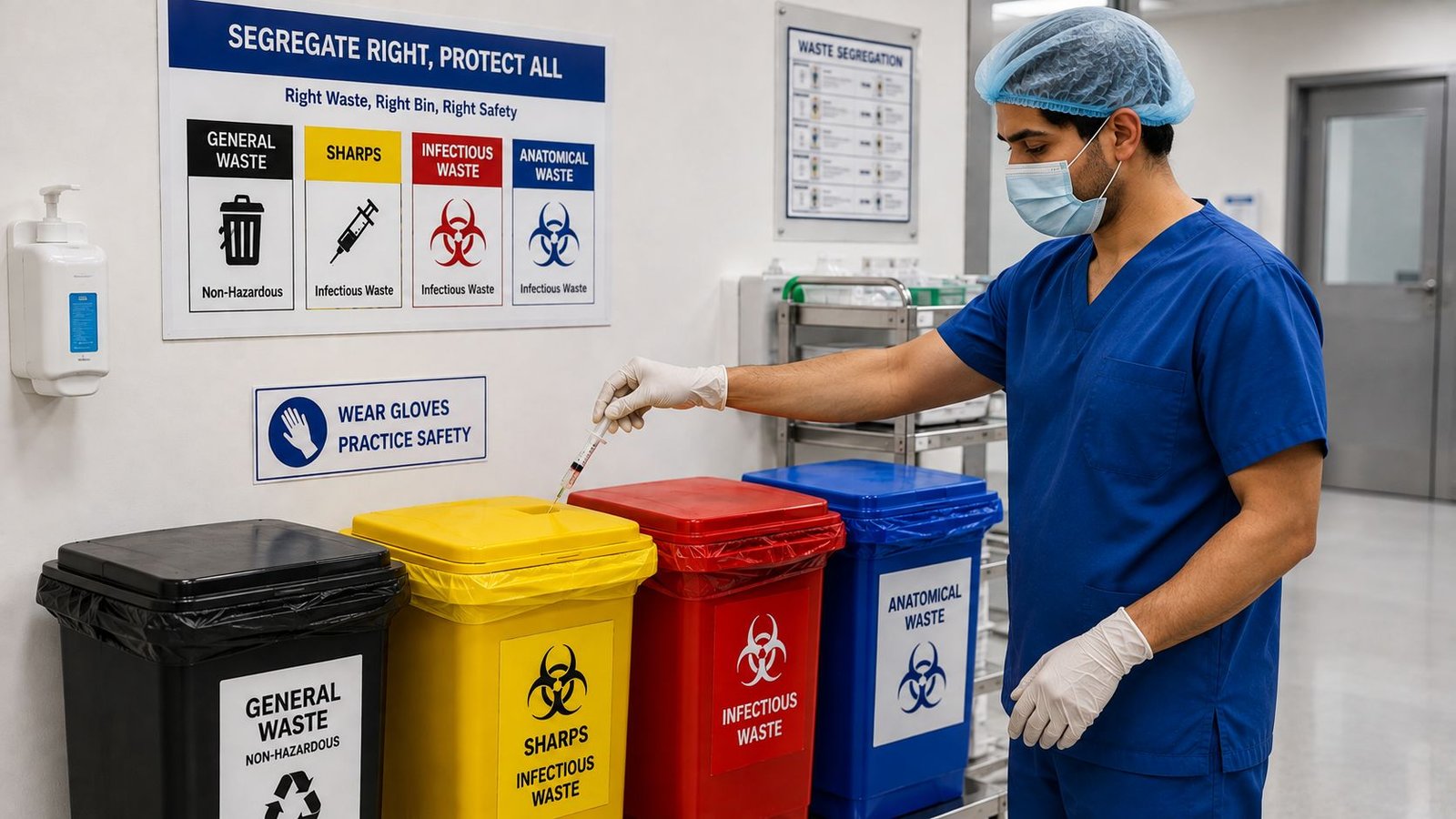
Medical waste that is segregated incorrectly at the point of generation cannot be fixed later in the disposal chain. Once anatomical waste, sharps, and general waste are mixed in a single bag, the entire bag must be treated and disposed of as the highest hazard category present, increasing cost and treatment burden for the entire facility. Good segregation happens in the first seconds after a healthcare worker finishes using an item, not somewhere further down the chain.
Why Segregation at the Point of Generation Matters
Dubai Municipality manages a significant volume of medical waste generated across hospitals, clinics, and laboratories citywide, transporting it to the Jebel Ali Hazardous Waste Treatment Facility for treatment. The efficiency of that entire downstream system depends on waste arriving already correctly segregated, since re-sorting mixed medical waste after collection is both hazardous and impractical at scale. A facility with poor segregation habits creates cost and risk that extends well beyond its own walls.
UAE Medical Waste Categories
Health authority guidance in the UAE, including frameworks referenced by the Abu Dhabi health regulator, structures medical waste into distinct categories, each with specific handling and container requirements.
Anatomical and Pathological Waste
Tissue, organs, body parts, and containers holding blood or blood products fall into this category. This waste is typically collected in heavy-duty red polyethylene bags marked as infectious waste, stored in a temperature-controlled area, and incinerated within a defined short window rather than allowed to accumulate.
Sharps Waste
Needles, scalpels, broken glass, and other sharp instruments or medical equipment vessels form their own dedicated category due to the dual hazard of injury and infection risk. Sharps should go directly into a rigid, puncture-resistant container at the point of use, never into a soft bag alongside other waste types.
Patient Waste
Dressings, casts, single-use clothing, diapers, and similar items not suspected of high infection risk are typically collected in medium-duty bags distinct from anatomical waste bags, reflecting their lower but still present hazard level.
Radioactive Medical Waste
Radioactive materials used in diagnostic or treatment procedures require containers marked with the radioactive waste symbol and disposal in line with the Federal Authority for Nuclear Regulation’s requirements, a separate and more tightly controlled pathway than other medical waste categories.
Recyclable and Non-Hazardous Domestic Waste
Paper, cardboard, and packaging not contaminated by clinical contact can be segregated into standard recycling streams, while genuinely non-hazardous domestic waste from staff and administrative areas follows normal municipal waste handling, separate from any clinical waste stream.
Container and Labelling Practices That Reduce Errors
Placing the Right Container Where the Waste Is Generated
A sharps container located across the room from where injections are given will be misused, since staff under time pressure default to whatever container is within reach. Container placement should be planned around actual workflow, not room layout convenience.
Consistent Labelling Across the Facility
Every container should carry a clear, consistent label indicating what waste category it is for, in both Arabic and English given the multinational healthcare workforce common across UAE facilities. Mixed labelling conventions between departments in the same facility is a frequent, avoidable source of segregation error.
PPE for Staff Handling Medical Waste
Gloves and Hand Protection
Staff handling waste bags and containers should wear disposable gloves rated for the task, changed between different waste handling activities to avoid cross-contamination between areas.
Protective Clothing for Waste Handling Staff
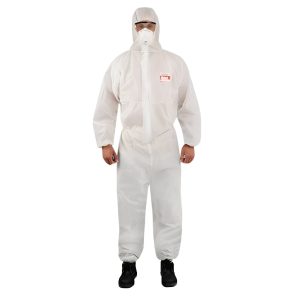
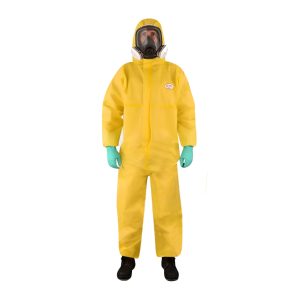
Facility staff responsible for collecting and transporting waste bags between departments benefit from a disposable coverall and head cover, reducing the chance of contamination transfer as they move between clinical areas and the central waste storage point.
Eye Protection for Handling and Transfer
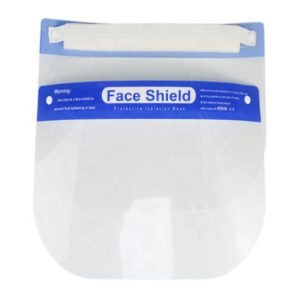
Where waste transfer involves any risk of splash, such as moving containers holding liquid waste, a face shield adds a layer of protection that gloves alone do not provide.
Staff Training and Ongoing Compliance
Segregation habits form quickly and are hard to change once established, which makes initial training at the point a staff member joins a facility more important than periodic refreshers alone. New staff, including agency and temporary staff who may be less familiar with a specific facility’s container layout, should receive a brief practical walkthrough of segregation practice for their specific work area before their first shift handling clinical waste. Periodic spot checks of waste streams, looking for sharps in general waste bags or anatomical waste mixed with patient waste, give facilities an early indicator of where retraining is needed before an external audit identifies the same gap.
UAE Regulatory Context
Medical waste management in the UAE falls under a combination of federal waste management legislation, emirate-level environmental and municipal regulation, and health authority licensing requirements specific to healthcare facilities. Dubai Municipality oversees medical waste collection and treatment within Dubai, working alongside the Dubai Health Authority and the Ministry of Health and Prevention on facility-level compliance, while Abu Dhabi applies its own framework through the Department of Health and relevant environmental authorities. Facilities should confirm their waste management contractor and internal segregation practice align with the specific requirements published by their emirate’s health and environmental regulators, since container specifications and collection frequency can vary by facility type and location.
AAA Safe Dubai supplies gloves, coveralls, and face protection suited to medical waste handling. Contact our technical team for guidance on PPE for your facility’s waste management workflow.
Frequently Asked Questions
The entire bag must typically be treated and disposed of as the higher hazard category once contamination is discovered, increasing treatment cost and handling risk for waste that would otherwise have been straightforward general waste.
Only if it has had no contact with clinical waste or bodily fluids. Packaging that has been in a clinical treatment area should be assessed on a case by case basis rather than assumed safe for standard recycling by default.
This depends on the volume generated and the specific waste category, with sharps and anatomical waste typically requiring more frequent collection than lower-risk patient waste. Facilities should set collection schedules based on actual generation volume rather than a single fixed interval across all categories.
The underlying waste categories and hazard principles apply regardless of facility size, though the volume and frequency of each category generated will differ. Even a small clinic generating sharps waste needs a dedicated sharps container and correct segregation practice.
Facility management is generally responsible for providing the correct containers, training, and labelling systems. Individual staff are responsible for following the segregation practice provided, which is why clear training and accessible container placement matter as much as the policy itself.
Disclaimer
This article provides general information on medical waste segregation practices and does not replace facility-specific waste management protocols or legal advice. For authoritative requirements, refer to Dubai Municipality and the Ministry of Health and Prevention. Always confirm segregation and disposal requirements with your facility’s licensed waste management contractor and relevant health authority.