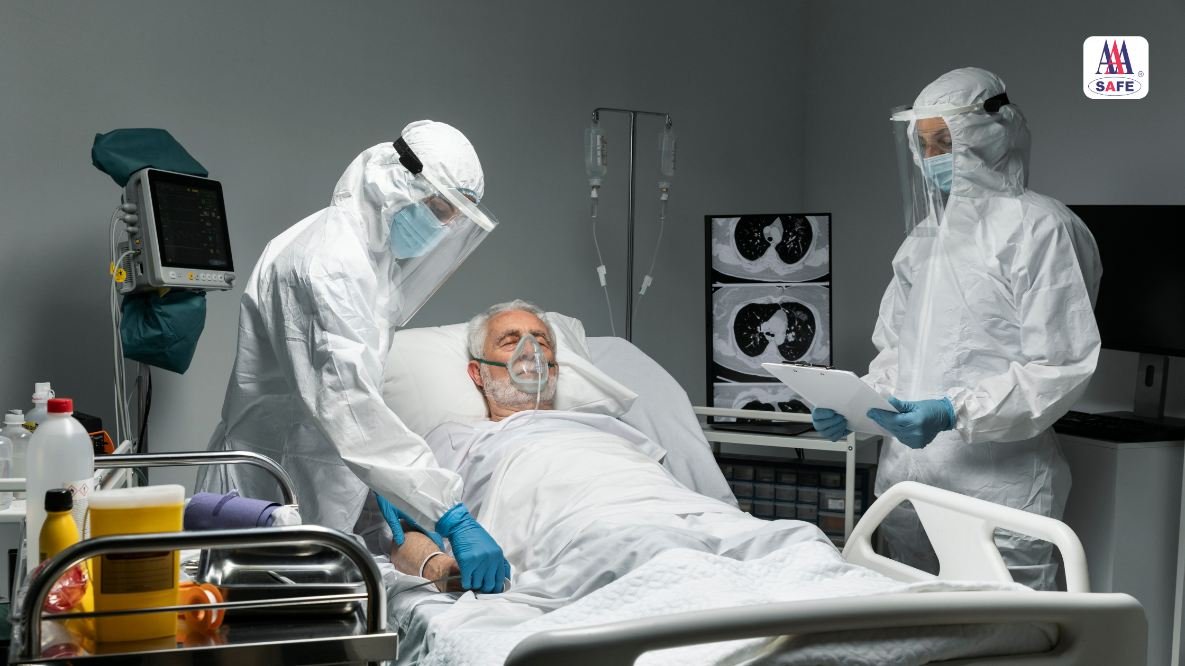
You know that moment when a hospital compliance officer realizes their ICU staff haven’t had formal PPE audit training in over two years? That’s when ICU PPE safety compliance becomes more than just a regulatory box to check – it becomes a systematic breakdown in worker protection that could cost lives and destroy institutional credibility.
I’ve worked with healthcare facilities across the UAE for years, and honestly, the hospitals that treat compliance as a separate function from actual safety are the ones that end up with preventable infections and regulatory violations. Hospital PPE compliance isn’t about having the right equipment sitting in storage somewhere – it’s about ensuring that every single staff member uses that equipment correctly every single time they enter a patient room.
Look, ICU environments don’t forgive carelessness. One improper donning sequence, one moment of hand contact with a contaminated surface, one failure to change gloves between patients – any of these can turn a healthcare worker into a disease vector that spreads infections throughout your facility. Effective healthcare safety standards require systematic, relentless attention to detail that most facilities simply aren’t providing.
This guide walks you through implementing comprehensive ICU PPE safety compliance systems specifically designed for UAE hospitals operating under DHA, DoH, and MoHAP regulations.
Understanding UAE Healthcare Compliance Framework
Professional hospital PPE compliance starts with understanding the regulatory environment that governs healthcare safety in the UAE.
Regulatory Bodies and Requirements
The Dubai Health Authority (DHA) Health Facility Guidelines establish comprehensive standards for all health facilities in Dubai, including specific requirements for ICU operations and infection prevention and control measures.
The Ministry of Health and Prevention (MoHAP) sets national-level standards applicable across all emirates. The Department of Health Abu Dhabi (DoH) establishes emirate-specific requirements for healthcare facilities in Abu Dhabi.
Federal Decree Law No. 33 of 2021 requires employers to provide appropriate protective equipment based on workplace hazards. For ICU environments, this includes comprehensive systems designed for high-contamination scenarios.
International Accreditation Standards
Joint Commission International (JCI) and Central Board of Accreditation for Healthcare Institutions (CBAHI) provide additional accreditation requirements that many UAE hospitals voluntarily adopt. These healthcare safety standards include specific requirements for protective equipment and infection prevention.
Hospital PPE compliance must meet these various regulatory frameworks simultaneously, creating complex obligations that require systematic management.
Need expert guidance on UAE hospital compliance? AAA Safe Dubai specializes in helping healthcare facilities across Dubai, Abu Dhabi, and Sharjah implement comprehensive safety programs that meet DHA, DoH, and MoHAP requirements while addressing UAE-specific challenges.
Core Components of Hospital PPE Compliance Programs
Effective healthcare safety standards for hospitals encompass multiple components that must work together as an integrated system.
1. Hazard Assessment and PPE Selection
Comprehensive hazard assessment determines which protective equipment is actually necessary for specific clinical scenarios.
Risk-Based PPE Selection
Standard precautions apply to all patient care, requiring minimum equipment including gloves, isolation gowns, and hand hygiene. Cost per standard care encounter is AED 2-5.
Enhanced precautions for known infectious disease patients or high-risk procedures require FFP2 and N95 masks, face shields, and extended-sleeve gowns. Cost per encounter is AED 15-30.
Maximum protection for highly infectious or unknown disease scenarios requires PAPR systems, full-body suits, and extended protocols. Cost per encounter is AED 50-150.
Hospital PPE compliance requires documented hazard assessment procedures that clearly define which equipment is required for specific patient scenarios and clinical procedures.
2. Equipment Inventory Management
Proper inventory systems ensure adequate supply without excess waste or emergency shortages.
Inventory Control Systems
Automated inventory tracking (cost AED 5,000-12,000 for system setup) monitors stock levels, alerts managers to reorder triggers, and documents consumption patterns.
Usage tracking systems document which items are used for specific procedures or patient types, enabling cost analysis and compliance verification.
Expiration management ensures expired or degraded equipment doesn’t enter circulation. Many UAE hospitals lose thousands of dirhams annually to expired supplies.
Seasonal adjustment accounts for fluctuating needs during disease outbreaks or peak patient volumes.
3. Training and Competency Assessment
Staff cannot comply with healthcare safety standards they don’t understand or haven’t properly practiced.
Training Requirements
Initial competency training (AED 400-750 per worker) covers hazard recognition specific to ICU environments, proper equipment selection based on clinical scenario, correct donning sequences preventing self-contamination, proper doffing procedures minimizing exposure, hand hygiene procedures before and after use, and emergency removal protocols.
Competency demonstration requires observed performance where staff demonstrate correct procedures and receive immediate feedback.
Annual refresher training (AED 300-500 per worker) maintains competency and addresses equipment changes or policy updates.
Role-specific training addresses unique requirements for nurses (AED 350-600), physicians (AED 300-500), respiratory therapists (AED 400-700), and support staff (AED 250-400).
Documentation requirements include attendance records, competency assessments, and individual files maintaining training history.
4. Compliance Auditing Systems
Regular audits identify gaps and drive corrective actions in hospital PPE compliance programs.
Audit Methodologies
Observational audits monitor actual use during patient care, assessing appropriate selection for scenario, correct donning sequence, proper hand hygiene, appropriate doffing procedure, and environmental contamination prevention.
CDC guidance indicates only 50% of healthcare personnel remove protective equipment correctly under normal conditions, making observational auditing essential for improvement.
Competency-based audits (AED 150-300 per session) assess staff knowledge and demonstrated skills through direct observation and testing.
Equipment availability audits verify that required items are properly stocked and immediately accessible at points of care.
Supply proximity audits ensure equipment is located within arm’s reach of clinical work areas, preventing delays that encourage non-compliance.
Audit Frequency and Scheduling
DHA and international best practices recommend quarterly audits minimum, with increased frequency during disease outbreaks or after identified gaps.
Random audits catch actual performance rather than staff performing well when they know they’re being observed.
Targeted audits focus on specific areas with identified issues or new staff members.
Aggregate data analysis tracks trends across departments and time periods to identify systemic issues requiring comprehensive intervention.
5. Hand Hygiene Integration
Hand hygiene represents the most critical component of infection prevention in healthcare safety standards, yet suffers from chronic failure.
Hand Hygiene Requirements
Before donning protective equipment, workers must perform hand hygiene using soap and water if visibly soiled (20 seconds minimum) or alcohol-based hand sanitizer (60%+ alcohol) if not visibly soiled (20 seconds).
After doffing equipment, workers must perform immediate hand hygiene before contacting any clean surfaces or other patients.
Between patient encounters, hand hygiene must be performed regardless of whether gloves were worn.
Hand Hygiene Compliance Challenges
Research indicates compliance rates of 40-60% for hand hygiene protocols, meaning most ICU staff fail to comply with this fundamental requirement.
Proximity issues – Hand sanitizer not immediately accessible in clinical areas reduces compliance by 30-40%.
Time pressure – During busy shifts, staff skip hand hygiene despite knowing requirements.
Perceived low risk – Staff working with the same patient over hours sometimes skip hand hygiene believing low risk justifies non-compliance.
Healthcare safety standards require systematic hand hygiene monitoring and correction.
6. Environmental Infection Control
Environmental surfaces become contaminated during clinical care and can serve as vectors for infection spread if not properly managed.
Environmental Cleaning Requirements
High-touch surface cleaning (cost AED 15-35 per room per day) includes bed rails and support equipment, ventilator surfaces and connections, monitor screens and control panels, medication carts and surfaces, and nurse station keyboards and phones.
Disinfection validation using ATP testing (cost AED 5-10 per test) verifies cleaning effectiveness. ATP monitoring systems detect surface contamination and provide objective feedback on cleaning quality.
Equipment decontamination protocols ensure shared devices like stethoscopes, blood pressure cuffs, and thermometers are properly cleaned between patients.
Linen and waste management follows standard infection control procedures with proper segregation and handling protocols.
Looking to implement comprehensive audit systems for your UAE hospital? AAA Safe Dubai provides complete solutions including tracking software, regular audits, and corrective action programs tailored to DHA and MoHAP requirements.
Hospital PPE Compliance Components and Costs
| Compliance Component | Implementation Cost (AED) | Annual Cost (AED) | Key Metrics | Regulatory Authority |
|---|---|---|---|---|
| Hazard Assessment | 2,000–4,000 | 1,000–2,000 | Risk-appropriate use | DHA and MoHAP |
| Inventory Management | 5,000–12,000 | 2,000–4,000 | Stock levels, waste reduction | All authorities |
| Training Programs | 8,000–15,000 | 6,000–12,000 | Competency rates, completion | All authorities |
| Audit Systems | 3,000–8,000 | 4,000–8,000 | Compliance rates, trend data | All authorities |
| Hand Hygiene | 2,000–5,000 | 2,000–4,000 | Compliance observation rates | All authorities |
| Environmental Control | 4,000–10,000 | 3,000–7,000 | ATP test results, infection rates | All authorities |
| Documentation Systems | 3,000–7,000 | 1,000–2,000 | Audit trails, records | All authorities |
Costs reflect small-to-medium ICU facility implementation in UAE market as of 2025. Pricing represents general market estimates and should be verified with suppliers.
Implementing Hospital PPE Compliance in UAE Facilities
ICU PPE safety compliance requires systematic implementation across all hospital operations.
Phase 1: Assessment and Planning (Weeks 1-4)
Current state assessment
- Evaluate existing practices through direct observation
- Document baseline compliance rates
- Identify high-risk areas and practices
- Interview staff regarding barriers
- Review incident reports and infection data
Gap analysis
- Compare current practices to DHA, DoH, and MoHAP requirements
- Identify resource gaps (equipment, training, systems)
- Determine vulnerabilities
- Assess staff knowledge and attitudes
Implementation planning
- Define specific objectives
- Allocate budget and resources
- Establish timelines
- Designate team members
- Secure leadership support
Phase 2: Infrastructure Development (Weeks 5-12)
Equipment procurement and deployment
- Procure high-quality equipment appropriate for ICU scenarios
- Deploy at all patient care points (AED 3,000-6,000 per care area)
- Install inventory management systems
- Establish supply chain protocols
System implementation
- Implement audit and feedback systems
- Establish documentation and record-keeping procedures
- Create inventory tracking protocols
- Develop reporting mechanisms
Facility modifications
- Install hand sanitizer dispensers at all care points
- Relocate or increase accessibility of supplies
- Establish dedicated areas for donning and doffing
- Install environmental monitoring systems (ATP testing)
Phase 3: Training and Education (Weeks 13-24)
Staff training delivery
- Conduct initial competency training for all ICU staff
- Perform direct observation of procedures
- Provide immediate feedback and correction
- Document competency achievement
Department-specific training
- Nursing staff training (AED 350-600 per person)
- Physician training (AED 300-500 per person)
- Respiratory therapy training (AED 400-700 per person)
- Support staff training (AED 250-400 per person)
Ongoing education
- Weekly team huddles reviewing issues
- Monthly continuing education on emerging infections or procedure changes
- Annual refresher training for all staff
Phase 4: Compliance Monitoring (Ongoing)
Regular audit program
- Implement quarterly audits
- Conduct monthly observational studies
- Perform random unannounced audits
- Track healthcare-associated infection rates
Data collection and analysis
- Document all audit findings
- Analyze trends across time and departments
- Identify non-compliance patterns
- Calculate compliance percentages
Corrective actions
- Address individual non-compliance through retraining
- Implement systemic changes when gaps are widespread
- Provide positive reinforcement
- Escalate persistent non-compliance through management
Continuous improvement
- Review infection data quarterly
- Update protocols based on emerging best practices
- Adjust audit procedures based on findings
- Celebrate improvements
Heat Stress Considerations for UAE Hospital PPE Programs
Hospital PPE compliance in UAE facilities must address unique heat challenges that affect staff performance.
PPE-Related Heat Stress
Even in air-conditioned ICU environments, full protective equipment can cause heat accumulation and stress. Staff working rapidly or emotionally stressed may experience elevated core body temperature, increased sweating and dehydration, fatigue and reduced cognitive function, and increased error rates and safety lapses.
Heat Stress Mitigation
Work scheduling
- Rotate staff through high-stress tasks
- Provide adequate rest periods
- Avoid scheduling intensive procedures during peak heat periods
- Allow duty rotation reducing continuous wear
Environmental controls
- Maintain ICU ambient temperature at comfortable levels
- Increase ventilation in high-risk areas
- Provide cooling stations with air-conditioned areas
- Install additional fans to improve air circulation
Personal cooling
- Provide cooling vests for extended operations (AED 280-450)
- Supply chilled electrolyte drinks preventing dehydration
- Encourage mandatory rest and cooling breaks
- Monitor staff for heat stress symptoms
Cost-Benefit Analysis of Hospital PPE Compliance
Healthcare safety standards investment provides substantial returns through infection prevention and liability reduction.
Investment Costs
One-time implementation
- Equipment and system installation: AED 25,000-50,000
- Staff training program development: AED 8,000-15,000
- Audit system setup: AED 3,000-8,000
- Total initial: AED 36,000-73,000
Annual operational costs
- Staff salaries for compliance activities: AED 50,000-100,000
- Audit and monitoring services: AED 4,000-8,000
- Training and refresher programs: AED 8,000-15,000
- Supplies: AED 30,000-60,000
- System maintenance and updates: AED 5,000-10,000
- Total annual: AED 97,000-193,000
Healthcare-Associated Infection Costs
DHA and international data demonstrates that healthcare-associated infections create substantial costs for hospitals including direct medical treatment, extended hospitalization, legal liability and settlements, regulatory fines and penalties, and reputational damage that affects patient volumes and revenue.
Return on Investment Analysis
For typical ICU with 30-50 beds, prevention of 2-3 healthcare-associated infections through proper hospital PPE compliance can save AED 380,000-4,050,000 annually. Combined with regulatory compliance improvements, reduced citations, maintained accreditation, and improved staff retention, the return on investment consistently exceeds initial and ongoing costs.
Ready to implement comprehensive hospital PPE compliance for your UAE facility? AAA Safe Dubai provides complete programs including assessment, training, audit systems, and ongoing support tailored to DHA, DoH, and MoHAP requirements across Dubai, Abu Dhabi, and Sharjah.
Frequently Asked Questions
DHA Health Facility Guidelines, MoHAP national standards, and Federal Decree Law No. 33 of 2021 establish requirements for appropriate equipment, training, audit systems, and documentation. Hospital PPE compliance must meet all applicable regulatory frameworks simultaneously across Dubai, Abu Dhabi, and other emirates.
Best practice recommends quarterly audits minimum, with increased frequency (weekly or monthly) during disease outbreaks or after identified gaps. Random audits should supplement scheduled audits. Healthcare safety standards require ongoing monitoring rather than periodic assessments.
Initial implementation costs range from AED 36,000-73,000, with annual operational costs of AED 97,000-193,000 for facilities with 30-50 ICU beds. These costs represent general market estimates and should be verified based on specific facility needs and supplier pricing.
Initial competency training (AED 400-750 per worker) covers hazard recognition, equipment selection, donning and doffing procedures, hand hygiene, and emergency protocols. Annual refresher training (AED 300-500 per worker) maintains competency. Healthcare safety standards require documented training completion for all staff.
Individual non-compliance should trigger immediate retraining and competency reassessment. Repeated non-compliance may require disciplinary action. Systemic gaps require comprehensive intervention including policy review, equipment changes, and additional training. Documentation should track all corrective actions.
Hand hygiene is fundamental to infection prevention, yet compliance rates typically remain 40-60%. ICU PPE safety compliance programs must prioritize hand hygiene monitoring and correction through auditing, proximity improvement, and staff engagement initiatives according to DHA and MoHAP standards.
Key metrics include audit compliance rates (targeting over 90%), hand hygiene compliance rates (targeting over 85%), healthcare-associated infection rates (targeting reduction of 20-30%), and staff training completion rates (targeting 100%). Healthcare safety standards should track these metrics quarterly.
Proper use prevents contamination transmission from patients to staff and other patients. Environmental cleaning ensures surfaces don’t serve as infection vectors. Together, they create comprehensive infection prevention systems required by DHA and MoHAP regulations.
Important Notice
This information provides general guidance on ICU PPE safety compliance and should not be considered a substitute for professional safety consultation or regulatory advice. Compliance requirements vary based on facility type, patient populations, and specific operations.
UAE hospitals must comply with Dubai Health Authority regulations, Department of Health Abu Dhabi requirements, Ministry of Health and Prevention directives, and applicable international standards. Requirements change frequently, and facilities must verify current obligations with relevant authorities.
Hospital PPE compliance programs must be designed by qualified occupational health and infection prevention professionals familiar with ICU operations, UAE regulatory environment, and international best practices. Improper implementation can result in regulatory violations, inadequate protection, and healthcare-associated infections.
Professional safety and infection prevention consultation is essential for developing effective programs that protect both healthcare workers and patients. Facilities should engage external auditors and consultants to supplement internal programs.
Equipment Cost Disclaimer: All pricing information represents general UAE market estimates as of 2025 and should be verified with current suppliers. Equipment costs vary based on supplier, quantity, specifications, and import duties. Hospitals should obtain current quotes for accurate budget planning.
Regulatory Compliance: Healthcare facilities must verify current requirements with Dubai Health Authority, Department of Health Abu Dhabi, Ministry of Health and Prevention, and other applicable regulatory bodies. Standards and requirements change regularly.
For professional consultation on hospital PPE compliance programs designed specifically for UAE healthcare operations, contact qualified providers with demonstrated experience in healthcare safety and UAE regulatory requirements.
Conclusion
ICU PPE safety compliance represents the most important investment UAE hospitals can make in worker protection and patient safety. The reality is that systematic, documented compliance with protective equipment protocols is the difference between excellent healthcare organizations and institutions drowning in preventable infections and regulatory violations.
The good news is that effective hospital PPE compliance isn’t actually complicated. It requires clear standards, proper training, regular auditing, and genuine leadership commitment. That’s it. But that genuine commitment is exactly where most facilities fail because compliance feels like an administrative burden rather than a core operational necessity.
I’ve learned that the best hospitals don’t treat compliance as something that happens in an office somewhere. They treat it as central to ICU operations – as fundamental as medications or medical devices. When leadership takes healthcare safety standards seriously, staff understand that compliance matters and behaviors change accordingly.
The financial return on investment is compelling but shouldn’t be the primary motivation. Yes, preventing healthcare-associated infections saves hundreds of thousands of dirhams. Yes, avoiding regulatory violations and fines protects institutional finances. But more fundamentally, hospital PPE compliance is about protecting healthcare workers who deserve to come home healthy after providing excellent patient care.
Your ICU staff are exposed to serious pathogens daily. They deserve protection systems that actually work because someone decided compliance wasn’t optional. Your patients deserve protection from healthcare-associated infections that can turn a recovery into tragedy. Comprehensive healthcare safety standards deliver on both those commitments.
Make the investment. Do the work. Implement systematic compliance. Your facility, your staff, and your patients will be better for it.