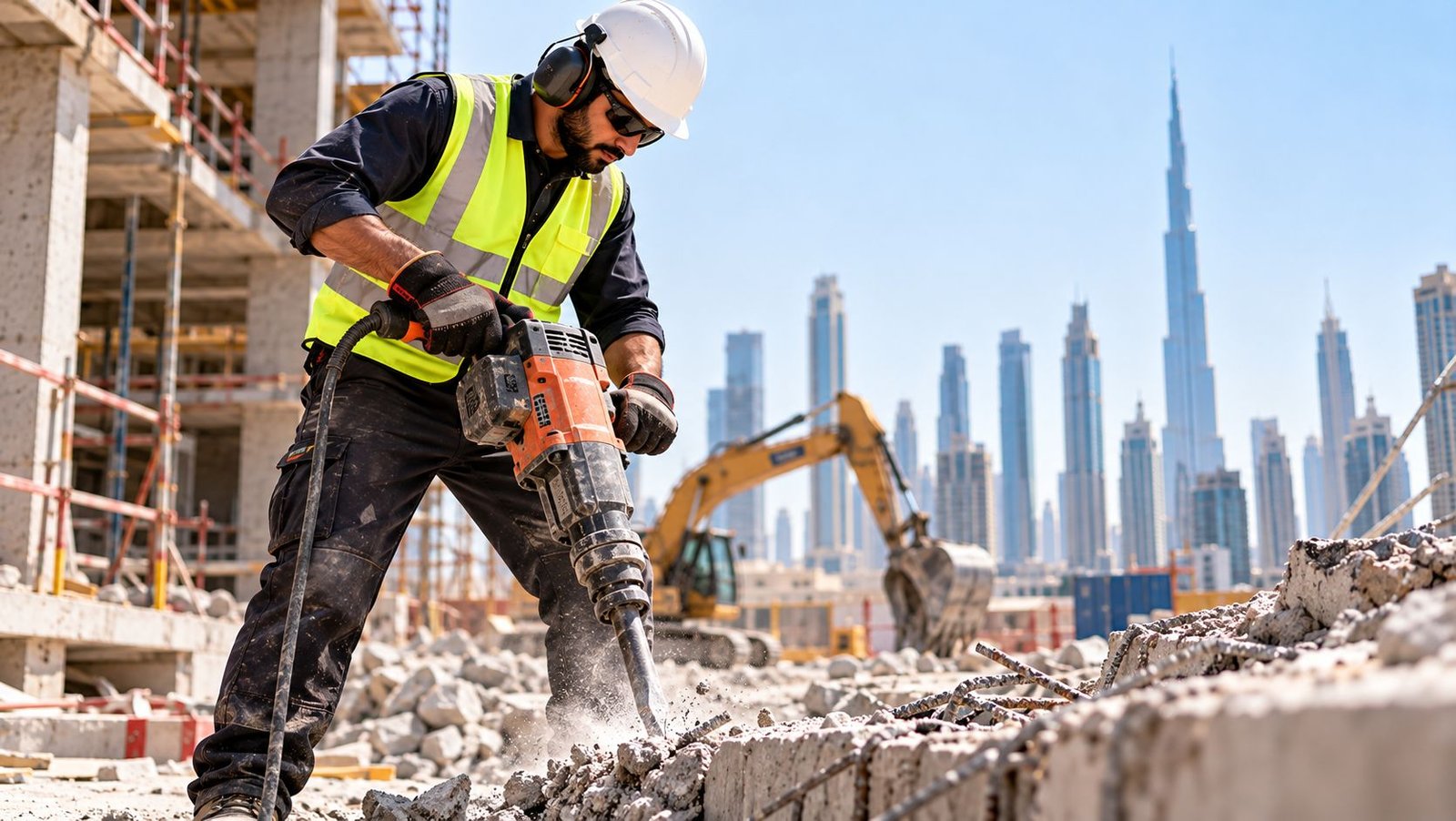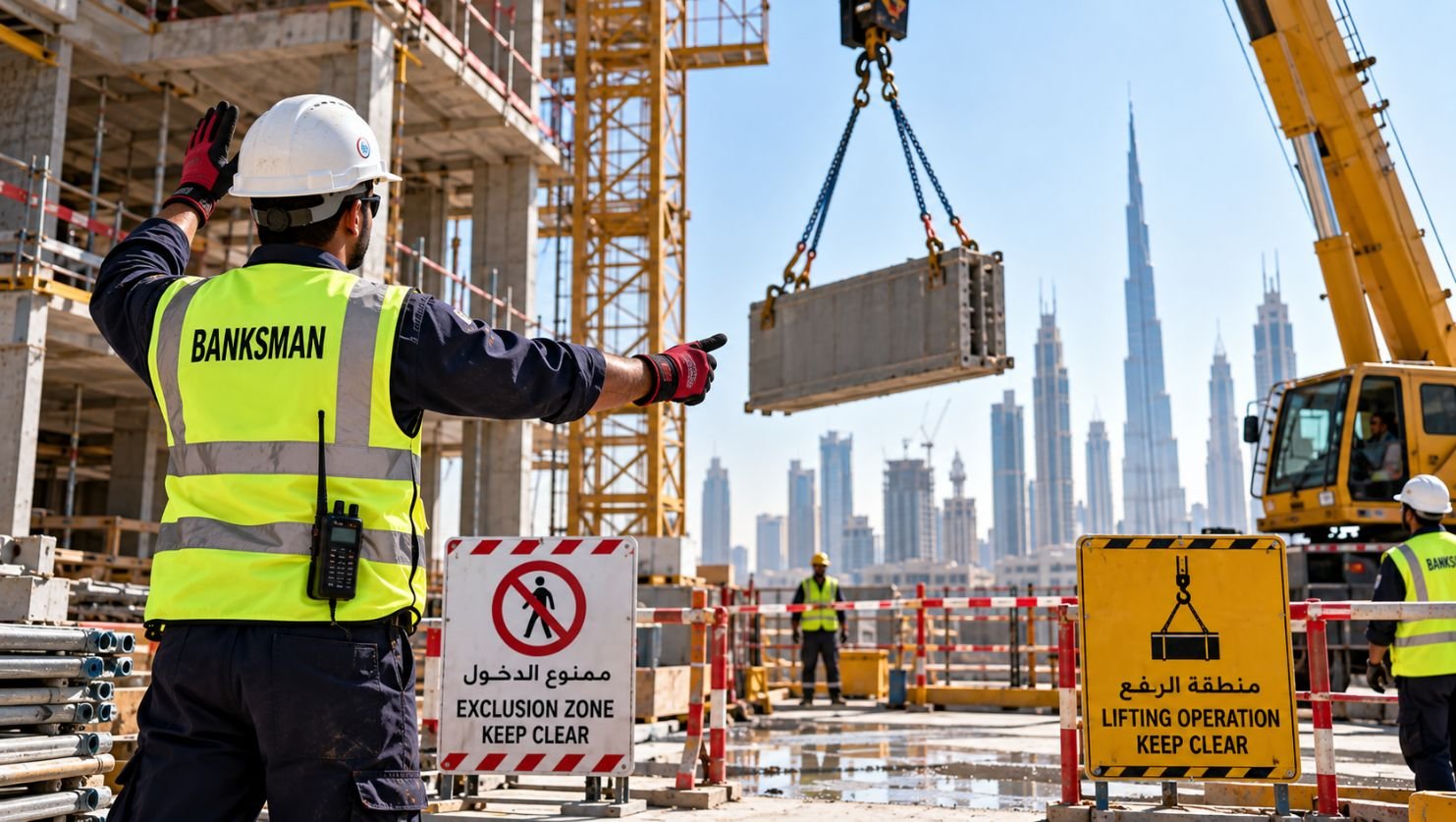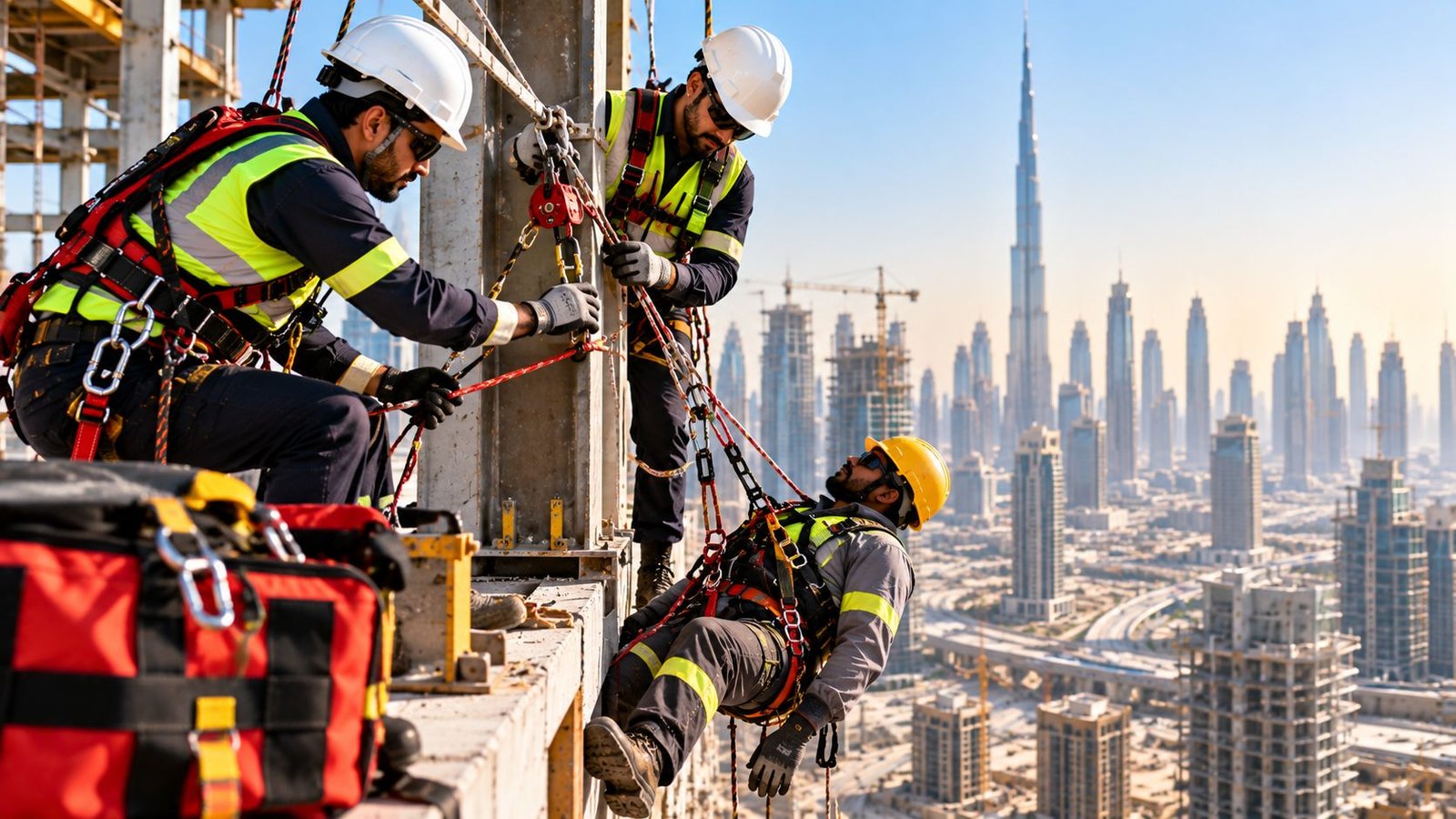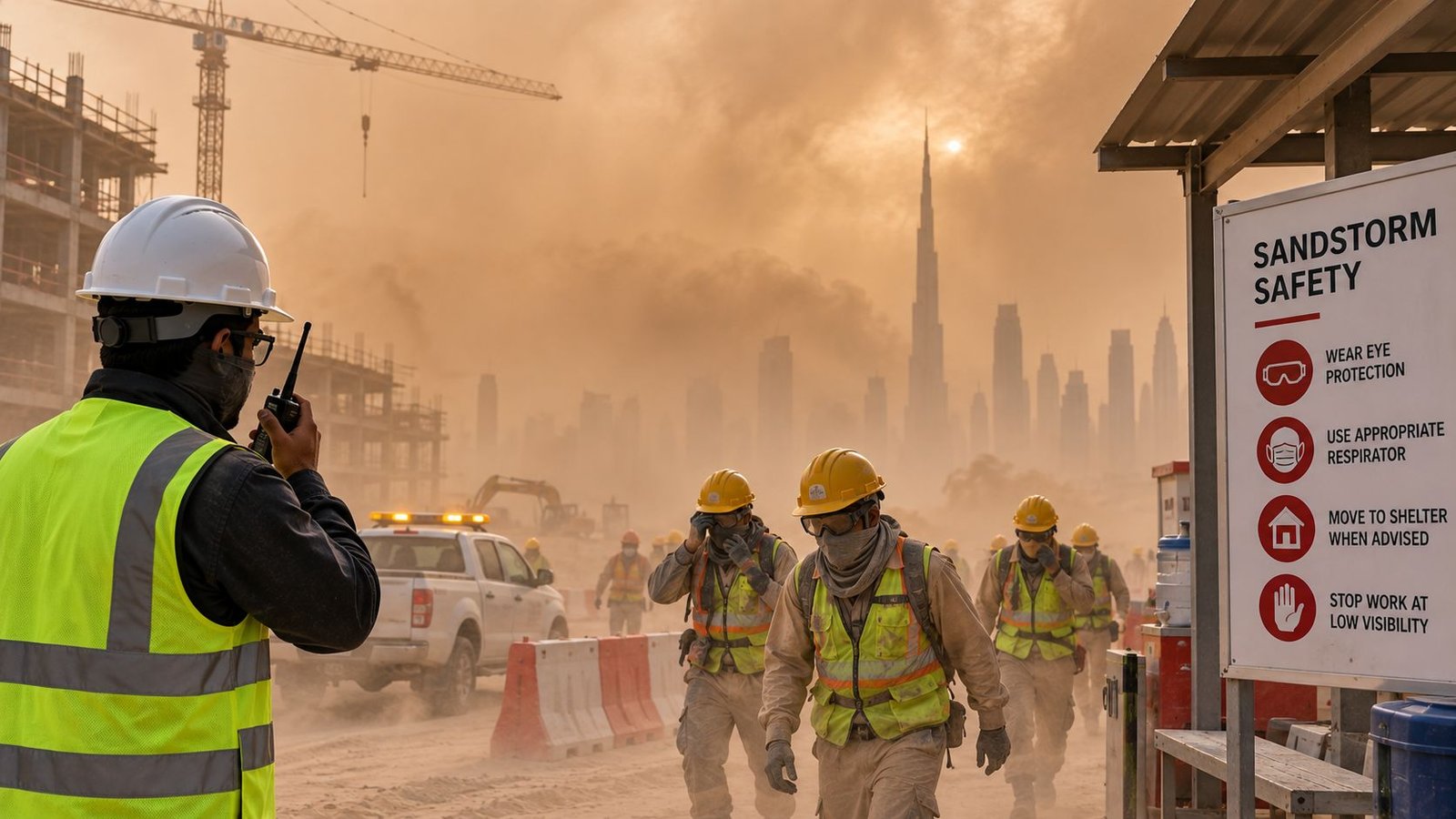
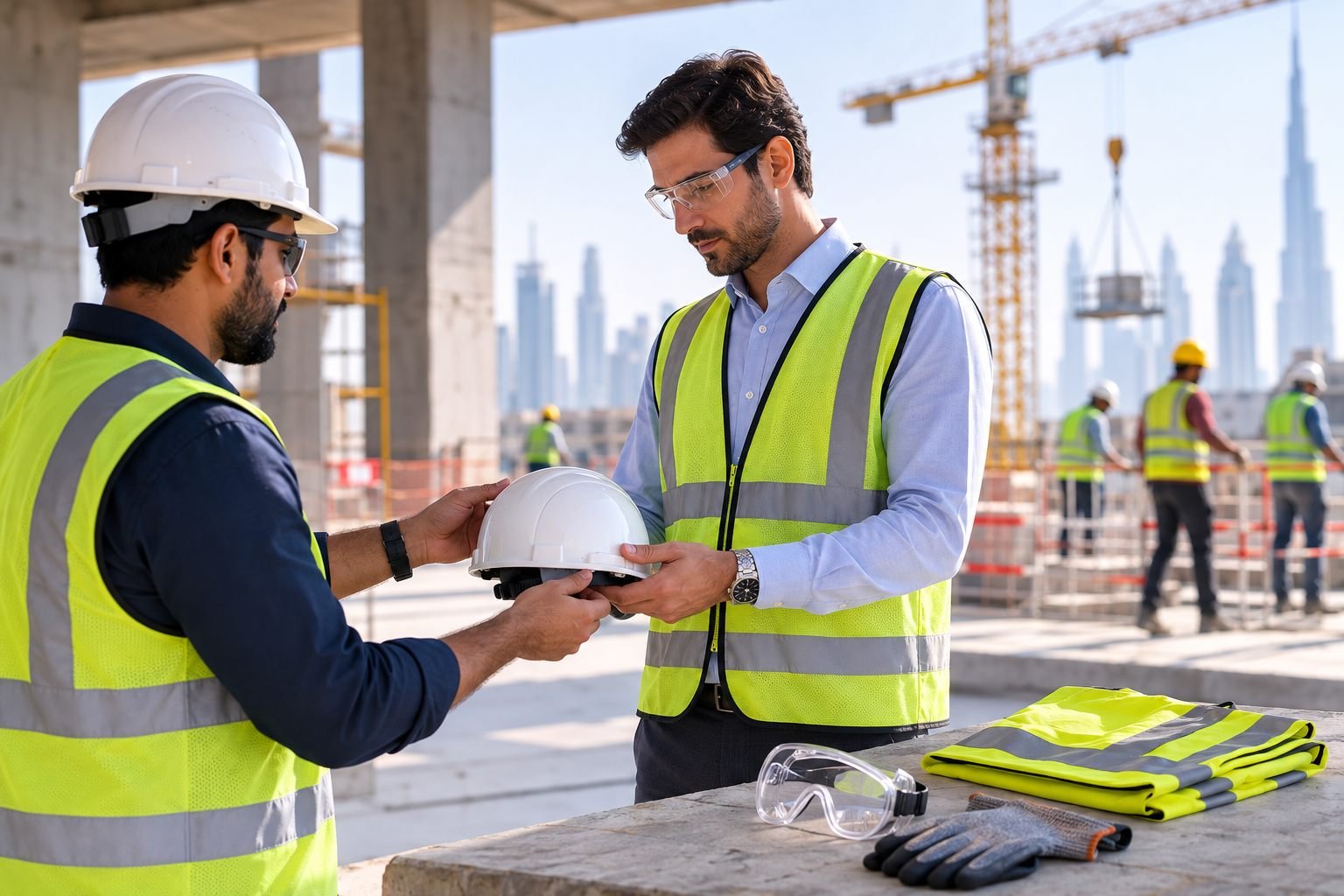
A client arrives at a construction site in Dubai to inspect progress. The project manager walks him onto the deck in a suit and leather shoes, no helmet, no high visibility vest. They stand under a crane that is moving a load two floors up. A tool slips from a scaffold somewhere above. It misses them by a few feet and shatters on the slab. Everyone laughs it off. The client could have left in an ambulance.
Visitors carry a risk that regular workers do not. They do not know the site. They do not read the signage out of habit. They wander toward the interesting machine instead of away from it. When something falls or moves, a worker ducks on instinct and a visitor freezes. The injury that follows lands on the employer, because the duty of care covers everyone who sets foot on the site, not only the payroll.
UAE law makes this plain. Federal Decree Law No. 33 of 2021 and the supporting safety framework expect employers to protect any person exposed to risk on their premises. To handle visitor safety equipment at active sites properly, you need a system that screens who enters, fits them with the right protection, briefs them on the hazards, and tracks the gear back at the gate. This guide sets out that system in full.
Need a ready supply of visitor PPE for your site gate? AAA Safe stocks helmets, high visibility vests, goggles, and overshoes in visitor quantities across the Emirates. Talk to our team about a visitor kit for your project.
Why visitors are a hidden risk
The way you manage visitor safety equipment at active sites tells your team how seriously the company takes its duty of care. A guest waved through without protection sends the wrong message to every worker watching.
Visitors lack site awareness
A worker spends weeks learning the traffic routes, the blind corners, and the lifting zones. A visitor learns none of that. The protection has to make up for the missing knowledge.
The duty of care has no exceptions
Across Dubai, Abu Dhabi, and Sharjah, the employer is responsible for the safety of clients, auditors, delivery drivers, and inspectors alike. A visit lasting ten minutes carries the same obligation as a full shift. Treat every entry as a managed event.
What UAE law expects for site visitors
Before you design a process, ground it in the rules that apply across the Emirates. The duties sit in federal law and emirate-level frameworks.
Federal Decree Law No. 33 of 2021
This labour law requires employers to provide a safe environment and suitable means of protection for those exposed to occupational risk. The federal framework is available through the official portal at u.ae. Protecting a visitor falls inside the same duty that protects a worker.
MOHRE oversight
The Ministry of Human Resources and Emiratisation enforces workplace safety for most private sites, with guidance published at mohre.gov.ae. An inspector reviewing your site may ask how you handle visitor safety equipment at active sites and whether visitor entries are logged.
Emirate-level frameworks
Abu Dhabi runs the OSHAD system through the Abu Dhabi Public Health Centre at adphc.gov.ae. Dubai Municipality sets technical and site requirements published at dm.gov.ae. Sharjah aligns closely with the federal rules. A contractor operating across all three needs one visitor process that meets the strictest of them.
Decide who counts as a visitor
Not every person at the gate needs the same treatment. Sorting visitors by purpose and exposure keeps the process fast and proportionate.
Categories of visitor
A client touring the deck needs full protection. A driver who stays in the cab needs little. An auditor moving through every zone needs a complete kit and an escort. Define the categories so the gate staff know what to issue without guessing.
The table below groups common visitors by the protection level they need.
| Visitor Type | Typical Exposure | PPE Level |
|---|---|---|
| Delivery driver (stays in vehicle) | Low | Vest only at gate |
| Office or meeting guest | Low to medium | Helmet, vest, safe footwear |
| Client site tour | Medium | Full visitor kit, escort |
| Auditor or inspector | Medium to high | Full kit, escort, briefing |
| Contractor visitor | High | Task-matched PPE, induction |
Plan for the unexpected guest
People show up without warning. A regulator can arrive unannounced. A senior client may bring an extra colleague. Keep enough spare kit at the gate so an unplanned arrival never becomes a reason to skip protection.
Build a visitor PPE station at entry
The gate is where the process lives or dies. A stocked, organised entry point makes the right action the easy action.
Stock the station by size
A helmet that does not fit gives false comfort. Keep a range of sizes for helmets and vests so the gate can match the person. Overshoes and disposable items remove the hygiene worry of shared gear.
Keep it visible and signed
Place the station where a visitor cannot miss it, with clear signage on what each zone requires. A worker should not have to hunt for a vest while a client waits in the sun.
Standards to look for
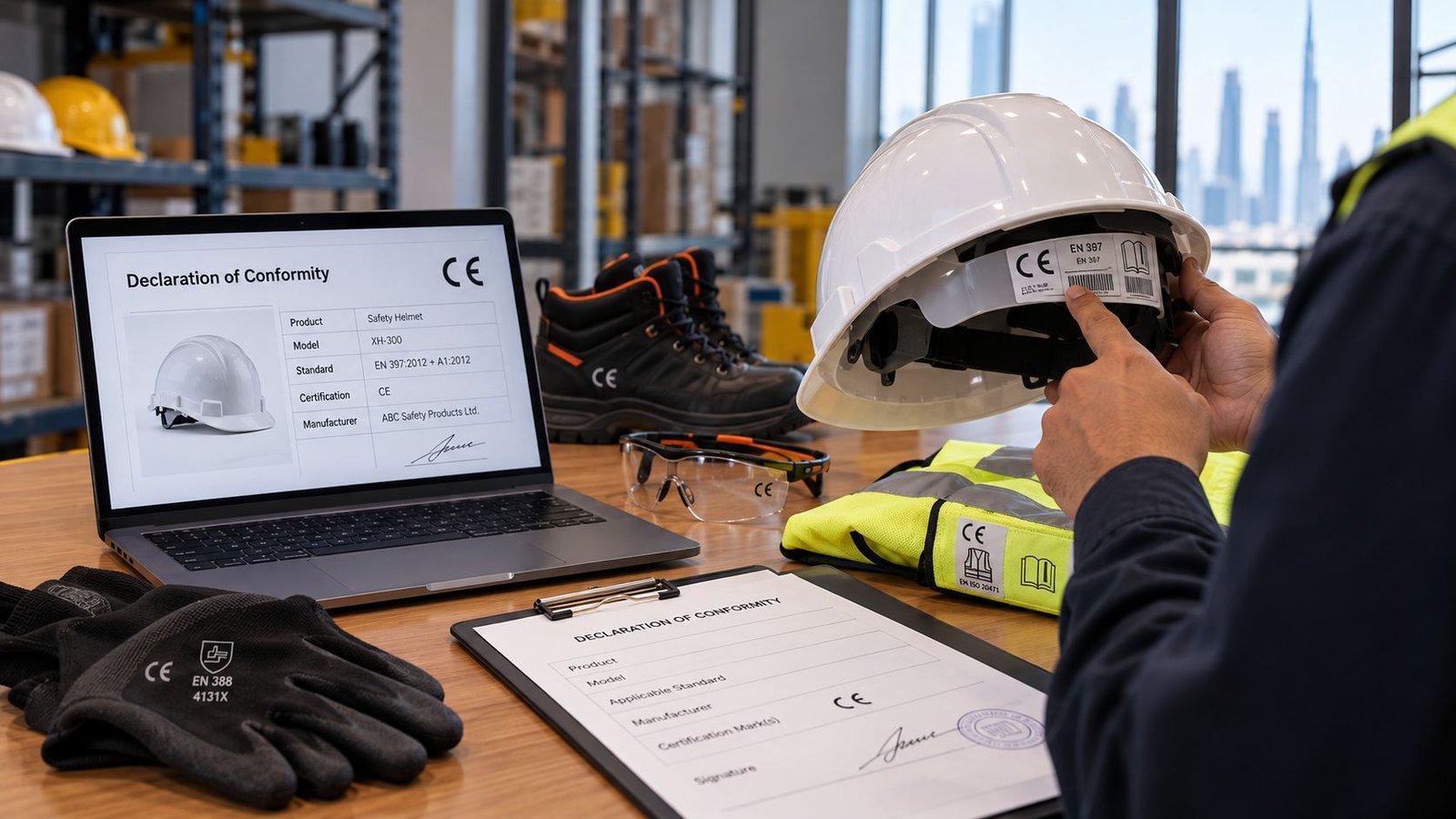
Equipment at the station should carry a recognised mark so you know it performs. The common references in the UAE market are summarised below.
| Equipment | Standard Reference | What It Covers |
|---|---|---|
| Safety helmets | EN 397 | Industrial head protection |
| High visibility vests | EN ISO 20471 | Daytime and low-light visibility |
| Eye protection | EN 166 / ANSI Z87.1 | Impact and optical performance |
| Safety footwear | EN ISO 20345 | Toe protection and slip resistance |
You can source visitor PPE carrying these marks through AAA Safe, which supplies EN and ANSI rated gear for sites across the Emirates.
Match the gear to where the visitor goes
Protection should follow the route, not a blanket rule. A visitor who only enters the site office needs less than one walking under active lifting.
Map your zones
Divide the site into zones by hazard. A welcome area, a walkway, an active work face, and a height zone each carry a different level. Issue the kit that matches the zone the visitor will reach.
The table below shows a zone-based approach to visitor protection.
| Zone | Main Hazard | Visitor PPE |
|---|---|---|
| Site office and welcome area | Low | None or vest |
| Marked walkways | Moving traffic | Helmet, vest, footwear |
| Active work face | Falling objects, dust | Full kit, goggles |
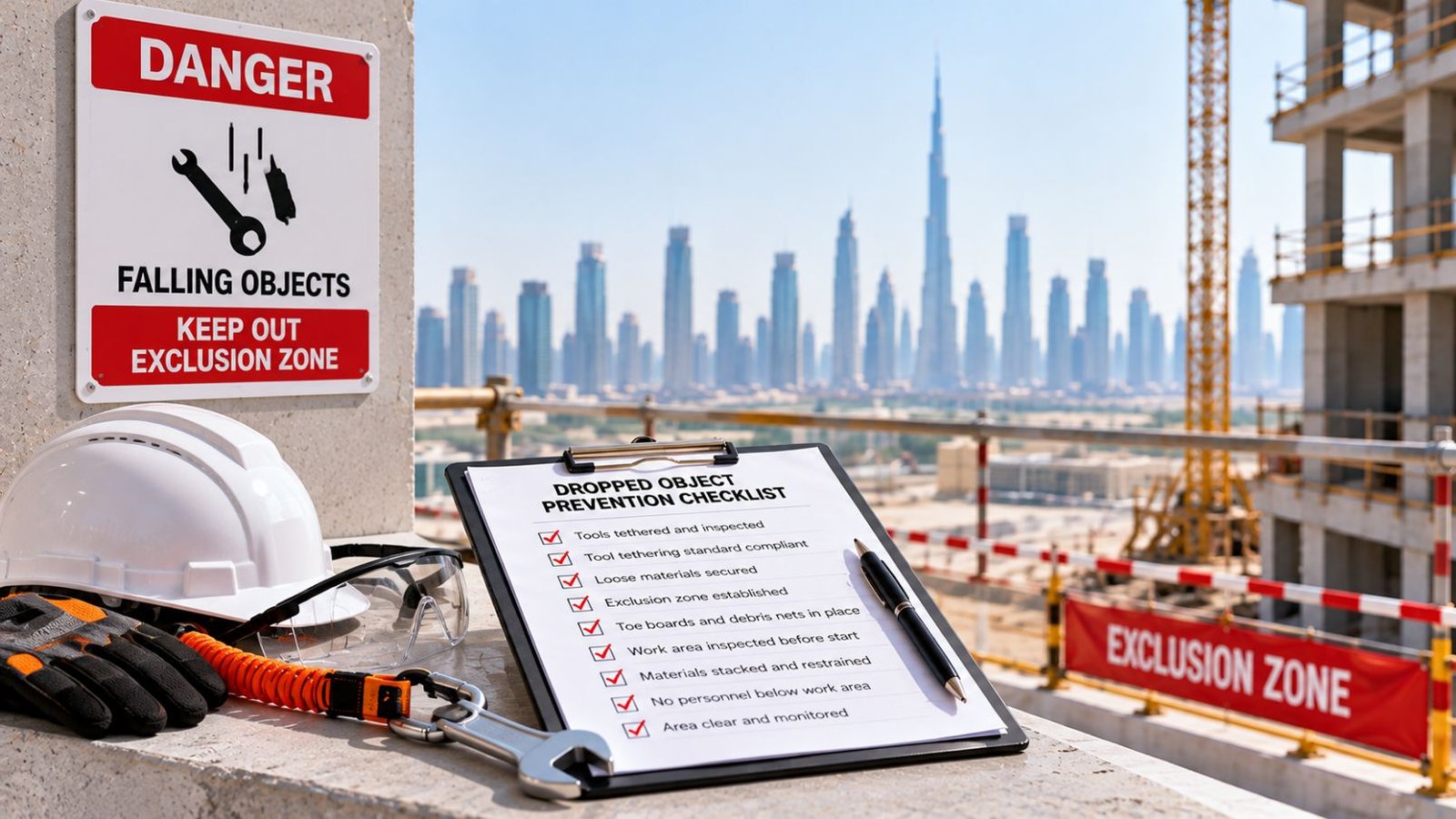
| Work at height area | Falls, dropped tools | Full kit, restricted access |
Account for the UAE climate
Heat is a hazard in its own right. A visitor in heavy gear during a Dubai summer afternoon tires fast. Offer water, keep tours short, and respect the midday work ban periods that apply across Abu Dhabi and the wider Emirates.
Touring clients through an active Dubai or Sharjah site this season? AAA Safe helps you build a size-balanced visitor PPE station so every guest is covered before they pass the gate. Send us your site details.
The sign-in and induction step
Handing over a helmet is half the job. The visitor also needs the rules of the site before stepping past the gate.
A short, clear briefing
Cover the emergency exits, the assembly point, the alarm sound, and the no-go zones. Keep it to a couple of minutes. A visitor remembers three clear instructions, not a wall of text.
Sign the visitor in
Record the entry. A simple log links each person to a time, a host, and the gear issued. This matters during any incident review.
The table below shows useful fields for a visitor log.
| Field | Why It Matters |
|---|---|
| Visitor name and company | Identifies who was on site |
| Time in and out | Tracks duration of exposure |
| Host or escort name | Names who is responsible |
| Equipment issued | Confirms protection was given |
| Equipment returned | Closes the loop at exit |
| Signature | Confirms briefing received |
Confirm understanding
Ask the visitor to repeat the assembly point or confirm they heard the alarm rule. A nod is not proof. When you handle visitor safety equipment at active sites, the briefing and the gear work together, never apart.
Manage fit and hygiene for shared kit
Visitor equipment moves between people, so fit and cleanliness need a plan that worker gear does not.
Adjust on the spot
Set the helmet cradle for the visitor with them present. Check the chin strap holds when the head tips forward. A loose helmet shifts at the wrong moment and exposes the skull.
Keep shared items clean
Wipe down reused helmets and goggles between visitors. Use disposable hair nets under shared helmets and overshoes over street footwear. Clean gear is part of a professional gate, and the Abu Dhabi framework at adphc.gov.ae treats hygiene as part of workplace health.
Retire damaged stock
A cracked visitor helmet or a faded vest belongs in the bin, not back on the rack. Check returned items before they go out again.
Escort visitors and control zones
Equipment alone does not keep a visitor safe. A guest left to wander finds the one hazard everyone else avoids.
Assign a host
Every visitor past the welcome area needs a named escort who stays with them. The host knows the live hazards and steers the visitor clear.
Restrict high-risk zones
Some areas suit no visitor at all. A live lifting zone or an active work-at-height area in a Dubai high-rise project should stay off the tour unless there is a strong reason and added control. Fire and evacuation planning feeds into this, and Dubai Civil Defence sets site expectations published at dcd.gov.ae.
Brief the team
Tell the work crew when visitors are due. A team that knows guests are present takes extra care with loads, tools, and reversing vehicles.
Recover and inspect returned equipment
The process closes at the gate, not at the work face. Gear that walks off site cannot protect the next visitor.
Check the log at exit
Match the equipment returned against what was issued. A missing helmet means a follow-up call, not a shrug.
Inspect before reuse
Look over each returned item for cracks, tears, and wear. A vest that lost its reflective strip no longer does its job. Pull it from service.
Restock for the next arrival
Top up the station so the next visitor finds it ready. A station that runs short becomes the reason someone skips the gear.
Common mistakes when you handle visitor safety equipment at active sites
Most visitor incidents trace back to a few repeated errors. Designing around them closes the gap.
Waving through familiar faces
A regular client gets walked in without a helmet because everyone knows him. Familiarity is not protection. The rule applies to every guest.
Skipping the briefing
Handing over gear without a word about exits and no-go zones leaves the visitor blind to the site. The briefing is not a formality.
Offering one size only
A single helmet size on the rack means half the visitors wear it loose. Stock a range so fit is real, not pretend.
Letting visitors roam
A guest without an escort drifts toward the interesting machine. An assigned host prevents that drift.
Keeping no record
Without a visitor log, you cannot say who was on site during an incident or what they were issued. The gap surfaces at the worst time.
Forgetting to recover gear
Gear that leaves with the visitor is gear the next guest does not have. Close the loop at exit every time.
Setting up a compliant visitor gate across your UAE sites? AAA Safe supplies visitor PPE in the quantities and sizes you need, ready for Dubai, Abu Dhabi, and Sharjah delivery. Request a quote before your next client visit.
Frequently Asked Questions
It means screening who enters, issuing protection matched to their route, briefing them on the hazards, and recovering the gear at exit. The full process meets the employer duty set out under Federal Decree Law No. 33 of 2021.
Yes. The duty of care covers any person exposed to risk on the premises, including clients, auditors, and delivery drivers. A short visit carries the same obligation as a full shift.
It depends on exposure. A driver who stays in the cab may need a vest only at the gate. One who steps out into a work zone needs the same protection as any other visitor in that area.
Yes. A visitor log links each person to a time, a host, and the equipment issued. It matters during an incident review or an inspection in Dubai, Abu Dhabi, or Sharjah.
Wipe down reused helmets and goggles between visitors, use disposable hair nets under shared helmets, and offer overshoes over street footwear. Retire any damaged item rather than reissue it.
Treat high-risk zones as off limits to visitors unless there is a strong reason and added control. A live lifting or height area carries risk that gear alone does not remove.
Look for recognised marks such as EN or ANSI references suited to the hazard. A helmet to EN 397 or a vest to EN ISO 20471 tells you the gear performs as claimed.
Yes. AAA Safe supplies certified safety equipment across the Emirates, including helmets, high visibility vests, goggles, and overshoes in visitor quantities. As a supplier, AAA Safe helps employers stock the right sizes and standards to handle visitor safety equipment at active sites. Reach the team through the contact page.
Closing Thoughts
The moment a visitor steps onto your site, their safety becomes yours. A helmet that fits, a two minute briefing, a name in the log, an escort at their side. These cost little and prevent the kind of incident that ends a client relationship and draws a regulator’s attention.
When you handle visitor safety equipment at active sites with care, you protect the guest and you protect the company. The law across Dubai, Abu Dhabi, and Sharjah expects it. The inspector will ask for proof of it. The client who leaves impressed rather than shaken is the quiet reward for getting it right. Set up the gate once, run it the same way for every arrival, and the visitor stops being the weak point in your site safety.
Disclaimer
This article is for general information and does not replace legal, regulatory, or professional safety advice. AAA Safe Dubai is a supplier of safety equipment and PPE and does not provide installation, inspection, or consultancy services. Employers remain responsible for compliance with all applicable UAE laws and standards.
Regulatory requirements change. Confirm current obligations with the relevant authorities before acting on any guidance here. Useful references include the UAE Government Portal at u.ae for Federal Decree Law No. 33 of 2021, the Ministry of Human Resources and Emiratisation at mohre.gov.ae, Dubai Municipality at dm.gov.ae, the Abu Dhabi Public Health Centre at adphc.gov.ae, and Dubai Civil Defence at dcd.gov.ae.
Product standards and inspection intervals vary by manufacturer. Always follow the instructions supplied with each item. Any tables in this article give general guidance and not product-specific direction.
The mention of standards such as EN, ANSI, and ISO is for reference and does not imply endorsement by any standards body. Verify the marking on each product against the current published standard.
This content reflects general practice at the time of writing. It may not cover every site condition, visitor type, or hazard. A competent safety professional should assess your specific workplace.
AAA Safe Dubai accepts no liability for actions taken based on this article. Use it as a starting point and seek qualified advice for your circumstances.