Fall Protection measures for marine industry workers in the UAE represent a critical safety requirement that can mean the difference between life and death. Working on vessels in the Arabian Gulf and coastal waters presents unique challenges where Fall Protection measures for marine industry operations must account for extreme temperatures, saltwater corrosion, and rapid weather changes that characterize the region.
The UAE’s maritime sector employs thousands of workers across commercial fishing, offshore oil platforms, and port operations. Each environment demands specialized Fall Protection measures for marine industry protocols that go beyond standard industrial safety practices. When you fall on land, you hit solid ground. When you fall from a vessel, you face drowning, hypothermia in air-conditioned vessel compartments, and potential separation from rescue teams.
This comprehensive guide examines the essential Fall Protection measures for marine industry requirements specific to UAE operations, covering regulatory compliance, equipment selection, and emergency procedures designed for the unique conditions of Arabian Gulf maritime work.
Understanding Fall Protection Measures for Marine Industry in UAE Context
Fall Protection measures for marine industry encompass specialized safety systems designed to prevent workers from falling into water or onto vessel surfaces during maritime operations. In the UAE, these measures must withstand extreme heat (up to 50°C), high humidity, intense UV radiation, and corrosive saltwater conditions.
What Makes UAE Marine Fall Protection Unique
UAE maritime operations face environmental conditions that accelerate equipment degradation. Temperatures exceeding 45°C can weaken synthetic materials, while salt spray from the Arabian Gulf creates corrosive conditions that destroy standard equipment within months.
Environmental Challenges Specific to UAE Waters
The Arabian Gulf presents unique environmental stresses that affect Fall Protection measures for marine industry equipment performance. Solar radiation levels frequently exceed 7 kWh/m²/day, causing rapid degradation of polymer components in safety equipment.
High Temperature Effects on Equipment
High humidity levels (often exceeding 80%) combined with salt spray create conditions that accelerate corrosion of metal components. Standard stainless steel grades may prove inadequate for long-term Gulf deployment.
UV Radiation Impact
Intense UV radiation in the UAE requires specialized equipment with enhanced UV stabilizers and protective coatings to maintain performance throughout expected service life.
Equipment Integration for UAE Conditions
For quality marine safety equipment that meets UAE environmental standards, AAA Safe Dubai provides comprehensive solutions designed for Arabian Gulf conditions. Their marine fall protection systems are specifically tested for regional temperature and humidity extremes.
UAE Regulatory Framework for Marine Fall Protection
The UAE follows international maritime safety standards while implementing additional requirements for regional conditions. Fall Protection measures for marine industry must comply with both federal maritime law and emirate-specific regulations.
Federal Maritime Safety Requirements
The UAE Federal Decree by Law No. 43 of 2023 establishes comprehensive maritime safety standards. Under Article 127, vessel operators must ensure all personnel working at height receive proper fall protection equipment rated for marine environments.
Inspection and Certification Requirements
Dubai Maritime Authority regulations require Fall Protection measures for marine industry systems to undergo quarterly inspections due to accelerated wear in Gulf conditions. Equipment must be replaced more frequently than international standards recommend.
OSHA Maritime Standards Application in UAE
While UAE regulations take precedence, many international companies operating in UAE waters follow OSHA maritime standards as best practice. OSHA’s Fall Protection Standards require fall protection when working more than 5 feet above solid surfaces or any distance above water.
Height Requirements and Trigger Points
OSHA’s Commercial Fishing Guidelines specify that safety belts cannot be used for fall arrest in maritime operations. Only full-body harnesses meeting marine specifications are acceptable.
Coast Guard Equipment Requirements
Personal flotation devices must meet US Coast Guard standards under 46 CFR 28 for vessels operating in UAE waters serving international routes.
PFD Specifications and Standards
Type I PFDs are required for vessels over 40 feet operating beyond coastal waters, while Type II PFDs may be acceptable for near-shore operations in protected waters.
Essential Equipment for UAE Marine Fall Protection
Fall Protection measures for marine industry operations in the UAE require specialized equipment designed for extreme environmental conditions. Standard industrial equipment fails rapidly in Gulf maritime conditions.
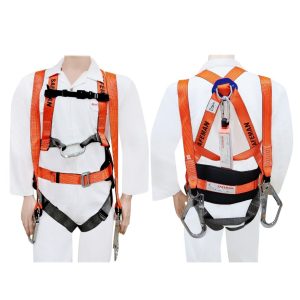
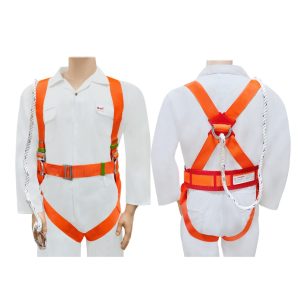
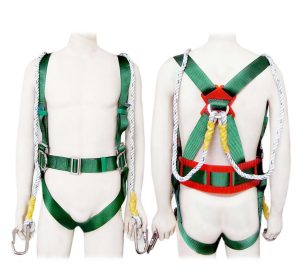
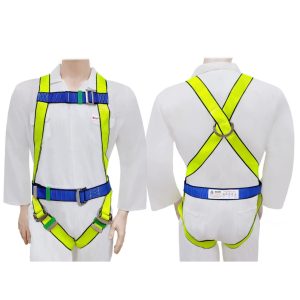
Harness Systems for UAE Marine Conditions
Full-body harnesses used in UAE marine operations typically cost between AED 450-850 depending on specifications. Marine-grade harnesses with enhanced UV protection and saltwater resistance range from AED 650-1,200.
Material Selection for Gulf Conditions
Polyester webbing harnesses perform better than nylon in UAE conditions, maintaining strength retention above 90% after six months of Gulf exposure. Nylon harnesses can lose up to 30% strength in the same conditions.
- UV Resistance Testing Results
Polyester webbing demonstrates superior performance in UAE marine environments. UV resistance testing shows polyester maintains 95% strength after 2,000 hours of accelerated UV exposure, while nylon drops to 70% strength.
- Salt Spray Resistance Performance
Salt spray resistance testing indicates polyester webbing retains flexibility and strength after extended exposure to concentrated salt solutions, making it the preferred material for Fall Protection measures for marine industry applications.
Hardware Considerations
Marine-grade hardware requires 316L stainless steel minimum to resist Gulf corrosion conditions. Standard 304 stainless steel shows significant pitting within 6 months of marine deployment.
- Stainless Steel Grade Requirements
316L stainless steel provides superior corrosion resistance in marine environments, while 304 grades may experience premature failure in high-salt conditions.
- Aluminum Component Specifications
Aluminum components must be hard-anodized with marine-grade coatings to prevent galvanic corrosion when in contact with stainless steel components.
Anchor Point Requirements and Specifications
Anchor points must support minimum 22.2 kN (5,000 pounds) per worker according to OSHA Fall Protection Standards. In UAE marine environments, anchor points require 316L stainless steel construction minimum to resist corrosion.
Installation Considerations for Moving Vessels
Fall Protection measures for marine industry anchor points on vessels must account for dynamic loading from wave action and vessel movement. Static calculations used for land-based installations may be inadequate for marine applications.
- Welding Requirements for Marine Anchor Points
Welded anchor points require certified marine welders familiar with 316L stainless steel welding procedures. Improper welding can create corrosion-prone areas that fail prematurely in Gulf conditions.
Temporary Anchor Points
Clamp-on anchor points suitable for retrofit installations cost AED 380-550 per unit. These systems must be rated for marine dynamic loading and constructed from corrosion-resistant materials.
- Daily Inspection Requirements
Temporary anchor systems require daily inspection for proper installation and tightness, as vessel vibration can loosen connections over time.
Personal Flotation Device Integration
Fall Protection measures for marine industry workers must integrate PFDs with harness systems without compromising either component. Inflatable PFDs suitable for UAE heat conditions cost AED 280-650, while foam PFDs range from AED 150-380.
Compatibility Requirements
Harness and PFD integration requires careful attention to attachment point locations. D-rings on harnesses must not interfere with PFD inflation mechanisms or shift during use.
- Attachment Point Positioning
Fall Protection measures for marine industry systems must ensure that fall arrest forces are transmitted through the harness, not through the PFD, which could cause PFD failure.
Table 1: UAE Marine Fall Protection Equipment Costs and Specifications
| Equipment Type | UAE Market Price (AED) | UV Rating | Saltwater Resistance | Service Life (UAE Climate) |
|---|---|---|---|---|
| Marine Harness (Polyester) | 650-1,200 | UV 50+ | Excellent | 18-24 months |
| Stainless Steel Lanyard | 320-580 | N/A | Excellent | 3-5 years |
| Shock Absorber Lanyard | 180-340 | UV 30+ | Good | 12-18 months |
| Type I PFD | 280-650 | UV 40+ | Excellent | 5-8 years |
| Anchor Point (316L SS) | 450-850 | N/A | Excellent | 8-12 years |
Note: Prices reflect UAE market conditions as of 2025, including 5% VAT
Commercial Fishing Vessel Fall Protection in UAE Waters
UAE commercial fishing operations face unique Fall Protection measures for marine industry challenges due to traditional dhow designs, modern trawler operations, and artisanal fishing methods still common in the region.
Traditional Dhow Safety Considerations
Traditional dhows lack modern fall protection anchor points. Retrofit solutions must preserve vessel integrity while providing adequate protection. Clamp-on anchor points rated for 22.2 kN cost AED 380-550 per unit.
Structural Modifications for Traditional Vessels
Adding fall protection systems to traditional dhows requires careful structural analysis. Many dhows lack adequate structural strength to support modern anchor point loads without reinforcement.
- Reinforcement Options and Costs
Reinforcement options include installing backing plates and structural supports, typically costing AED 1,200-2,400 per anchor point including materials and marine welding services.
Cultural Considerations in Safety Implementation
Traditional fishing crews may resist modern Fall Protection measures for marine industry systems. Training programs must respect cultural practices while emphasizing safety benefits.
- Multilingual Training Requirements
Language barriers require multilingual safety materials in Arabic, Urdu, and Bengali to reach UAE’s diverse fishing workforce.
Modern Trawler Fall Protection Systems
Modern fishing trawlers operating from UAE ports typically incorporate built-in fall protection systems. However, Gulf environmental conditions require more frequent equipment replacement than manufacturer recommendations.
Winch Area Protection
Winch operations present significant fall hazards when handling nets in rough seas. Fall Protection measures for marine industry procedures must account for rapid gear deployment while maintaining worker safety.
- Hydraulic Winch Safety Zones
Hydraulic winch operations create exclusion zones where workers cannot safely operate. Fall Protection measures for marine industry protocols must define these zones and provide alternative work positions when winches are operating.
- Moveable Guardrail Systems
Moveable guardrail systems around winch areas cost AED 2,400-4,200 per installation, depending on vessel layout and winch specifications.
Net Handling Procedures
Commercial fishing net deployment requires workers to operate near unguarded deck edges. Fall Protection measures for marine industry systems must provide freedom of movement while preventing falls overboard.
- Retractable Lifeline Systems
Retractable lifeline systems suitable for net handling operations range from AED 1,800-3,200 per unit, including installation and commissioning.
Fishing Vessel Safety Solutions
For comprehensive marine fishing vessel safety solutions, AAA Safe Dubai provides complete fall protection systems designed for Gulf fishing operations, from traditional dhows to modern trawlers.
Offshore Platform and Support Vessel Operations
UAE offshore operations present some of the most challenging Fall Protection measures for marine industry scenarios due to personnel transfers, weather exposure, and distance from emergency services.
Personnel Transfer Procedures
Basket transfers between vessels and platforms require specialized Fall Protection measures for marine industry protocols. Transfer baskets must include five-point harness attachment points and emergency flotation systems.
Transfer Basket Specifications
Personnel transfer baskets must incorporate fall protection attachment points and emergency flotation. Complete transfer basket systems cost AED 45,000-85,000 including fall protection integration and flotation systems.
- Training Requirements for Transfer Operations
Transfer procedures require specialized training for both vessel and platform crews. Fall Protection measures for marine industry training for transfer operations typically requires 24-32 hours of instruction.
Weather Limitations
Weather windows for safe personnel transfer are limited in summer months when Gulf temperatures exceed 45°C. Heat stress becomes a significant factor in fall protection effectiveness.
- Temperature-Based Work Restrictions
High temperatures reduce safe working windows for personnel transfers. Fall Protection measures for marine industry protocols must account for heat stress effects on worker performance and equipment reliability.
- Heat Index Operational Limits
Transfer operations are typically suspended when air temperatures exceed 48°C or heat index reaches dangerous levels for workers wearing full PPE including harnesses and PFDs.
Platform Maintenance Fall Protection
Offshore platforms require permanent fall protection systems due to constant maintenance needs. Fall Protection measures for marine industry installations must withstand Gulf weather extremes and provide reliable performance in emergency evacuations.
Permanent Installation Systems
Fall protection costs for offshore platforms typically range from AED 15,000-45,000 per work level, including anchor points, guardrail systems, and emergency descent devices.
- Fixed Guardrail Systems
Fixed guardrail systems on platforms require 316L stainless steel construction with additional protective coatings for extended life. Complete perimeter protection systems cost AED 1,200-2,800 per linear meter.
- Engineering Design Requirements
Fall Protection measures for marine industry permanent installations require engineering design specific to platform layout and operational requirements.
Emergency Descent Systems
Offshore platforms must provide emergency descent capabilities independent of normal access routes. Emergency descent systems cost AED 8,500-15,000 per escape route.
- Monthly Inspection and Certification
Descent systems require monthly inspection and annual recertification to ensure reliability during emergency conditions.
Supply Vessel Deck Operations
Supply vessels servicing UAE offshore platforms face unique Fall Protection measures for marine industry challenges during cargo operations. Deck crews must maintain fall protection while handling pipes, drilling mud, and other platform supplies.
Cargo Handling Procedures
Platform supply operations require deck crews to work around moving cargo and operating cranes. Fall Protection measures for marine industry systems must provide protection without interfering with cargo operations.
- Mobile Anchor Point Systems
Mobile anchor point systems allow workers to maintain fall protection while moving around cargo areas. Complete mobile systems cost AED 3,200-6,800 per unit.
Crane Operation Safety Zones
Crane operations require specialized fall protection procedures as loads swing over personnel. Exclusion zones and fall arrest systems must work together to protect deck crews.
- Dynamic Exclusion Zone Management
Crane operations create dynamic exclusion zones that change based on load position and swing radius. Fall Protection measures for marine industry procedures must define these zones and provide protection for personnel who must work nearby.
- Communication Protocols
Warning systems and communication protocols between crane operators and deck crews are essential components of comprehensive fall protection programs.
Heat Stress and Fall Protection Integration
UAE maritime operations must address heat stress as a critical factor affecting Fall Protection measures for marine industry effectiveness. Workers suffering heat exhaustion are more likely to make mistakes that lead to falls.
Equipment Design for High Temperature Operations
Harnesses and PFDs designed for UAE conditions incorporate moisture-wicking materials and enhanced ventilation. Standard equipment can become unbearable in Gulf heat, leading workers to remove protection.
Ventilated Harness Systems
Fall Protection measures for marine industry protocols in the UAE must include heat stress monitoring and mandatory cooling breaks. Work scheduling during cooler hours reduces heat stress risks.
- Mesh-Backed Harness Design
Mesh-backed harnesses with enhanced ventilation help reduce heat buildup during Gulf operations. Ventilated harness systems cost AED 850-1,450, representing a 25-30% premium over standard harnesses.
- Cooling Vest Compatibility
Cooling vest compatibility ensures harnesses can be worn with personal cooling systems without compromising safety or comfort.
Heat Stress Monitoring
Personal heat stress monitors integrated with fall protection systems provide real-time worker safety data. Complete monitoring systems cost AED 1,200-2,100 per worker.
- Mandatory Rest Break Protocols
Fall Protection measures for marine industry protocols must include mandatory rest breaks when heat stress indicators reach dangerous levels.
Hydration and Safety Equipment
Hydration systems compatible with fall protection equipment allow workers to maintain fluid intake while wearing harnesses and PFDs. Hands-free hydration systems cost AED 120-220 and significantly improve safety compliance.
Hands-Free Hydration Systems
Personal cooling systems integrated with fall protection equipment help workers maintain alertness in extreme heat. Battery-powered cooling vests compatible with harness systems range from AED 850-1,450.
- Hydration System Integration
Hydration systems must integrate with PFDs and harnesses without creating entanglement hazards. Fall Protection measures for marine industry hydration systems require bite valves and secure routing of hydration lines.
- Complete System Costs
Complete hydration systems including reservoir, lines, and mounting hardware typically cost AED 180-320 per worker.
Personal Cooling Integration
Active cooling systems help maintain worker core temperature during extended operations in Gulf heat. Cooling systems must be compatible with fall protection equipment and not interfere with safety systems.
- Battery-Powered Cooling Vests
Battery-powered cooling vests suitable for marine operations with 4-6 hour operating time range from AED 950-1,650 per unit.
Training Requirements for UAE Marine Fall Protection
Fall Protection measures for marine industry training in the UAE must address both international standards and regional hazards specific to Arabian Gulf operations.
Dubai Maritime Authority Training Requirements
The Dubai Maritime Authority requires all personnel working on vessels to complete maritime safety training that includes fall protection protocols specific to marine environments. Training must be renewed every three years.
Certification Programs
Competent person certification for Fall Protection measures for marine industry requires demonstration of knowledge in UAE-specific hazards including extreme heat, sandstorm procedures, and Gulf rescue protocols.
- Basic Certification Requirements
Basic Fall Protection measures for marine industry certification requires 16 hours of instruction covering equipment selection, inspection procedures, and emergency response. Certification costs range from AED 1,200-1,800 per person.
- Advanced Competent Person Training
Advanced competent person training requires additional 24 hours covering system design, hazard assessment, and rescue procedures, typically costing AED 2,400-3,600 per person.
Renewal Requirements
Training renewals are required every three years with 8-hour refresher courses focusing on equipment updates and incident lessons learned. Refresher training typically costs AED 650-950 per person.
- Training Record Maintenance
Fall Protection measures for marine industry training records must be maintained by employers and available for inspection by UAE maritime authorities.
Heat Emergency Response Training
UAE marine fall protection training must include heat emergency recognition and response. Workers suspended in fall arrest systems are particularly vulnerable to heat stroke in Gulf conditions.
Heat Illness Recognition
Emergency descent procedures must account for the need to move injured workers to air-conditioned spaces rapidly. Standard rescue procedures may require modification for heat-related emergencies.
- Recognition Training Components
Training programs must include recognition of heat exhaustion and heat stroke symptoms in workers wearing fall protection equipment. Fall Protection measures for marine industry protocols must include immediate response procedures for heat-related emergencies.
- Training Duration and Costs
Heat illness response training adds 4 hours to standard fall protection courses, typically increasing costs by AED 300-450 per person.
Emergency Cooling Procedures
Rescue procedures must include rapid cooling techniques for workers suffering heat-related illness while suspended in fall arrest systems. Emergency cooling supplies must be readily available during Gulf maritime operations.
- Emergency Kit Requirements
Fall Protection measures for marine industry emergency kits must include cooling towels, electrolyte solutions, and shade deployment systems for heat emergency response.
Professional Training Services
AAA Safe Dubai offers comprehensive fall protection training programs tailored to UAE maritime conditions, meeting Dubai Maritime Authority requirements while addressing regional safety challenges.
Emergency Response Procedures for UAE Waters
Fall Protection measures for marine industry emergency response in UAE waters must account for extreme heat, potential language barriers among international crews, and coordination with UAE Coast Guard services.
UAE Coast Guard Coordination
UAE Coast Guard operates rescue coordination centers in Dubai, Abu Dhabi, and Ras Al Khaimah. Emergency communications should be conducted on VHF Channel 16 with backup communications through UAE Coast Guard emergency services.
Communication Protocols
Response times in UAE waters vary significantly based on location. Offshore operations may experience response delays of 2-4 hours, making shipboard rescue capabilities critical.
- VHF Radio Requirements
Emergency communications must follow UAE Coast Guard protocols with position reporting in decimal degrees format. Fall Protection measures for marine industry emergency procedures must include accurate position determination and reporting procedures.
- GPS Integration Systems
VHF radio equipment must include GPS integration for automatic position reporting during emergency calls. Complete marine emergency communication systems cost AED 2,400-4,500.
Response Time Planning
Fall Protection measures for marine industry emergency planning must account for extended response times in offshore UAE waters. Self-rescue capabilities become critical when professional response may be hours away.
- Self-Rescue Capability Assessment
Emergency response planning must include assessment of available rescue resources, weather conditions, and worker medical condition to determine appropriate response actions.
Heat-Related Emergency Procedures
Workers suspended in fall arrest systems face rapid heat exhaustion in Gulf conditions. Fall Protection measures for marine industry emergency procedures must prioritize rapid rescue and immediate cooling.
Rapid Rescue Protocols
Emergency medical supplies for UAE marine operations must include heat stroke treatment capabilities, oral rehydration solutions, and cooling materials suitable for marine environments.
- Powered Rescue Device Requirements
Heat-related emergencies require immediate rescue of suspended workers. Fall Protection measures for marine industry rescue equipment must be capable of rapid deployment in high-temperature conditions.
- Rescue Time Minimization
Powered rescue devices reduce rescue time and physical stress on rescue personnel working in extreme heat. Complete powered rescue systems cost AED 8,500-15,000.
Cooling Treatment Procedures
Emergency cooling procedures must begin immediately upon worker rescue. Fall Protection measures for marine industry emergency supplies must include ice packs, cooling towels, and electrolyte replacement solutions.
- Air-Conditioned Treatment Areas
Access to air-conditioned spaces for heat emergency treatment is critical for UAE maritime operations. Emergency procedures must identify cooling locations and evacuation routes.
Multi-Language Emergency Communications
UAE vessels typically employ crews speaking Arabic, English, Urdu, and Tagalog. Fall Protection measures for marine industry emergency procedures must account for potential communication barriers during rescue operations.
Standardized Emergency Signals
Emergency cards with basic rescue commands in multiple languages help ensure effective communication during fall protection emergencies. Visual emergency signals become critical when language barriers exist.
- Hand Signal Protocols
Fall Protection measures for marine industry operations require standardized hand signals and visual indicators that work across language barriers. Emergency signal training must be part of all crew safety orientation.
- Audio Signal Systems
Emergency whistle codes provide audio signals for fall protection emergencies when visual communication is impossible. Standard emergency whistle protocols must be established and practiced.
Translation Resources
Emergency procedures should include translation resources for medical information and rescue instructions. Fall Protection measures for marine industry emergency kits should include multilingual emergency medical information cards.
- Digital Translation Devices
Digital translation devices suitable for marine environments can assist with emergency communication when crew members do not share common languages.
Table 2: UAE Marine Emergency Response Resources and Contact Information
| Emergency Service | Primary Contact | Response Time | Coverage Area | Special Capabilities |
|---|---|---|---|---|
| UAE Coast Guard | VHF Channel 16 | 1-4 hours | Territorial waters | Search and rescue, medical evacuation |
| Dubai Police Marine | VHF Channel 12 | 30-90 minutes | Dubai waters | Port rescue, diving operations |
| ADNOC Emergency Response | VHF Channel 81 | 45-120 minutes | Abu Dhabi offshore | Industrial rescue, medical facilities |
| Port Authority Rescue | VHF Channel 14 | 15-45 minutes | Port areas | Harbor rescue, fire suppression |
Response times vary based on weather conditions and vessel location
Maintenance and Inspection in UAE Environment
Fall Protection measures for marine industry equipment requires accelerated maintenance schedules in UAE conditions due to extreme environmental stresses.
Enhanced Inspection Protocols
Daily pre-use inspections must check for heat damage, UV degradation, and salt crystal buildup that can weaken equipment. Fall Protection measures for marine industry inspection protocols in the UAE should be more stringent than international standards.
Daily Inspection Procedures
Monthly formal inspections by competent persons should include detailed examination of all load-bearing components, with particular attention to heat-stressed areas and UV-exposed materials.
- Pre-Use Inspection Checklists
Pre-use inspections must include visual and tactile examination of all equipment components. Fall Protection measures for marine industry daily inspection checklists must address UAE-specific degradation patterns including heat damage and salt contamination.
- Worker Training Requirements
Workers must be trained to recognize signs of equipment degradation common in Gulf maritime environments, including UV chalking, salt crystal buildup, and heat-induced webbing stiffness.
Competent Person Inspections
Monthly formal inspections require detailed documentation of equipment condition and service history. Fall Protection measures for marine industry inspection records must track environmental exposure and replacement schedules.
- Inspection Training Requirements
Competent person inspection training must include recognition of UAE-specific equipment failure modes and appropriate replacement criteria for Gulf operating conditions.
Equipment Replacement Schedules
Standard international replacement schedules may be inadequate for UAE conditions. Harness webbing should be replaced every 18-24 months instead of standard 5-year intervals due to accelerated UV and heat degradation.
Accelerated Aging Factors
Fall Protection measures for marine industry equipment storage in the UAE requires climate-controlled environments when possible. Equipment stored in non-air-conditioned spaces degrades significantly faster.
- UV Radiation Impact on Service Life
UV radiation levels in the UAE can cause polymer degradation rates 3-4 times faster than temperate climates. Fall Protection measures for marine industry replacement schedules must account for accelerated aging from intense solar radiation.
- Thermal Cycling Effects
High temperature cycling between air-conditioned storage and outdoor work environments creates thermal stress that can reduce equipment life significantly.
Storage Requirements
Climate-controlled storage extends equipment life significantly in UAE conditions. Fall Protection measures for marine industry equipment storage areas should maintain temperatures below 35°C and relative humidity below 60%.
- Equipment Rotation Procedures
Equipment rotation procedures ensure older inventory is used first while maintaining proper storage conditions for reserve equipment.
Cost-Effective Maintenance Programs
Bulk replacement programs can reduce Fall Protection measures for marine industry equipment costs. Annual replacement contracts typically offer 15-25% savings over individual purchases while ensuring compliance with inspection schedules.
Preventive Replacement Programs
Equipment leasing programs for temporary projects can provide cost savings of 30-40% compared to purchasing for short-term UAE marine operations.
- Scheduled Replacement Benefits
Scheduled replacement based on service time rather than condition can prevent equipment failure. Fall Protection measures for marine industry preventive replacement programs typically reduce total costs while improving safety reliability.
- Group Purchasing Agreements
Group purchasing agreements for multiple vessels or platforms can achieve significant cost savings on replacement equipment while ensuring consistent quality standards.
Lifecycle Cost Analysis
Total cost of ownership includes purchase price, inspection costs, and replacement frequency. Fall Protection measures for marine industry equipment selection should consider lifecycle costs rather than initial purchase price alone.
- Value Analysis Methodology
Higher-quality equipment with extended service life often provides better value despite higher initial costs when UAE environmental conditions are considered.
Frequently Asked Questions
Fall Protection measures for marine industry are required any time workers are exposed to fall hazards above water according to OSHA Commercial Fishing Safety Requirements. This includes deck work, mast climbing, and equipment maintenance where falls could occur.
UAE temperatures exceeding 45°C can significantly degrade fall protection equipment. Fall Protection measures for marine industry equipment replacement schedules should be accelerated, with harnesses replaced every 18-24 months instead of standard 5-year intervals.
Dubai Maritime Authority requires maritime safety training including fall protection protocols for all vessel personnel. Fall Protection measures for marine industry training must be renewed every three years and include UAE-specific hazards like extreme heat and sandstorm procedures.
Modern marine harnesses are designed to work with PFDs without interference. Fall Protection measures for marine industry systems must ensure harness attachment points don’t compromise PFD inflation mechanisms or buoyancy.
Anchor points must support minimum 22.2 kN (5,000 pounds) per worker according to OSHA Fall Protection Standards. UAE marine conditions may require higher ratings due to dynamic loading from vessel movement.
Fall Protection measures for marine industry equipment requires daily pre-use inspections plus monthly formal inspections by competent persons. UAE environmental conditions accelerate equipment degradation requiring more frequent inspection than standard international protocols.
Emergency equipment must include rescue boats, lifting devices, communication systems, and medical supplies. Fall Protection measures for marine industry emergency kits in UAE must include heat stroke treatment materials and cooling supplies.
Requirements scale with vessel size and risk exposure. Smaller vessels may not need throwable flotation devices per Coast Guard requirements, but workers still need appropriate fall protection when exposed to fall hazards.
Comprehensive Safety Disclaimer
This information provides general guidance on Fall Protection measures for marine industry operations and should not be considered a substitute for professional safety consultation. Marine fall protection systems involve life-critical equipment that must be properly specified, installed, and maintained by qualified professionals.
UAE maritime operations must comply with multiple regulatory frameworks including federal maritime law, emirate-specific regulations, and international standards. Requirements change frequently, and operators must verify current compliance requirements with relevant authorities.
Fall Protection measures for marine industry systems must be designed by qualified safety engineers familiar with both international standards and UAE environmental conditions. Improper selection, installation, or maintenance of fall protection equipment can result in system failure and serious injury or death.
Environmental conditions in the UAE can significantly affect equipment performance and safety. Extreme temperatures, UV exposure, saltwater corrosion, and sandstorms create conditions that may exceed standard equipment specifications. Professional consultation is essential for UAE marine operations.
Emergency response procedures must be developed in coordination with local authorities and rescue services. Response capabilities vary significantly across UAE waters, and vessel operators must ensure adequate emergency response resources are available for their specific operations.
Training requirements vary based on vessel type, operation area, and crew composition. Vessel operators must verify training requirements with Dubai Maritime Authority, Abu Dhabi maritime authorities, or other relevant jurisdictions.
Equipment costs and availability change frequently. The pricing information provided reflects general UAE market conditions and should be verified with current suppliers. Import duties, VAT, and other costs may affect final equipment prices.
For professional consultation on Fall Protection measures for marine industry systems designed specifically for UAE maritime operations, contact qualified safety equipment providers with demonstrated experience in Arabian Gulf conditions.
Conclusion
Fall Protection measures for marine industry operations in the UAE require specialized approaches that account for extreme environmental conditions, diverse workforce requirements, and unique regional hazards. The Arabian Gulf’s challenging maritime environment demands equipment specifications, maintenance schedules, and emergency procedures that exceed standard international recommendations.
Successful implementation of Fall Protection measures for marine industry systems in UAE waters depends on understanding that equipment designed for temperate climates may fail in Gulf conditions. Accelerated replacement schedules, enhanced inspection protocols, and heat stress integration are not optional extras but essential components of effective maritime safety programs.
The UAE’s growing maritime sector demands continuous improvement in Fall Protection measures for marine industry standards. As offshore operations expand and commercial fishing modernizes, safety systems must evolve to meet new challenges while addressing traditional hazards that remain relevant in regional operations.
Investment in proper Fall Protection measures for marine industry systems represents both regulatory compliance and operational necessity. The costs of comprehensive fall protection programs are minimal compared to the potential consequences of maritime accidents in UAE waters, where rescue response times may be extended and environmental conditions create additional survival challenges.
Effective Fall Protection measures for marine industry programs require ongoing commitment to training, equipment maintenance, and system improvement. UAE maritime operators who prioritize comprehensive fall protection create safer working environments while potentially reducing insurance costs and regulatory scrutiny.
The future of Fall Protection measures for marine industry operations in the UAE will likely see increased integration of monitoring technology, predictive maintenance systems, and automated safety protocols. However, the fundamental principles of hazard recognition, proper equipment selection, and comprehensive training remain the cornerstone of effective maritime fall protection programs.