A new safety law changes what a contractor must prove, not just what they must do. Dubai Law No. 7 of 2025 sets safety requirements for contractors, and meeting them takes more than good intentions on site. A contractor compliance checklist turns the law’s duties into actions a firm can verify before an inspection rather than scrambling during one. This guide gives contractors a practical checklist focused on the safety and PPE obligations that apply to construction work.
Construction across Dubai and the wider UAE operates under federal and emirate level safety rules, and Dubai Law No. 7 of 2025 adds requirements that contractors must build into their daily operations. Firms working across Dubai, Abu Dhabi, and Sharjah need to know which duties fall on them and how to show compliance. This article focuses on the safety and PPE side of those duties and gives a checklist to track them.
Why a contractor compliance checklist matters
Safety law sets duties, but compliance is proven through evidence. A contractor who follows the rules but cannot show records still risks penalties during an inspection. A compliance checklist captures both the action and the proof, which protects the firm and the workers.
The cost of non compliance runs beyond fines. Work stoppages, reputational damage, and liability after an incident all follow from failing the law’s duties. A checklist that keeps the firm ready for inspection reduces all of these risks across UAE projects.
Turning law into action
A law states duties in legal language. A checklist translates those duties into specific actions a supervisor can complete and tick. This translation closes the gap between knowing the rule and following it on site.
Evidence for inspection
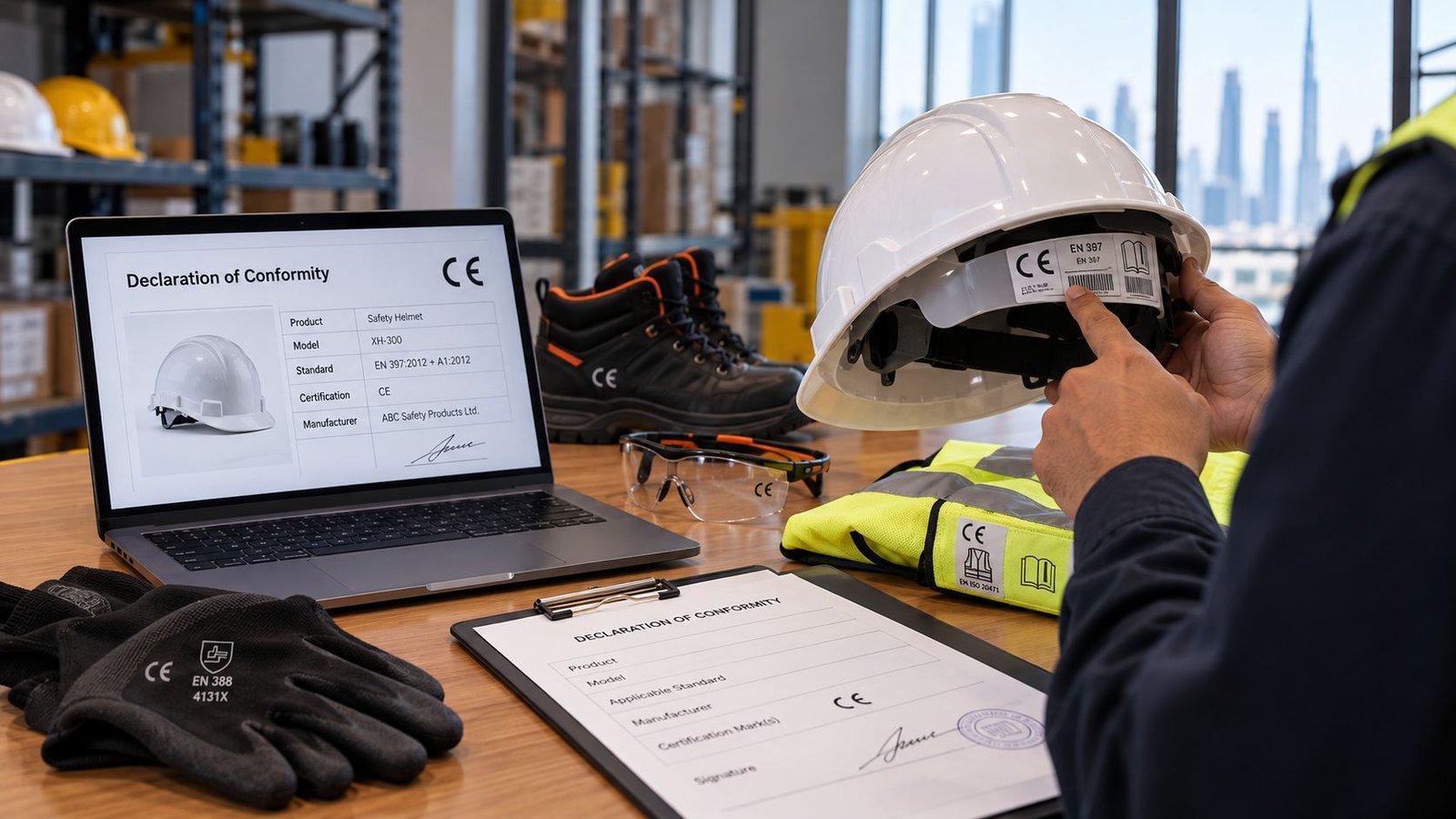
Inspectors check records as well as conditions. A firm that documents its safety actions can show compliance quickly. The checklist builds this evidence trail as part of daily operation rather than as a separate task.
Understanding the scope of contractor safety duties
Before the checklist, a contractor needs to know which duties the law places on them. The Dubai Law 7 of 2025 safety requirements for contractors explainer covers the legal background. This article focuses on translating those duties into a compliance routine.
Who carries the duty
Safety duties fall on the contractor as the party running the work. Within the firm, site supervisors carry day to day responsibility for enforcement. The site supervisor safety responsibilities for construction guide details these supervisory duties.
What the duties cover
The duties span risk assessment, worker protection, training, and documentation. PPE provision sits within worker protection. A complete compliance approach covers all these areas rather than focusing on PPE alone.
Where the duties apply
The duties apply across the contractor’s worksites. A firm operating across multiple emirates applies them consistently while accounting for emirate level differences. The checklist works across the firm’s UAE projects.
Risk assessment and safety planning compliance
The law expects contractors to assess risks and plan controls. The checklist confirms this foundation is in place.
Documenting risk assessments
A documented risk assessment for each worksite shows the contractor has identified hazards and planned controls. This document underpins the rest of the safety system. Inspectors expect to see it, and workers depend on the controls it defines.
Method statements for high risk work
High risk activities such as work at height, confined space entry, and hot work need method statements that detail safe execution. These documents show the contractor has planned the work safely. They guide the crew through hazardous tasks.
Keeping plans current
A risk assessment goes stale as the work changes. The checklist includes reviewing and updating assessments as the project moves through phases. Current plans cover current hazards across the UAE site.
AAA Safe Dubai supports contractors with PPE supply and site assessments aligned to UAE safety requirements. Contact our technical team for guidance on equipping your sites to the standard.
PPE provision and compliance
PPE provision is a core contractor duty. The checklist confirms the firm supplies, maintains, and enforces the right protection.
Supplying the right PPE
The contractor supplies PPE matched to the hazards of each task and zone. This means the correct footwear, head protection, hand protection, eye protection, and high visibility gear for the work. A PPE matrix by role and zone makes this systematic across the site.
Maintaining and replacing PPE
Supplying PPE once is not enough. The contractor maintains and replaces it as it wears out. A scheduled inspection catches worn gear before it fails. The duty continues through the life of the project.
Enforcing PPE use
PPE protects only when worn. The contractor enforces its use through supervision and a clear policy. A firm that supplies PPE but tolerates non use fails the protective duty. Enforcement makes the provision meaningful.
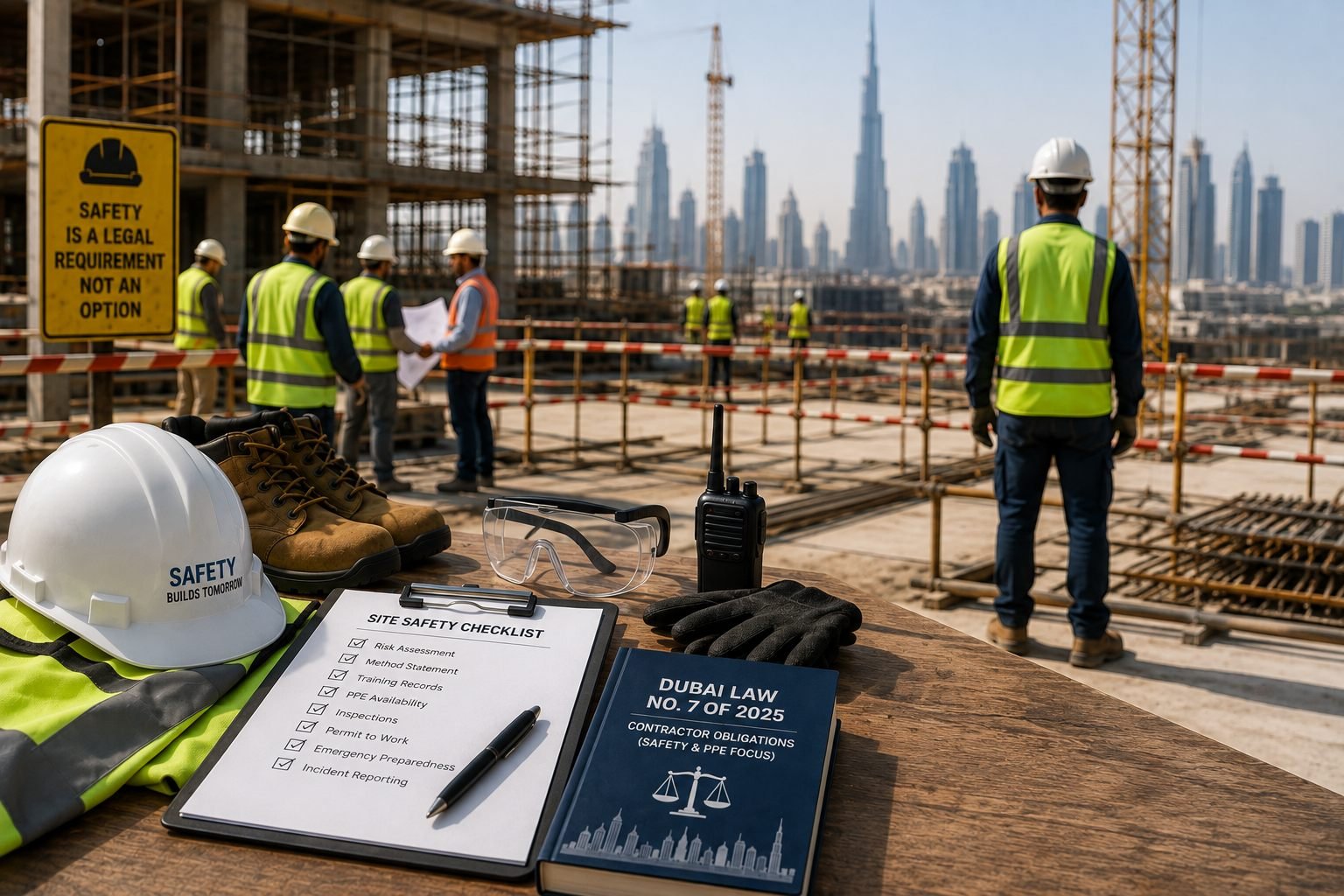
Contractor compliance checklist for safety and PPE
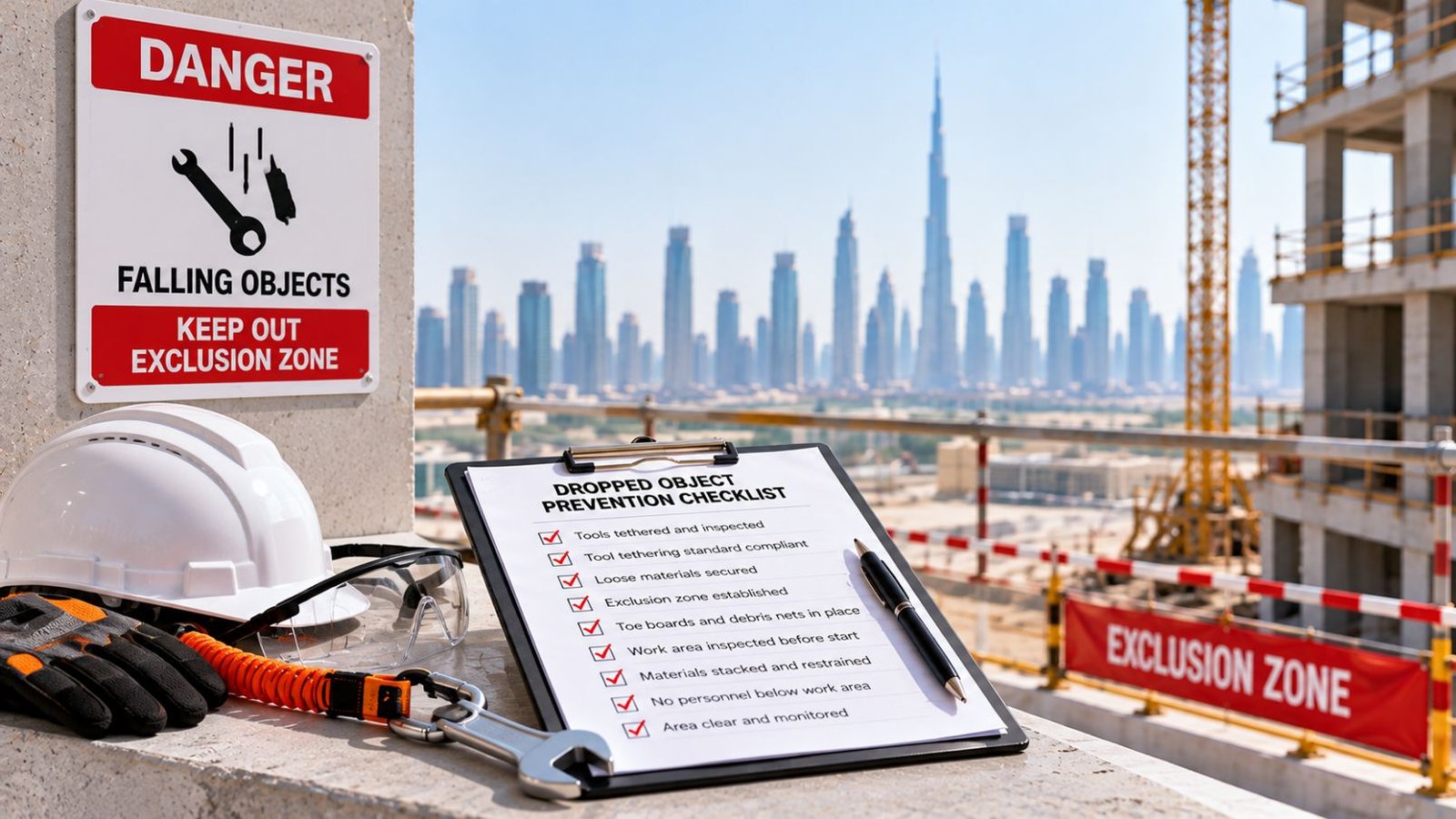
The checklist below tracks the safety and PPE duties a contractor must meet. A supervisor completes it to confirm and record compliance.
| Compliance item | Confirmed |
|---|---|
| Documented risk assessment for the site | |
| Method statements for high risk work | |
| PPE matrix by role and zone in place | |
| Correct PPE supplied to all workers | |
| PPE inspection and replacement schedule active | |
| PPE use enforced through supervision | |
| Worker safety training records kept | |
| Site supervisor safety duties assigned | |
| Emergency response plan documented | |
| Incident and near miss reporting in place |
Using the checklist for inspection readiness
A firm that keeps this checklist current stays ready for inspection at any time. The completed checklist plus the underlying records form the evidence an inspector expects. This readiness reduces the stress and risk of an unannounced visit.
Adapting the checklist to the project
Each project has its own hazards, so the checklist adapts to the work. A project with work at height adds fall protection items. One with confined spaces adds gas detection and entry controls. The core stays constant while the specifics flex.
Training and competency requirements
The law expects workers to be trained for the hazards they face. The checklist confirms this training is delivered and recorded.
Worker safety training
Workers need training on the site hazards, the controls, and the correct use of PPE. Induction covers the basics, and ongoing training keeps it current. Recording this training provides the evidence of compliance.
Supervisor competency
Supervisors enforcing safety need the competency to do it. Their training covers the duties they carry and how to enforce them. A competent supervisor turns the safety plan into daily practice across the UAE site.
Specialist task training
High risk tasks need specific training beyond the general induction. Work at height, confined space entry, and equipment operation each need competent workers. The checklist confirms specialist training for the tasks on the project.
Documentation and record keeping
Compliance lives in records as much as in actions. The checklist and its supporting documents form the firm’s evidence.
Building the record set
The record set includes risk assessments, method statements, PPE matrices, inspection logs, training records, and incident reports. Together these show the contractor meets its duties. Inspectors review these records as part of any check.
Keeping records accessible
Records that exist but cannot be found fail their purpose during an inspection. Keeping them organised and accessible lets the firm show compliance quickly. Digital and physical copies both need a clear filing system.
Linking safety systems
The contractor’s safety systems connect. Heat stress management, lockout tagout, and other specific programs all sit under the broader compliance approach. The heat stress management plan and lockout tagout procedures are examples of programs that feed the wider compliance picture.
AAA Safe Dubai supplies the PPE and safety equipment that underpins contractor compliance across Dubai, Abu Dhabi, and Sharjah. Request an itemised quote covering your project’s protection needs.
Maintaining ongoing compliance
Compliance is continuous, not a one time event. The checklist supports an ongoing routine rather than a single push before an inspection.
Regular self audits
A regular self audit against the checklist catches gaps before an inspector does. The firm finds and fixes its own shortfalls. This proactive approach keeps the firm consistently compliant across the UAE.
Responding to changes
New work phases, new hazards, and updated regulations all change what compliance requires. The firm adapts its checklist and systems as these change. Staying current with the law protects the firm from falling behind.
Building a safety culture
Compliance holds when safety becomes part of how the firm works rather than a box ticking exercise. Supervisors who lead on safety and workers who follow build this culture. A genuine safety culture sustains compliance better than any single document.
Frequently Asked Questions
A contractor compliance checklist tracks the safety and PPE duties a contractor must meet under the law. It translates legal duties into specific actions a supervisor can complete and record. The checklist keeps the firm ready for inspection.
Dubai Law No. 7 of 2025 sets safety requirements for contractors covering risk assessment, worker protection, training, and documentation. PPE provision sits within worker protection. The detailed legal background is covered in the dedicated explainer.
Safety duties fall on the contractor as the party running the work. Within the firm, site supervisors carry day to day enforcement responsibility. Both the firm and its supervisors have defined roles.
A contractor supplies PPE matched to the hazards, maintains and replaces it, and enforces its use. Supplying PPE once without maintenance or enforcement fails the duty. A PPE matrix by role and zone makes provision systematic.
Inspectors check records as well as site conditions. A contractor who follows the rules but cannot show records still risks penalties. Documentation provides the evidence of compliance during an inspection.
A contractor keeps risk assessments, method statements, PPE matrices, inspection logs, training records, and incident reports. Together these show the firm meets its duties. The records need to be organised and accessible.
A contractor stays ready by keeping the compliance checklist current and the supporting records accessible. Regular self audits catch gaps before an inspector does. This ongoing readiness reduces the risk of an unannounced visit.
The law expects workers trained on site hazards, controls, and PPE use, with records kept. Supervisors need competency to enforce safety. High risk tasks need specialist training beyond the general induction.
The core checklist stays constant while specifics flex by project. A project with work at height adds fall protection items, and one with confined spaces adds entry controls. The hazards of the work drive the additions.
A contractor should self audit regularly against the checklist to catch gaps early. The frequency suits the project’s size and risk. Proactive self audits keep the firm consistently compliant rather than scrambling before an inspection.
Disclaimer
This article provides general guidance on contractor safety and PPE compliance for construction work in the UAE. It does not replace legal advice or a site specific risk assessment. The article focuses on safety and PPE duties and does not cover the full scope of Dubai Law No. 7 of 2025.
The information here reflects general practice and does not constitute legal advice on construction or labour regulations. Contractors should confirm the current requirements and their specific obligations with the relevant authorities and qualified legal advisors.
For construction safety and labour requirements, consult the Ministry of Human Resources and Emiratisation, Dubai Municipality, and the official Dubai Government legislation channels.