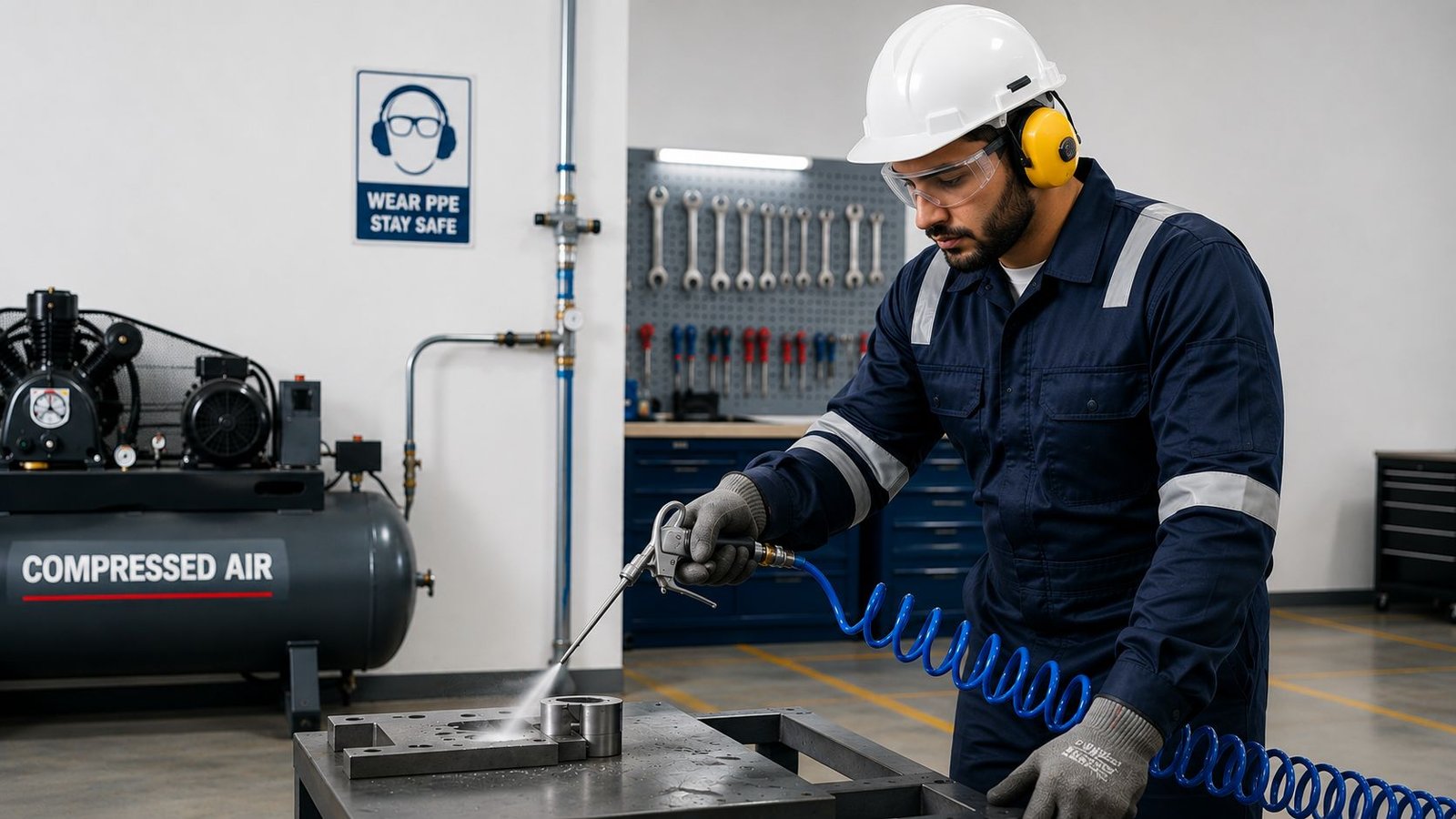
Compressed air looks harmless compared to chemical or electrical hazards, which is exactly why it causes so many preventable injuries. A jet of air at full line pressure can rupture skin, force air into the bloodstream, and permanently damage hearing within seconds of exposure. None of that requires a system malfunction. Most compressed air injuries happen during normal, everyday use of tools and hoses that were operating exactly as installed.
UAE manufacturing, workshop, and maintenance environments use compressed air constantly, for pneumatic tools, spray finishing, and cleaning down equipment and work areas. The hazard sits in how casually the equipment gets treated once it becomes part of the daily routine.
The Main Hazards of Compressed Air
Hose Failure and Whip
A hose under pressure that disconnects or ruptures does not simply deflate. It whips violently until the pressure releases, and a metal fitting travelling at that speed can cause serious eye, face, or head injury to anyone standing nearby. Fittings should be secured with a locking mechanism rather than a simple push fit, and hoses should be inspected for cracking or bulging before every shift on high use lines.
Misuse for Cleaning Skin or Clothing
Using compressed air to blow dust off clothing or skin is one of the most common causes of serious compressed air injury, because air forced against or through skin can enter the bloodstream and cause an embolism, which can be fatal even at relatively low pressures. This practice should be treated as a hard rule violation on any UAE site, not a minor procedural lapse.
Uncontrolled Blow Gun Pressure
Many facilities still use blow guns without a dead-end pressure relief feature, meaning the nozzle can build to full line pressure if accidentally blocked against skin or a surface. Regulated nozzles that cap output pressure and vent excess air sideways reduce this risk substantially and are a low cost retrofit on existing air lines.
Noise Exposure From Compressed Air Tools
Pneumatic tools and open blow guns are among the loudest routine sources of noise on a workshop floor, often exceeding safe exposure limits within a short distance of the operator. Hearing protection is not optional on any task involving sustained compressed air tool use.
Selecting the Right Hearing Protection
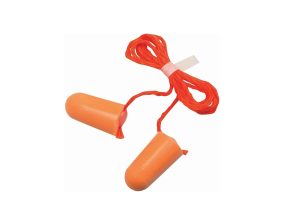
For intermittent exposure, foam earplugs offer a low cost, disposable option suited to visitors and short duration tasks. For workers operating compressed air tools for extended periods, over the head ear muffs provide more consistent attenuation and are easier to confirm are correctly fitted during a walk-around inspection. AAA Safe Dubai’s hearing protection category covers both formats.
Eye and Respiratory Protection
Compressed air used for cleaning or spray work throws particulate directly into the surrounding air, which makes eye and respiratory protection necessary even for tasks that seem brief.
Eye Protection
Safety goggles with a sealed frame protect against particulate thrown from close range, which standard open spectacles do not fully cover.
Dust and Particulate Masks
For cleaning tasks that generate visible dust, a disposable dust mask rated for particulate filtration reduces inhalation exposure during the task itself.
Pressure Control and System Design
Regulating Line Pressure at the Point of Use
Reducing pressure at the tool or blow gun to the minimum needed for the task, rather than running every outlet at full compressor output, lowers both injury severity and energy use. This is a system design decision best reviewed with a qualified mechanical or pneumatic technician rather than adjusted informally on the shop floor.
Ventilation During Extended Use
Sustained compressed air use in an enclosed workshop can push dust and particulate into the general air faster than natural ventilation clears it. A portable industrial blower fan paired with duct hose helps clear a confined work bay during and after heavy compressed air tasks such as spray cleaning or surface preparation.
Inspection and Maintenance Routine
A written inspection routine catches the failures that cause most incidents before they happen. Hoses, fittings, and blow guns should be visually checked before each shift, with a more thorough inspection covering couplings, pressure regulators, and safety relief valves on a documented weekly or monthly schedule depending on usage intensity. Any hose showing cracking, abrasion through the outer layer, or a fitting that no longer locks securely should be taken out of service immediately rather than left for the next scheduled check.
UAE Workplace Safety Context
Compressed air systems fall under the general duty of care obligations that apply to all UAE workplaces through MOHRE labour regulations and emirate level occupational safety frameworks such as OSHAD-SF in Abu Dhabi. There is no separate UAE-specific compressed air code publicly available, so most UAE facilities and their HSE consultants benchmark equipment specification and safe working distances against internationally recognised guidance from bodies such as OSHA and equivalent European standards, applied through the facility’s own risk assessment.
AAA Safe Dubai supplies hearing, eye, and respiratory PPE alongside ventilation equipment suited to compressed air work areas. Contact our technical team for a site specific PPE recommendation covering your compressed air tasks.
Frequently Asked Questions
No. This should never be permitted regardless of pressure, since forced air can penetrate skin and cause serious internal injury. Use a vacuum or brush instead.
Injury risk rises sharply as pressure increases, which is why many facilities fit dead-end pressure relief nozzles that cap output pressure at the nozzle itself, reducing risk even if a line runs at higher pressure upstream.
There is no fixed replacement interval that applies to every hose type and use case. Replacement should be based on inspection findings, meaning any hose showing cracking, bulging, or fitting wear should be replaced immediately rather than on a calendar schedule alone.
Yes, if the task involves sustained tool or blow gun operation at close range. Noise exposure limits are based on cumulative daily exposure, so even short tasks repeated many times across a shift can add up to a harmful total.
There is no single dedicated compressed air regulator. Compliance sits within general occupational safety and health obligations enforced by MOHRE at federal level and by emirate bodies such as OSHAD in Abu Dhabi and Dubai Municipality in Dubai.
Disclaimer
This article provides general information on compressed air safety practices and does not replace a qualified engineer’s assessment of your specific system or legal advice. For broader workplace safety obligations, refer to the Ministry of Human Resources and Emiratisation and the Abu Dhabi Public Health Centre. Always consult a qualified HSE professional before changing system pressure settings or safety procedures.