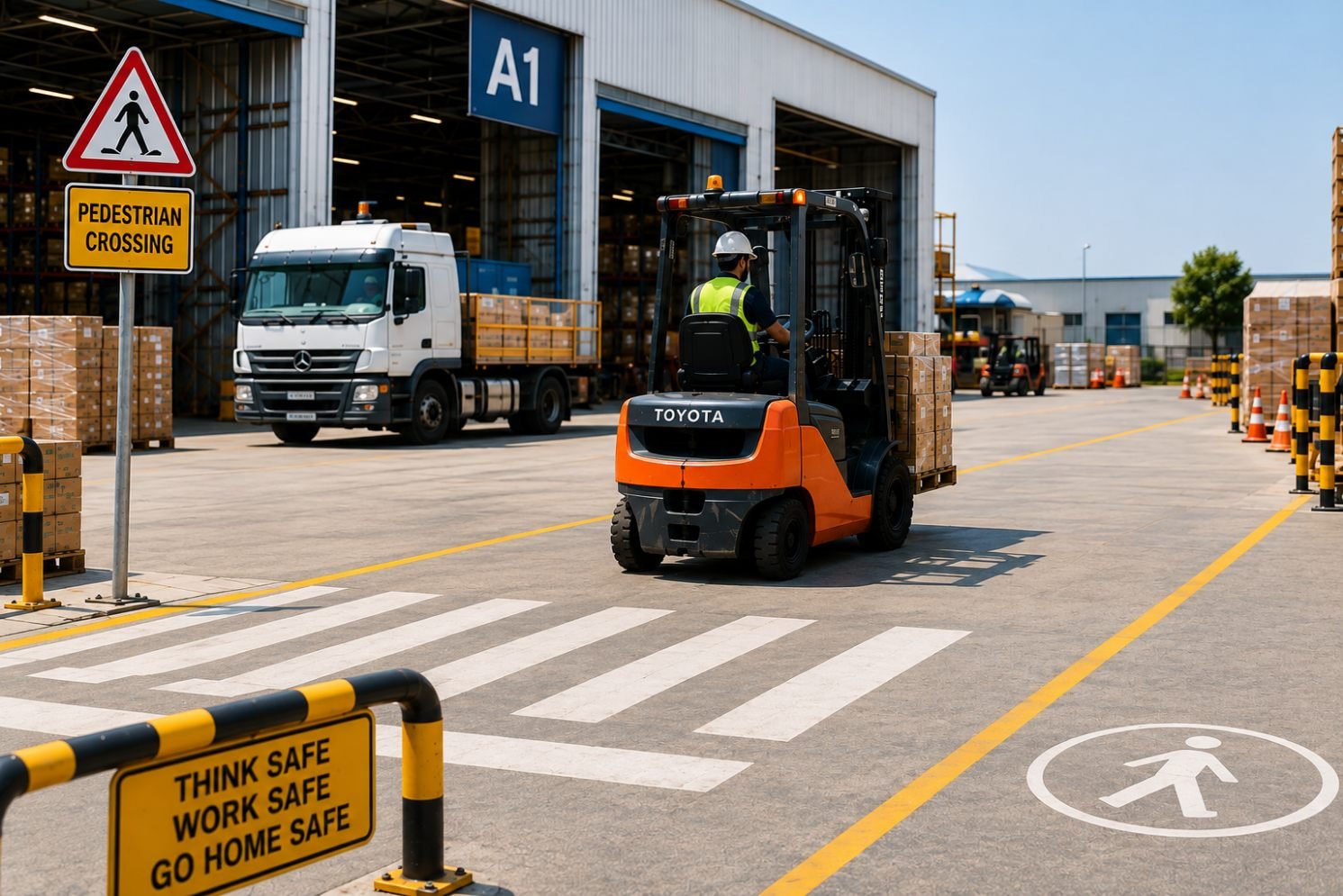
Workplace transport safety covers every movement of vehicles inside a site boundary. Forklifts in a Jebel Ali warehouse. Tipper trucks reversing on a Dubai construction site. Delivery vans in a Sharjah industrial yard. The vehicles are ordinary. The injuries they cause are not.
Four collision types account for a large share of workplace transport injuries. A vehicle strikes a pedestrian. A vehicle overturns. A person falls from a vehicle. A load falls from a vehicle. Each has its own control set, and a traffic management plan that treats them as one problem tends to miss three.
Why Site Traffic Causes Serious Injury
Speeds are low and consequences are high
A forklift travelling at 10 kilometres per hour looks harmless. Its mass makes it lethal to a pedestrian. Low speed does not mean low energy.
Reversing removes the driver's view
A large share of workplace transport fatalities happen during reversing. The driver cannot see behind, and the pedestrian assumes they have been seen.
Familiarity erodes discipline
Workers who cross a yard fifty times a week stop looking. Drivers who reverse into the same bay every day stop checking.
The UAE conditions factor
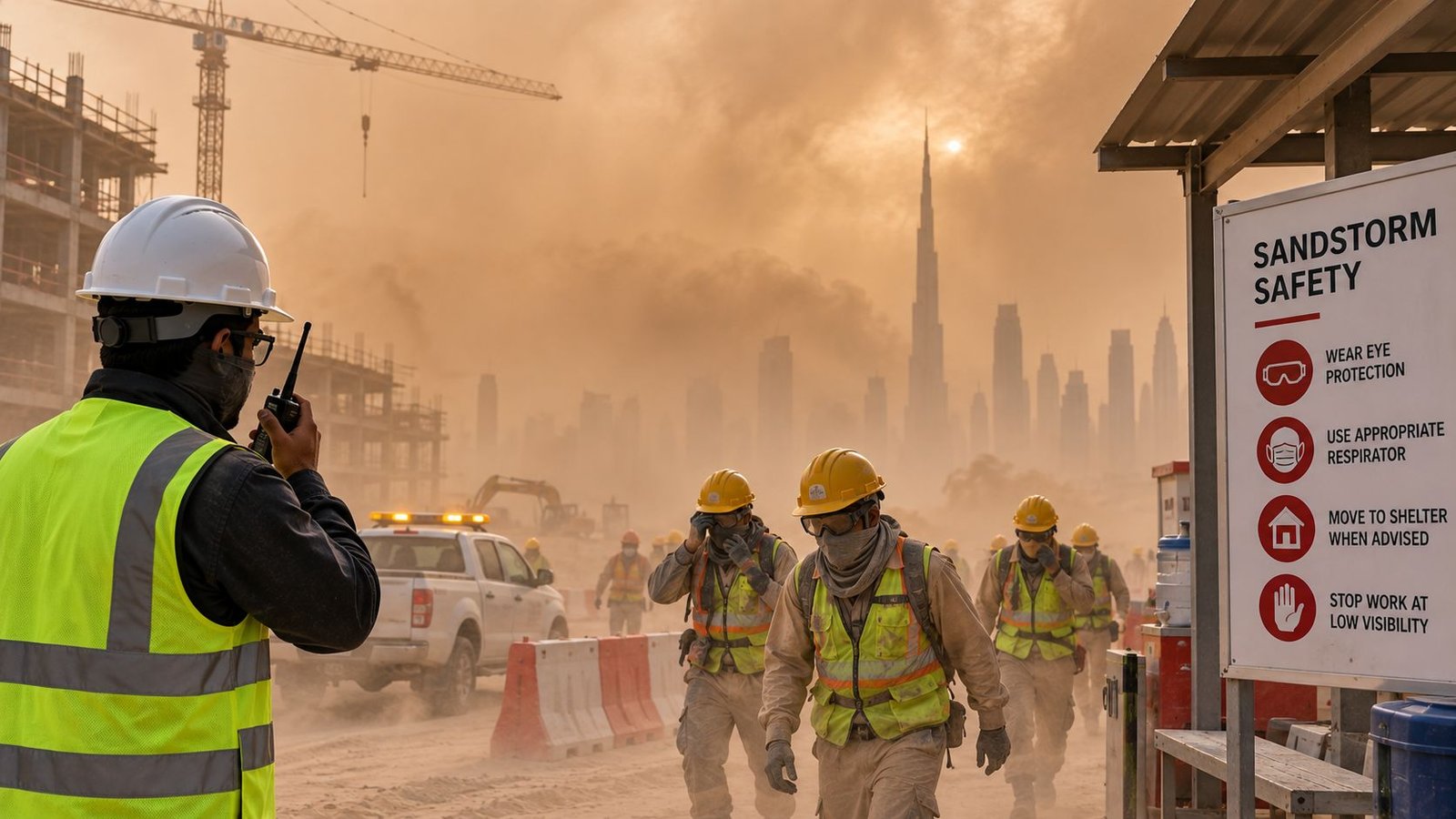
Glare, dust and heat haze all reduce visibility during daylight. Reflective surfaces on parked vehicles compound the problem. Site traffic plans built for temperate conditions underestimate the visibility loss.
| COLLISION TYPE | TYPICAL SCENARIO | PRIMARY CONTROL |
|---|---|---|
| Vehicle strikes pedestrian | Reversing in a loading bay | Physical segregation, banksman, reversing alarm |
| Vehicle overturn | Tipper on uneven ground, forklift on a slope | Ground preparation, load limits, route design |
| Fall from vehicle | Sheeting a load, climbing a trailer | Access platform, edge protection, task redesign |
| Load falls from vehicle | Unrestrained material, unstable stack | Load restraint, exclusion zone during unloading |
Measure 1. Separate People From Vehicles Physically
Segregation is the control that works without depending on anyone’s attention.
Define pedestrian routes and enforce them.
Marked walkways with a physical edge outperform painted lines alone. Plastic barrier chain strung between posts creates a visible boundary that a worker cannot cross without noticing.
Give pedestrians their own entrances.
A shared gate for vehicles and people creates a conflict point at the busiest moment of the day. Separate doors remove it.
Protect the segregation from vehicle impact.
A barrier struck by a forklift stops protecting anyone. Corner and wall protectors absorb impact at aisle ends and door frames where contact is routine.
Use expandable barriers for temporary work.
Maintenance, deliveries and short-term work zones need a barrier that deploys in seconds. An expandable barrier closes a route without a permanent installation.
Cover cables and hoses crossing routes.
A trailing cable is a trip hazard for pedestrians and a snag hazard for vehicles. A cable protector ramp keeps both moving.
Measure 2. Control Reversing Above Everything Else
Reversing deserves disproportionate attention because it causes disproportionate harm.
Design reversing out where you can.
One-way circulation and drive-through bays eliminate the manoeuvre. This is the strongest control available and the one more often dismissed as impractical before it has been tried.
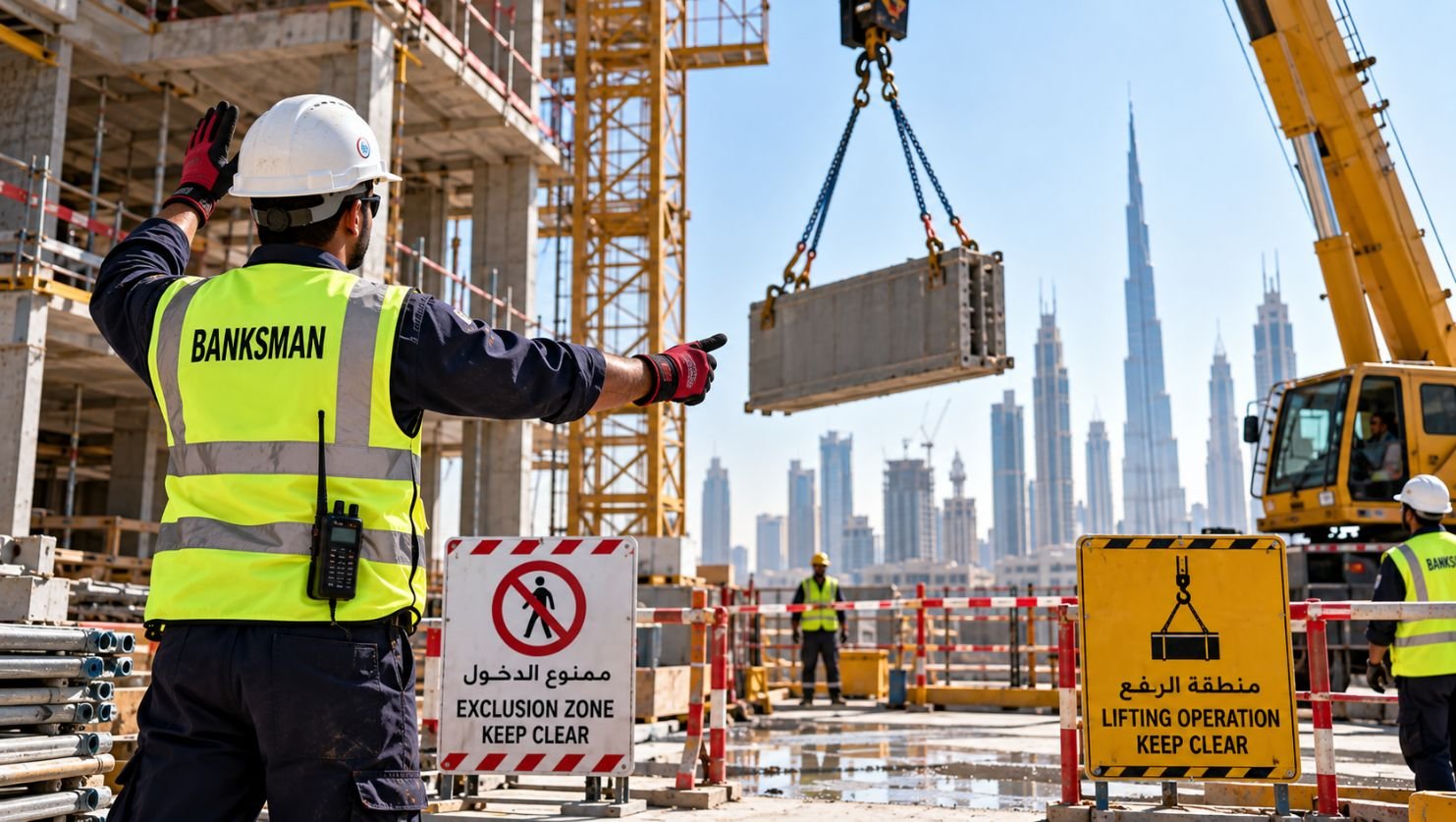
Use a trained banksman where reversing is unavoidable.
The banksman stands in a position visible to the driver at all times, uses agreed signals, and stops the movement the moment they lose sight of the driver.
Make the banksman visible.
A banksman in the same clothing as everyone else is not visible. High-visibility clothing in a distinct specification, chosen from the high-visibility garment options, separates the banksman from general site staff at a glance.
Provide signal equipment.
Hand signals fail in dust, glare and at distance. A stop and go traffic baton gives an unambiguous signal that reads clearly across a yard.
Fit mirrors at blind corners.
Where a route bends and sightlines close, a convex mirror restores the view. Site them at aisle intersections, gate approaches and blind bends.
Measure 3. Manage Speed Physically, Not With Signs
Speed limit signs inform. Physical measures enforce.
Install speed humps at approach points.
Signs are ignored. A speed hump is not. Position them before pedestrian crossings, gate approaches and blind bends instead of spacing them evenly.
Narrow the route where speed matters.
A narrower carriageway slows drivers without any enforcement effort. Traffic poles and cones achieve this temporarily.
Mark lane discipline.
Road studs delineate the edge of the vehicle route at night and in dust. Reflective road studs hold their visibility in conditions where paint disappears.
Set realistic limits.
A limit set too low gets ignored entirely and takes the rest of the traffic rules with it. Set a limit the route can in practice support.
Measure 4. Make Everyone Visible
Visibility failures cause the collisions that segregation does not prevent.
Specify high-visibility clothing correctly.
Class of garment should match the vehicle speed and the environment. Yard workers on foot around moving plant need higher visibility than office staff crossing a car park.
Add active visibility for low-light periods.
Passive reflective material needs a light source pointed at it. An LED reflective vest emits its own light and is visible from angles where reflective tape returns nothing.
Light the vehicles.
A heavy duty revolving warning light on plant and delivery vehicles announces movement before the vehicle appears at a corner.
Light the hazard, not only the vehicle.
Excavations, temporary obstructions and works areas need their own marking. Solar warning lights avoid the cabling problem entirely and run through the night without intervention.
AAA Safe Team supplies traffic management equipment, barriers, warning lights, high-visibility clothing and site marking systems across Dubai, Abu Dhabi, Sharjah and the wider UAE. Contact our technical team for site-specific traffic layout recommendations.
Measure 5. Control Loading and Unloading Zones
Loading bays concentrate every hazard in one place.
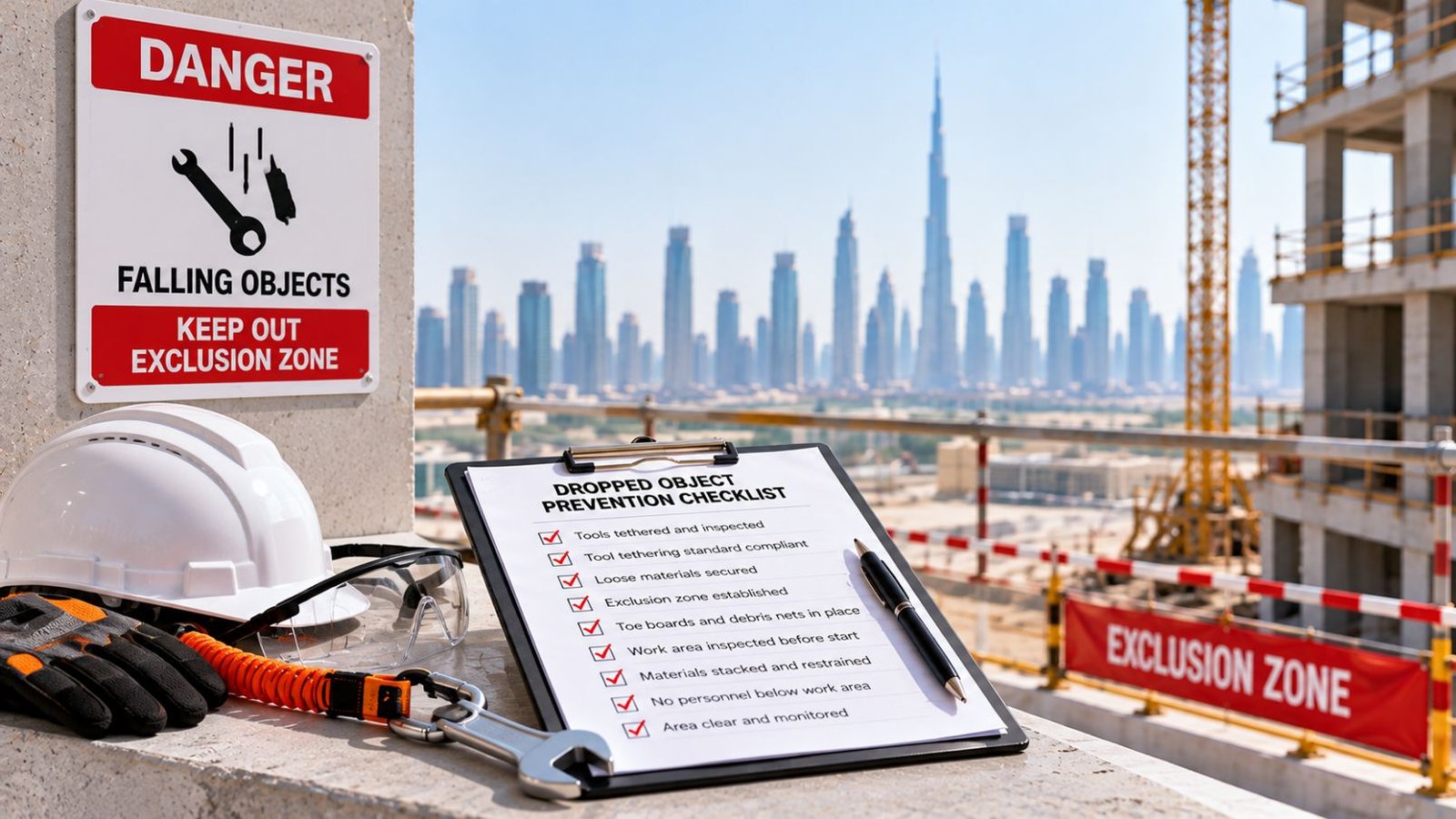
Establish an exclusion zone during unloading.
Nobody stands within the drop zone while a load is being released. Cones or barriers define it physically instead of relying on judgement.
Chock every stationary vehicle.
A trailer that moves during loading kills. Wheel chocks placed before work begins prevent roll-away and prevent premature departure.
Prevent drive-away.
Vehicle drive-away while loading is in progress causes falls and crush injuries. A key control procedure or a physical restraint removes the possibility.
Provide safe access to trailer beds.
Climbing on tyres and jumping down from beds causes a steady stream of ankle and back injuries. Provide steps or a platform.
Restrain loads before movement.
An unrestrained load shifts during the first turn. Restraint is a pre-departure check, not an option.
Measure 6. Enforce Parking and Storage Discipline
Parked vehicles create hazards as effectively as moving ones.
Designate parking areas and mark them.
Vehicles parked opportunistically block routes, obstruct sightlines and force pedestrians into carriageways. Clear no parking signage marks where vehicles must not stop.
Keep fire routes and escape routes clear.
A vehicle blocking a fire route is an emergency waiting for an emergency. Enforce it daily.
Control unauthorised vehicle movement.
Where vehicles must remain stationary for extended periods, a wheel lock prevents movement by anyone without authorisation.
Store material clear of routes.
Material creeping into a vehicle route narrows it and pushes vehicles toward pedestrian areas.
Measure 7. Write a Traffic Management Plan and Keep It Current
A plan on paper that does not match the site is worse than no plan.
Draw the site as it is.
Vehicle routes, pedestrian routes, crossing points, loading bays, parking, gates and blind spots. Mark one-way sections and speed controls.
Update the plan when the site changes.
Construction sites change weekly. A traffic plan from the mobilisation phase describes a site that no longer exists.
Brief every driver and every visitor.
Delivery drivers arriving for the first time are among the highest-risk people on site. Brief them at the gate, not after the incident.
Audit the plan against reality.
Walk the site and check whether people use the routes as drawn. Where they cut across, the route design is wrong instead of the people.
Investigate every near miss.
A near miss between a vehicle and a pedestrian is a collision that happened to miss. Treat it with the same seriousness, using the approach set out in our guide to how to run a near miss reporting system.
| SITE TYPE | DOMINANT RISK | PRIORITY CONTROLS |
|---|---|---|
| Warehouse | Forklift and pedestrian conflict in aisles | Marked walkways, mirrors at aisle ends, racking protection |
| Construction site | Reversing plant, uneven ground | Banksman, one-way routes, ground preparation |
| Logistics yard | Loading bay activity, trailer movement | Wheel chocks, exclusion zones, key control |
| Industrial estate | Mixed traffic, visiting delivery vehicles | Gate briefing, separate pedestrian entrance, speed humps |
| Roadworks | Public traffic interface, night working | Cones and poles, warning lights, high-visibility clothing |
Sites reviewing their full provision can browse the transportation and logistics safety equipment range or contact our specialists for an itemised quotation covering equipment and delivery.
Frequently Asked Questions
Workplace transport safety covers the control of vehicle movement within a site boundary, including forklifts, plant, delivery vehicles and cars. It addresses collisions with pedestrians, overturns, falls from vehicles and falling loads.
Reversing removes the driver’s direct view of the area behind the vehicle. A large share of workplace transport fatalities occur during reversing, usually where a pedestrian assumed they had been seen.
A banksman directs vehicle movement using agreed signals from a position visible to the driver. If the banksman loses sight of the driver, the movement stops immediately.
Through marked and physically bounded walkways, separate pedestrian entrances, barriers protected against vehicle impact, and crossing points positioned where sightlines are clear.
Signs alone have limited effect. Physical measures such as speed humps and route narrowing enforce speed without relying on driver compliance.
At blind corners, aisle intersections, gate approaches and any point where a bend closes the sightline between a vehicle route and a pedestrian route.
Yes. Chocks prevent roll-away during loading and prevent a vehicle departing before loading is complete. They should be placed before work begins and removed only when the vehicle is cleared to leave.
Whenever the site layout changes, which on construction projects can mean weekly. Static sites should review at least annually and after any vehicle-related incident or near miss.
Disclaimer
This article provides general guidance on workplace transport safety for sites in the UAE. It is not legal, regulatory or traffic engineering advice and does not replace a site-specific traffic management plan prepared by a competent person.
Site layouts, vehicle types and traffic volumes vary widely. Requirements differ by Emirate and by sector, and regulations change over time. Verify current obligations with the relevant authority.
Engage a qualified health and safety professional when designing or auditing a site traffic management plan.