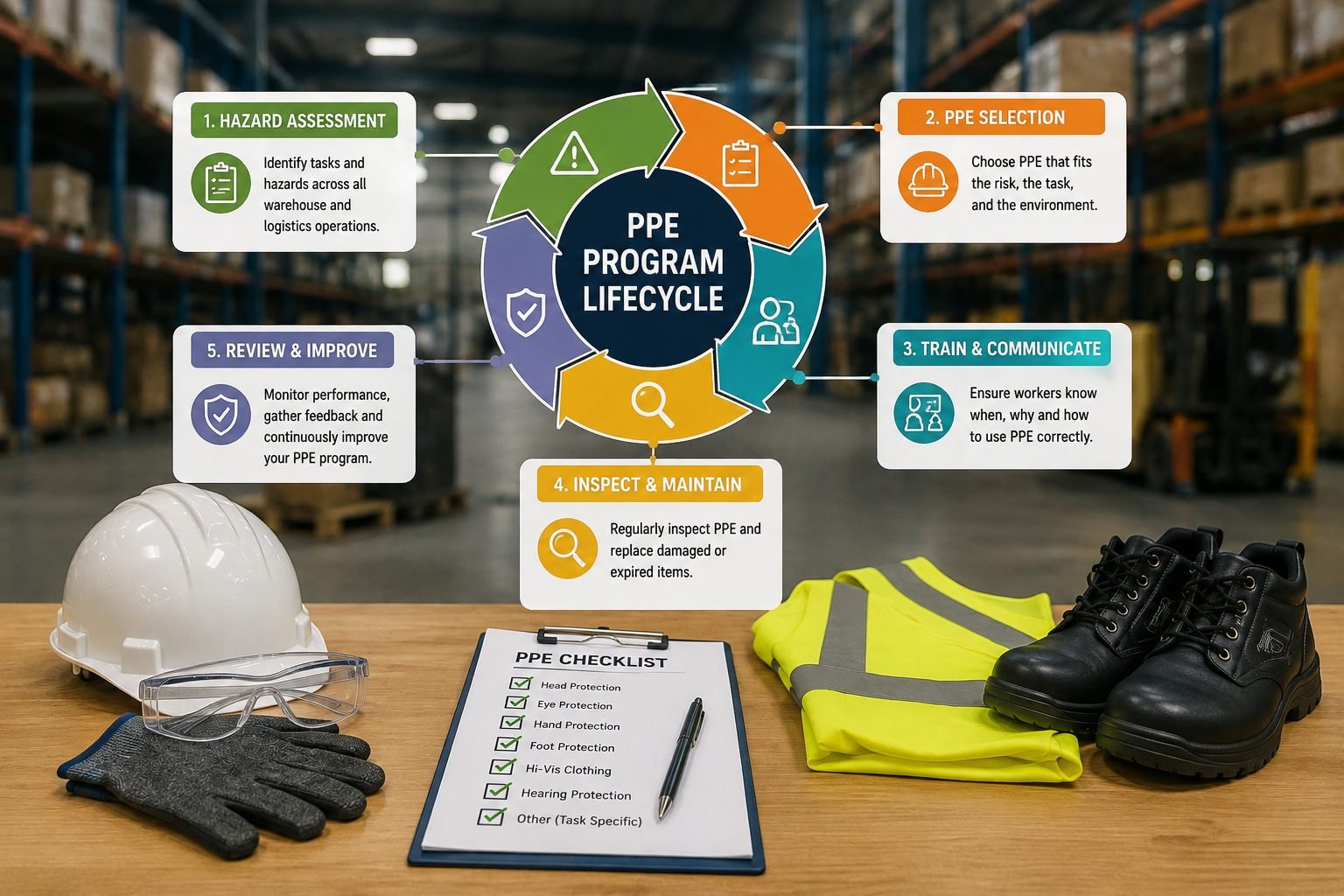
A warehouse runs on movement. Forklifts, pallets, racking, and people share the same floor through long shifts, and each adds a hazard the next worker must avoid. A structured warehouse and logistics PPE program turns scattered safety gear into a system that matches protection to the real risks on the floor. This guide gives UAE safety managers a way to build that program from hazard mapping through to inspection and audit.
Warehousing and logistics have grown fast across the UAE as Dubai and Abu Dhabi expand their roles as trade hubs. Sites range from chilled food distribution to e commerce fulfilment, and each carries its own mix of hazards. A program built around the facility, rather than a generic checklist, gives workers the right protection for the work they actually do.
Why a warehouse and logistics PPE program matters
Personal protective equipment handed out without a system creates gaps. One worker wears a hi vis vest while another nearby does not, and the forklift driver cannot tell who is safe to pass. A program closes those gaps by defining who wears what, where, and why.
UAE facilities operate under federal occupational safety rules and emirate level requirements. A documented warehouse and logistics PPE program shows that the site has assessed its hazards and matched protection to them. That documentation supports both worker safety and compliance reviews across the Emirates.
From handout to system
Issuing PPE is the easy part. The harder work is deciding what each role needs and confirming workers wear it correctly every shift. A program holds that logic in one place so the safety team is not deciding case by case.
Covering the whole logistics chain
Goods move through receiving, storage, picking, and dispatch. Each zone has its own hazards. A program that maps PPE to each zone gives workers consistent protection as they move through the facility.
Mapping hazards across the warehouse floor
A PPE program starts with a hazard map. You cannot select protection until you know what threatens the worker in each area.
Vehicle and pedestrian interaction
Forklifts and pedestrians sharing aisles is the central hazard of most warehouses. The risk is a strike, a crush against racking, or a fall from a load. High visibility clothing and clear traffic routes form the first line of defence.
Manual handling and racking
Lifting, stacking, and reaching into racking strain backs and risk dropped loads. Falling stock from height threatens the head and feet. Foot protection and head protection in racking zones address this directly.
Slip, trip, and surface hazards
Spilled liquids, loose packaging, and uneven dock surfaces cause slips and trips. Slip resistant footwear and good housekeeping reduce this risk across UAE sites where dock doors open onto hot, dusty yards.
Temperature and environmental factors
Chilled and frozen zones add cold exposure. Open loading bays in the UAE summer add heat. The program accounts for both extremes within the same facility where they exist.
Building the PPE matrix by role and zone
The PPE matrix is the core of the program. It states what each role wears in each zone. The table below shows a sample structure that a safety manager adapts to their own facility.
| ROLE OR ZONE | CORE PPE | ADDITIONAL PPE |
|---|---|---|
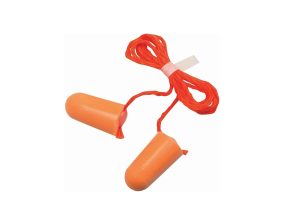
| Forklift operator | Hi vis vest, safety footwear | Bump cap, hearing protection in noisy zones |
| Picker and packer | Hi vis vest, safety footwear, gloves | Knee protection for low racking |
| Receiving and dock | Hi vis clothing, safety footwear, gloves | Weather gear for open bays |
| Chilled and frozen zone | Cold rated workwear, insulated footwear, gloves | Hi vis layer over cold gear |
| Maintenance | Safety footwear, gloves, eye protection | Hearing protection, fall protection at height |
Defining mandatory versus task based PPE
Some PPE applies the moment a worker enters the floor, such as hi vis clothing and safety footwear. Other PPE applies only to a task, such as cut resistant gloves for opening cartons. The matrix separates these so workers know the baseline and the additions.
High visibility clothing standards
Hi vis clothing should meet a recognised standard so it performs in the lighting conditions of the facility. Colour and reflective placement matter where forklifts operate in dim aisles. Worn or faded vests lose their visibility and need replacing.
AAA Safe Dubai supplies high visibility clothing, safety footwear, and hand protection for UAE warehouse operations. Contact our team for a PPE matrix matched to your facility zones.
Hand and eye protection in logistics work
Hands and eyes face frequent hazards in warehouse work. The program specifies protection that matches the task without slowing the worker.
Glove selection by task
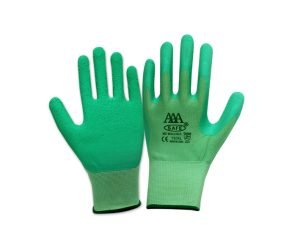
Carton opening risks cuts from blades and edges, which calls for cut resistant gloves. General handling needs grip and abrasion resistance. Chilled zones need insulated gloves that still allow dexterity. One glove rarely covers all tasks, so the matrix assigns gloves by job.
Eye protection where needed
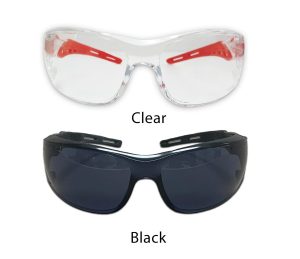
Most picking work does not need eye protection, but maintenance, cleaning with chemicals, and certain machinery tasks do. The program flags these tasks so workers wear protection only where the hazard exists. This keeps compliance high because the rule makes sense to the worker.
Comfort and compliance
PPE that is uncomfortable gets removed. Gloves that fit and breathe stay on the hands. The program treats comfort as a compliance factor, not a luxury, because protection only works when worn.
Foot and head protection on the warehouse floor
Feet and heads face crushing and impact hazards near racking and moving loads. Footwear and head protection address these directly.
Footwear for warehouse hazards
Warehouse footwear needs toe protection against dropped loads and slip resistance for wet docks. Chilled zones add an insulation need. The program matches footwear to the zone the worker spends most time in.
Bump caps and hard hats
Full hard hats suit areas with overhead load risk. Bump caps suit lower racking zones where the risk is striking the head against a fixed object rather than a falling load. The matrix assigns the right head protection to each zone.
Maintaining foot and head gear
Footwear and head protection wear out and take damage. The program includes a check and replace routine so worn gear does not stay in service. This ties into the wider PPE inspection process.
AAA Safe Dubai stocks the personal protective equipment and workwear range for warehouse and logistics operations across the UAE. Request an itemised quote for your facility.
Inspection, maintenance, and replacement
PPE protects only while it stays in good condition. A program includes a routine to check, maintain, and replace gear before it fails.
Building an inspection routine
A monthly inspection catches worn vests, cracked toe caps, and damaged gloves. The monthly PPE inspection procedure gives a structure that a warehouse safety manager can apply across the floor. Recording each inspection creates an audit trail.
Storage and cleaning
PPE stored badly degrades faster. Clean, dry storage extends the life of gloves, vests, and footwear. Cleaning routines matter for shared and reusable items where hygiene affects whether workers wear them.
Replacement triggers
The program defines when gear gets replaced rather than waiting for failure. A faded vest, a worn sole, or a torn glove triggers replacement. Clear triggers stop damaged PPE from staying in use across busy UAE sites.
Training and worker engagement
A program lives or dies on whether workers follow it. Training and engagement turn the written matrix into daily behaviour.
Induction and ongoing training
New workers learn the PPE rules during induction. Ongoing refreshers keep the rules current as the facility changes. Training lands when it explains why each rule exists, not just what the rule is.
Supervisor enforcement
Supervisors confirm PPE use on the floor every shift. Their consistency sets the tone for the crew. A supervisor who lets gaps slide signals that the rules are optional.
Feedback from the floor
Workers spot PPE problems that a desk based plan misses. A vest that catches on racking or a glove that fails at a task surfaces through worker feedback. The program improves when the safety team listens to that feedback.
Documentation and compliance for UAE facilities
A documented program supports compliance across the UAE regulatory framework. Auditors check that hazards are assessed and protection is matched to them.
Keeping records
The hazard map, PPE matrix, inspection logs, and training records form the documentation set. Ready records speed compliance reviews and show due diligence. These records also help when investigating any incident.
Aligning with UAE regulations
Federal occupational safety law and emirate level requirements shape what a facility must do. Dubai, Abu Dhabi, and Sharjah each have authorities that oversee workplace safety. The program should align with the rules that apply to the facility’s location and sector.
Reviewing and updating the program
A facility changes as it grows or shifts what it stores. The program needs periodic review so the hazard map and PPE matrix stay current. An out of date program leaves new hazards uncovered. Reach the AAA Safe Dubai team through the contact page to discuss a program review.
Frequently Asked Questions
A warehouse and logistics PPE program is a documented system that matches protective equipment to the hazards in each zone of a facility. It includes a hazard map, a PPE matrix by role and zone, and inspection routines. The program gives workers consistent protection across the logistics chain.
A PPE matrix states what each role wears in each zone, which removes guesswork. It separates mandatory floor wide PPE from task based PPE. This clarity improves compliance and supports audits across UAE facilities.
Forklift operators need high visibility clothing and safety footwear as a baseline. Noisy zones add hearing protection, and some areas call for a bump cap. The exact set depends on the facility hazard map.
High visibility clothing makes pedestrians visible to forklift operators in dim aisles. This reduces the risk of strikes and crushes, the central hazard of warehouse work. Faded or worn vests lose their effect and need replacing.
Carton opening needs cut resistant gloves, general handling needs grip and abrasion resistance, and chilled zones need insulated gloves. One glove rarely covers all tasks. The PPE matrix assigns gloves by job.
A monthly inspection catches worn vests, cracked toe caps, and damaged gloves. Recording each inspection creates an audit trail. The replacement triggers in the program stop damaged PPE from staying in use.
Chilled and frozen zones need cold rated workwear, insulated footwear, and insulated gloves. A high visibility layer goes over the cold gear. The program accounts for both cold and any heat in the same facility.
Training turns the written matrix into daily behaviour. Induction teaches new workers the rules, and refreshers keep them current. Explaining why each rule exists improves compliance more than stating the rule alone.
A facility keeps the hazard map, PPE matrix, inspection logs, and training records. Ready records speed compliance reviews and show due diligence. They also support any incident investigation.
The program needs periodic review as the facility grows or changes what it stores. An out of date program leaves new hazards uncovered. A review keeps the hazard map and PPE matrix current.
Disclaimer
This article provides general guidance on building a PPE program for warehouse and logistics facilities in the UAE. It does not replace a site specific risk assessment or professional occupational safety advice. Hazards and PPE requirements vary by facility, sector, and the goods handled.
The information here reflects general practice and does not constitute legal advice on occupational safety regulations. Safety managers should confirm current requirements with the relevant authorities for their location and sector.
For occupational safety frameworks and workplace requirements, consult the Ministry of Human Resources and Emiratisation, Dubai Municipality, and the Abu Dhabi Public Health Centre.