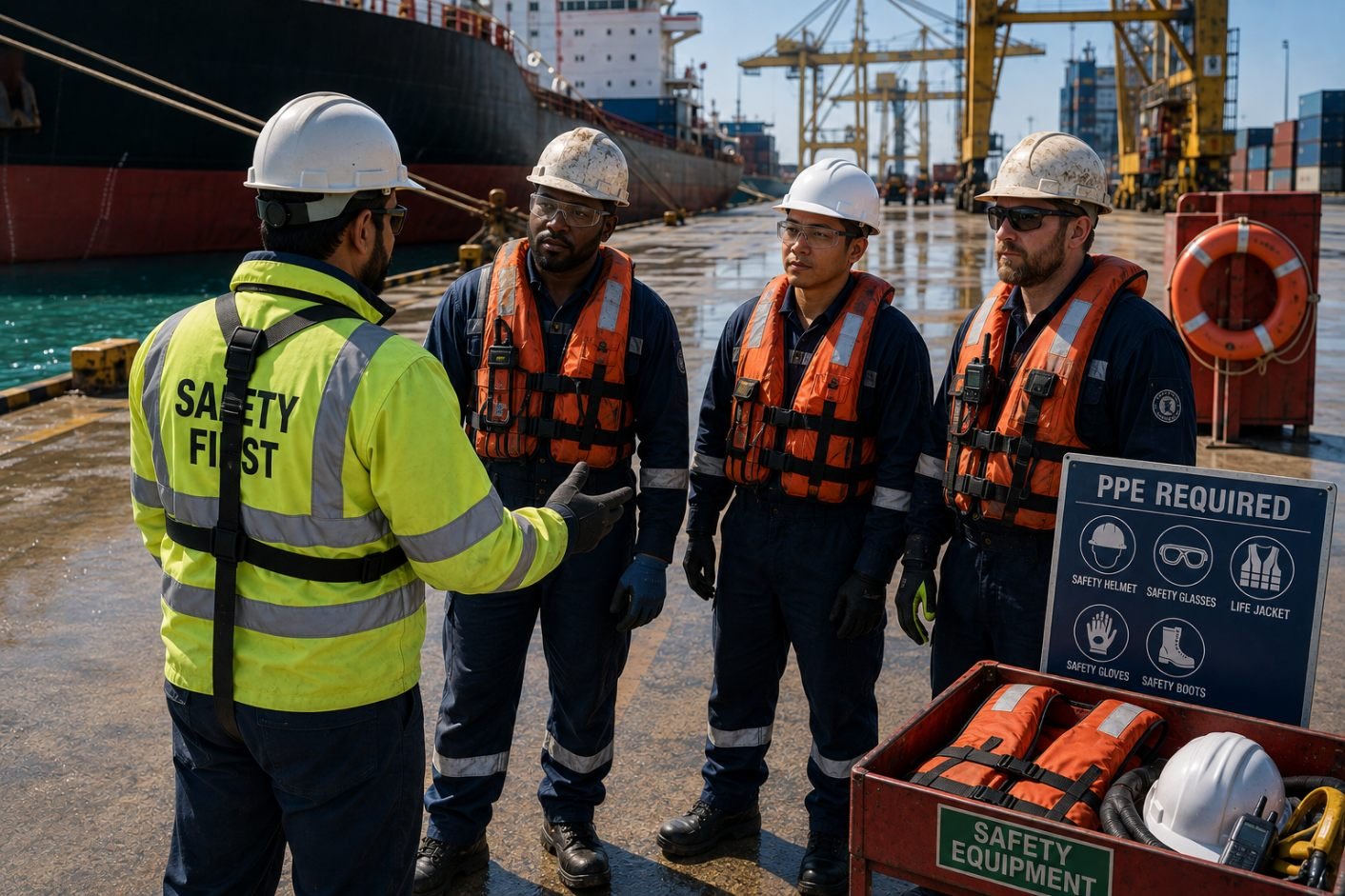
Work on a quay, a vessel, or an offshore platform exposes a worker to hazards that a land based program never covers. The risk of falling into water, the corrosive salt air, and the heavy moving loads of cargo handling each demand protection built for the marine environment. A marine and port worker PPE program brings these requirements into one system that UAE operators can apply across their waterfront sites.
The UAE runs some of the busiest ports in the region, with major operations across Dubai, Abu Dhabi, and the wider Emirates. Workers on these sites move cargo, maintain vessels, and operate on open water. This guide gives safety managers a way to build a PPE program matched to marine and port hazards rather than borrowing a land based one that leaves water risks uncovered.
Why marine and port work needs a dedicated PPE program
The defining hazard of marine work is water. A worker who falls from a quay or a deck faces drowning, cold shock, and the difficulty of recovery. Standard PPE does nothing against this hazard. Marine specific equipment, starting with personal flotation, is the difference between a recoverable incident and a fatality.
Salt and humidity also attack equipment that performs well on land. Metal corrodes, fabric degrades, and gear fails earlier than its land based equivalent. A marine and port worker PPE program selects equipment built to survive the conditions of UAE waterfronts and offshore sites.
The water hazard that land programs ignore
A land PPE program protects against impact, cuts, and falls to a hard surface. None of that addresses a fall into water. The marine program adds flotation, water rescue equipment, and the procedures that surround them. This is the core reason marine work needs its own program.
Corrosion and the marine environment
Salt air shortens the life of metal fittings, fasteners, and tools. PPE and rescue equipment exposed to this environment need corrosion resistant construction. A program that ignores this finds its gear failing inspections sooner than expected.
Personal flotation for port and offshore workers
Flotation is the foundation of marine PPE. The program defines who wears it, what type, and when.
Life jackets and buoyancy aids
Life jackets keep an unconscious worker face up in water, which buoyancy aids do not. Buoyancy aids suit strong swimmers in calmer conditions where the work demands more movement. The program matches the device to the risk and the worker’s exposure to deep water.
Automatic and manual inflation
Inflatable life jackets save bulk and allow movement during work. Automatic inflation triggers on contact with water, which protects a worker knocked unconscious. Manual versions need the worker to activate them. For high risk roles, automatic inflation removes the dependence on the worker reacting.
When flotation is mandatory
The program states the zones and tasks where flotation is mandatory. Working near an unguarded edge, on a deck in motion, or over open water all call for flotation. Defining these zones clearly removes argument about when the gear is needed.
Marine grade PPE and material selection
Beyond flotation, the worker needs protection against the same impact, cut, and slip hazards as land work, but in marine grade form.
Corrosion resistant components
Toe caps, fasteners, and tool fittings exposed to salt air need corrosion resistant materials. Composite toe caps avoid the rust that attacks steel in marine conditions. Stainless and coated fittings outlast plain metal on the waterfront.
Footwear for wet decks
Decks and quays stay wet, which makes slip resistance critical. Marine footwear combines slip resistant soles with water resistance and corrosion resistant protective elements. The marine grade PPE for offshore and port workers guide covers footwear and wider equipment built for these conditions.
High visibility in marine settings
Cargo handling involves cranes and moving loads where the worker must be seen. High visibility clothing in marine grade fabric resists salt degradation while keeping the worker visible to operators. This matters across busy UAE port operations.
AAA Safe Dubai supplies marine grade PPE, life jackets, and water safety equipment for UAE port and offshore operations. Contact our team for a program matched to your waterfront site.
Water rescue and lifesaving equipment
PPE protects the individual worker. Rescue equipment recovers a worker who enters the water. Both belong in a complete marine program.
Lifebuoy placement
Lifebuoys are the immediate rescue tool when a worker falls in. Their placement decides whether one is in reach when needed. The lifebuoys placement guidelines explain spacing and positioning along quays and decks so rescue equipment is always within reach.
Throw lines and rescue aids
A throw line extends the reach of a rescuer to a worker in the water. Combined with lifebuoys, throw lines speed recovery before the cold and current take hold. Training in their use matters as much as their presence.
Rescue boats and recovery plans
Larger operations need a means to recover a worker from open water. A recovery plan names who acts, what equipment they use, and how they raise the alarm. The plan turns scattered equipment into a coordinated response across the UAE site.
Head, eye, and respiratory protection in port work
Marine and port work shares many hazards with industrial work, and the program covers these alongside the water specific gear.
Head protection
Falling cargo and fixed obstructions threaten the head during loading and maintenance. Hard hats with corrosion resistant fittings suit the marine environment. Chin straps keep the hat in place in wind and on moving decks.
Eye protection
Salt spray, grinding during maintenance, and chemical handling threaten the eyes. Eye protection rated for the task protects against these. Anti fog properties help in the humid conditions of UAE ports.
Respiratory protection
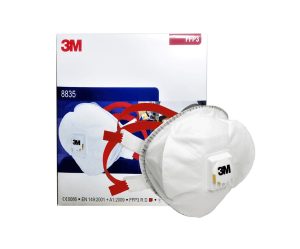
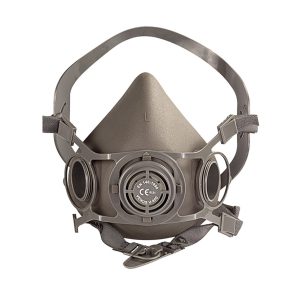
Confined spaces on vessels, paint and coating work, and bulk cargo dust each create respiratory hazards. The program flags these tasks and assigns the right respiratory protection. Confined space entry on vessels carries its own strict procedures beyond PPE alone.
Hand protection and workwear for marine conditions
Hands and the body need protection that survives salt, water, and heavy handling.
Glove selection
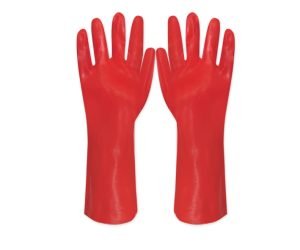
Mooring lines, wire ropes, and cargo edges threaten the hands. Cut and abrasion resistant gloves protect during handling. Grip in wet conditions matters where land based gloves would slip. The program assigns gloves by the marine task.
Workwear against sun and salt
Open deck work in the UAE combines strong sun with salt exposure. Workwear that shields against sun while surviving salt suits this environment. Breathable fabric manages the heat that builds during summer shifts across the Emirates.
Cold and wet weather gear
Night shifts and the cooler months bring cold and wet conditions on the water. Weatherproof gear keeps workers functional without trapping moisture. The program accounts for these conditions where the operation runs year round.
AAA Safe Dubai stocks the water safety range alongside marine grade PPE for UAE operations. Request an itemised quotation covering flotation, rescue equipment, and protective gear.
Training and competency for marine PPE
Marine PPE works only when workers know how to use it. Flotation, rescue gear, and emergency procedures all need training.
PPE use and fit
Workers learn to don, check, and maintain their flotation and protective gear. A life jacket worn loose or unfastened fails when it matters. Training fixes correct use before the worker reaches the water’s edge.
Rescue drills
Regular drills test the rescue plan and keep response sharp. Workers practise throwing lines, deploying lifebuoys, and raising the alarm. Drills reveal gaps in equipment placement and procedure that a written plan hides.
Emergency response readiness
The program confirms that workers know the alarm, the muster point, and the recovery steps. UAE emergency services respond to marine incidents, and the site’s first response decides the outcome before they arrive.
Inspection, maintenance, and compliance
Marine equipment faces harsh conditions and needs regular inspection to stay reliable.
Inspecting flotation and rescue gear
Life jackets, inflation mechanisms, lifebuoys, and lines need regular checks. Inflation cartridges expire, fabric degrades, and fittings corrode. A scheduled inspection catches these before the equipment fails in use.
Maintenance against corrosion
Rinsing salt from equipment, drying it properly, and storing it well extend its life. Corrosion that goes unchecked weakens fittings until they fail. Maintenance routines counter the marine environment’s effect on the gear.
Aligning with UAE maritime authorities
Marine and port operations fall under maritime authorities alongside general occupational safety rules. The program should align with the requirements that apply to UAE waterfront and offshore work. Reach the AAA Safe Dubai team through the contact page to discuss equipment and compliance for your operation.
Frequently Asked Questions
A marine and port worker PPE program is a system that matches protective and rescue equipment to the hazards of waterfront and offshore work. It covers flotation, marine grade PPE, and water rescue equipment. The program addresses the water hazard that land based programs ignore.
Marine work adds the hazard of falling into water, which standard PPE does nothing against. It also exposes equipment to salt and humidity that cause corrosion. Marine grade PPE and flotation address both factors.
Workers should wear flotation when working near an unguarded edge, on a deck in motion, or over open water. The program defines these zones and tasks clearly. Automatic inflation suits high risk roles where a worker could be knocked unconscious.
Marine grade PPE uses corrosion resistant materials that survive salt air, such as composite toe caps and coated or stainless fittings. It combines this with slip resistance for wet decks. Standard land PPE corrodes and fails faster in marine conditions.
Lifebuoy placement guidelines set the spacing and positioning of buoys along quays and decks. Correct placement keeps a buoy within reach wherever a worker might fall in. This speeds rescue before cold and current take hold.
A port operation needs lifebuoys, throw lines, and a recovery plan for open water. Larger operations need a means to recover a worker from the water. Training in the use of this equipment matters as much as its presence.
Confined spaces on vessels, paint and coating work, and bulk cargo dust create respiratory hazards. The program flags these tasks and assigns respiratory protection. Confined space entry carries strict procedures beyond PPE alone.
Strong sun and salt exposure combine on UAE decks, while humidity speeds corrosion. Workwear must shield against sun while surviving salt. Breathable fabric manages the heat that builds during Emirates summer shifts.
Life jackets, inflation mechanisms, lifebuoys, and lines need regular scheduled checks. Inflation cartridges expire and fabric degrades over time. A scheduled inspection catches problems before the equipment fails in use.
Marine and port operations fall under maritime authorities alongside general occupational safety rules. The program aligns with the requirements for UAE waterfront and offshore work. Operators should confirm the authorities that apply to their site and operation.
Disclaimer
This article provides general guidance on building a PPE program for marine and port workers in the UAE. It does not replace a site specific risk assessment or professional marine safety advice. Hazards and equipment requirements vary by operation, vessel, and waterfront conditions.
The information here reflects general practice and does not constitute legal advice on maritime or occupational safety regulations. Safety managers should confirm current requirements with the relevant authorities for their operation.
For maritime and workplace safety requirements, consult the Federal Transport Authority, Abu Dhabi Maritime, and the Ministry of Human Resources and Emiratisation.