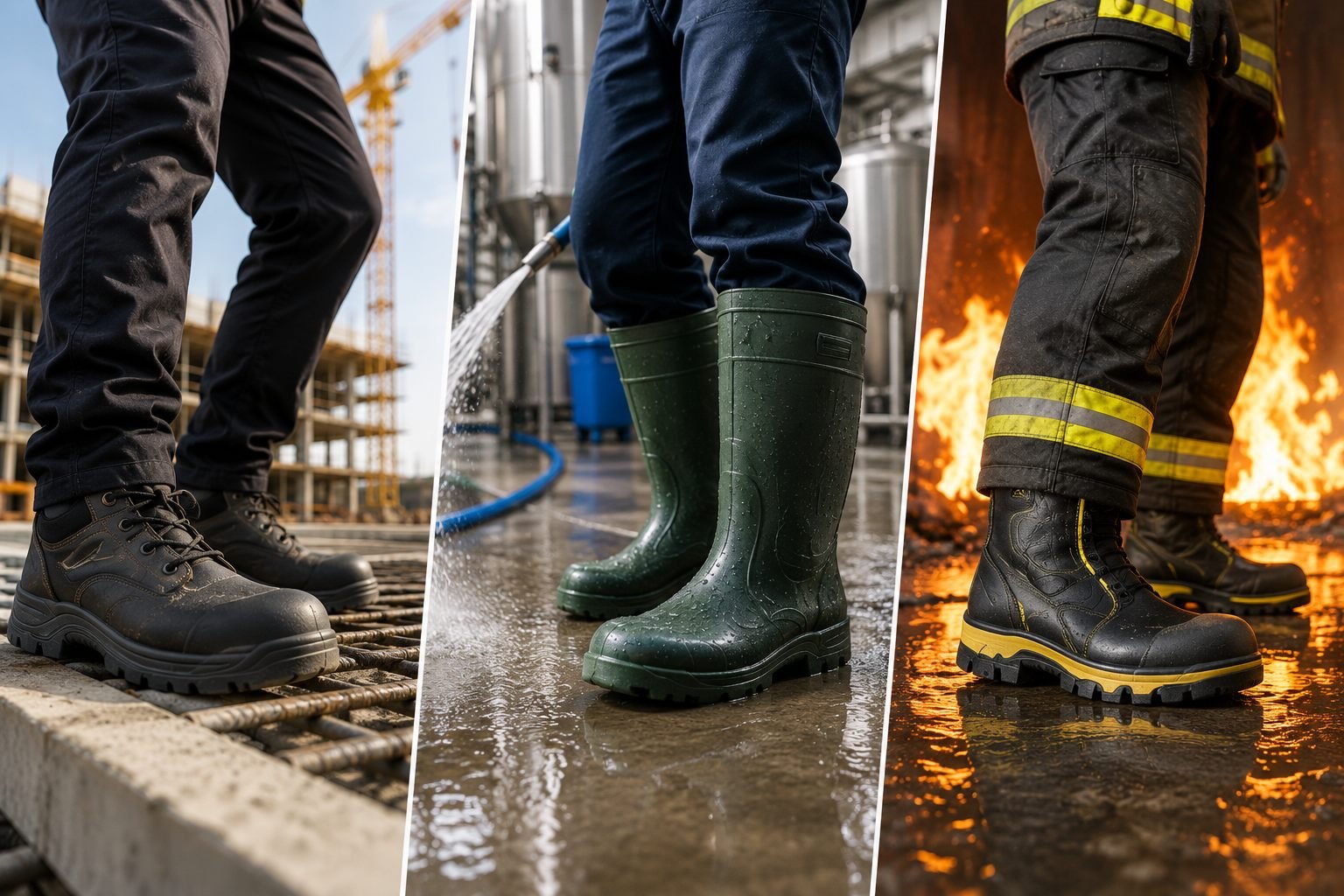
Three workers stand on the same site, and each needs a different boot. One lays concrete, one washes down a wet processing floor, and one works near heat and flame. Giving all three the same footwear protects none of them well. Foot protection choices come down to matching the boot to the hazard, and this comparison breaks down where safety shoes, gumboots, and fire boots each belong.
UAE sites across Dubai, Abu Dhabi, and Sharjah run a wide mix of work. A single facility might combine dry construction zones, wet wash down areas, and hot work near furnaces. Knowing the strengths and limits of each footwear type lets a safety manager equip workers correctly rather than defaulting to one boot for everyone.
Moving a project from one phase to the next across the Emirates? A supplier that holds depth in certified PPE for every trade keeps the right gear ready for each phase in Dubai, Abu Dhabi, and Sharjah. Speak to the team about phase-based supply.
Why foot protection choices matter on UAE sites
Feet carry the worker all day and sit closest to many ground hazards. A dropped load, a puncture, a chemical spill, or a slip each threatens the foot first. The boot is the barrier, and the wrong boot leaves a gap.
Matching footwear to the hazard is the core of foot protection choices. A boot that excels against impact may fail against chemicals. A boot built for water may offer no toe protection at all. Understanding these trade offs prevents the false confidence of wearing a boot that does not match the work.
The cost of one boot for every job
Issuing one footwear type across a mixed UAE facility saves on procurement but fails on protection. The construction boot soaks through in the wash down zone. The wet area boot offers no toe cap on the construction floor. Matching the boot to the zone closes these gaps.
Reading the hazard before the boot
Selection starts with the hazard, not the catalogue. Impact, puncture, water, chemical, and heat each point to a different footwear strength. The comparison below connects each hazard to the footwear that handles it.
Safety shoes: the construction and industrial standard
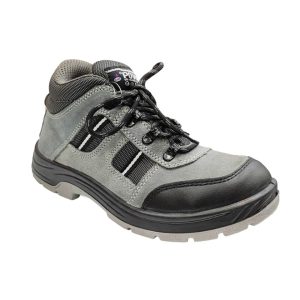
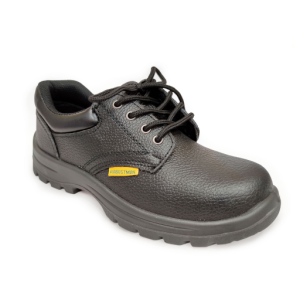
Safety shoes and boots are the default for dry construction and industrial work. They protect against the impact, puncture, and slip hazards of most sites.
What safety shoes protect against
Safety shoes carry a toe cap that resists impact and compression from dropped loads. Penetration resistant midsoles block punctures from below. Slip resistant soles handle the dry and lightly wet conditions of construction floors. This combination covers the common hazards of UAE construction.
Toe cap and sole options
Toe caps come in steel, composite, and aluminium, each with trade offs in weight and temperature conduction. Soles vary in slip resistance and heat tolerance. The anti fatigue safety shoes article explains how construction affects comfort over a long shift.
Where safety shoes fall short
Safety shoes are not built for standing water or chemical immersion. A wash down floor soaks them, and chemicals attack the materials. For wet and chemical work, gumboots take over. Safety shoes also offer limited heat protection for hot work near flame.
AAA Safe Dubai stocks safety footwear across protection levels for UAE construction and industrial work. Browse the safety shoes range or request a quote for your crew.
Gumboots: protection for wet and chemical environments
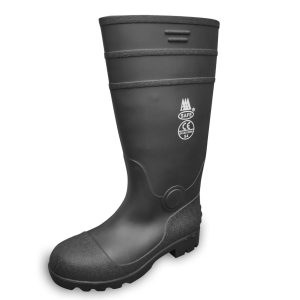
Gumboots, also called wellington or rubber boots, handle standing water and chemical exposure that defeat safety shoes. They suit wash down areas, food processing, and chemical handling.
What gumboots protect against
Gumboots seal the foot against water and many chemicals. Their full rubber or polymer construction keeps liquids out where a stitched leather boot would soak through. This makes them the choice for wet processing floors across UAE facilities.
Safety rated gumboots
Plain gumboots offer no impact protection. Safety rated gumboots add a toe cap and sometimes a penetration resistant midsole, combining water protection with impact resistance. For wet zones that also carry dropped load risk, safety rated gumboots cover both.
Chemical resistance
Different chemicals attack different materials. A gumboot rated for one chemical may degrade in another. The program should match the boot’s chemical rating to the substances on site rather than assuming all gumboots resist all chemicals.
Where gumboots fall short
Gumboots run hot in the UAE climate because they trap heat and moisture. They suit wet work but cause discomfort on dry hot ground. They also offer no protection against flame or radiant heat. For hot work, fire boots take over.
Fire boots: protection against heat and flame
Fire boots protect workers exposed to heat, sparks, molten metal, and flame. Welding, foundry work, and firefighting all call for footwear built to resist heat.
What fire boots protect against
Fire boots resist radiant heat, contact heat, and sparks or molten splash. Their construction keeps the foot protected where ordinary footwear would melt or ignite. Heat resistant soles tolerate hot surfaces that would degrade standard rubber.
Construction features
Fire boots use heat resistant uppers and soles, often with limited stitching that flame could attack. Quick release fastenings let a worker remove the boot fast in an emergency. Metatarsal protection guards the upper foot against falling hot material.
Where fire boots fit on UAE sites
Welding bays, metal foundries, and emergency response roles all use fire boots. The fire safety range covers equipment for these hot work environments across the Emirates. The boot matches the specific heat hazard of the task.
Where fire boots fall short
Fire boots are heavier and less suited to general walking work. They do not seal against water like gumboots or offer the all day comfort of construction safety shoes. They are a specialist boot for heat exposure, not a general site boot.
Comparing the three footwear types
The table below summarises where each footwear type fits. A safety manager uses it to match the boot to the zone.
| Factor | Safety shoes | Gumboots | Fire boots |
|---|---|---|---|
| Primary hazard | Impact, puncture, slip | Water, chemicals | Heat, flame, sparks |
| Toe protection | Standard | On safety rated models | Standard with metatarsal options |
| Water resistance | Limited | Full | Limited |
| Chemical resistance | Limited | Strong, rated by type | Limited |
| Heat resistance | Low | Low | High |
| Typical UAE setting | Construction, industrial | Wash down, food, chemical | Welding, foundry, fire response |
Mixed sites need mixed footwear
A facility with several hazard zones equips workers by zone. The construction crew wears safety shoes, the wash down team wears gumboots, and the welding bay wears fire boots. Matching footwear to the zone protects each worker for their actual work.
Sizing across footwear types
Each footwear type fits differently, so sizing carries across with care. A worker who needs two boot types for different tasks needs both sized correctly. Comfort drives compliance, so fit matters across all three.
AAA Safe Dubai supplies safety shoes, gumboots, and fire boots for UAE sites. Contact our team for itemised quotes covering footwear matched to each hazard zone in your facility.
Selecting footwear for common UAE work scenarios
Real sites combine hazards, and selection connects the scenario to the boot.
Dry construction work
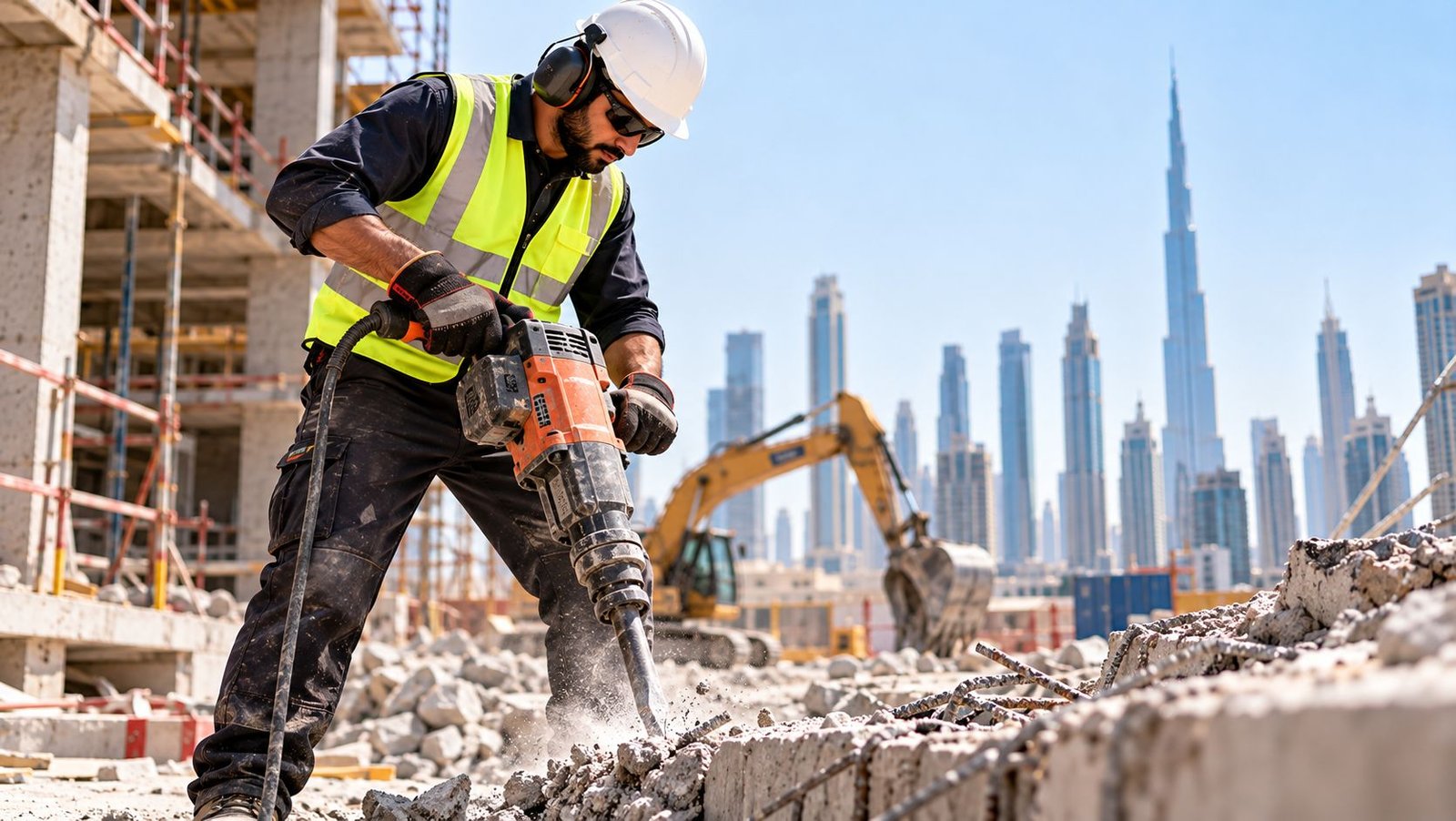
Concrete, steel, and general building work face impact, puncture, and slip hazards. Safety shoes with a penetration resistant midsole and slip resistant sole cover this. Composite toe caps reduce heat load for outdoor crews across Dubai and Abu Dhabi.
Food processing and wash down
Wet floors, cleaning chemicals, and hygiene rules point to safety rated gumboots. They seal against water and resist the cleaning agents used. Slip resistance matters on the wet floors common in these facilities.
Welding and hot work
Sparks, molten metal, and radiant heat call for fire boots with metatarsal protection. Quick release fastenings allow fast removal if hot material enters the boot. This footwear matches the heat hazard that defeats other boots.
Mixed industrial facilities
A facility that combines all three hazards equips workers by their primary task and zone. The hazard map drives the footwear choice. Some workers may carry a second pair for tasks that move them between zones.
Maintenance and replacement across footwear types
Each footwear type wears differently and needs its own check routine.
Inspecting for damage
Safety shoes show worn soles and exposed caps. Gumboots crack and split with age and chemical exposure. Fire boots degrade where heat has weakened the materials. A regular check catches each before failure.
Cleaning and storage
Gumboots need rinsing after chemical contact to prevent degradation. Fire boots need inspection for heat damage after hot work. Safety shoes need drying to prevent the moisture problems of long UAE shifts. Proper care extends the life of each type.
Replacement triggers
Replace any boot when its protective feature fails. A cracked gumboot, an exposed toe cap, or a heat damaged fire boot all trigger replacement. Clear triggers stop compromised footwear from staying in service across Sharjah, Dubai, and Abu Dhabi sites.
Frequently Asked Questions
The main foot protection choices are safety shoes for construction and industrial work, gumboots for wet and chemical environments, and fire boots for heat and flame. Each matches a different hazard. Mixed sites equip workers by zone.
Safety shoes are not built for standing water and soak through in wash down areas. Chemicals also attack their materials. Safety rated gumboots suit wet and chemical zones instead.
Plain gumboots offer no impact protection. Safety rated gumboots add a toe cap and sometimes a penetration resistant midsole. For wet zones with dropped load risk, choose the safety rated version.
Fire boots are necessary for welding, foundry work, and fire response where heat, sparks, and molten metal threaten the foot. They resist heat that would melt or ignite standard footwear. Metatarsal protection guards against falling hot material.
Gumboots trap heat and moisture because of their sealed rubber construction. This causes discomfort on dry hot ground in the UAE climate. They suit wet work rather than dry hot conditions.
One boot rarely covers impact, water, chemical, and heat hazards well. A construction boot fails in wet zones, and a gumboot offers no heat protection. Matching the boot to the zone protects each worker correctly.
Different chemicals attack different materials, so a gumboot rated for one chemical may degrade in another. The footwear’s chemical rating should match the substances on site. Do not assume all gumboots resist all chemicals.
Outdoor construction suits safety shoes with composite toe caps that reduce heat load. A penetration resistant midsole and slip resistant sole cover the common hazards. Breathable construction helps manage heat over a long shift.
Replace any boot when its protective feature fails. Safety shoes when the cap is exposed or sole worn, gumboots when cracked or split, and fire boots when heat damaged. The trigger is condition, not a fixed date.
AAA Safe Dubai supplies safety shoes, gumboots, and fire boots for UAE sites. The range covers construction, wet work, and hot work hazards. Contact the team for itemised quotes matched to each hazard zone.
Disclaimer
This article provides general guidance on foot protection choices for sites in the UAE. It does not replace a site specific risk assessment or professional safety advice. Footwear requirements vary by hazard, task, and the substances or conditions present.
The information here reflects general practice and does not confirm the rating of any specific product. Buyers should verify protective ratings and chemical resistance with the supplier for the substances on their site.
For workplace safety and product conformity requirements, consult the Ministry of Human Resources and Emiratisation, Dubai Municipality, and the Emirates Authority for Standardization and Metrology.