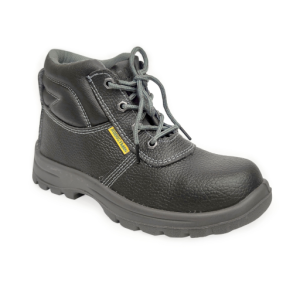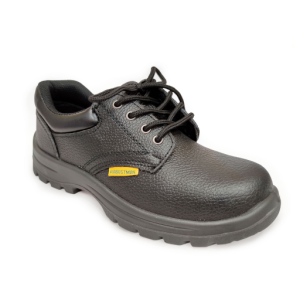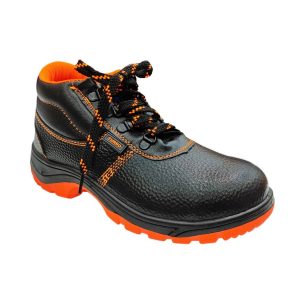
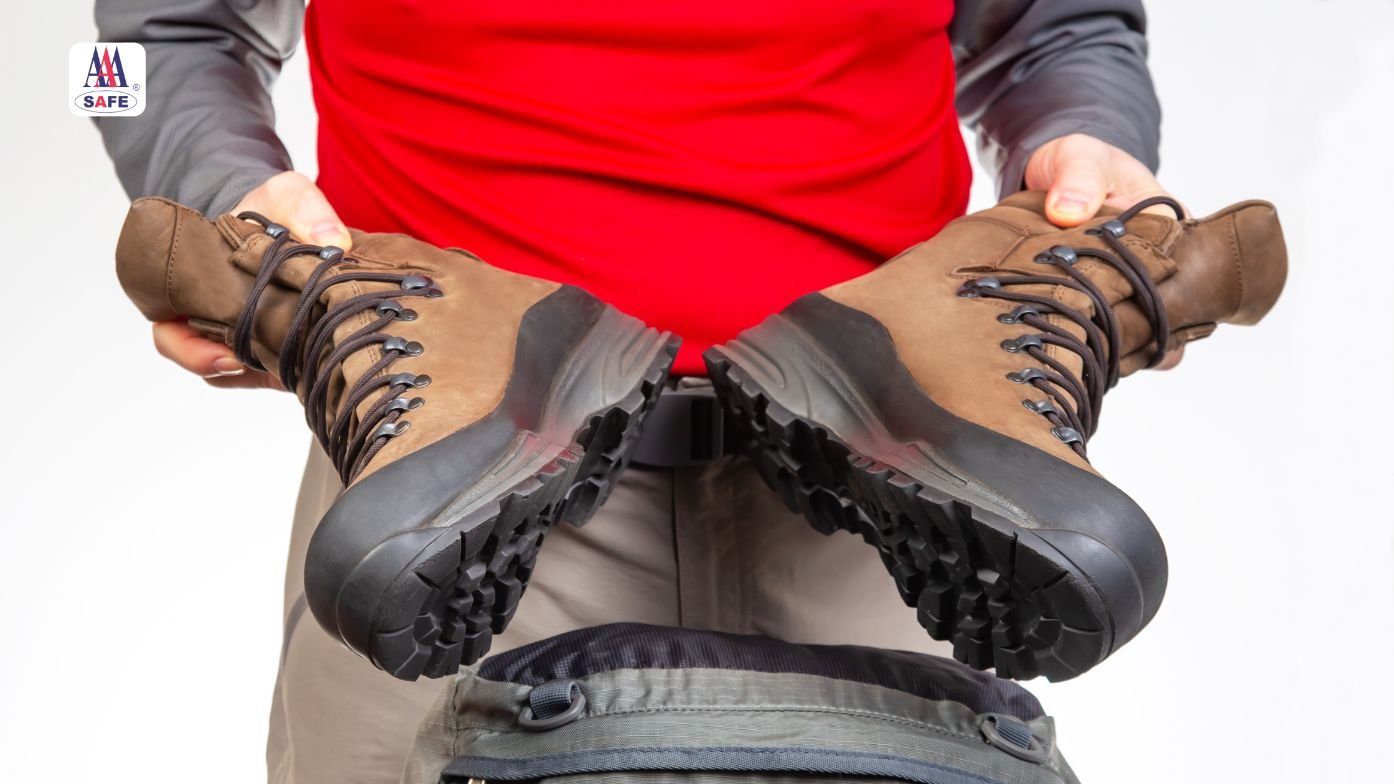
A warehouse supervisor in Jebel Ali noticed something troubling during his morning rounds. Three workers from the picking team had requested schedule changes in the same week. When he asked why, each gave the same answer: their feet, legs, and lower backs hurt so badly by the end of each shift that they could barely walk to their cars.
These workers were wearing safety shoes that met all the required standards. The toe caps protected against impacts. The soles resisted punctures. The outsoles provided adequate slip resistance. Yet the footwear was slowly damaging their bodies through a hazard that standard safety certifications do not address: the cumulative trauma of standing eight to twelve hours daily on concrete floors.
I encounter this situation regularly when consulting with facilities across Dubai, Abu Dhabi, and Sharjah. Companies invest in compliant safety footwear but overlook the ergonomic features that determine whether workers can sustain their performance throughout a career. This is where anti fatigue safety shoes make a measurable difference in worker health, productivity, and injury prevention.
The Hidden Cost of Prolonged Standing in Workplaces
Standing work is everywhere in UAE industries. Retail staff in Dubai malls stand throughout their shifts. Manufacturing workers in Sharjah industrial areas operate machines on their feet for hours. Security guards at Abu Dhabi facilities patrol and stand at checkpoints all day. Hospitality workers across the Emirates remain standing from the beginning to end of their duties.
The European Agency for Safety and Health at Work reports that prolonged standing for more than eight hours regularly is strongly associated with chronic venous insufficiency, musculoskeletal pain in the lower back and feet, and various vascular disorders. Research from the Korean Working Conditions Survey found that 48.7% of full-time workers stood for more than half their working hours, with significantly higher rates of low back pain and lower extremity muscle pain among this group.
The health consequences extend beyond simple discomfort. According to research published in academic journals, standing work leads to low back pain, pain in the thoracic region, lower limb discomfort, and musculoskeletal disorders. When standing time is prolonged, ankle blood pressure and soleus blood flow increase, correlating with lower limb discomfort and swelling.
What Happens to Your Body During Extended Standing
Understanding the physiological impact of prolonged standing helps explain why anti fatigue safety shoes provide such significant benefits.
When you stand statically, your leg muscles remain contracted to maintain your upright position. Unlike walking, which creates a pumping action to move blood through your veins, static standing allows blood to pool in your lower extremities. This pooling reduces the oxygen and nutrients reaching your muscles while allowing metabolic waste products to accumulate.
Your spinal discs also suffer during prolonged standing. These discs depend on movement to circulate the fluid that keeps them healthy and cushioned. Static positions prevent this circulation, leading to disc compression and the familiar aching sensation in your lower back.
Research indicates that standing for prolonged periods beyond 40 minutes without movement or intervention is associated with increased musculoskeletal symptoms. The European Agency guidance notes that when workers cannot move even within a one meter radius, the negative effects become significantly worse than dynamic standing where some movement is possible.
The Financial Impact on UAE Businesses
Workplace injuries cost employers far more than the direct medical expenses. According to the National Safety Council, the average cost of a workplace injury reaches approximately USD 41,000 when accounting for medical expenses, lost wages, and productivity losses. Liberty Mutual’s Workplace Safety Index estimated that employers pay more than USD 1 billion per week for direct workers’ compensation costs from disabling, non-fatal workplace injuries.
For UAE businesses, these costs manifest as medical treatment expenses under insurance programs, lost productivity during recovery periods, costs to recruit and train replacement workers, reduced output from workers experiencing pain but remaining on duty, and potential regulatory penalties for inadequate protection.
Musculoskeletal disorders represent a significant portion of these costs. In some regions, musculoskeletal disorders account for more than 65% of all occupational diseases. The conditions develop gradually, making them easy to overlook until they become severe enough to require extended treatment and time away from work.
Anti fatigue safety shoes represent one of the most cost-effective interventions available for protecting standing workers. AAA Safe supplies ergonomic footwear from leading manufacturers for operations throughout Dubai, Abu Dhabi, Sharjah, and the UAE. Contact our team for product recommendations matched to your industry requirements.
How Anti Fatigue Safety Shoes Technology Works
Anti fatigue safety shoes incorporate multiple technologies designed to reduce the strain that standing places on the musculoskeletal system. Understanding these technologies helps you evaluate products and select appropriate protection for your workforce.
Shock Absorption Systems
Every step a worker takes sends impact forces through their body. On hard surfaces like concrete, tile, or steel grating common in UAE industrial environments, these forces can be substantial. Over thousands of steps per shift, the cumulative impact contributes to joint pain, muscle fatigue, and long-term damage.
Modern anti fatigue footwear uses advanced midsole materials to absorb these impact forces before they reach the foot. The most common materials include ethylene vinyl acetate (EVA) foam compounds engineered for shock absorption, polyurethane (PU) layers that provide cushioning with durability, dual density constructions that combine soft cushioning with structural support, and gel inserts positioned at high impact zones in the heel and forefoot.
The midsole sits between the insole (where your foot rests) and the outsole (the bottom of the shoe). This layer performs the primary shock absorption function. Quality fatigue reducing footwear features midsoles engineered specifically for impact reduction rather than generic foam layers.
Energy Return Technology
Shock absorption alone addresses only half the equation. Advanced fatigue reducing safety footwear also returns energy to the wearer with each step, reducing the muscular effort required to move.
Timberland PRO developed one of the most recognized energy return systems using an inverted cone design. The geometric cones compress under weight and rebound as the foot lifts, returning energy that would otherwise be lost. This reduces the effort muscles must expend and delays the onset of fatigue.
Other manufacturers achieve similar results through different approaches. Some use specially formulated foams that compress and spring back quickly. Others incorporate mechanical elements or air pockets that provide rebound. The key measurement is the percentage of energy returned to the wearer rather than absorbed into the shoe material.
Research on running shoe midsoles found that energy return directly affects fatigue rates during extended activity. The same principles apply to work footwear, where even small improvements in energy return accumulate over thousands of steps per shift.
Anatomical Support Features
Anti fatigue safety shoes provide structured support that helps maintain proper body alignment throughout the workday.
Arch support prevents the plantar fascia from overstretching. This band of tissue running along the bottom of the foot commonly becomes inflamed in workers who stand on hard surfaces, a condition called plantar fasciitis that is particularly prevalent in manufacturing workers required to stand for long periods.
Heel counters hold the heel firmly in position, preventing excessive movement that strains the ankle and Achilles tendon. The best heel counters use firm thermoplastic shaped to match heel contours.
Midfoot stabilizers support the arch area and reduce stress on the ligaments that connect the heel to the forefoot. These can be dual density foam sections or molded thermoplastic components integrated into the midsole.
Contoured footbeds cradle the foot rather than providing a flat platform. This distributes pressure more evenly across the foot surface, reducing hot spots and pressure points that cause localized pain.
Ergonomic Outsole Design
The outsole of ergonomic safety footwear contributes to fatigue reduction through several mechanisms.
Rocker geometry encourages a natural rolling motion through the gait cycle. Rather than requiring the foot to lift flat off the ground, rocker soles help propel the foot forward, reducing the effort required for each step.
Flex grooves positioned at the ball of the foot allow the shoe to bend naturally during toe-off. Stiff shoes require more muscular effort to flex during walking, accelerating fatigue.
Wide heel bases provide stable platforms that reduce the ankle adjustments needed to maintain balance. Unstable shoes force constant micro-corrections that contribute to leg muscle fatigue over time.
Anti Fatigue Safety Shoes and UAE Safety Standards
Anti fatigue footwear sold in the UAE must comply with relevant safety standards while incorporating ergonomic features. Understanding these standards helps you verify that footwear provides both protection and comfort.
EN ISO 20345 Safety Footwear Standard
The EN ISO 20345 standard governs safety footwear sold throughout Europe and is widely recognized in the UAE market. The 2022 revision made slip resistance a basic requirement for all safety footwear classes and updated several testing protocols.
Safety Classifications Under EN ISO 20345
| Class | Basic Requirements | Additional Features |
|---|---|---|
| SB | 200J toe cap, slip resistance | Basic safety |
| S1 | SB + antistatic, energy absorption heel, closed heel | Dry environments |
| S2 | S1 + water resistant upper | Wet environments |
| S3 | S2 + puncture resistant sole, cleated outsole | Construction, outdoor |
| S4 | Polymer boot, SB features | Wet industrial |
| S5 | S4 + puncture resistance, cleats | Heavy wet conditions |
| S6 | S2 + full water resistance | Waterproof |
| S7 | S3 + full water resistance | Waterproof construction |
The standard also defines optional features indicated by letter codes. Energy absorption in the heel area (E) relates directly to anti fatigue properties, requiring the heel to absorb at least 20 joules of energy during testing. However, this minimum requirement does not guarantee comprehensive anti fatigue performance across the entire foot.
ASTM F2413 American Standard
Some footwear sold in the UAE, particularly from American manufacturers, carries ASTM F2413 certification. This standard addresses impact resistance (I/75), compression resistance (C/75), metatarsal protection (Mt/75), conductive protection (Cd), electrical hazard protection (EH), static dissipative protection (SD), and puncture resistance (PR).
Like EN ISO 20345, ASTM F2413 does not specifically certify anti fatigue properties. Manufacturers incorporate anti fatigue features separately from the safety certifications.
UAE Regulatory Framework
The UAE regulatory environment for workplace safety operates through multiple authorities. Federal Decree Law 33 of 2021 establishes employer obligations for worker protection, including providing appropriate personal protective equipment.
Abu Dhabi’s OSHAD System Framework Code of Practice 2.0 addresses PPE selection, maintenance, and storage requirements. Section 3.4 requires that PPE be appropriately selected for the hazards it protects against, which should include ergonomic hazards like fatigue from prolonged standing.
Dubai Municipality enforces safety standards aligned with international regulations. Construction sites and industrial facilities must comply with both federal and local requirements.
For specific guidance on UAE PPE requirements, consult the Ministry of Human Resources and Emiratisation and the Abu Dhabi Public Health Centre OSHAD documentation.
AAA Safe provides EN ISO 20345 and ASTM certified ergonomic safety footwear for all UAE industries. Our technical team understands both international standards and local regulatory requirements. Request a consultation for your facility across Dubai, Abu Dhabi, Sharjah, or anywhere in the Emirates.
Selecting Anti Fatigue Safety Shoes for UAE Industries
Different work environments require different combinations of safety features and anti fatigue properties. This section provides guidance for common UAE industry applications.
Construction Industry
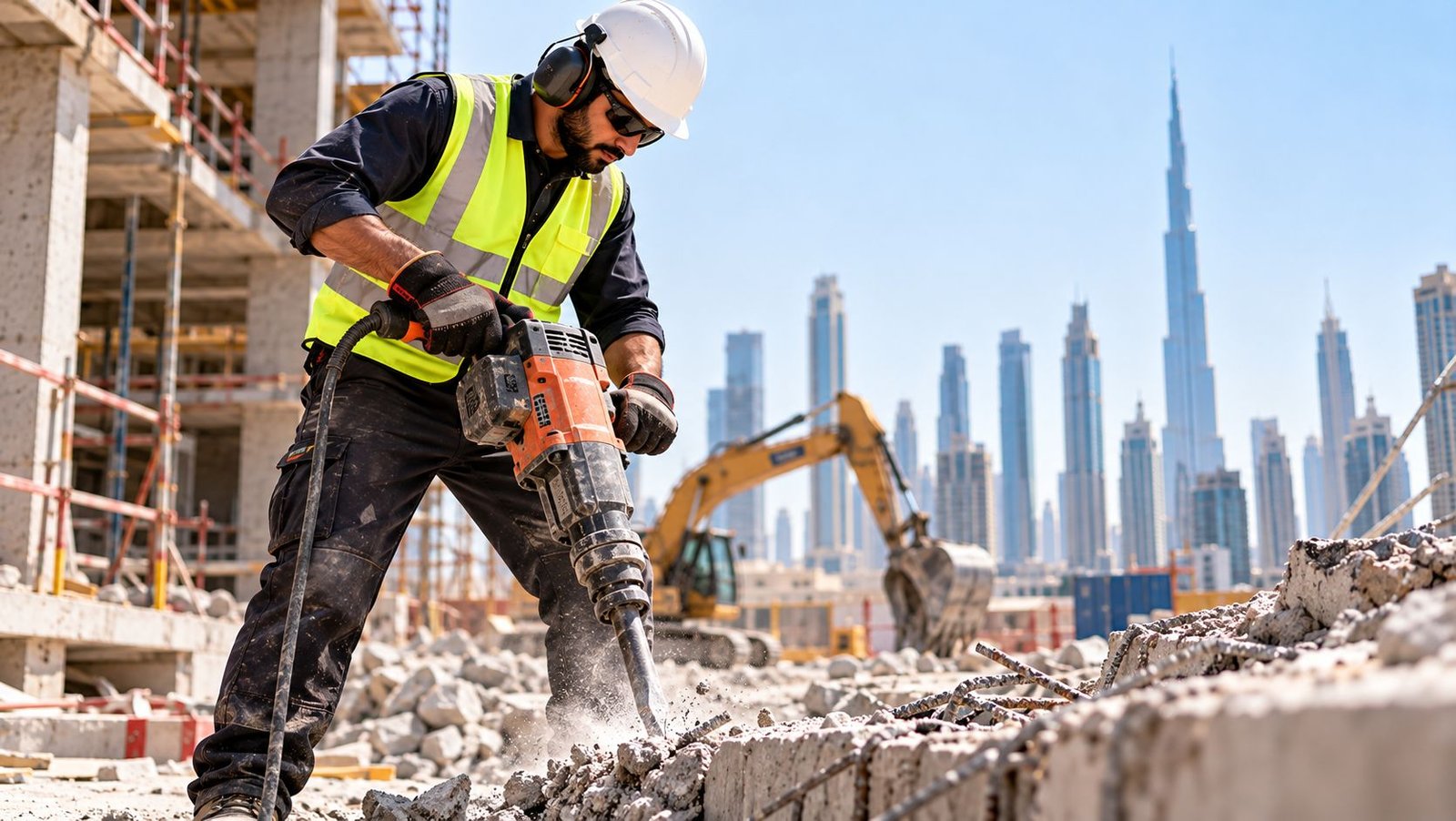
Construction workers in Dubai, Abu Dhabi, and across the UAE face multiple hazards requiring robust protection combined with all day comfort. Workers walk across uneven surfaces, climb scaffolding, and stand on concrete slabs throughout their shifts.
For construction applications, select S3 rated footwear providing impact protection, puncture resistance, and water resistant uppers. Look for anti fatigue midsoles with dual density construction, energy absorbing heel zones specifically designed for hard surface impact, outsoles with deep treads for stability on construction materials, and ankle support for uneven terrain.
Anti fatigue footwear designed for construction should withstand the demanding UAE climate. Look for breathable linings and moisture wicking insoles that manage perspiration during hot weather work.
Manufacturing and Warehouse Operations
Manufacturing facilities and warehouses in Jebel Ali, Sharjah industrial zones, and throughout the UAE typically feature hard concrete or tile floors where workers stand for extended periods.
For manufacturing environments, S1 or S2 rated footwear often provides adequate protection. Focus anti fatigue features on maximum cushioning for concrete floor comfort, slip resistant outsoles for potentially oily or wet floors, lightweight construction to reduce additional fatigue from heavy footwear, and ESD protection if working with electronics or in static sensitive environments.
Warehouse workers who combine standing with walking and climbing benefit from fatigue reducing footwear with flexible outsoles that reduce effort during varied movements.
Retail and Hospitality
Retail staff in Dubai malls and hospitality workers across UAE hotels and restaurants stand throughout shifts that can exceed ten hours. While impact and puncture hazards may be lower than industrial settings, the cumulative effects of standing are equally damaging.
For retail and hospitality applications, O1 occupational footwear (the EN standard for non-safety footwear with occupational features) may be appropriate where safety toe caps are not required. Prioritize maximum cushioning and energy return technology, professional appearance suitable for customer facing roles, lightweight construction for extended comfort, and slip resistance for kitchen and serving areas.
Security and Facilities Management
Security personnel at UAE facilities spend hours standing at checkpoints and walking patrol routes. Facilities management staff move between standing tasks and walking across large properties.
Select footwear balancing comfort for standing periods with support for walking activities. Look for anti fatigue technology distributed throughout the midsole rather than concentrated in the heel, supportive heel counters for ankle stability during walking, breathable construction for extended wear, and professional appearance appropriate for visible positions.
Key Features to Evaluate When Purchasing
When evaluating ergonomic safety footwear for your UAE workforce, assess these specific features.
Midsole Construction
The midsole determines most of the anti fatigue performance. Look for dual or triple density construction using different foam densities in different zones, PU/PU (dual layer polyurethane) outsoles that provide both cushioning and durability, named anti fatigue technologies from reputable manufacturers, and specific claims about shock absorption percentages or energy return rates.
Avoid shoes with thin, single density midsoles that provide minimal cushioning. Generic EVA foam without engineering for shock absorption offers limited anti fatigue benefits.
Insole Quality
The insole or footbed provides the immediate interface with the foot. Quality anti fatigue insoles feature anatomical contouring that supports natural foot shape, cushioning concentrated at heel and ball of foot, arch support appropriate for the wearer’s foot type, moisture wicking materials for UAE climate comfort, and antimicrobial treatment to control odor during extended wear.
Many fatigue reducing shoes allow insole replacement. This enables customization with orthotic insoles for workers with specific needs and extends shoe life by replacing worn insoles rather than entire shoes.
Weight Considerations
Heavy shoes contribute to fatigue independently of their cushioning properties. Each additional gram requires muscular effort to lift with every step. Over thousands of steps per shift, heavy footwear significantly increases energy expenditure.
Quality ergonomic safety footwear achieves protection without excessive weight through composite toe caps rather than steel, lightweight midsole foams, efficient material use in upper construction, and aluminum toe caps as an alternative to both steel and composite.
Compare weights between similar models. Differences of 100 to 200 grams per shoe can meaningfully impact fatigue over a full shift.
Fit and Sizing
Even the best anti fatigue technology fails if shoes do not fit properly. Poorly fitting shoes create pressure points, restrict circulation, and force compensating movements that accelerate fatigue.
Ensure proper fit by measuring feet at the end of the day when they are largest, trying shoes with the same socks workers will wear on the job, checking for adequate toe room (approximately one thumb width from longest toe to shoe end), verifying heel does not slip during walking, and confirming width accommodates the foot without squeezing.
Provide multiple width options when possible. Standard widths do not fit all workers, and shoes that squeeze the foot compromise both circulation and comfort.
Anti Fatigue Safety Shoes Pricing in UAE
| Category | Typical Price Range (AED) | Features |
|---|---|---|
| Basic Anti Fatigue | 150-300 + VAT | Single density foam, basic support |
| Mid-Range Fatigue Reducing | 300-500 + VAT | Dual density, named technology |
| Premium Ergonomic | 500-900 + VAT | Advanced energy return, full features |
| Specialized Industrial | 600-1,200 + VAT | Heavy duty with premium anti fatigue |
Prices reflect typical retail pricing for quality products from established manufacturers. Volume purchasing for workforce deployment typically offers savings.
Maximizing the Benefits of Anti Fatigue Safety Shoes
Providing ergonomic safety footwear creates the foundation for reducing standing related injuries. Additional practices multiply the benefits.
Proper Break Scheduling
Anti fatigue technology reduces but does not eliminate the effects of prolonged standing. Workers should have opportunities to sit periodically throughout their shifts.
Research indicates that several small micro breaks are more effective at reducing fatigue than one long break. The ideal approach allows workers some control over when they take breaks, enabling them to respond to their body’s signals.
Even brief seated breaks of a few minutes allow blood to flow from pooled lower extremities, spinal discs to rehydrate, and fatigued muscles to recover.
Movement Encouragement
Static standing causes more harm than dynamic standing with movement. Even moving within a one meter radius significantly improves blood flow and reduces muscle fatigue compared to standing in exactly the same position.
Design work areas to encourage movement when possible. Position tools and materials to require reaching and stepping. Consider anti fatigue mats at fixed workstations to complement anti fatigue footwear.
Stretching Programs
Simple stretching exercises performed during breaks can reduce muscle tightness and improve circulation. Effective stretches for standing workers include calf raises to pump blood from lower legs, ankle rotations to maintain joint mobility, hamstring stretches to reduce lower back tension, and hip flexor stretches to counteract standing posture effects.
Train workers on appropriate stretches and encourage their use during breaks. Brief stretching sessions of just a few minutes provide meaningful benefits.
Footwear Maintenance and Replacement
Anti fatigue properties degrade as midsole materials compress over time. Shoes that provided excellent cushioning when new may offer minimal protection after months of heavy use.
Establish replacement schedules based on usage intensity. Workers standing on concrete for eight plus hours daily may need replacement every six to twelve months, while lighter use may allow longer service life.
Watch for signs that replacement is needed: visible midsole compression, reduced felt cushioning, new onset of foot or leg discomfort, and uneven wear patterns affecting gait.
In the UAE climate, heat and UV exposure can accelerate material degradation. Replace outdoor shoes more frequently than those used in climate controlled environments.
AAA Safe offers fatigue reducing safety footwear from Timberland PRO, Caterpillar, and other leading manufacturers. We support UAE businesses with product selection, bulk ordering, and ongoing supply programs. Contact our team to discuss your requirements for Dubai, Abu Dhabi, Sharjah, or anywhere across the Emirates.
Building a Complete Standing Worker Protection Program
Anti fatigue footwear works best as part of a comprehensive approach to protecting standing workers. Consider these additional elements.
Workplace Assessment
Evaluate your facilities to identify where workers stand for extended periods. Document the floor surfaces present (concrete, tile, steel grating), typical standing durations for each position, existing interventions such as mats or seating options, and current footwear in use and worker feedback.
Use this assessment to prioritize anti fatigue footwear deployment and identify opportunities for complementary interventions.
Training Programs
Train workers on the health effects of prolonged standing so they understand why anti fatigue footwear matters. Cover how anti fatigue technology works to protect them, proper footwear fit and wear, signs that indicate shoes need replacement, stretching and movement practices that complement footwear, and how to report discomfort before it becomes injury.
OSHAD SF requirements include training for all persons using PPE. Anti fatigue footwear training should be part of your overall PPE program.
Documentation and Monitoring
Maintain records of footwear specifications and assignments, training completion, replacement schedules and actual replacements, and worker feedback on comfort and effectiveness.
Track metrics that indicate program success, including worker complaints related to foot, leg, and back pain, time off related to musculoskeletal issues, requests for position transfers away from standing jobs, and footwear related workers compensation claims.
Improvements in these metrics justify continued investment in quality anti fatigue footwear.
Frequently Asked Questions
Ergonomic safety footwear incorporates specific technologies designed to reduce the strain of prolonged standing. These include shock absorbing midsoles that cushion impact, energy return systems that reduce muscular effort, anatomical support features that maintain proper body alignment, and ergonomic outsole designs that encourage natural movement. Regular safety shoes focus on hazard protection like impact and puncture resistance without necessarily addressing ergonomic concerns.
Service life depends on usage intensity and environmental conditions. Workers standing eight or more hours daily on concrete typically need replacement every six to twelve months as midsole cushioning compresses. Lighter use in climate controlled environments may allow twelve to eighteen months. Watch for reduced felt cushioning, visible midsole compression, and new onset of discomfort as indicators that replacement is needed. UAE heat and UV exposure can accelerate degradation for outdoor use.
Quality anti fatigue insoles can improve the comfort of existing safety footwear but typically provide fewer benefits than purpose built ergonomic safety shoes. The midsole of a shoe provides more cushioning volume than a thin insole. However, anti fatigue insoles are useful for extending the life of shoes where the original insole has worn, customizing fit and support for individual workers, and adding anti fatigue properties to specialized footwear where purpose built options are limited.
Quality fatigue reducing footwear designed for industrial use typically includes breathable linings and moisture wicking insoles appropriate for hot weather. Look for shoes specifically marketed for warm climate use or featuring ventilation elements. Avoid heavy insulation designed for cold weather. Even with appropriate footwear, workers in extreme heat may benefit from more frequent break opportunities and hydration support.
For industrial use in the UAE, footwear should carry EN ISO 20345 or ASTM F2413 certification appropriate for the hazards present. Construction sites typically require S3 rated footwear providing impact protection, puncture resistance, and water resistance. Manufacturing may need S1 or S2 depending on conditions. The Emirates Authority for Standardization and Metrology (ESMA) oversees safety equipment standards. Verify that anti fatigue features are incorporated separately from or in addition to these safety certifications.
Workers likely benefit from ergonomic safety footwear if they stand for more than four hours per shift, work on hard surfaces like concrete, tile, or steel, report foot, leg, or lower back pain, show declining productivity through shifts, or experience swelling in lower legs by end of shift. Conducting a workplace assessment helps identify positions where fatigue reducing footwear provides the greatest benefit.
Ergonomic safety footwear with proper arch support helps reduce the risk of plantar fasciitis, a painful inflammation of the foot tissue that is common among workers who stand on hard surfaces. The cushioning reduces impact stress on the plantar fascia, while arch support prevents overstretching. However, shoes alone may not prevent plantar fasciitis if workers have pre-existing foot structure issues. Workers with persistent foot pain should consult a healthcare provider.
Most modern fatigue reducing footwear is comfortable from initial wear, though some adjustment period is normal as feet adapt to the support profile. Avoid shoes requiring extended painful break in periods, as this often indicates poor fit rather than normal adjustment. Workers should report persistent discomfort so fit can be evaluated and alternative sizes or models considered.
Proper care extends service life and maintains fatigue reducing properties. Remove insoles overnight to allow moisture evaporation. Clean uppers regularly according to manufacturer instructions. Avoid storing in direct sunlight or extreme heat that can degrade foam materials. Inspect periodically for wear, damage, and midsole compression. Replace insoles when they show significant wear even if shoes remain serviceable.
Several manufacturers produce quality ergonomic safety footwear suitable for UAE industrial applications. Timberland PRO developed one of the original anti fatigue technologies and offers extensive options. Caterpillar, Puma Safety, and other established brands provide anti fatigue features across their industrial lines. Focus on specific features and certifications rather than brand alone, and verify products meet your application requirements.
Protecting Your Standing Workforce
The workers who stand throughout their shifts deserve protection that goes beyond compliance with minimum safety standards. Anti fatigue safety shoes address a real health hazard that conventional footwear ignores, reducing pain, preventing injuries, and enabling workers to maintain productivity throughout their careers.
For UAE businesses, investing in quality ergonomic safety footwear makes both human and financial sense. The cost of proper footwear is modest compared to the expense of treating preventable musculoskeletal disorders, replacing workers who can no longer tolerate standing jobs, and managing the productivity losses that accompany worker discomfort.
Start by assessing which workers in your organization face significant standing exposure. Evaluate your current footwear program against the features described in this guide. Consider whether your replacement schedules allow shoes to be changed before fatigue reducing properties degrade.
The technology exists to protect standing workers effectively. The question is whether your organization chooses to use it.
Your standing workers need more than basic safety shoes. AAA Safe provides complete anti fatigue safety footwear solutions for UAE industries, from product selection through ongoing supply programs. With two decades serving construction, manufacturing, retail, and industrial clients across Dubai, Abu Dhabi, Sharjah, and throughout the UAE, we understand the unique demands of the local market. Contact our safety specialists to discuss anti fatigue footwear options for your workforce and discover how proper footwear can reduce injuries while improving productivity.
Disclaimer
This guide provides general information about ergonomic safety footwear for educational purposes. Product specifications, pricing, and regulations change over time. Always verify current requirements with manufacturers, regulatory authorities, and qualified safety professionals.
Anti fatigue technology reduces but does not eliminate the effects of prolonged standing. Employers should implement comprehensive programs including appropriate break scheduling, workplace design, and health monitoring. Workers experiencing persistent pain should consult healthcare providers regardless of footwear quality.
For current UAE regulatory requirements, consult MOHRE, the Abu Dhabi Public Health Centre, and Dubai Municipality. This information does not constitute medical or legal advice.