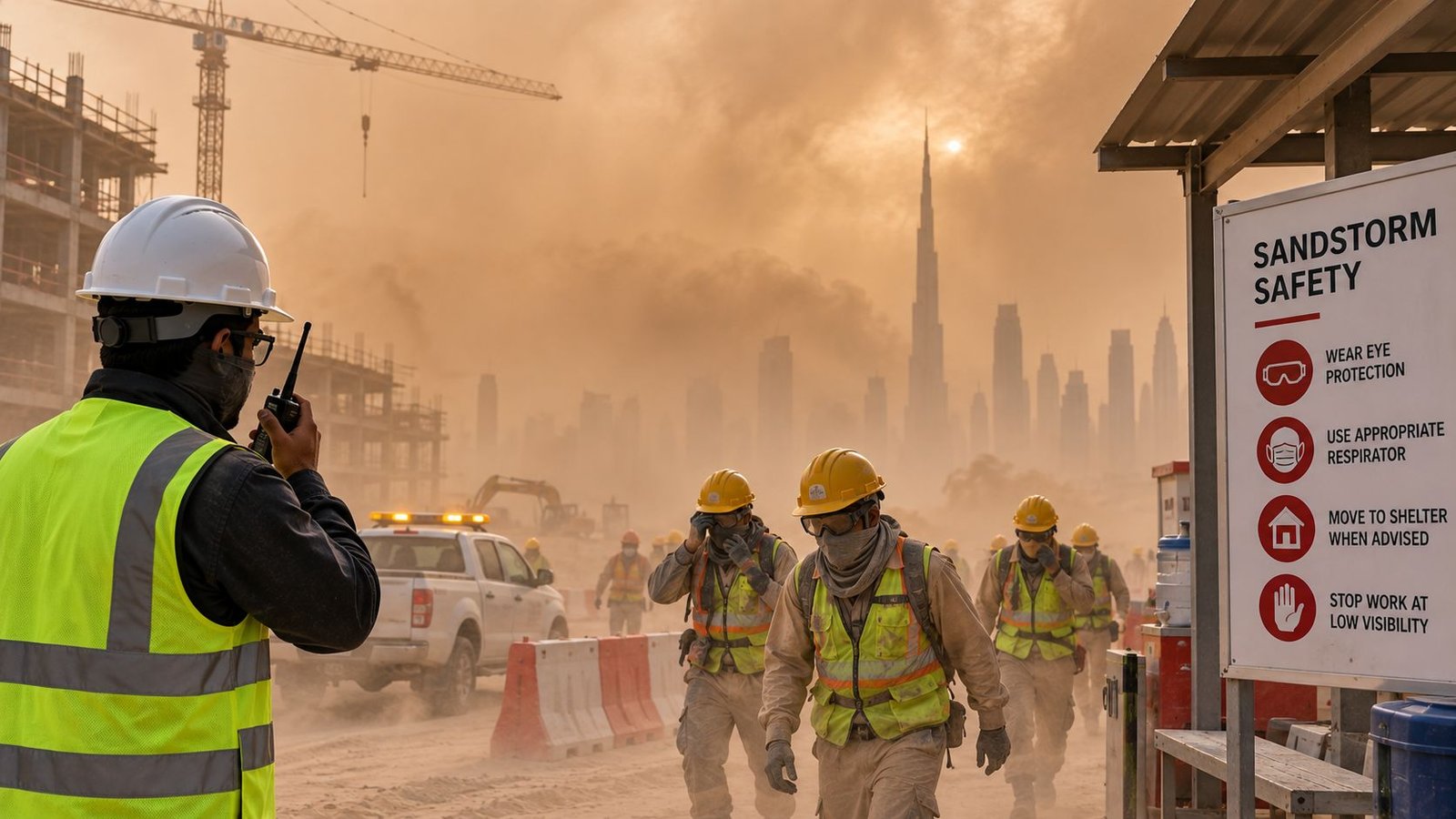
Ever walked onto a construction site in Dubai and wondered why there are so many different colored warning tape sections everywhere? You’re not alone. Choosing the right warning tape types isn’t just about picking the brightest color – it’s about understanding what works best for your specific environment, especially when you’re dealing with UAE’s challenging climate conditions.
Let’s break this down in simple terms. Think of warning tape as your site’s first line of communication. It needs to grab attention, survive the elements, and clearly tell people what they’re dealing with. Whether you’re managing a construction project in Abu Dhabi or setting up safety protocols in an industrial facility, getting this right can make all the difference for your PPE kit effectiveness.
Understanding Your Material Options: PE vs Vinyl Warning Tape
Here’s where most people get confused – polyethylene (PE) and vinyl (PVC) warning tape might look similar, but they’re quite different under the hood. Let me explain this like you’re choosing between two cars for desert driving.
PE (Polyethylene) Warning Tape: The Desert Warrior
Why PE Warning Tape Works Well Here:
- Temperature tolerance from -50°C to 80°C (way beyond what you’ll face)
- No plasticizers that can leak out in heat
- Naturally UV resistant without added stabilizers
- Stays flexible even when it gets hot
- Longer lifespan (3-5 years vs 2-3 for vinyl)
The Trade-offs:
- Slightly lower adhesive strength than vinyl warning tape
- Can be harder to find in specialized applications
- Less resistant to surface abrasion
Vinyl (PVC) Warning Tape: The Specialist
Vinyl Warning Tape Strengths:
- Excellent adhesive strength (grips surfaces really well)
- Outstanding abrasion resistance
- Better elongation properties (stretches more)
- Proven track record in industrial settings
The Challenges:
- Needs stabilizers to handle UV exposure
- Requires plasticizers to stay flexible
- More expensive than PE alternatives
- Shorter lifespan in outdoor conditions
Adhesive Strength: Getting the Grip Right
Think of adhesive strength like choosing the right glue for different jobs. You wouldn’t use school glue to fix a car engine, right? Same principle applies to warning tape selection for your PPE kit requirements.
Understanding the Grades
Light Duty (0.5-1.5 N/cm): Perfect for indoor marking or temporary setups. Think office spaces or short-term events. In UAE’s climate? Not your best friend for outdoor warning tape use.
Medium Duty (1.5-3.0 N/cm): Good for general warning tape applications. Works for short-term outdoor projects, but you’ll want to replace it more frequently in the heat.
Heavy Duty (3.0-5.0 N/cm): Now we’re talking! This is your go-to for construction sites and extended outdoor use. Can handle UAE’s temperature swings and still stick around.
Industrial (5.0-8.0 N/cm): The heavy hitter for harsh environments. Oil rigs, chemical plants, heavy machinery – this grade doesn’t mess around.
Extreme Duty (8.0+ N/cm): For when you absolutely, positively need that warning tape to stay put. Chemical plants, extreme conditions, mission-critical applications.
How to Choose the Right Strength
Ask yourself these questions:
- How long will this warning tape stay up?
- What’s the surface like? (smooth concrete vs rough steel)
- What’s the temperature range?
- Are there chemicals or oils around?
- How critical is it that this warning tape stays put?
For most UAE applications, you’ll want Heavy Duty or Industrial grade. The extra cost pays for itself when you’re not replacing warning tape every few months.
Color Coding: Speaking the Universal Language of Safety
Colors aren’t just pretty – they’re a language that can save lives. Let’s decode what each warning tape combination actually means and how it integrates with your PPE kit protocols.
The Universal Standards
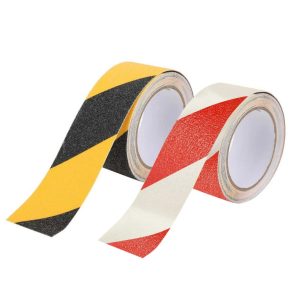
Red/White Stripes Warning Tape
This screams “DANGER” in any language. Use this around electrical hazards, fire zones, and areas where immediate danger exists. Think power lines, electrical panels, and fire equipment zones.
Yellow/Black Stripes Warning Tape
The classic “CAUTION” combo. Perfect for construction sites, machinery areas, and anywhere you need people to slow down and think. This is probably what you’ll use most often in your PPE kit deployment.
Orange/White Warning Tape
Traffic and construction warning. Road work, temporary barriers, and areas where vehicle traffic is a concern. Dubai’s road construction crews know this one well.
Blue/White Warning Tape
Defective machinery and maintenance areas. When equipment is down for repairs or maintenance, this tells everyone to stay away.
Green/White Warning Tape
Safety equipment and first aid. Emergency exits, safety showers, first aid stations – anywhere people need to go FOR safety, not away from danger.
Black/Yellow Warning Tape
Physical hazards like pinch points, moving parts, and areas where you could get caught or crushed.
Magenta/Yellow Warning Tape
Radiation hazards. Medical facilities, labs, and anywhere radioactive materials are present.
Purple/White Warning Tape
Special purpose and restricted areas. Custom applications where standard colors don’t quite fit.
UAE-Specific Applications
In the UAE, you’ll often see:
- Red/White warning tape around electrical installations (Dubai Electricity and Water Authority requirements)
- Yellow/Black warning tape on construction sites (Dubai Municipality standards)
- Orange/White warning tape for traffic control (RTA requirements)
- Blue/White warning tape in industrial maintenance areas
UV Resistance: Surviving the Desert Sun
UV resistance isn’t just a nice-to-have in the UAE – it’s essential for warning tape longevity. The sun here can break down materials faster than you’d believe, affecting your entire PPE kit effectiveness.
What UV Does to Your Warning Tape
UV radiation attacks the polymer chains in warning tape materials, causing:
- Color fading (your bright yellow becomes pale and hard to see)
- Brittleness (tape becomes stiff and cracks)
- Adhesive breakdown (tape falls off)
- Reduced tensile strength (tape tears easily)
How to Choose UV-Resistant Options
For PE Warning Tape
Look for UV-stabilized formulations. The good news is that PE naturally resists UV better than vinyl, so you’re starting from a stronger position.
For Vinyl Warning Tape
Make sure they include UV stabilizers. Without these additives, vinyl warning tape will degrade quickly in direct sunlight.
Application Tips:
- Replace outdoor warning tape every 6-12 months in direct sun exposure
- Consider reflective tapes for better longevity
- Use industrial-grade adhesives for UV-exposed applications
PPE Kit Integration: Making Warning Tape Types Work with Your Safety Program
Warning tape isn’t just decoration – it’s part of your overall personal protective equipment (PPE) strategy. Here’s how to make warning tape work together with your PPE kit requirements.
Visual Management Systems
Think of warning tape as part of your site’s visual communication system. It should work alongside your PPE kit components:
- Safety signs and placards
- PPE kit requirements posted at entry points
- Emergency evacuation routes
- Equipment status indicators
Color Coordination with PPE Kit Requirements
Match your warning tape colors with your PPE kit requirements:
- Red zones: Full PPE kit required (hard hat, safety glasses, steel-toed boots)
- Yellow zones: Standard PPE kit (hard hat, safety glasses)
- Green zones: Minimal PPE kit (safety glasses only)
- Blue zones: Maintenance PPE kit (lockout/tagout procedures)
Training Your Team
Make sure everyone knows:
- What each warning tape color combination means
- When to stop and assess PPE kit requirements
- How to report damaged or missing warning tape
- Emergency procedures for each zone type
Industry-Specific Guidance for UAE Applications
Different industries have different warning tape needs. Let’s break this down by sector and how it affects your PPE kit selection.
Construction Industry
- Primary choice: PE Heavy Duty warning tape
- Colors: Yellow/Black for general hazards, Orange/White for traffic areas
- PPE kit integration: Match warning tape zones with hard hat requirements
- Challenges: Dust, UV exposure, temperature extremes
- Replacement schedule: Every 6-8 months
Oil & Gas Sector
- Primary choice: Vinyl Industrial grade warning tape
- Colors: Red/White for electrical hazards, Yellow/Black for equipment
- PPE kit integration: Chemical-resistant gear requirements by zone
- Challenges: Chemical exposure, high temperatures, explosion risks
- Replacement schedule: Every 3-4 months in harsh environments
Manufacturing Facilities
- Primary choice: PE Medium Duty warning tape
- Colors: Yellow/Black for machinery, Green/White for safety equipment
- PPE kit integration: Machine-specific protection requirements
- Challenges: Oils, chemicals, abrasion from equipment
- Replacement schedule: Every 8-12 months
Healthcare Facilities
- Primary choice: Vinyl Light Duty warning tape
- Colors: Red/White for biohazards, Blue/White for equipment maintenance
- PPE kit integration: Infection control protocols
- Challenges: Cleaning chemicals, moisture, frequent washing
- Replacement schedule: Every 6-9 months
Practical Selection Tips for UAE Conditions
Here’s what you need to know to make smart warning tape choices for your PPE kit deployment:
For Extreme Heat (45°C+)
- Choose PE over vinyl for better heat tolerance
- Use Industrial or Extreme Duty adhesive strength
- Consider reflective warning tape to reduce heat absorption
- Plan for more frequent replacement in direct sun
For High Humidity Areas
- PE warning tape handles moisture better than vinyl
- Use rubber-based adhesives over acrylic
- Ensure proper surface preparation before application
- Consider anti-fungal treatments for long-term applications
For Dusty Environments
- Vinyl warning tape resists abrasion better than PE
- Use wider tape (75mm vs 50mm) for better visibility
- Clean surfaces thoroughly before application
- Consider textured surfaces for better adhesion
For Chemical Exposure
- PE warning tape offers better chemical resistance
- Use specialized chemical-resistant adhesives
- Test compatibility with specific chemicals
- Plan for more frequent inspection and replacement
Installation Best Practices
Getting the warning tape application right is half the battle. Here’s how to do it properly for maximum PPE kit effectiveness:
Surface Preparation
- Clean the surface with appropriate solvents
- Allow complete drying (important in humid conditions)
- Roughen smooth surfaces lightly for better adhesion
- Remove any existing adhesive residue
Application Technique
- Apply warning tape at temperatures between 15-25°C when possible
- Use firm, consistent pressure during application
- Work out air bubbles immediately
- Allow 24 hours for full adhesive cure
Maintenance Schedule
- Daily: Visual inspection for damage or detachment
- Weekly: Check adhesion at edges and corners
- Monthly: Assess color fading and overall condition
- Quarterly: Plan replacement based on condition assessment
Frequently Asked Questions
Most quality warning tape lasts 6-12 months outdoors, depending on sun exposure and adhesive grade. In direct sunlight, plan for replacement every 6 months. Shaded areas can extend this to 12 months or more.
While you have some flexibility, stick to internationally recognized standards. Using non-standard warning tape colors can confuse workers and visitors, potentially creating safety hazards.
Light Duty (18-54 oz/in) is for temporary indoor use. Heavy Duty (108-180 oz/in) handles outdoor conditions and extended applications. For UAE conditions, Heavy Duty is usually the minimum you’ll want for warning tape.
PE is generally better for buried applications because it doesn’t need plasticizers that can leach out over time. It also handles moisture and temperature cycling better than vinyl warning tape.
Look for UV stabilizer additives in the product specifications. PE warning tape has natural UV resistance, while vinyl warning tape needs added stabilizers. Check manufacturer data sheets for UV testing results.
PE warning tape is generally recyclable, while vinyl warning tape is not. However, practical recycling depends on local facilities and contamination levels. Check with your waste management provider.
This usually indicates insufficient adhesive strength or poor surface preparation. Try upgrading to a higher adhesive grade or improving surface cleaning before warning tape application.
Conclusion
Making the Right Warning Tape Choice for Your PPE Kit Strategy
Selecting the appropriate warning tape for UAE conditions requires careful consideration of material properties, adhesive strength, and environmental challenges. The extreme climate conditions, regulatory requirements, and diverse industrial applications across the Emirates demand a strategic approach to warning tape selection that integrates seamlessly with your PPE kit protocols.
Key Decision Framework
The choice between PE and vinyl warning tape fundamentally depends on your specific application requirements. PE warning tape offers superior durability and UV resistance for long-term outdoor applications, while vinyl warning tape provides enhanced adhesive strength for specialized industrial environments. Your PPE kit effectiveness depends on making the right material choice for each application.
Adhesive strength selection directly impacts warning tape performance in UAE’s challenging conditions. Heavy Duty or Industrial grade adhesives should be considered the minimum standard for most applications, with Extreme Duty options reserved for mission-critical installations where warning tape failure could compromise safety.
Color coding compliance ensures clear communication of hazard levels and PPE kit requirements. Standardized color combinations create universal understanding across diverse workforce populations, reducing confusion and enhancing safety outcomes.
Strategic Implementation Recommendations
Organizations deploying warning tape systems across UAE projects should develop comprehensive procurement standards that prioritize:
- Climate Compatibility: Select materials and adhesives specifically rated for extreme heat, UV exposure, and wind conditions
- PPE Kit Integration: Align warning tape color schemes with existing PPE kit requirements and zone-based safety protocols
- Lifecycle Cost Analysis: Consider total ownership costs including replacement frequency, maintenance requirements, and disposal considerations
- Regulatory Compliance: Ensure all warning tape selections meet local safety standards and industry-specific requirements
Maintenance and Replacement Strategy
The UAE’s accelerated aging environment requires proactive maintenance schedules that anticipate material degradation. Organizations must implement systematic inspection protocols that identify replacement needs before warning tape failure compromises safety effectiveness or PPE kit compliance.
Preventive replacement based on time intervals rather than reactive replacement after failure ensures consistent safety performance. The investment in quality warning tape materials and proper installation techniques pays dividends through reduced maintenance costs and enhanced safety outcomes.
Future-Proofing Your Warning Tape Program
As UAE industries continue evolving toward greater automation and smart technologies, traditional warning tape systems must integrate with digital safety management platforms. However, the fundamental principles of material selection, proper installation, and systematic maintenance remain constant regardless of technological advancement.
The integration of warning tape with broader PPE kit management systems creates comprehensive safety protocols that protect workers while ensuring regulatory compliance. This holistic approach to workplace safety demonstrates organizational commitment to employee welfare and operational excellence.
Final Recommendations
Success in UAE warning tape deployment requires understanding that no single solution fits all applications. Safety managers, procurement professionals, and operations teams must evaluate each project’s specific requirements against the comprehensive factors outlined in this guide.
The investment in appropriate warning tape selection, proper installation techniques, and systematic maintenance protocols directly impacts both safety outcomes and operational costs. Organizations that prioritize these elements while maintaining focus on PPE kit integration will achieve superior safety performance in the UAE’s challenging industrial environment.
By following the specifications and guidelines presented in this comprehensive guide, organizations can confidently select, deploy, and maintain warning tape systems that meet both current requirements and future challenges in the UAE’s dynamic industrial landscape.
Contact AAA Safe Dubai Today:
📞 Phone: +971-502349605
📧 Email: aaasafedubai@hotmail.com
🌐 Website: aaasafedubai.com
📍 Visit our Dubai showroom for hands-on product evaluation