Static electricity is invisible until it finds a spark gap, and in a facility handling flammable vapours, fine powders, or solvents, that spark is enough to ignite an explosion. Static discharge does not require a fault in equipment. It builds up through completely normal activity, walking across a floor, pouring a liquid, or unrolling plastic sheeting, and releases the moment a charged surface or person gets close enough to a grounded object or another charged surface.
UAE industrial facilities face a specific version of this risk that is easy to overlook. Constant air conditioning keeps indoor humidity low across most of the year, and low humidity is one of the conditions that most increases static charge buildup and retention. A facility that would see naturally higher ambient humidity in an outdoor climate can have a persistently dry indoor environment year round because of how aggressively cooling systems dehumidify the air.
How Static Charge Builds Up
Static charge forms through friction between two materials, known as triboelectric charging, when they separate after contact. Common industrial sources include liquid flowing through a pipe or hose, powder moving through a chute or being poured, plastic sheeting or film unwinding from a roll, and a person walking across a floor in insulating footwear. None of these activities look hazardous on their own. The danger appears only when the resulting charge has nowhere safe to discharge except through a spark.
Where Static Discharge Becomes an Ignition Risk
A spark is only dangerous where it meets a flammable atmosphere, meaning vapour, gas, or fine dust in concentrations within the explosive range. Facilities handling solvents, fuels, fine powders such as flour or metal dust, or any process generating flammable vapour need to treat static control as a core safety system rather than an optional add-on.
Flammable Liquid Transfer
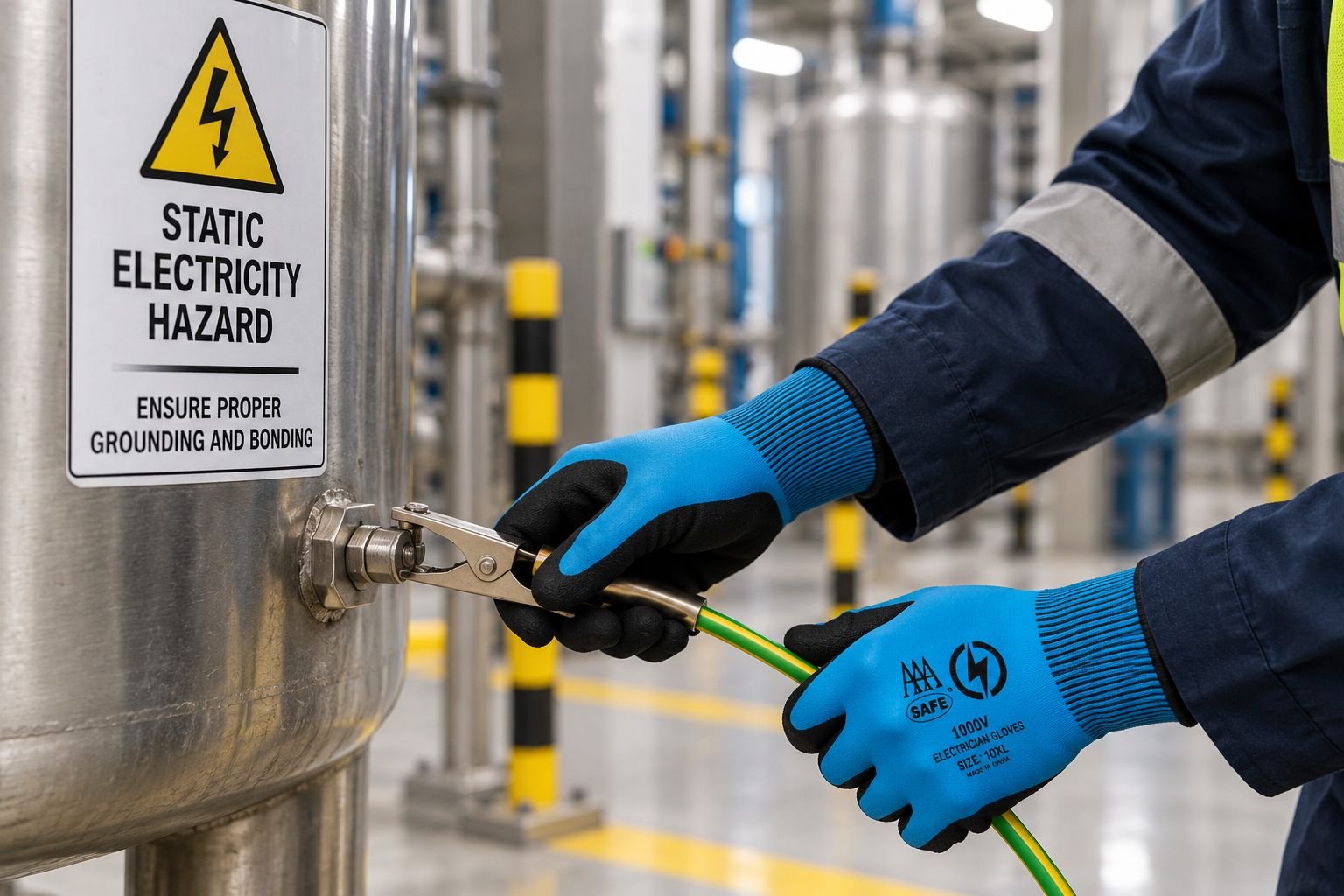
Pouring or pumping flammable liquid between containers is one of the highest risk static generating activities, particularly when the liquid is poured from height into a container, which increases splash and charge separation. Bonding the source and receiving containers together, and grounding both to a common earth point, allows any charge generated during transfer to dissipate safely rather than accumulate.
Powder and Dust Handling
Fine powders moving through chutes, mixers, or pneumatic conveying systems generate substantial static charge, and if that powder is also combustible, such as certain metal or organic dusts, the combination creates a serious dust explosion risk. Equipment handling combustible powders should be bonded and grounded as a system, not just at isolated points.
Grounding and Bonding Fundamentals
Grounding connects equipment to earth so accumulated charge has a path to dissipate safely. Bonding connects two or more items of equipment together so they remain at the same electrical potential, preventing a spark between them even if neither is directly grounded. Both are typically required together in facilities handling flammable materials, since bonding alone does not remove charge from the system, it only equalises it across connected equipment.
Common Grounding Failures
The most frequent failure found during facility audits is a grounding connection that looks intact visually but has lost continuity due to corrosion, paint buildup over a clamp, or a cable that has been disconnected during maintenance and never reconnected. Grounding continuity should be tested periodically with proper test equipment rather than assumed correct because the cable is physically present.
Personal Static Control
People carry static charge too, and in facilities with a flammable atmosphere risk, personal grounding matters as much as equipment grounding.
Anti-Static and Conductive Footwear
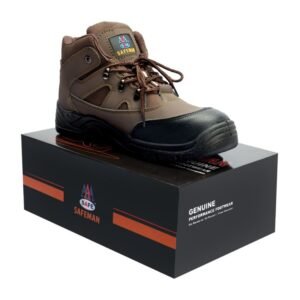
Standard rubber-soled footwear insulates the wearer from the floor, allowing charge to build up as they walk. Anti-static safety shoes, such as those built with a conductive anti-static sole, provide a controlled path for charge to dissipate through the floor rather than accumulating on the body.
Clothing and Gloves
Synthetic clothing can generate significant static charge through everyday movement. In areas with flammable atmosphere risk, workwear specified for the task and chemical-resistant gloves rated for the specific solvent or chemical being handled reduce both static and chemical exposure risk together.
Humidity Control as a Supporting Measure
Raising ambient humidity reduces the rate at which static charge builds up and increases the rate at which it naturally dissipates, which is why some facilities handling sensitive processes maintain minimum humidity levels as an engineering control alongside grounding and bonding. This is a supporting measure, not a substitute for proper grounding, since humidity control alone does not eliminate ignition risk in a genuinely hazardous atmosphere.
UAE Regulatory Context
Static electricity control in flammable atmospheres is generally addressed through the broader hazardous area and process safety obligations that apply under UAE civil defence fire codes and emirate level occupational safety frameworks such as OSHAD-SF in Abu Dhabi, rather than through a dedicated standalone static electricity regulation. Facilities handling flammable liquids, gases, or combustible dust typically reference international standards such as NFPA 77 for static electricity control as part of their internal hazardous area classification and process safety documentation, since these are the standards most UAE process safety consultants are trained against.
AAA Safe Dubai supplies anti-static footwear, chemical-resistant PPE, and related equipment for facilities managing static ignition risk. Contact our technical team for guidance suited to your specific process and material handling setup.
Frequently Asked Questions
A static discharge spark on its own does not cause fire or explosion. The risk exists only where a flammable concentration of vapour, gas, or combustible dust is present at the same time and location as the spark.
No. Anti-static footwear is one control among several, alongside equipment grounding, bonding, and process controls. It should never be relied on as the sole measure in a facility with flammable atmosphere risk.
Visual inspection alone is not sufficient, since corrosion or paint buildup can break electrical continuity while the connection still looks intact. Continuity should be verified with proper test equipment as part of a scheduled inspection programme.
Air conditioning systems reduce indoor humidity as part of the cooling process, and lower humidity is one of the environmental conditions that increases both the rate of static charge buildup and how long that charge persists before naturally dissipating.
Often yes, particularly during liquid or powder transfer between two separate items of equipment. Grounding alone does not prevent a potential difference building up between two ungrounded or separately grounded items, which is what bonding is designed to prevent.
Disclaimer
This article provides general information on static electricity control and does not replace a qualified process safety engineer’s hazardous area assessment or legal advice. For broader workplace safety obligations, refer to the Abu Dhabi Public Health Centre and Dubai Civil Defence. Always consult a qualified process safety professional before finalising grounding and bonding procedures for flammable material handling.