Description
High-Voltage Electrical Gloves – Detailed Breakdown
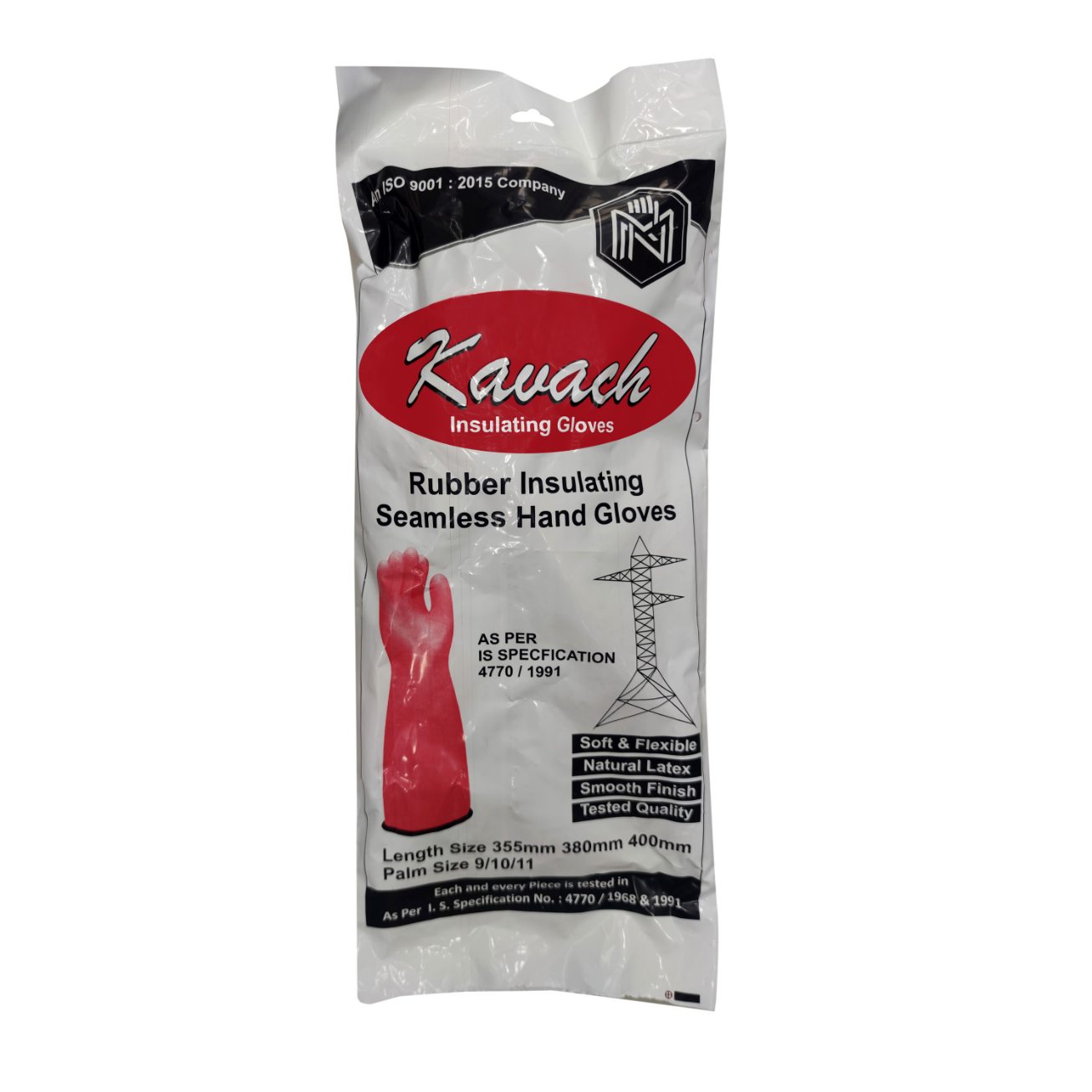
These electrical insulating gloves serve workers who perform maintenance, repairs, and installations on energized electrical systems. The gloves suit electricians, power generation technicians, utility workers, and industrial maintenance crews who require verified protection against electric shock hazards. Each pair undergoes testing to confirm insulation integrity before reaching the field, and the marked specifications allow safety officers to verify compliance with site requirements.
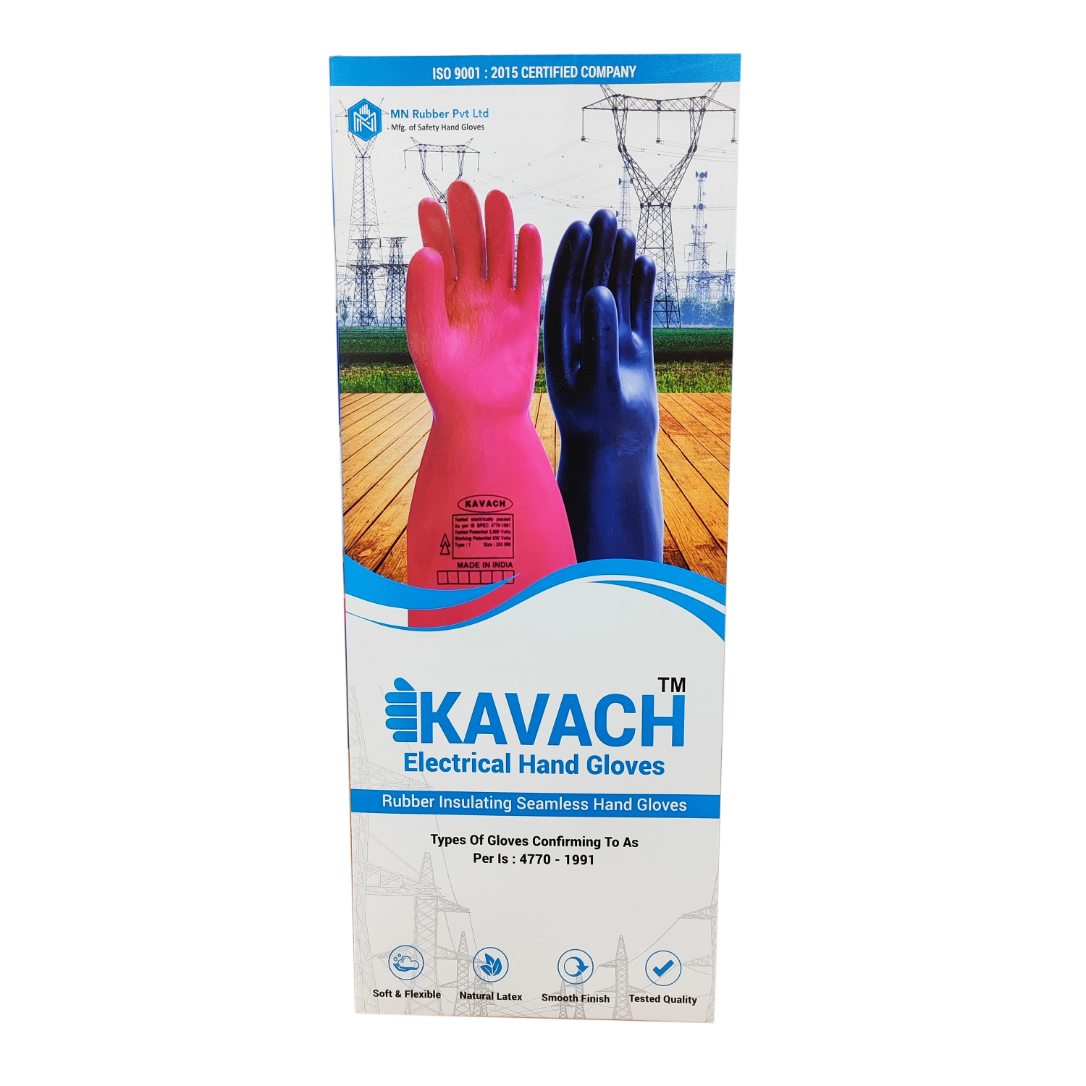
This description details reusable, high-voltage electrical gloves made from natural latex rubber. Here’s a breakdown of the key features:
Key Features
- Seamless Natural Latex Rubber: This material offers flexibility and dexterity while providing electrical insulation.
- High-grade latex rubber construction provides electrical insulation and maintains flexibility for dexterous work
- Voltage protection up to 33KV available in 5KV, 11KV, 22KV, and 33KV rated variants
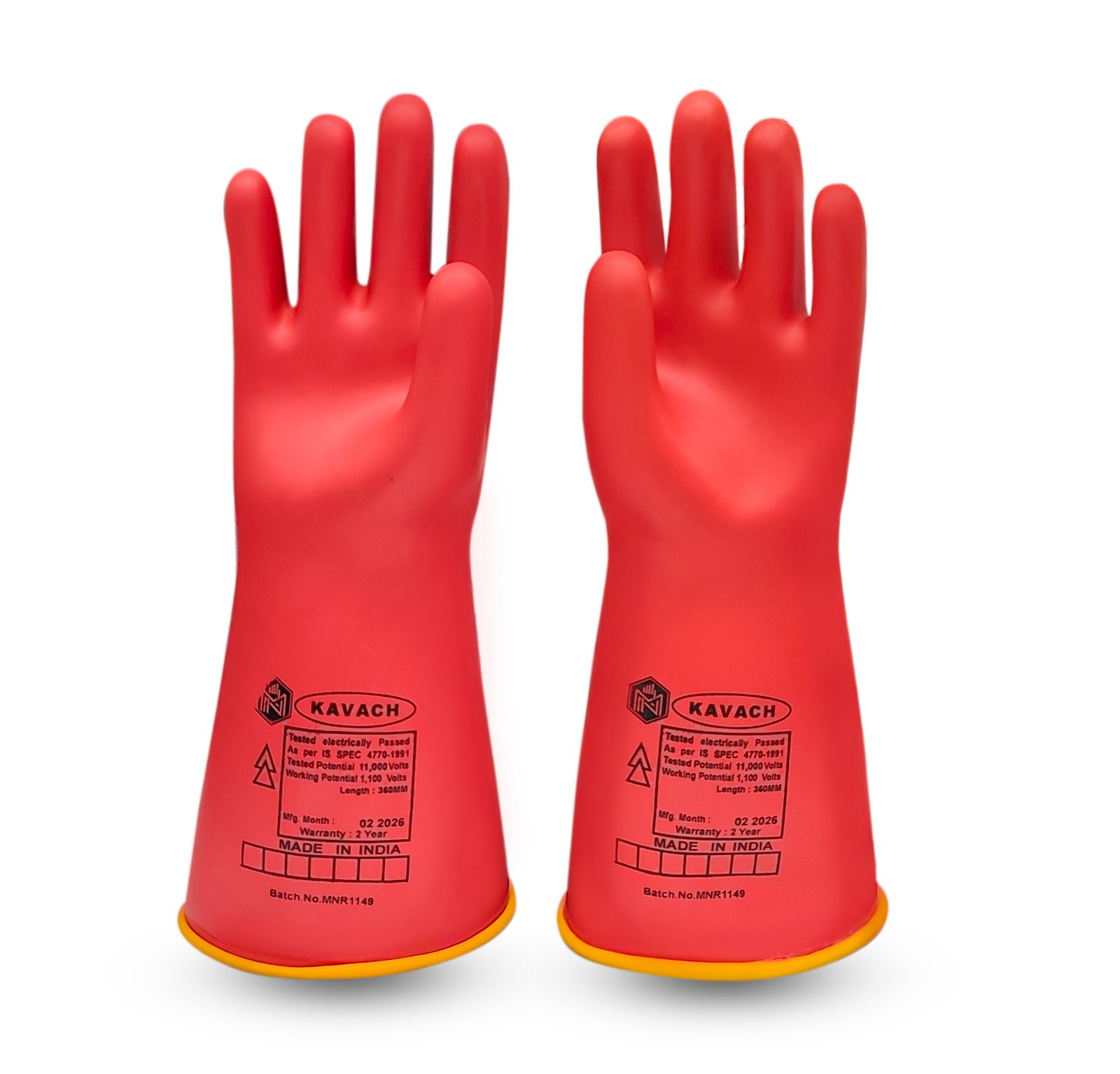
- IEC 60903:2014 and IS 4770:1991 tested confirming compliance with international electrical safety standards
- Extended cuff design protects wrists and forearms from accidental contact with energized components
- Bright pink high-visibility color makes gloves easy to identify in industrial and utility environments
- Chemical resistance against acid, oil, ozone, and mechanical stress for durability in harsh conditions
- Ergonomic shaping follows natural hand contours for comfortable wear during prolonged electrical work
- Individual glove markings display manufacturing date, test voltage, standards compliance, and serial number
- 360mm overall length provides coverage beyond the wrist for added forearm protection
- 1-year warranty from date of manufacture as printed on each glove
- Available in Various Voltage Ratings: 5KV, 11KV, 22KV, and 33KV. Choose the appropriate voltage rating for your specific electrical work to ensure adequate protection.
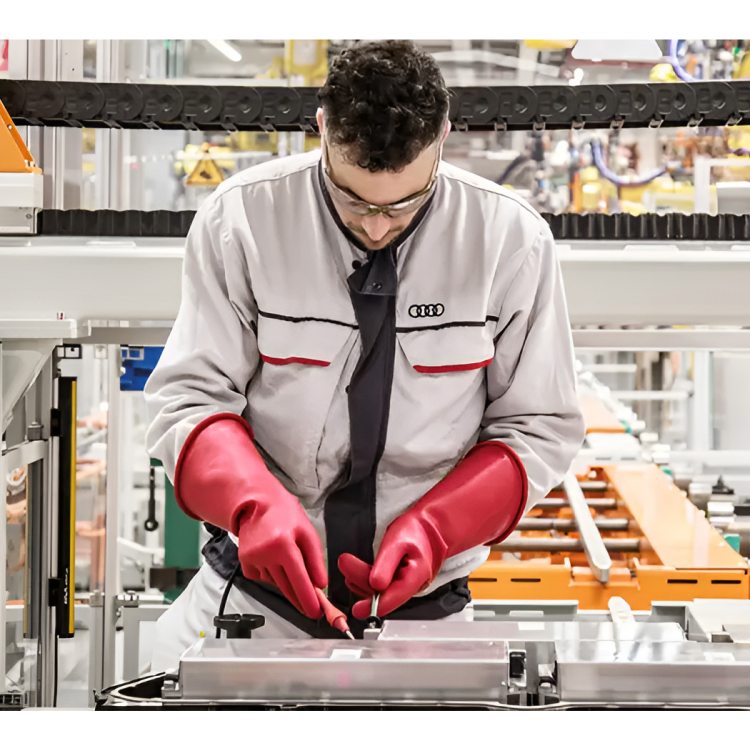
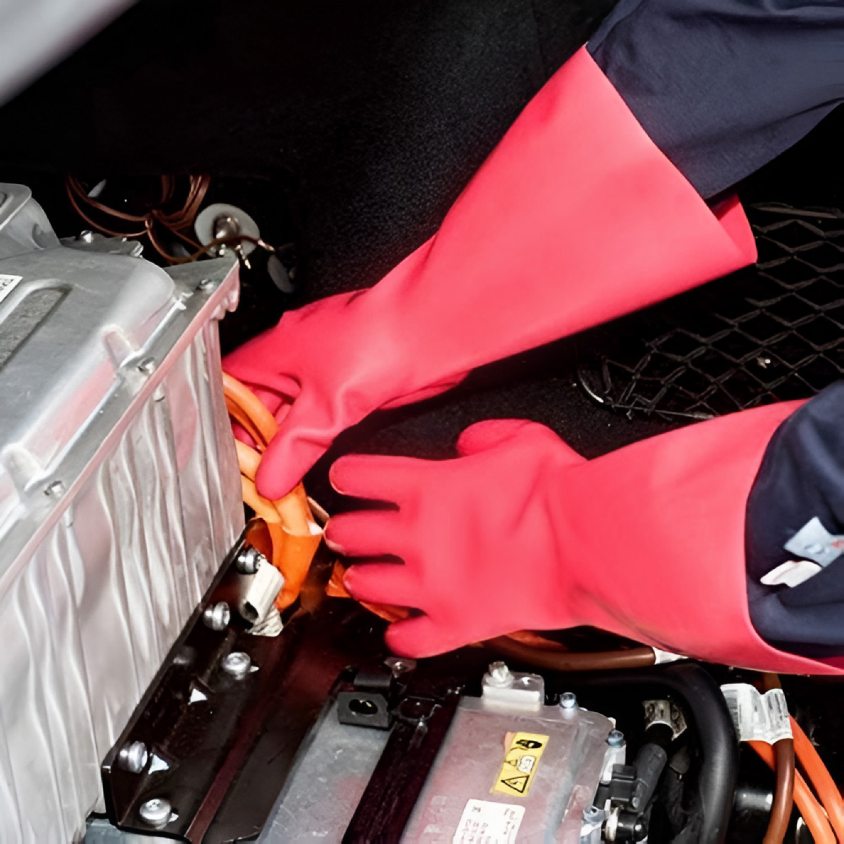
- Electrical Work: These gloves are ideal for use in factories, labs, and industrial settings for tasks involving high-voltage electricity (within the rated voltage).
- Easy to Use: The description mentions ease of use, but proper training on safe electrical work practices is crucial
- Tested and Certified: Look for labels indicating compliance with relevant safety standards (e.g., ASTM, IEC) for user confidence.
- Safety First: Electrical work can be hazardous. Always prioritize following safe work practices and use equipment with proper voltage ratings for the specific task.
- Visual Inspection: Regularly inspect gloves for damage (tears, cracks) before use. Damaged gloves can compromise safety.
- Training and Expertise: Using high-voltage electrical gloves requires proper training and knowledge of electrical safety procedures.
Technical Build
These Kavach electrical gloves use high-grade latex rubber specifically formulated for electrical insulation properties. The rubber compound maintains its dielectric strength while remaining flexible enough for workers to grip tools, manipulate wires, and perform detailed electrical tasks. Each glove undergoes individual testing according to IEC 60903 and IS 4770 standards before leaving the manufacturing facility, with test results recorded through the serial number marking system.
Voltage Class Protection Advantage
The Class 1 rating on these gloves indicates their tested performance against specific voltage levels. Workers can select the appropriate variant based on the maximum voltage they may encounter during their tasks. The clear voltage marking on each glove allows safety supervisors to verify that workers are using appropriate protection for the electrical systems they are servicing, supporting compliance with workplace electrical safety protocols.
Use-Case Scenarios
- Electrical maintenance and repair on commercial and industrial systems
- Power generation facilities working on generators, switchgear, and distribution panels
- Transmission line work servicing overhead and underground power infrastructure
- Utility and substation operations performing switching, testing, and maintenance procedures
- Industrial electrical installations connecting machinery, control systems, and power feeds
- Building electrical systems working on main panels, transformers, and high-voltage feeds
- Emergency electrical response isolating faults and restoring power safely
Ideal Applications
- Electrical maintenance and repair work
- Power generation and distribution facilities
- Transmission line servicing
- Utility and substation operations
- Industrial electrical installations
- Commercial building electrical systems
- Emergency electrical fault response
- Overall:
- These gloves could be suitable for qualified electricians working with high voltage within the specified ranges. However, prioritize safety by following proper procedures, using equipment with appropriate voltage ratings, and undergoing relevant training.
Frequently Asked Questions
Q: What voltage levels do these gloves protect against?
A: These Class 1 gloves are available in variants rated for 5KV, 11KV, 22KV, and 33KV maximum use voltage. Select the appropriate rating based on the highest voltage you may encounter during your electrical work. Always verify the voltage marking on your gloves matches or exceeds your work requirements.
Q: What do the IEC 60903 and IS 4770 certifications mean?
A: IEC 60903 is the international standard for electrical insulating gloves, specifying testing methods and performance requirements. IS 4770 is the corresponding Indian standard. Testing to these standards confirms the gloves meet established safety benchmarks for dielectric strength, physical properties, and durability under electrical stress.
Q: How should I inspect these gloves before use?
A: Before each use, visually inspect gloves for cuts, tears, holes, or signs of deterioration. Perform an air inflation test by rolling the cuff toward the fingers to trap air, then check for leaks. Do not use gloves that show any damage or fail the inflation test. Regular electrical testing by qualified facilities is also recommended according to your workplace safety protocols.
Q: Why are the gloves bright pink?
A: The bright pink color serves a safety function by making the gloves highly visible in industrial environments. This visibility helps supervisors confirm workers are wearing proper electrical protection and makes it easier to spot gloves in tool bags and storage areas.
Q: What is the warranty coverage?
A: These gloves carry a 1-year warranty from the date of manufacture printed on each glove. The warranty covers manufacturing defects. Normal wear, damage from misuse, or failure to follow inspection and care guidelines are not covered. Retain purchase documentation for warranty claims.
Q: Can these gloves protect against chemicals as well as electricity?
A: Yes. The latex rubber construction resists acid, oil, ozone, and mechanical stress in addition to providing electrical insulation. This chemical resistance helps the gloves maintain their protective properties when working in environments where electrical components may be exposed to industrial substances.
Q: How do I verify the glove specifications?
A: Each glove is individually marked with the manufacturing date, applicable standards, test voltage rating, and serial number. These markings allow you to verify the glove meets your requirements and provide traceability for safety audits and compliance documentation.





Leave a Reply