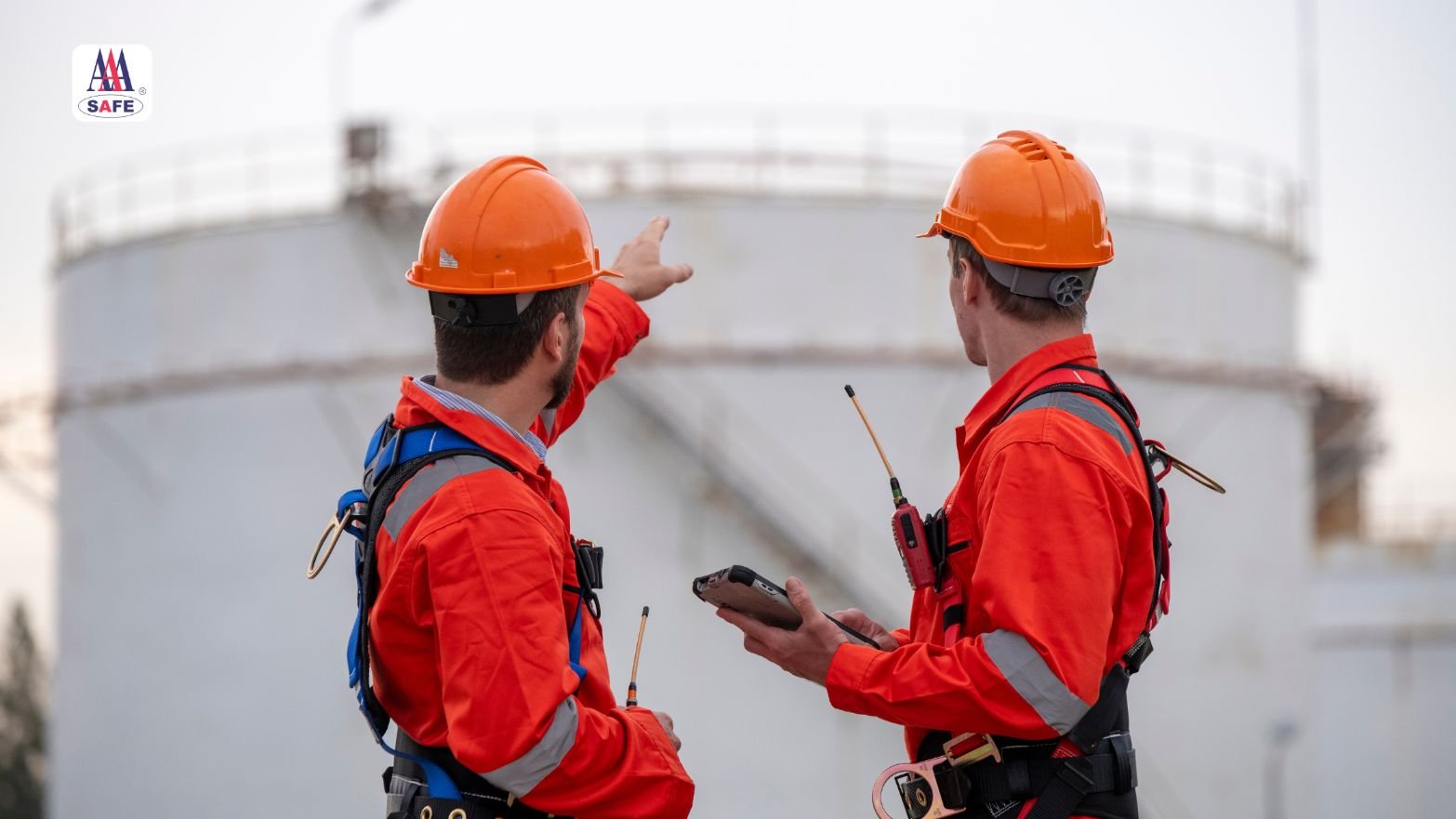
Have you ever watched port workers and offshore employees operating in harsh maritime environments and wondered what protective equipment keeps them safe from extreme conditions, chemical exposures, and constant hazard exposure? The reality is that maritime workers face some of the most demanding occupational environments globally, yet many ports and offshore facilities in the UAE operate with inadequate marine grade PPE standards.
I’ve worked with maritime operations across the UAE for years, and honestly, the facilities that use standard industrial PPE in marine environments are the ones dealing with equipment failures, worker injuries, and regulatory violations. Understanding marine grade PPE for offshore and port workers becomes essential when you recognize that maritime workers face simultaneous exposure to saltwater corrosion, chemical spills, heavy equipment hazards, and extreme weather conditions that standard industrial PPE simply doesn’t address.
Marine grade equipment exists for specific reasons that standard PPE cannot provide across Dubai ports, Abu Dhabi offshore facilities, and Sharjah maritime operations. Understanding what marine grade PPE for offshore and port workers actually requires protects workers while maintaining operational efficiency in UAE’s demanding maritime environments.
This guide walks you through the 7 essential categories of marine grade PPE for offshore and port workers throughout UAE maritime operations, protecting your workforce while ensuring compliance with international maritime safety standards.
Understanding UAE Maritime Safety Requirements
Marine grade PPE for offshore and port workers starts with recognizing the unique challenges that UAE maritime environments create for worker protection.
UAE Maritime Environmental Challenges
Extreme heat and humidity in UAE coastal areas accelerate PPE degradation while increasing worker heat stress during extended shifts on docks and offshore platforms.
Saltwater exposure throughout Dubai ports, Abu Dhabi terminals, and Sharjah harbors creates constant corrosion of standard PPE metal components and degradation of non-marine materials.
Chemical handling operations in UAE ports involve petroleum products, cleaning agents, and cargo chemicals requiring specialized protection beyond standard industrial equipment.
Heavy equipment operations including cranes, forklifts, and cargo handling machinery operate continuously in Dubai, Abu Dhabi, and Sharjah ports creating constant visibility and protection requirements.
UAE Maritime Regulatory Framework
The UAE Federal Decree Law No. 33 of 2021 requires employers to provide appropriate PPE for maritime workers. For UAE ports and offshore operations, this includes marine grade equipment meeting international maritime standards.
Dubai Ports Authority regulations establish specific PPE requirements for port operations, including marine grade visibility standards and chemical protection specifications. Abu Dhabi ports maintain similar requirements with additional offshore platform considerations.
UAE Ministry of Human Resources and Emiratisation guidelines require documented PPE provision and training specific to maritime hazards affecting workers in coastal operations.
For professional marine grade PPE consultation tailored to UAE maritime requirements, AAA Safe Dubai provides specialized solutions ensuring regulatory compliance while addressing saltwater corrosion and extreme weather challenges across Dubai, Abu Dhabi, and Sharjah maritime operations.
1. Marine Grade Protective Footwear and Slip-Resistant Systems
Essential Footwear Specifications and Costs
UAE maritime operations require specialized footwear addressing saltwater exposure, slippery surfaces, and chemical spills common in port environments.
Marine grade safety boots cost approximately AED 280-550 per pair (indicative pricing – verify with current marine safety suppliers) featuring composite toes, wave-pattern slip-resistant soles, and saltwater-resistant materials designed for UAE maritime conditions.
Slip-resistant deck shoes cost approximately AED 180-350 per pair (indicative cost) providing specialized traction on wet surfaces with quick-dry materials suitable for extended port operations.
Chemical-resistant footwear for cargo handling costs approximately AED 320-650 per pair (indicative pricing) offering protection against petroleum products and cleaning chemicals common in UAE port operations.
Thermal footwear for offshore operations costs approximately AED 450-850 per pair (indicative cost) providing insulation and waterproofing for extended offshore platform work in UAE waters.
Why Standard Safety Shoes Fail
Saltwater corrosion rapidly deteriorates steel toes and metal fasteners in standard safety shoes, compromising protection and creating sharp edges.
Standard sole materials lose traction when saturated with seawater or oil spills, creating serious slip hazards on UAE port docks and offshore platforms.
Water absorption in regular footwear creates heavy, uncomfortable conditions leading to foot problems during 12+ hour maritime shifts common in UAE operations.
Limited chemical resistance means standard shoes deteriorate when exposed to petroleum products and port chemicals, requiring frequent replacement.
2. High-Visibility Apparel for UAE Maritime Operations
Marine Grade Visibility Requirements
High-visibility life jackets cost approximately AED 220-450 each (indicative pricing – verify current rates with AAA Safe Dubai for bulk facility orders) providing 360° retroreflective coverage with integrated flotation for UAE port and offshore work.
Marine grade safety vests cost approximately AED 85-165 per unit (indicative cost) featuring UV-resistant materials and enhanced reflectivity designed for intense UAE sunlight and water reflection conditions.
High-visibility coveralls for maintenance operations cost approximately AED 180-380 per set (indicative pricing) providing full-body visibility with marine grade materials suitable for UAE climate conditions.
Reflective hard hat accessories cost approximately AED 35-75 per unit (indicative cost) enhancing head visibility for crane operations and equipment movement in Dubai and Abu Dhabi ports.
Visibility Challenges in UAE Maritime
Intense sunlight reflection off water surfaces in Dubai, Abu Dhabi, and Sharjah ports reduces equipment operator visibility requiring enhanced reflective materials.
Night operations common in UAE ports and offshore platforms demand superior visibility systems exceeding standard high-visibility requirements.
Variable lighting conditions during shift changes and weather variations require consistent visibility performance throughout UAE maritime operations.
3. Marine Grade Respiratory Protection Systems
Respiratory Hazards in UAE Maritime Operations
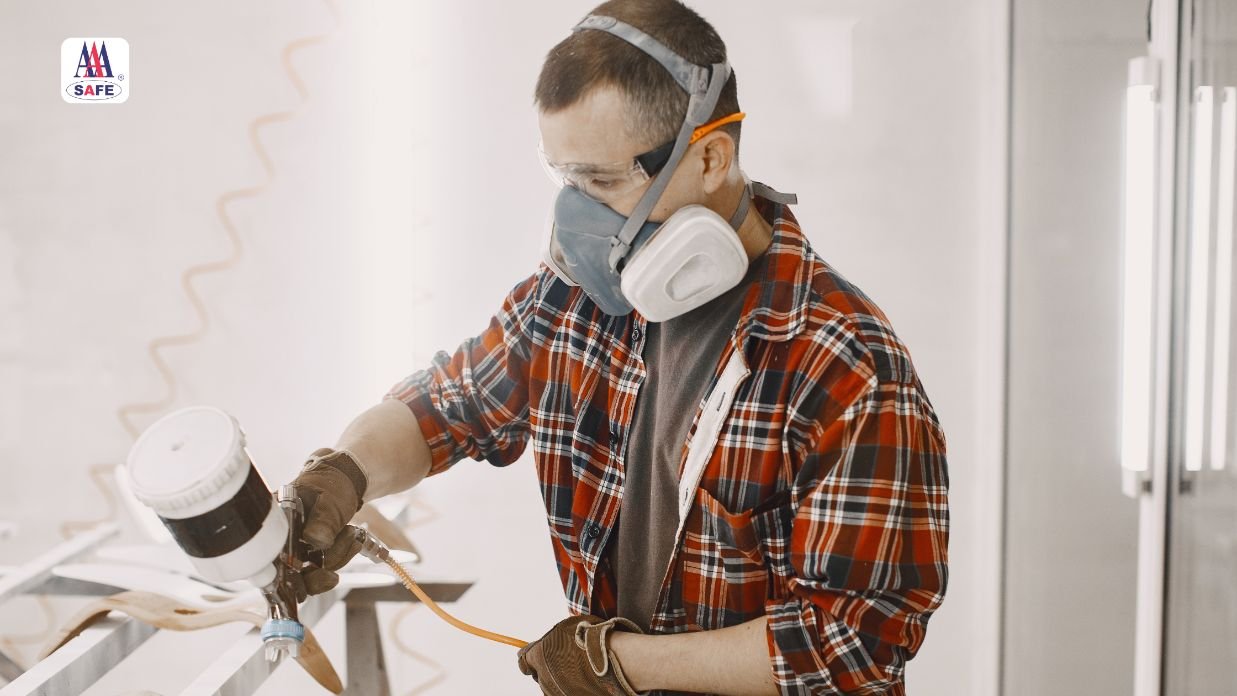
Diesel exhaust exposure from port equipment and vessels requires P100 filtration with marine grade respirators costing approximately AED 120-280 per unit (indicative pricing) designed for UAE heat and humidity conditions.
Welding fumes during ship maintenance in UAE ports require specialized respirators costing approximately AED 350-750 per system (indicative cost – contact AAA Safe Dubai for facility-specific respiratory protection assessment) with saltwater-resistant components.
Chemical vapor exposure during cargo operations requires supplied-air systems costing approximately AED 1,500-3,500 per unit (indicative pricing) for tank cleaning and confined space operations.
Confined space entry in ships and storage tanks requires SCBA systems costing approximately AED 8,000-18,000 per unit (indicative cost) for emergency rescue and high-hazard operations.
Marine Grade Respiratory Features
Salt-resistant filter materials prevent corrosion and maintain filtration efficiency in UAE coastal environments with constant saltwater exposure.
Quick-dry cartridges designed for UAE humidity conditions maintain effectiveness during extended shifts with high perspiration rates.
Stainless steel components prevent corrosion in marine environments while maintaining seal integrity for worker protection.
Anti-fogging systems maintain clear vision during respiratory protection use in UAE heat and humidity conditions.
4. Marine Grade Hand Protection Systems
Specialized Hand Protection and Costs
Cut-resistant marine gloves with ANSI A4 rating cost approximately AED 35-85 per pair (indicative pricing) providing protection against rope handling and sharp equipment common in UAE port operations.
Chemical-resistant gloves for cargo handling cost approximately AED 25-55 per pair (indicative cost) offering protection against petroleum products and cleaning chemicals with extended durability.
Thermal protection gloves for hot equipment cost approximately AED 45-95 per pair (indicative pricing) providing heat resistance for UAE port maintenance and offshore operations.
Antimicrobial treated gloves cost approximately AED 30-65 per pair (indicative cost) preventing infection from contaminated seawater exposure common in UAE maritime work.
Hand Protection Requirements
High cut resistance protects against rope handling, cargo straps, and sharp metal edges common throughout Dubai, Abu Dhabi, and Sharjah port operations.
Chemical resistance prevents skin damage from petroleum products, cleaning agents, and cargo chemicals handled daily in UAE maritime facilities.
Saltwater durability ensures gloves maintain protection and grip despite constant exposure to corrosive seawater conditions.
Antimicrobial treatment prevents infections from pathogen-contaminated seawater present in UAE coastal and offshore operations.
Need specialized hand protection for your UAE maritime operations?
AAA Safe Dubai offers comprehensive glove selection ensuring proper protection for specific port and offshore tasks across Dubai, Abu Dhabi, and Sharjah facilities.
5. Marine Grade Eye and Face Protection
Eye Protection Specifications and Costs
Marine safety glasses with anti-salt coating cost approximately AED 55-125 per pair (indicative pricing) providing UV protection exceeding 99.9% for intense UAE sunlight and water reflection.
Face shields for chemical protection cost approximately AED 85-185 per unit (indicative cost) featuring oversized coverage and easy-clean coatings for tank cleaning operations.
Welding helmets for maintenance work cost approximately AED 450-950 per unit (indicative pricing) with auto-darkening features and stainless steel construction for UAE marine environments.
Sealed safety goggles for confined spaces cost approximately AED 75-155 per pair (indicative cost) providing complete eye protection during high-risk chemical exposure operations.
Eye Hazards in UAE Maritime
Extreme UV exposure from intense UAE sunlight and water reflection requires marine grade UV protection exceeding standard safety glass specifications.
Saltwater spray constant throughout Dubai, Abu Dhabi, and Sharjah ports demands anti-fogging and salt-resistant coatings maintaining clear vision.
Chemical splashes from cargo operations and tank cleaning require chemical-resistant lens materials and sealed designs preventing contamination.
Wind-blown debris carried by UAE coastal winds requires superior sealing preventing particle infiltration during offshore and port operations.
6. Marine Grade Head Protection Systems
Head Protection Requirements and Costs
Marine grade hard hats with flotation features cost approximately AED 120-285 per unit (indicative pricing – verify current specifications with AAA Safe Dubai for UAE compliance requirements) providing impact protection with corrosion-resistant materials.
High-visibility helmets with integrated communication cost approximately AED 280-650 per unit (indicative cost) enabling radio compatibility for UAE port and offshore operations.
Flotation-rated helmets for offshore work cost approximately AED 350-750 per unit (indicative pricing) providing head protection with emergency flotation capability for man-overboard scenarios.
Thermal protection helmets cost approximately AED 220-485 per unit (indicative cost) offering sun protection and heat dissipation for extended UAE outdoor maritime operations.
Head Protection Features
Corrosion resistance through stainless steel fasteners and marine grade materials prevents degradation in UAE saltwater environments.
Flotation capability ensures helmet floats if worker falls overboard, maintaining head position above water during rescue operations.
Integrated visibility features including retroreflective strips and high-visibility colors meeting UAE maritime operation requirements.
Secure retention systems with heavy-duty chin straps preventing helmet loss during water exposure or extreme weather conditions.
7. Marine Grade Body Protection and Specialized Apparel
Comprehensive Body Protection Costs
Marine coveralls with chemical resistance cost approximately AED 185-385 per set (indicative pricing) providing full-body protection with quick-dry materials suitable for UAE climate conditions.
Immersion suits for offshore operations cost approximately AED 850-1,850 per unit (indicative cost – contact AAA Safe Dubai for offshore-specific protection solutions) offering thermal protection and flotation for extended cold water exposure.
Chemical-resistant overalls for tank cleaning cost approximately AED 320-680 per set (indicative pricing) featuring sealed seams and specialized materials for hazardous cargo operations.
Thermal undergarments for offshore work cost approximately AED 125-285 per set (indicative cost) maintaining insulation even when wet during UAE offshore operations.
Body Protection Features
Quick-dry materials designed for UAE humidity conditions prevent clothing from becoming heavy and uncomfortable during extended maritime shifts.
Chemical resistance protects against petroleum products, cleaning agents, and cargo chemicals commonly handled in UAE port operations.
Life jacket compatibility ensures all body protection integrates seamlessly with mandatory flotation equipment required for UAE maritime work.
UV protection with UPF-rated fabrics protecting against intense UAE sunlight during extended outdoor port and offshore operations.
Integration with Safety Systems
Flotation compatibility ensures all body protection works effectively with life jackets and immersion suits required for UAE offshore operations.
Emergency visibility features enable quick identification during rescue operations in UAE waters and port emergency scenarios.
Communication integration allows radio and emergency signal compatibility throughout body protection systems for UAE maritime operations.
Cost-Benefit Analysis for UAE Maritime Operations
Initial PPE Investment for UAE Facilities
Complete marine PPE for 50-worker UAE port facility:
- Marine grade footwear (50 pairs): AED 14,000-27,500 (indicative pricing)
- High-visibility apparel (50 sets): AED 10,750-22,750 (indicative cost)
- Respiratory protection systems: AED 8,500-18,500 (indicative pricing)
- Hand protection (monthly supply): AED 1,750-4,250 (indicative cost)
- Eye and face protection: AED 4,500-9,500 (indicative pricing)
- Head protection systems: AED 6,000-14,250 (indicative cost)
- Body protection apparel: AED 12,500-28,000 (indicative pricing) Total initial investment: AED 58,000-124,750 (All costs are indicative)
Annual Replacement and Maintenance
Ongoing PPE costs:
- Replacement footwear (annual): AED 14,000-27,500 (indicative cost)
- Visibility apparel replacement: AED 8,000-16,500 (indicative pricing)
- Respiratory cartridge replacement: AED 6,500-12,500 (indicative cost)
- Monthly hand protection: AED 21,000-51,000 annually (indicative pricing)
- Eye protection replacement: AED 3,000-6,500 (indicative cost) Total annual operational costs: AED 52,500-114,000 (All costs are indicative)
Value Generated Through Protection
Injury prevention includes avoided serious injuries (AED 75,000-750,000 per incident), maintained productivity, and reduced workers compensation claims.
Regulatory compliance avoids violations and penalties (AED 15,000-75,000 estimated), maintains operating licenses, and prevents work stoppages.
Equipment durability through marine grade materials reduces replacement frequency and operational disruptions in harsh UAE maritime environments.
3-Year ROI: Investment of approximately AED 163,500-352,750 preventing incidents worth AED 90,000-2,250,000 provides ROI of 55-590% (calculations based on indicative costs and estimated incident values).
Frequently Asked Questions
High-visibility apparel and proper footwear are most critical for daily port operations. Visibility prevents accidents from heavy equipment; proper footwear prevents falls on slippery surfaces. However, the “most critical” PPE depends on specific job tasks. Tank cleaning workers prioritize respiratory protection; deck operations workers prioritize slip-resistant footwear and visibility; offshore workers prioritize life jackets and immersion suits.
Replacement frequency depends on equipment type and usage intensity. High-visibility apparel typically lasts 6-12 months before reflectivity degradation. Footwear usually requires replacement annually with heavy use. Hand protection may require weekly replacement with intensive use. Helmets typically last 5-7 years unless damaged. Respiratory equipment cartridges require replacement per manufacturer specifications.
No. Standard industrial PPE was not designed for saltwater environments and will corrode, degrade, and lose protective properties rapidly. Using standard PPE in marine environments creates false security while equipment actually fails. Marine grade PPE exists because maritime conditions demand specialized materials and design. Cost savings from standard equipment are exceeded by increased injury risk and liability.
Waterproof means water cannot penetrate the material. Marine grade means equipment is designed specifically for harsh maritime environments including saltwater, UV exposure, chemical splash, and corrosion resistance. Waterproof PPE might repel fresh water but corrode in saltwater. Marine grade equipment combines waterproofing with corrosion resistance, material durability, and visibility features required for maritime operations.
Life jackets are separate safety equipment addressing immersion hazards. However, marine grade PPE should integrate with life jackets without interference. Workers wearing both shouldn’t find one prevents effective use of the other. Life jackets prevent drowning if immersion occurs, while PPE prevents injuries during normal maritime operations.
Workers should receive training on why marine grade equipment is necessary, proper donning and doffing procedures, care and maintenance extending equipment life, recognition of damaged equipment, replacement procedures, and integration with life jackets. Annual refresher training ensures knowledge retention and updates reflecting new equipment or procedures.
Rinse equipment with fresh water after each shift removing saltwater and corrosive deposits. Dry thoroughly to prevent mold and degradation. Store in cool, dry locations away from direct UV exposure. Inspect regularly for damage, corrosion, or degradation. Replace components showing significant wear. Never store PPE in direct sunlight or extreme temperatures.
Stop using damaged equipment immediately and replace with functional equipment. Damaged PPE no longer provides protection and creates false security. Report damage to supervisors documenting incidents and ensuring replacement. Assess whether damage represents manufacturing defect requiring supplier notification. Never attempt field repairs unless explicitly authorized and trained.
Yes. UAE maritime operations must comply with international maritime standards, International Labour Organization (ILO) maritime conventions, and UAE Ministry of Human Resources and Emiratisation standards. Local port authorities may impose additional requirements. Professional maritime consultants familiar with UAE regulations can specify exact compliance requirements.
Yes. Marine grade PPE works in industrial environments, though specialized features may be unnecessary expense. However, using non-marine PPE in maritime environments is inappropriate and dangerous. If workers perform both maritime and non-maritime work, marine grade PPE can cover both applications, though non-marine PPE cannot safely cover maritime work.
Safety Disclaimer
This information provides general guidance on marine grade PPE for offshore and port workers and should not be considered a substitute for professional maritime safety consultation. All costs mentioned are indicative only and should be verified with current suppliers and service providers. Specific requirements vary based on vessel type, cargo handled, location, and maritime regulations.
UAE maritime operations must comply with international maritime standards, ILO maritime conventions, and UAE Ministry of Human Resources and Emiratisation standards. Dubai Ports Authority, Abu Dhabi ports, and Sharjah authorities maintain specific marine grade PPE requirements that change regularly.
Selection and use of marine grade PPE for offshore and port workers must be performed by qualified professionals familiar with UAE maritime conditions, regulatory requirements, and specific operational hazards. Improper PPE selection can result in worker injuries or fatalities.
Equipment specifications, maintenance requirements, and costs vary significantly between suppliers and applications. Pricing information reflects general UAE market conditions and should be verified with current marine safety suppliers and certified installation contractors.
For professional consultation on marine grade PPE programs tailored to specific UAE maritime operations, contact certified maritime safety professionals with demonstrated experience in offshore and port worker protection and UAE regulatory compliance.
Conclusion
Understanding these 7 essential categories of marine grade PPE for offshore and port workers creates the foundation for protecting maritime workers from hazards unique to UAE’s demanding marine environments. Saltwater corrosion, chemical exposure, heavy equipment, and extreme weather combine to create dangerous working conditions requiring specialized protective equipment that standard industrial PPE cannot address.
The maritime operations succeeding in UAE’s competitive market aren’t the ones treating marine grade PPE as optional expense. They’re the ones understanding that worker protection prevents injuries, maintains operational efficiency, and demonstrates genuine commitment to employee safety in challenging environments.
I’ve learned that the best maritime operations treat marine grade PPE as fundamental safety infrastructure, not optional equipment. When facility managers invest in proper marine protection systems and create organized maintenance programs, workers maintain safety and productivity while operations run reliably in harsh maritime conditions.
The return on investment from proper marine grade PPE is measurable and substantial. Yes, marine equipment requires higher initial investment than standard PPE. But prevented injuries, maintained productivity, and avoided regulatory violations create value far exceeding equipment costs. Marine grade PPE for offshore and port workers consistently provides positive returns through worker protection and operational confidence.
More fundamentally, this is about protecting people who work in some of the world’s most challenging occupational environments. Maritime workers face constant exposure to hazards that can cause serious injury or death without proper protection. Marine grade PPE demonstrates that commitment to safety extends beyond compliance to genuine worker welfare.
Your maritime operation’s success depends on workers who remain safe and productive in demanding conditions. Select equipment based on systematic hazard assessment rather than minimum cost. Invest in solutions that demonstrate genuine commitment to worker protection and operational excellence.
Your workers, your safety record, and your operational success will all benefit from this systematic approach to marine grade worker protection.