A maintenance technician reaches into a conveyor system to clear a jam. Without warning, the machine activates. In seconds, a routine task becomes a life-altering injury. This scenario plays out far too often in industrial facilities across the UAE, and it is entirely preventable.
I have spent years helping industrial facilities in Dubai, Abu Dhabi, and Sharjah implement proper lockout tagout procedures in UAE workplaces. The pattern is always the same. Companies invest millions in equipment but overlook the simple safety systems that protect workers from hazardous energy. One skipped step. One assumption that power was disconnected. That is all it takes.
Here is what I have learned about implementing effective lockout tagout procedures in UAE industrial settings, and why getting this right can literally save lives in your facility.
What Are Lockout Tagout Procedures and Why Do They Matter
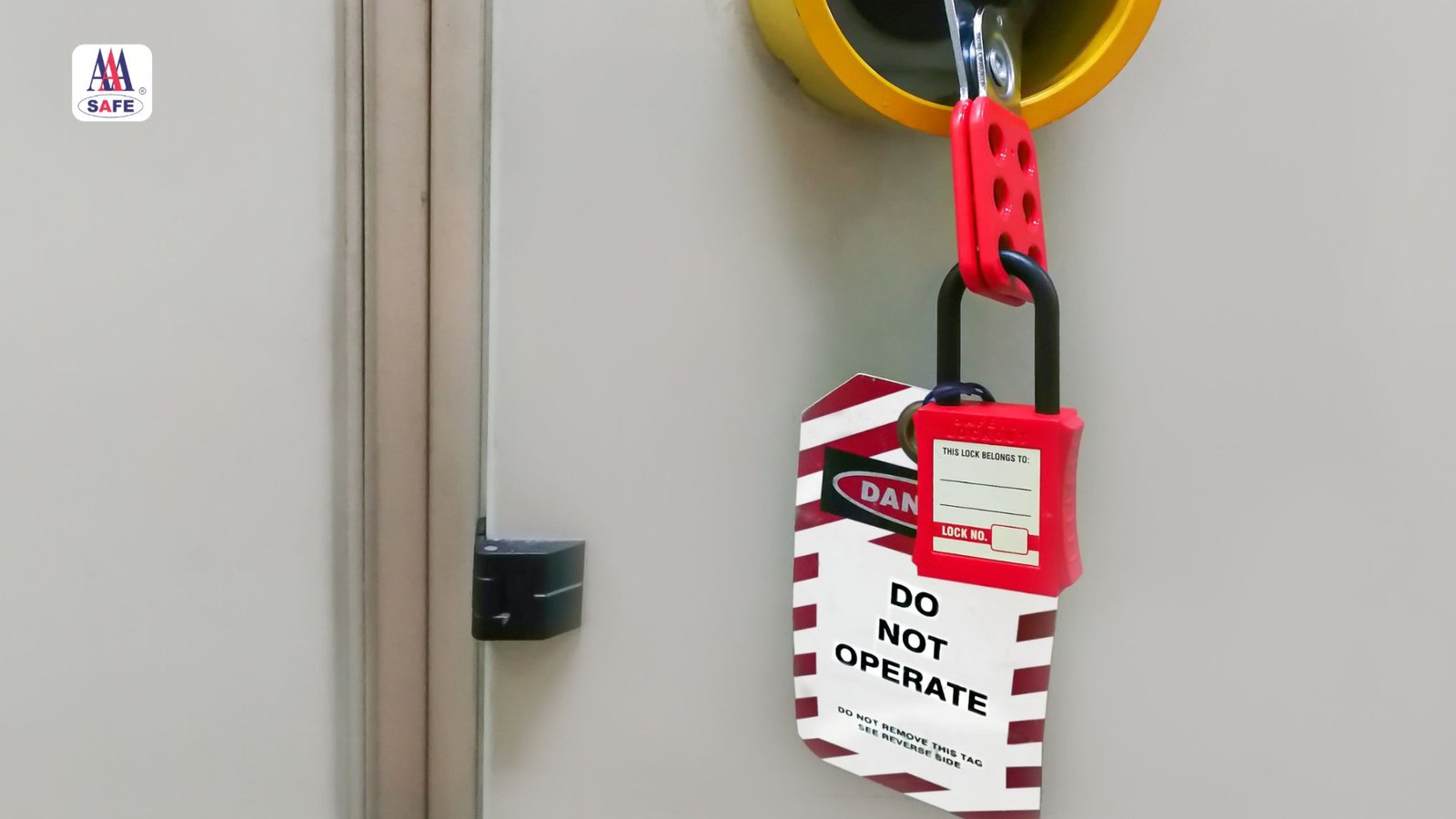
Lockout tagout procedures, commonly called LOTO, represent a systematic approach to controlling hazardous energy during equipment maintenance and servicing. The concept is straightforward. Before any worker performs maintenance on machinery, all energy sources must be isolated, locked, and tagged to prevent unexpected startup.
In the UAE context, lockout tagout procedures have become increasingly important as industrial operations expand across the Emirates. Manufacturing plants in Jebel Ali Free Zone, oil and gas facilities in Abu Dhabi, and processing operations in Sharjah all require robust energy control programs to protect their workforce.
According to international safety data, proper LOTO compliance prevents an estimated 120 fatalities and 50,000 injuries annually. Workers injured due to uncontrolled hazardous energy miss an average of 24 workdays while recovering. For UAE employers, beyond the human cost, these incidents carry significant financial implications including medical expenses, compensation claims, and regulatory penalties under Federal Decree Law 33 of 2021.
Types of Hazardous Energy in Industrial Settings
Understanding hazardous energy sources is the foundation of effective lockout tagout procedures in UAE facilities. Your workers may encounter multiple energy types during routine maintenance.
- Electrical Energy remains the most common hazard in industrial operations. This includes power from main supply lines, battery backup systems, capacitors storing residual charge, and solar installations increasingly common in Dubai and Abu Dhabi facilities.
- Mechanical Energy comes from moving parts including flywheels, gears, belts, and any component that rotates or reciprocates. Even after power is disconnected, stored mechanical energy can cause serious injuries.
- Hydraulic Energy powers much of the heavy equipment used in construction and manufacturing. Pressurized fluid in accumulators, cylinders, and lines can release suddenly with devastating force.
- Pneumatic Energy involves compressed air systems common in industrial facilities. Air pressure remaining in tanks, lines, and cylinders poses crushing and striking hazards.
- Thermal Energy becomes particularly relevant in the UAE climate. Equipment exposed to ambient temperatures often exceeds 50°C during summer months. Steam systems, ovens, and heated processing equipment require cooling periods before maintenance.
- Chemical Energy exists in reactive substances, pressurized vessels, and processes where chemical reactions continue after shutdown. Petrochemical facilities in Abu Dhabi must address this energy type carefully.
- Gravitational Energy applies to elevated components, suspended loads, and any item that could fall when support is removed during maintenance activities.
UAE Regulatory Framework for Lockout Tagout Procedures
Implementing lockout tagout procedures in UAE requires understanding the applicable regulatory framework. Unlike some countries with a single LOTO-specific standard, UAE regulations address hazardous energy control through multiple overlapping requirements.
Federal Labour Law Requirements
Federal Decree Law 33 of 2021 Regarding the Regulation of Employment Relationships establishes the foundation for workplace safety in the UAE. Article 13 requires employers to provide adequate prevention means protecting workers from occupational injuries and illnesses.
Cabinet Resolution No. 1 of 2022 provides implementing regulations that expand on these requirements. Specifically, employers must provide necessary means of prevention to protect workers from risks of injuries that may occur during working hours, including risks resulting from the use of machines and other work tools.
The law requires employers to inform workers prior to commencement of duty of the risks of their occupation, including machine hazards. This directly supports the training requirements essential to any lockout tagout program. Fines for safety violations under recent amendments range from AED 100,000 to AED 1,000,000 for serious infractions.
For complete federal requirements, consult the Ministry of Human Resources and Emiratisation official portal.
Abu Dhabi ADOSH-SF Requirements
The Abu Dhabi Occupational Safety and Health System Framework provides the most detailed lockout tagout requirements in the UAE. ADOSH-SF Code of Practice 24.0, titled “Lock-out/Tag-out (Isolation),” establishes minimum performance requirements for controlling hazardous energy.
This Code of Practice applies to all employers within the Emirate of Abu Dhabi and covers servicing and maintenance of machines and equipment where unexpected energization or release of stored energy could cause injury to employees.
Key requirements from ADOSH-SF CoP 24.0 include establishing an energy control program consisting of energy control measures, procedures, training, and periodic inspections. Employers must utilize lockout when energy isolating devices are capable of being locked out. Tagout systems may only be used when lockout is not feasible, with equivalent protection demonstrated.
The Abu Dhabi standard requires annual periodic inspections of energy control procedures by competent employees other than those utilizing the procedures being inspected. Training records must include employee names, Emirates ID numbers, classification as authorized, affected, or other employees, dates of training, and names of trainers.
If you operate in Dubai, Abu Dhabi, or Sharjah and need help implementing lockout tagout procedures that meet regulatory requirements, AAA Safe provides equipment, training, and consulting services across all Emirates. Contact our team for a facility assessment.
Dubai Municipality and Free Zone Requirements
Dubai Municipality enforces safety requirements through building codes and inspection protocols. Industrial facilities in Dubai must demonstrate adequate safety systems during licensing and periodic inspections.
Free zones including JAFZA, Dubai South, and DMCC maintain their own regulatory frameworks often incorporating international standards. Many require formal LOTO programs as part of operational licensing requirements. Trakhees, the regulatory authority for free zones under Ports, Customs and Free Zone Corporation, includes lockout tagout provisions in their HSE requirements.
The 6 Step Lockout Tagout Procedure for Workplaces
Effective lockout tagout procedures in UAE follow a systematic approach. While some organizations use more steps, these six core elements form the foundation of any compliant LOTO program.
Step 1: Preparation and Planning
Before shutting down any equipment, authorized employees must thoroughly prepare for the lockout procedure. This preparation phase involves several critical activities.
First, identify all energy sources that power or could affect the equipment. This includes obvious sources like electrical supply and hidden sources like pneumatic accumulators or elevated components. In facilities with multiple energy sources, create a written list specifying each isolation point.
Review the specific lockout tagout procedure for the equipment. ADOSH-SF requires documented procedures clearly outlining scope, purpose, authorization rules, and techniques for controlling hazardous energy. Each machine or equipment type should have specific procedural steps developed by competent personnel.
Gather all required LOTO devices before beginning. Nothing disrupts a procedure more than realizing halfway through that you need additional padlocks or lockout hasps. Ensure you have sufficient devices for all isolation points plus any group lockout requirements.
Finally, notify all affected employees that maintenance will occur and the equipment will be locked out. This communication prevents anyone from attempting to restart the equipment and ensures workers understand the reason for the downtime.
Step 2: Equipment Shutdown
With preparation complete, proceed to shut down the equipment using normal operating procedures. This step seems simple but carries important safety considerations.
Use the equipment’s normal stopping mechanisms including stop buttons, control switches, or automatic shutdown sequences. Never simply disconnect power to stop running machinery, as this can damage equipment and create additional hazards from abrupt stops.
Ensure all affected employees are safely positioned away from the equipment before and during shutdown. Even normal stopping procedures can present hazards if someone is positioned incorrectly.
Verify the equipment has completely stopped before proceeding. Some machinery requires several minutes or longer to coast to a complete stop. Hydraulic and pneumatic systems may require time to depressurize. Heated equipment must cool to safe temperatures before maintenance begins.
Step 3: Energy Isolation
This step physically disconnects the equipment from all energy sources. For effective lockout tagout procedures in UAE facilities, authorized employees must locate and operate every energy isolating device associated with the equipment.
Energy isolating devices include circuit breakers, disconnect switches, manually operated valves, and block valves on pipelines. In industrial facilities, these devices should be clearly labeled with equipment names and isolation point numbers corresponding to written procedures.
Position each energy isolating device in the “off” or “safe” position. For circuit breakers, this means the open or off position. For valves, typically the closed position. Some isolation devices have specific positions designated as safe depending on the energy type being controlled.
Important: Control circuits including push buttons, selector switches, and programmable controls are not energy isolating devices. These control circuits can fail or be bypassed. Only devices that physically interrupt energy flow provide adequate isolation for LOTO purposes.
Step 4: Application of Lockout and Tagout Devices
With all energy sources isolated, apply lockout devices and tagout devices to each energy isolating device. This step provides the physical barrier preventing inadvertent re-energization.
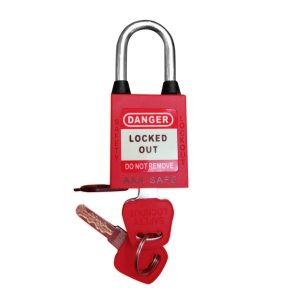
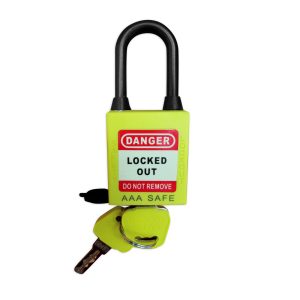
Each authorized employee performing maintenance must apply their own personal lockout device. Safety padlocks designed for LOTO applications typically cost between AED 25 and AED 150 each depending on material, shackle type, and keying options. Never share padlocks or keys between workers.
Attach tagout devices at the same location as lockout devices. Tags must include the name of the authorized employee who applied them, the date and time of application, and a warning statement. ADOSH-SF requires tags to be legible, printed in Arabic and English, and any other languages necessary for worker comprehension.
For equipment with multiple isolation points, use a lockout hasp allowing multiple padlocks to secure each point. Group lockout boxes can manage keys when many workers are involved in complex maintenance activities.
Step 5: Verification of Isolation (Try Out Procedure)
Before beginning any maintenance work, verify that the equipment is completely de-energized and all energy sources are effectively isolated. This verification step, sometimes called the “try out procedure,” confirms your lockout is effective.
First, ensure all personnel are positioned safely away from the equipment. Even verification activities can present hazards if isolation is incomplete.
Attempt to start the equipment using normal operating controls. If isolation is complete, nothing should happen. Any response indicates incomplete isolation requiring immediate correction before proceeding.
Use appropriate testing equipment to verify zero energy conditions. For electrical systems, use a voltage tester to confirm no power is present at the work location. For pneumatic and hydraulic systems, check pressure gauges showing zero or use bleed valves to release any remaining pressure.
Verify that all stored energy has been dissipated or restrained. Release tension from springs, lower elevated components to their lowest positions, bleed pressure from accumulators, and allow heated surfaces to cool.
Return operating controls to the “off” position after verification testing. This prevents unexpected operation when energy is eventually restored.
For facilities across Dubai, Abu Dhabi, Sharjah, and the Northern Emirates, AAA Safe supplies complete lockout tagout kits, individual LOTO devices, and customized energy control solutions. Our products meet international standards and withstand UAE environmental conditions including heat, humidity, and dust.
Step 6: Maintenance and Service Completion
With verification complete, authorized employees may safely perform maintenance, servicing, or repair activities on the equipment. Throughout this work, maintain awareness of LOTO status and any changes that could affect energy isolation.
When maintenance is complete, prepare for re-energization following these steps:
Remove all tools, equipment, and materials from the work area. Inspect the work area to ensure nothing will interfere with safe operation.
Verify that machine or equipment components are operationally intact. Guards and safety devices must be reinstalled before removing lockout devices.
Confirm all employees are safely positioned away from the equipment. Use a headcount or sign-off procedure to ensure no one remains in the danger zone.
Notify affected employees that lockout tagout devices are being removed and energy will be restored.
Remove lockout tagout devices in reverse order of application. Each employee must remove their own devices personally unless specific emergency removal procedures apply.
Restore energy to the equipment and verify proper operation through normal startup procedures.
Essential Lockout Tagout Equipment for UAE Operations
Implementing effective lockout tagout procedures in UAE requires appropriate equipment selected for your specific applications and environmental conditions. The extreme heat, humidity, and dusty conditions demand durable LOTO devices.
Lockout Device Selection Table
| Device Type | Application | Typical Cost (AED) | UAE Considerations |
|---|---|---|---|
| Safety Padlocks | All isolation points | 25-150 + VAT | Select corrosion-resistant materials for outdoor use |
| Circuit Breaker Lockouts | Electrical panels | 15-75 + VAT | Match to specific breaker types |
| Valve Lockouts (Gate) | Pipeline isolation | 45-200 + VAT | Size for locally available valve types |
| Valve Lockouts (Ball) | Quarter-turn valves | 35-150 + VAT | Heat-resistant materials for exposed installations |
| Cable Lockouts | Multiple energy sources | 50-180 + VAT | Adjustable cables for variable spacing |
| Lockout Hasps | Group lockout applications | 30-120 + VAT | Capacity for maximum workers expected |
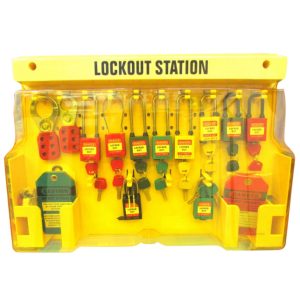
| Lockout Stations | Centralized storage | 200-1,500 + VAT | Shadow boards improve compliance |
| Complete LOTO Kits | General maintenance | 500-3,000 + VAT | Select kits matching facility energy types |
Tagout Requirements
Tags must meet specific requirements under ADOSH-SF and international standards. Quality tagout devices share these characteristics:
- Durability: Tags must withstand environmental conditions without deteriorating. Exposure to temperatures exceeding 45°C, high humidity, and dust is common at industrial sites in Dubai, Abu Dhabi, and other Emirates.
- Attachment strength: Tags must secure firmly to energy isolating devices preventing accidental removal. The attachment mechanism, typically a nylon cable tie, must resist vibration and incidental contact.
- Readability: Warning text must remain legible throughout the tag’s use. Tags should include space for employee name, date, time, and reason for lockout. Bilingual Arabic and English text satisfies ADOSH-SF requirements for most facilities.
- Standardization: All tagout devices should be singularly identified and used only for energy control purposes. Using the same tags for quality holds, inventory control, or other purposes creates confusion and undermines the lockout tagout program.
Training Requirements for LOTO Programs
Effective lockout tagout procedures in UAE depend on properly trained personnel. ADOSH-SF CoP 24.0 and international standards establish specific training requirements for different employee categories.
Authorized Employee Training
Authorized employees are those who perform the actual lockout procedures and maintenance work. Their training must cover:
Recognition of hazardous energy sources in the workplace and understanding of types and magnitude of energy available. In facilities with multiple energy sources, this training requires significant depth.
Types of isolation devices and their proper use. Employees must practice with the specific devices used at their facility rather than relying solely on generic instruction.
Procedures, methods, and means required for energy isolation and control. Machine-specific training ensures authorized employees understand each piece of equipment they may lock out.
Proper verification procedures to confirm effective isolation before beginning work.
Affected Employee Training
Affected employees work in areas where energy control procedures are used but do not perform lockout activities themselves. Their training includes:
Purpose and importance of the energy control program. Affected employees must understand why equipment is locked out and the serious consequences of attempting to restart locked equipment.
Recognition of lockout tagout devices and their meaning. Employees must never remove, ignore, or bypass LOTO devices applied by others.
Prohibition against attempting to restart or re-energize locked out equipment under any circumstances.
Other Employee Training
Employees whose work brings them into areas where lockout tagout procedures may be in effect receive basic awareness training covering:
General information about the energy control program and its purpose.
Recognition of locked out equipment and understanding of the prohibition against interfering with LOTO devices.
Training Documentation Requirements
Under ADOSH-SF requirements, employers must maintain records of employee training including:
| Required Information | Purpose |
|---|---|
| Employee name and ID number | Individual identification |
| Emirates ID number | Regulatory compliance |
| Employee classification | Authorized, affected, or other |
| Dates of training | Currency verification |
| Name of trainer | Accountability |
| Training content covered | Competency verification |
Training must be conducted in languages employees understand. In the multinational workforce common throughout the Emirates, this often means providing instruction in Arabic, English, Hindi, Urdu, and other languages depending on workforce composition.
Refresher training is required whenever job assignments change, when equipment or processes present new hazards, or when energy control procedures are revised. Additionally, if periodic inspections reveal deficiencies in employee knowledge or application of procedures, immediate retraining is necessary.
AAA Safe offers lockout tagout training programs designed for UAE workplaces. Our certified trainers deliver instruction in multiple languages at your facility or our training centers in Dubai and Abu Dhabi. Contact us to schedule training for your authorized and affected employees.
Common Lockout Tagout Mistakes in UAE Facilities
Understanding common errors helps facilities improve their lockout tagout procedures in UAE operations. These mistakes repeatedly contribute to incidents despite established safety programs.
Failure to Identify All Energy Sources
The most dangerous mistake is missing energy sources during the preparation phase. Industrial facilities often have multiple energy inputs that are not immediately obvious. Hidden electrical supplies from emergency generators, pneumatic pressure remaining in isolated lines, and thermal energy in heated equipment catch workers by surprise.
Thorough energy source identification requires reviewing equipment documentation, tracing all connected systems, and consulting with operators familiar with the equipment. Never assume you know all energy sources without systematic verification.
Using Tagout When Lockout is Possible
Some facilities use tagout alone when lockout devices could be applied. ADOSH-SF and international standards are clear that lockout must be used when energy isolating devices are capable of being locked out. Tags provide warning only, not physical prevention of re-energization.
Tagout is appropriate only when isolation devices cannot accept locks. Even then, employers must demonstrate that the tagout program provides protection equivalent to lockout, requiring additional protective measures.
Inadequate Verification Procedures
Rushing through verification or skipping the try-out procedure entirely leads to incidents when isolation is incomplete. Workers enter equipment believing it is safe when hazardous energy remains available.
Always attempt to start equipment using normal controls as part of verification. Always use appropriate testing instruments to confirm zero energy conditions. Never assume isolation is complete based on device positions alone.
Unauthorized Removal of LOTO Devices
Lockout devices must be removed only by the employees who applied them. Supervisors or coworkers removing locks to restart equipment while maintenance continues puts workers at extreme risk.
For situations where the employee who applied a device is unavailable, establish documented emergency removal procedures that include verification that the employee is not at the facility, multiple attempts to contact the employee before removal, and inspection of the work area to ensure safe restart conditions.
Poor Communication During Shift Changes
Maintenance activities spanning multiple shifts require clear communication and device transfer procedures. The LOTO devices of workers ending their shifts must be removed only after incoming workers have applied their own devices, creating continuous protection.
Without proper handoff procedures, equipment may be energized between shifts while workers assume protection continues.
Implementing Group Lockout Tagout Procedures
Complex maintenance involving multiple workers requires group lockout procedures beyond basic individual LOTO. Industrial facilities with large maintenance crews must establish systems ensuring every worker receives protection.
Group Lockout Requirements
When servicing or maintenance is performed by multiple authorized employees, the group lockout procedure must provide protection equivalent to individual lockout. This typically involves a primary authorized employee coordinating the lockout with overall responsibility for:
Making all authorized employees aware of energy types, magnitudes, and hazards before work begins.
Ensuring orderly shutdown and isolation according to documented procedures.
Coordinating application and removal of lockout devices so no employee is exposed to hazardous energy.
Group Lockout Box Systems
Group lockout boxes provide an efficient system for managing multiple-worker lockouts. The procedure works as follows:
The primary authorized employee isolates all energy sources and applies company locks to each isolation point.
Keys for all company locks are placed inside the group lockout box.
Each worker applies their personal padlock to the group lockout box before entering the work area.
Workers remove their padlocks from the group lockout box only after exiting the work area.
When all personal padlocks are removed, the primary authorized employee opens the group lockout box, retrieves the keys, and restores energy following proper procedures.
This system ensures equipment cannot be energized until every worker has signed out by removing their personal lock.
Periodic Inspection Requirements
ADOSH-SF requires annual periodic inspections of energy control procedures to ensure lockout tagout procedures in UAE remain effective and compliant. Inspections must be performed by authorized employees other than those utilizing the procedure being inspected.
Inspection Components
Periodic inspections must include review of energy control procedure adequacy, observation of actual lockout procedures as performed, and interviews with authorized employees regarding their responsibilities.
For procedures using lockout, inspections focus on proper identification and isolation of energy sources, correct application of lockout devices, and adequate verification procedures.
For procedures using tagout, inspections must additionally review employees’ understanding of tagout limitations and the additional protective measures required for equivalent protection.
Inspection Documentation
Employers must maintain records certifying that periodic inspections have been performed. Records must identify:
The machine or equipment on which the energy control procedure was utilized.
The date of the inspection.
Employees included in the inspection.
The person performing the inspection.
Any deficiencies identified and corrective actions taken.
For additional guidance on inspection requirements, refer to the UAE Government portal on workplace health and safety.
Frequently Asked Questions
Lockout tagout procedures in UAE protect workers from unexpected energization or startup of machinery during maintenance and servicing. By isolating energy sources and applying physical locks and warning tags, LOTO procedures prevent the serious injuries and fatalities that can occur when equipment activates unexpectedly. Regulations including ADOSH-SF CoP 24.0 and Federal Decree Law 33 of 2021 require employers to implement effective energy control programs.
Multiple regulations address lockout tagout requirements. Federal Decree Law 33 of 2021 establishes general employer duties to protect workers from machine hazards. Abu Dhabi’s ADOSH-SF Code of Practice 24.0 provides the most detailed lockout tagout requirements applicable within that Emirate. Dubai Municipality and various free zone authorities incorporate LOTO requirements in their operational licensing standards. Employers in Dubai, Abu Dhabi, Sharjah, and other Emirates should identify all applicable regulations for their specific operations.
Lockout involves physically preventing energy isolating devices from being operated using a lock that requires a key for removal. Tagout involves attaching a warning tag to indicate equipment should not be operated. Regulations require lockout when devices are capable of being locked out. Tagout alone may only be used when lockout is not feasible, and additional protective measures must demonstrate equivalent protection. Most industrial facilities should use lockout as the primary energy control method.
Under ADOSH-SF and international standards, only the employee who applied a lockout device may remove it. This principle ensures the worker maintaining equipment has direct control over their protection. When the employee who applied the device is unavailable, documented emergency removal procedures may allow supervisory removal after verifying the employee is not at the facility, making reasonable contact attempts, and confirming safe conditions for re-energization.
Training requirements differ by employee classification. Authorized employees who perform lockout procedures need detailed training on hazardous energy recognition, isolation device types and use, specific procedures for equipment they service, and verification methods. Affected employees require training on program purpose and the prohibition against restarting locked equipment. All employees working in areas where LOTO may be used need awareness training. ADOSH-SF requires training in languages employees understand, documentation of training, and refresher training when procedures change or deficiencies are identified.
ADOSH-SF CoP 24.0 requires periodic inspection of energy control procedures at least annually. Inspections must be performed by authorized employees other than those using the procedure being inspected. Inspections verify that procedures are adequate, being followed correctly, and that employees understand their responsibilities. Documentation of inspections must be maintained including equipment identified, inspection date, employees involved, and the inspector’s name.
Lockout tagout procedures must address all forms of hazardous energy that could cause injury during maintenance. Common energy types in industrial facilities include electrical, mechanical, hydraulic, pneumatic, thermal, chemical, and gravitational energy. Equipment often involves multiple energy sources requiring isolation of each before maintenance begins. Thorough hazard assessment during procedure development identifies all applicable energy sources.
No. Control circuit devices including push buttons, selector switches, and programmable controls are not acceptable energy isolating devices for lockout purposes. These devices can fail or be bypassed. Only devices that physically disconnect equipment from energy sources, such as circuit breakers, disconnect switches, and manually operated valves, provide adequate isolation for lockout tagout procedures in UAE.
Quality lockout tagout devices appropriate for industrial use range from AED 25 to AED 150 or more for padlocks, AED 15 to AED 200 for various lockout devices, and AED 500 to AED 3,000 for complete kits depending on contents. Devices should be selected for durability in environmental conditions including heat exceeding 45°C, high humidity, and dust exposure. Investing in quality devices provides reliable protection and reduces replacement costs.
When outside contractors perform work on facility equipment, the host employer must inform contractors of their energy control procedures. Contractors must comply with facility LOTO programs and inform the host employer of their own procedures that could affect host employees. Clear communication and coordination between facility personnel and contractors is essential for safe multi-employer work situations common in industrial operations.
Building a Sustainable LOTO Program for Your Facility
Implementing effective lockout tagout procedures in UAE requires commitment beyond initial training and equipment purchase. Sustainable programs demand ongoing management attention and continuous improvement.
Start by conducting a thorough survey of all equipment requiring energy control procedures. Document every energy source, isolation point, and required LOTO device for each machine. This inventory forms the foundation for written procedures.
Develop machine-specific written procedures that meet ADOSH-SF requirements. Include specific steps for shutdown, isolation, lockout device application, verification, and re-energization. Review procedures with operators and maintenance personnel who understand the equipment.
Invest in quality LOTO equipment appropriate for your facility’s energy types and environmental conditions. Establish a system for device inspection and replacement ensuring locks and tags remain functional and legible.
Train all personnel according to their classification and document training thoroughly. Schedule refresher training before employees’ competency degrades. Conduct periodic inspections annually as required, addressing any deficiencies immediately.
Most importantly, enforce LOTO procedures consistently. A program that looks good on paper but allows shortcuts in practice provides no real protection. Management commitment to stopping work when procedures are not followed demonstrates that worker safety truly comes first.
Your workers deserve protection from hazardous energy every time they perform maintenance. AAA Safe provides complete lockout tagout solutions for industrial facilities across Dubai, Abu Dhabi, Sharjah, and throughout the UAE. From initial assessment through equipment supply, training, and ongoing program support, we help you build LOTO programs that work. Contact our safety specialists today to protect your team.
Disclaimer
This article provides general information about lockout tagout procedures in UAE industrial workplaces. While we have made every effort to ensure accuracy, regulations and requirements change over time. Always consult current federal laws, emirate-specific regulations including ADOSH-SF for Abu Dhabi operations, and applicable free zone requirements for your facility. This information does not constitute legal advice. Consult qualified safety professionals and legal counsel for guidance specific to your operations. AAA Safe provides equipment and training services but recommends verification of all regulatory requirements through official sources including MOHRE, Abu Dhabi Public Health Centre, Dubai Municipality, and relevant free zone authorities.