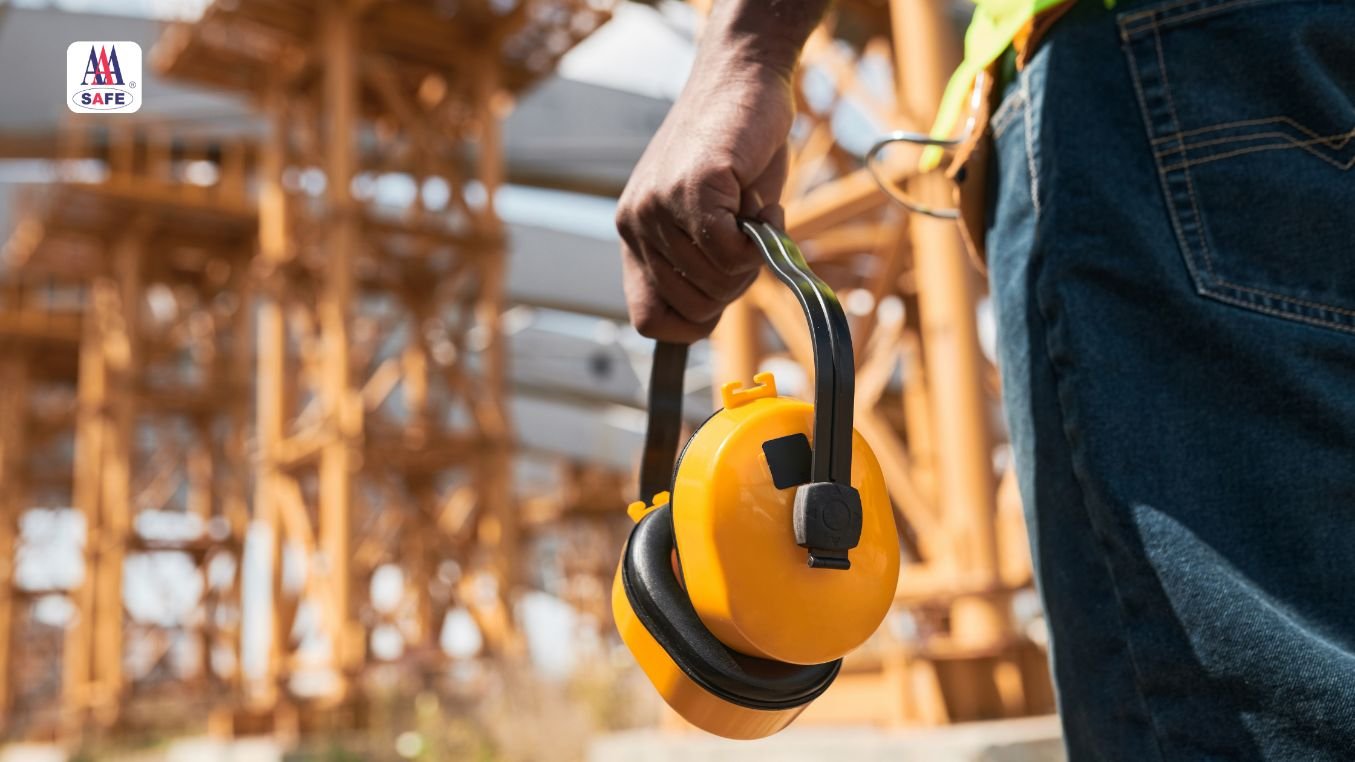
Noise on a construction site is not just a nuisance. It is a direct threat to the long-term health of every worker who steps onto the project. Concrete cutters and pile driving rigs push noise levels past 100 dB(A) on a typical UAE site. That is well beyond the 85 dB(A) threshold set by both OSHAD-SF in Abu Dhabi and Dubai Municipality’s Construction Safety Code.
Yet when most site safety managers think about hearing protection for construction workers, they reach for the same two items they have always used. Standard foam earplugs. Over-the-ear earmuffs. These are fine starting points, but they are far from the full picture. There are at least five categories of ear protection that regularly get skipped during safety procurement, and each one solves a real, daily problem that foam and basic muffs simply cannot address.
This article walks through those five overlooked options, explains where each one fits into a UAE construction environment, and details what to look for when selecting the right product. Whether you manage a high-rise project in Business Bay or a road infrastructure build in Abu Dhabi Industrial City, the information here will help you close gaps in your hearing conservation programme.
Need Help Selecting the Right Ear Protection for Your Site?
AAAsafedubai supplies a full range of hearing protection for construction workers across Dubai, Abu Dhabi, Sharjah, and the Northern Emirates. From canal caps to electronic earmuffs, our team can match products to your project’s noise profile and regulatory requirements.
Why Standard Ear Protection Falls Short on UAE Construction Sites
Standard disposable foam earplugs and passive earmuffs have been the default noise protection on construction sites for decades. They are inexpensive and easy to hand out during morning toolbox talks. But their limits become obvious once you look at how UAE construction sites actually operate.
The UAE’s climate plays a major role. Temperatures push past 45°C in summer, and humidity in Dubai, Abu Dhabi, and Sharjah often exceeds 80%. Over-the-ear earmuffs trap heat and moisture. Workers remove them to cool down, and every removal creates a gap in protection. On-and-off use sharply reduces the real-world Noise Reduction Rating (NRR) a worker actually receives.
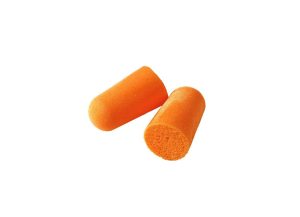
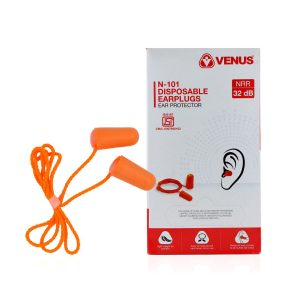
Foam earplugs carry a different problem. Proper insertion requires clean, dry hands and a careful rolling technique. On a dusty, fast-moving site, correct insertion rarely happens. A poorly seated foam plug can lose 50% or more of its rated noise reduction.
Then there is the communication issue. Workers wearing high-blocking passive protection sometimes cannot hear critical warnings, creating a secondary safety risk. This is especially relevant on UAE mega-projects where large, multilingual crews work near mobile cranes, dump trucks, and excavators.
5 Types of Noise Protection for Construction Sites That Get Overlooked
The five categories below are available in the UAE market, comply with relevant international standards (EN 352, ANSI S3.19, ANSI S12.6), and solve specific problems that standard foam and passive muffs cannot.
1. Banded Canal Caps (Semi-Insert Ear Protectors)
Canal caps sit at the opening of the ear canal rather than deep inside it. A lightweight plastic or metal band holds them in place behind the head, under the chin, or over the top. When not in use, they hang around the neck like a lanyard, ready to pop back in seconds.
- Why they get overlooked. Most safety procurement officers default to earplugs or full earmuffs. Canal caps occupy a middle ground that many buyers do not consider. They rarely appear in standard PPE order templates, and many UAE suppliers do not display them prominently.
- Where they solve a real problem. Canal caps are ideal for intermittent noise exposure. Think of workers who move between quiet office trailers and loud zones multiple times per hour. Site engineers, quality inspectors, and logistics coordinators can snap canal caps on and off in under two seconds instead of inserting and removing foam plugs repeatedly.
Typical NRR values range from 17 to 24 dB, suitable for moderate noise between 85 and 95 dB(A). They are not appropriate for extremely loud tasks like pile driving, but for the large number of roles that experience intermittent workplace noise, they offer a practical answer foam plugs cannot match.
2. Custom-Moulded Reusable Earplugs
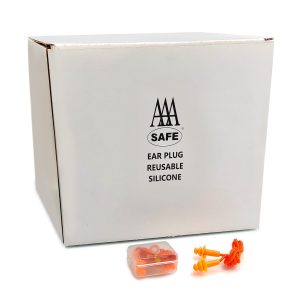
Custom-moulded earplugs are made from an impression of the individual worker’s ear canal. A trained technician takes the impression on-site, and the finished plugs are manufactured from medical-grade silicone or acrylic. The result is a hearing protector shaped to fit one specific person perfectly.
- Why they get overlooked. The upfront cost is higher than disposable foam. A single pair can cost between AED 250 and AED 600 depending on the material and filter options. Many procurement teams reject the idea without calculating the long-term savings.
- Where they solve a real problem. A well-maintained pair lasts three to five years. Compare that to disposable foam at AED 0.50 per pair. For 200 workers over 300 working days, foam plugs cost AED 30,000 per year, or AED 90,000 over three years. Custom moulds eliminate the insertion risk entirely because the plug fits the exact contour of the ear canal.
For workers who spend full shifts in high-noise zones above 90 dB(A), custom-moulded plugs with interchangeable attenuation filters give the best combination of comfort, seal quality, and noise reduction consistency. They are especially valuable for crane operators, piling rig operators, and concrete pump operators.
3. Electronic (Level-Dependent) Earmuffs
Electronic earmuffs contain built-in microphones and speakers. They allow normal conversation and ambient sounds to pass through at safe levels. The moment external noise exceeds a set threshold (typically 82 dB), the electronics compress or cut the sound to protect the wearer’s hearing.
- Why they get overlooked. Price is the first barrier. A quality pair costs between AED 350 and AED 1,200, compared to AED 40 to AED 100 for passive earmuffs. Many safety managers also associate electronic earmuffs with shooting ranges, not construction sites.
- Where they solve a real problem. Communication is one of the biggest unaddressed issues in hearing protection for construction workers. Passive earmuffs and deep-insert earplugs muffle everything, including warning calls from banksmen and supervisors. Electronic earmuffs let workers hear voices and alarms clearly while still blocking harmful impulse noise from hammering, cutting, and demolition.
On UAE sites where multiple languages are spoken, the ability to hear instructions clearly while remaining protected is not a convenience. It directly supports compliance with Dubai Municipality’s Construction Safety Code. Some models also include Bluetooth connectivity for radio calls and two-way communication without removing ear protection.
4. Flat-Attenuation (Musicians' Style) Earplugs for Site Engineers and Supervisors
Flat-attenuation earplugs reduce noise evenly across all frequency bands. Unlike standard foam plugs, which block high frequencies (including speech) more than low frequencies, flat-attenuation plugs lower the overall volume without distorting sound quality.
- Why they get overlooked. The name creates confusion. When a procurement officer sees “musicians’ earplugs” in a catalogue, the immediate reaction is that the product has nothing to do with construction.
- Where they solve a real problem. Site engineers, project managers, and safety officers spend much of their day in moderately noisy areas (80 to 95 dB(A)). They need to hear conversations clearly and pick up on abnormal machine sounds that could signal a failure. Standard foam makes all of this harder by turning clear speech into a muffled rumble. Flat-attenuation plugs with NRR values between 12 and 20 dB give these professionals the noise protection they need without sacrificing sound clarity. Yet they are almost never included in standard PPE kits on UAE construction sites.
5. Helmet-Mounted Earmuff Attachments
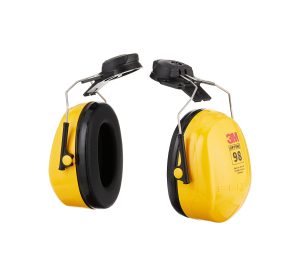
Helmet-mounted earmuffs clip directly onto a hard hat using standardised mounting slots. The earmuff cups flip up when not in use and snap down over the ears when entering a noise zone.
- Why they get overlooked. Many companies purchase hard hats and hearing protectors from separate suppliers without checking compatibility. Standard headband muffs create pressure points under a hard hat, leading workers to push the hat up or loosen the muff. Neither adjustment is safe.
- Where they solve a real problem. Every construction worker in the UAE must wear a hard hat. Headband-style earmuffs compete for the same space as the hat’s suspension system, resulting in a poor fit for one or both. Workers often skip the earmuffs to keep the hard hat secure. Helmet-mounted earmuffs solve this entirely. The flip-up design encourages compliance because workers can raise the muffs for conversation and lower them when re-entering a noise zone.
Typical NRR values range from 22 to 27 dB. For extreme impulse events, combining helmet-mounted muffs with earplugs underneath (dual protection) provides attenuation of 30 to 36 dB, which covers nearly all construction activities including demolition and piling.
Looking for Helmet-Compatible Ear Protection?
AAAsafedubai stocks helmet-mounted earmuff systems that fit all major hard hat brands used on UAE construction sites. Our safety advisors can help you match the right noise protection to your specific hard hat model and exposure levels.
Quick Comparison of the 5 Overlooked Types
| Protection Type | Typical NRR | Best For | UAE Climate Suitability | Approx. Cost (AED) |
|---|---|---|---|---|
| Banded Canal Caps | 17 – 24 dB | Intermittent noise zones | Excellent. Lightweight, no heat buildup | AED 15 – 45 per pair |
| Custom-Moulded Earplugs | 22 – 30 dB | Full-shift, high-noise roles | Excellent. Secure fit, no external bulk | AED 250 – 600 per pair (lasts 3-5 years) |
| Electronic Earmuffs | 22 – 31 dB | Communication-critical roles | Moderate. Battery heat adds warmth | AED 350 – 1,200 per unit |
| Flat-Attenuation Earplugs | 12 – 20 dB | Engineers, inspectors, supervisors | Excellent. Discreet, no external parts | AED 80 – 250 per pair (reusable) |
| Helmet-Mounted Earmuffs | 22 – 27 dB | All hard hat-wearing workers | Good. Flip-up reduces heat during breaks | AED 80 – 300 per set (plus compatible helmet) |
UAE Regulations That Apply to Hearing Safety on Construction Sites
The UAE does not have a single federal occupational noise regulation that applies uniformly across all seven emirates. Instead, hearing protection requirements come from multiple regulatory sources depending on the emirate and the type of project.
Abu Dhabi - OSHAD-SF Code of Practice 3.0 (Occupational Noise)
The OSHAD-SF, administered by the Abu Dhabi Public Health Center (ADPHC), sets the 85 dB(A) eight-hour time-weighted average as the action level. Employers must provide hearing protectors to all workers exposed at or above this threshold. They must also conduct noise monitoring using properly tested equipment and maintain training and audiometric testing records for a minimum of five years.
OSHAD-SF CoP 3.0 requires employers to subtract 7 dB from the manufacturer’s stated NRR before applying it to measured noise levels. This derating accounts for real-world fit losses and makes proper product selection even more important.
Abu Dhabi Public Health Center – Occupational Noise Programme
Dubai - Municipality Construction Safety Code and Circular 613
Dubai Municipality regulates construction noise through its Construction Safety Code and specific circulars. The noise limit for residential areas is 55 dB during daytime hours (7 AM to 8 PM on weekdays). For worker exposure, the same 85 dB(A) threshold applies. Employers must provide appropriate hearing protectors where noise levels exceed safe limits and ensure safety signals remain audible to all workers.
Violations can result in fines, equipment confiscation, or suspension of work permits.
Federal Labour Law - Decree Law No. 33 of 2021
The UAE’s Federal Decree Law No. 33 of 2021 (which replaced Federal Law No. 8 of 1980) establishes the general duty of employers to provide safe working conditions, risk prevention measures, and personal protective equipment. While it does not specify decibel thresholds directly, it requires employers to follow emirate-level regulations and relevant international standards for all workplace hazards, including noise.
How to Choose the Right Hearing Protection for Construction Workers
Selecting hearing protection for construction workers should not be a one-size-fits-all decision. Different roles, noise profiles, and work patterns demand different products.
- Step 1 – Conduct a Noise Assessment. Measure actual noise levels at your site. Use a sound level meter or personal dosimeters to identify which areas and tasks exceed 85 dB(A). Map the noise zones and note the duration of exposure for each worker category.
- Step 2 – Match Protection to the Noise Level. Apply the OSHAD-SF derating formula. Subtract 7 dB from the NRR, then subtract the result from the measured noise level. The final number should fall below 85 dB(A). If a single product cannot achieve this, consider dual protection.
- Step 3 – Account for the Work Environment. In UAE summer conditions, in-ear options (canal caps, custom moulds, flat-attenuation plugs) are far more comfortable than over-the-ear earmuffs. If the role requires constant verbal communication, electronic earmuffs or flat-attenuation plugs are better choices. For hard hat wearers (every construction worker in the UAE), helmet-mounted earmuffs prevent the fit conflict that headband muffs create.
- Step 4 – Train Workers on Proper Use. Every type of ear protection requires specific training. Foam earplugs need the roll-and-insert technique with clean hands. Canal caps must be positioned at the canal entrance. Custom moulds need daily inspection for cracks. Electronic earmuffs require battery checks. Helmet-mounted muffs need regular inspection of the mounting arms and ear cup seals. Training should happen within 30 days of a worker’s first noise exposure, consistent with OSHAD-SF requirements.
- Step 5 – Document Everything. UAE regulations require records of noise assessments, PPE distribution, training sessions, and audiometric testing. Keep these records for at least five years and ensure they are available for inspection by Dubai Municipality, Abu Dhabi Public Health Center, or the Ministry of Human Resources and Emiratisation.
Common Mistakes UAE Construction Companies Make with Noise Protection
Even companies that take hearing safety seriously often fall into recurring traps.
- Using the same product for every worker. A demolition labourer and a project manager face very different noise profiles. A proper hearing conservation programme assigns different ear protection based on each worker’s specific noise exposure.
- Ignoring the NRR derating. The OSHAD-SF 7 dB derating is not optional. It is a regulatory requirement in Abu Dhabi. Taking the NRR on the packaging at face value overestimates the protection workers actually receive.
- Not replacing worn-out protection. UAE’s extreme heat, dust, and humidity degrade ear protection faster than temperate climates. Foam earplugs should never be reused. Reusable plugs and earmuff cushions should be inspected weekly and replaced at the first sign of hardening or cracking.
- Skipping audiometric testing. Audiometric testing is the only way to detect hearing loss early. Both OSHAD-SF and international standards require baseline and annual audiograms for workers exposed to 85 dB(A) or above. Without testing, a company has no way to know whether its programme is working. Tinnitus and gradual hearing loss often go unnoticed until the damage is severe.
- Forgetting about non-continuous noise. Impact noise from nail guns, power-actuated tools, and steel-on-steel contact can cause immediate hearing damage in a single event, even if the average noise level stays below 85 dB(A). Noise protection on construction sites must account for peak noise events, not just time-weighted averages.
Build a Complete Hearing Conservation Programme with aaasafedubai.com
From product selection to compliance documentation, AAASAFEDUBAI.COM helps UAE construction companies build noise protection programmes that meet OSHAD-SF, Dubai Municipality, and Federal Labour Law requirements. We supply construction-grade ear protection across all project types and noise levels.
Noise Levels of Common UAE Construction Equipment
Understanding the noise output of equipment on your site helps you select the right ear protection for each zone.
| Equipment / Activity | Typical Noise Level dB(A) | Recommended Protection |
|---|---|---|
| Concrete mixer truck | 75 – 85 | Canal caps or flat-attenuation plugs |
| Pneumatic drill / breaker | 100 – 110 | Custom moulds or dual protection |
| Circular saw | 100 – 108 | Electronic earmuffs or helmet-mounted muffs |
| Pile driving rig | 95 – 115 | Dual protection (plugs + muffs) |
| Tower crane cabin | 80 – 90 | Flat-attenuation plugs or electronic muffs |
| Angle grinder | 95 – 105 | Helmet-mounted earmuffs or custom moulds |
| Concrete pump | 85 – 95 | Canal caps or standard foam plugs |
| Nail gun (impulse) | 100 – 120 peak | Dual protection or electronic muffs |
Frequently Asked Questions
The action level is 85 dB(A) as an eight-hour time-weighted average, consistent with OSHAD-SF Code of Practice 3.0 for Abu Dhabi and Dubai Municipality’s Construction Safety Code. Above this level, employers must provide hearing protectors, conduct noise monitoring, and implement a hearing conservation programme.
Yes. Electronic earmuffs that carry CE marking (EN 352 standard) or meet ANSI S3.19 / ANSI S12.6 standards are accepted on UAE construction sites. They must be worn per the manufacturer’s instructions and included in the site’s PPE management plan.
Due to extreme heat, dust, and humidity, ear protection degrades faster in the UAE than in temperate regions. Disposable foam earplugs should be replaced daily. Reusable cushions and earmuff pads should be inspected weekly and replaced at the first sign of hardening, cracking, or loss of seal. Industry guidance suggests replacing reusable components 25% to 30% more frequently than the manufacturer’s recommendation in Gulf conditions.
No. Consumer earbuds and noise-cancelling headphones are not rated for occupational noise exposure. They do not carry an NRR or SNR rating and are not manufactured to EN 352 or ANSI standards. Using consumer audio products as a substitute for rated noise protection on construction sites is a compliance violation under both OSHAD-SF and Dubai Municipality regulations.
Dual protection means wearing earplugs underneath earmuffs at the same time. It is recommended when noise levels exceed 100 dB(A) or when a single hearing protector cannot reduce exposure below 85 dB(A) after applying the 7 dB NRR derating. Dual protection is common for pile driving, demolition, and work near pneumatic breakers on UAE construction sites.
Yes. AAASAFEDUBAI.COM carries banded canal caps, custom-moulded earplugs, electronic earmuffs, flat-attenuation earplugs, and helmet-mounted earmuff systems from leading safety manufacturers. The team can assist with product selection based on your site’s noise assessment data and regulatory requirements.
Under OSHAD-SF in Abu Dhabi, employers must provide baseline and annual audiometric testing for all workers exposed to noise at or above 85 dB(A). While Dubai does not have an identical standalone requirement, the Dubai Municipality Construction Safety Code and Federal Labour Law place a general duty on employers to monitor worker health and prevent occupational injury, which includes hearing damage.
Closing Thoughts
Hearing protection for construction workers is one of those safety topics that appears simple but hides real complexity. Canal caps, custom-moulded earplugs, electronic earmuffs, flat-attenuation plugs, and helmet-mounted earmuffs are not exotic or hard to source. They are available, practical, and built to solve the exact problems that standard foam and passive muffs cannot handle.
The UAE construction industry operates in conditions that make hearing conservation harder than most markets. But those same conditions make proper ear protection more important, not less. Noise-induced hearing loss is permanent. Once it happens, no amount of PPE procurement will undo the damage.
If your current programme starts and ends with a box of disposable foam earplugs, evaluate whether these five overlooked options could close gaps on your site. The investment is small compared to the cost of hearing loss claims, regulatory penalties, and the lifelong impact on workers who trusted their employer to keep them safe.
Disclaimer
The information provided in this article is intended for general educational purposes only and should not be treated as a substitute for professional safety consultation, legal advice, or medical guidance. While every effort has been made to ensure accuracy, workplace safety regulations in the UAE are subject to change, and requirements may differ between emirates, free zones, and specific project authorities. Readers are encouraged to verify all regulatory information with the relevant government bodies, including the Abu Dhabi Public Health Center (ADPHC), Dubai Municipality, and the UAE Ministry of Human Resources and Emiratisation. Product specifications, pricing, and NRR values referenced in this article are approximate and may vary by manufacturer, model, and supplier. AAASAFEDUBAI.COM does not guarantee specific safety outcomes and recommends that all hearing protection selections be made in consultation with a qualified occupational health and safety professional. Individual results may vary based on proper fitting, maintenance, and worker compliance. Always refer to manufacturer instructions and current UAE regulations for definitive guidance.