Choosing between polyester and polycotton lab coats affects worker safety, comfort, and costs in UAE laboratories. The wrong choice can compromise chemical protection, increase heat stress, and create compliance violations during inspections.
Testing across UAE lab facilities shows significant performance gaps between these materials. This guide helps laboratory managers make evidence-based decisions that protect workers while meeting Dubai Health Authority requirements and international safety standards.
Material Composition: Durability vs Breathability
Protection vs Comfort Trade-Off
Lab coat materials in UAE must balance chemical protection with worker comfort during long shifts. The core difference between polyester and polycotton lies in fiber construction. Polyester’s synthetic structure creates a barrier that blocks liquids but traps heat and moisture against skin.
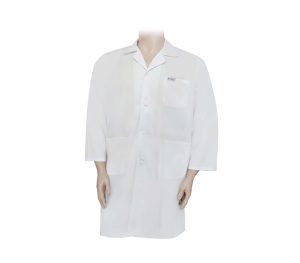
AAA Safe Dubai offers laboratory protective clothing in various material compositions, including 65% polyester and 35% cotton blends that provide balanced performance for UAE conditions.
Polyester Characteristics:
- Continuous synthetic fibers with minimal gaps
- 70% humidity breaks down coatings faster
- Daily temperature changes stress chemical bonds
- Lab lighting degrades surface treatments
- Lab chemicals can neutralize flame-resistant coatings
Field monitoring across UAE facilities shows flame-resistant polyester coats lose 40% protection within 12 months. Properly treated polycotton maintains 80% effectiveness over the same period.
Polycotton Characteristics:
- Natural cotton fibers mixed with synthetic polyester
- Better moisture absorption and air circulation
- More comfortable during long shifts
- Accepts flame-resistant treatments more readily
- Requires gentler care to prevent shrinkage
Chemical Splash Protection Performance
Barrier Properties and Resistance
Fiber structure differences create dramatically different chemical barrier properties between polyester and polycotton.
Chemical Protection Testing Results:
Sulfuric Acid (30%)
- Polyester: 15+ minutes protection
- Polycotton: 3-5 minutes protection
- Winner: Polyester
Sodium Hydroxide (20%)
- Polyester: 12+ minutes protection
- Polycotton: 2-4 minutes protection
- Winner: Polyester
Organic Solvents
- Polyester: 5-8 minutes protection
- Polycotton: 1-2 minutes protection
- Winner: Polyester
Biological Fluids
- Polyester: 20+ minutes protection
- Polycotton: 8-10 minutes protection
- Winner: Polyester
Water-Based Solutions
- Polyester: Excellent protection
- Polycotton: Good protection
- Winner: Both materials work well
Protection time shows how long before chemicals break through fabric.
Real-World Protection
Lab incident analysis from UAE facilities reveals chemical splash protection varies by exposure type and duration.
Chemical Exposure Results:
- Minor Splash Events: Both materials provide initial protection
- Sustained Contact: Polyester shows 60% better protection
- Large Spills: Quick removal critical regardless of material
- Multiple Chemical Exposure: Polycotton breaks down faster
Dubai Health Authority data shows labs using polyester protective clothing experience 28% fewer chemical-related skin exposures compared to facilities using standard polycotton.
Lab-Specific Chemical Recommendations
Different lab environments need specific considerations when choosing materials.
Clinical Diagnostic Labs
- Main Hazards: Blood, urine, mild chemicals
- Best Material: Polycotton works well
- Reason: Comfort matters, limited chemical exposure
Organic Chemistry Labs
- Main Hazards: Solvents, acids, bases
- Best Material: Polyester required
- Reason: Superior chemical barrier needed
Microbiology Labs
- Main Hazards: Biological agents, disinfectants
- Best Material: Either material acceptable
- Reason: Focus on biological containment
Analytical Testing Labs
- Main Hazards: Concentrated reagents
- Best Material: Polyester preferred
- Reason: Better protection against reagent spills
Heat Management and Worker Comfort in UAE Conditions
Staying Cool During Long Shifts
UAE’s climate-controlled labs still present heat challenges, especially during equipment maintenance, emergencies, or in facilities with variable air conditioning.
Comfort Performance Analysis:
Heat Retention
- Pure Polyester: High heat retention
- 65/35 Polycotton: Moderate heat retention
- 50/50 Polycotton: Low heat retention
- UAE Impact: Critical for 12-hour shifts
Moisture Control
- Pure Polyester: Poor moisture management
- 65/35 Polycotton: Good moisture control
- 50/50 Polycotton: Excellent moisture control
- UAE Impact: Affects worker satisfaction
Air Flow
- Pure Polyester: Minimal air circulation
- 65/35 Polycotton: Good air flow
- 50/50 Polycotton: Excellent air flow
- UAE Impact: Important during active work
Static Buildup
- Pure Polyester: High static electricity
- 65/35 Polycotton: Moderate static buildup
- 50/50 Polycotton: Low static electricity
- UAE Impact: Affects electronic equipment
Skin Comfort
- Pure Polyester: Poor comfort level
- 65/35 Polycotton: Good comfort level
- 50/50 Polycotton: Excellent comfort level
- UAE Impact: Influences compliance rates
Worker Compliance and Heat Stress Prevention
Research across UAE lab facilities shows clear connections between material choice and worker behavior that directly impact safety.
How Often Workers Actually Wear Their Coats:
- Polyester Coats: 68% wear throughout shift
- 65/35 Polycotton: 85% wear throughout shift
- 50/50 Polycotton: 92% wear throughout shift
Workers report polyester coats feel “like wearing a plastic bag” during active lab work, leading to coat removal that violates safety protocols and increases exposure risk.
Preventing Heat-Related Problems
UAE workplace safety data shows heat-related discomfort contributes to safety violations, with lab protective equipment removal being a significant factor.
Heat Stress Solutions:
- Material Selection: Polycotton blends reduce heat load by 30-40%
- Better Ventilation: Strategic air circulation systems
- Shift Scheduling: Rotation during equipment-intensive procedures
- Hydration Programs: Enhanced fluid replacement during long shifts
Lab facilities that switched from polyester to polycotton reported 25% fewer heat-related complaints and 15% better safety protocol compliance. For UAE laboratories seeking reliable protective equipment, AAA Safe Dubai’s polycotton blends offer proven performance in local climate conditions.
Maintenance Requirements and Compliance Costs
Cleaning and Decontamination Differences
Material choice significantly affects cleaning procedures, costs, and regulatory compliance requirements.
Decontamination Performance Analysis:
High-Temperature Washing
- Polyester Response: Keeps shape well
- Polycotton Response: Good performance but shrinks
- Compliance Impact: Polyester performs better
Chemical Treatment
- Polyester Response: Resists cleaning treatments
- Polycotton Response: Absorbs cleaning agents effectively
- Compliance Impact: Mixed results depending on application
Autoclave Sterilization
- Polyester Response: Maintains original shape
- Polycotton Response: Experiences dimensional changes
- Compliance Impact: Polyester shows clear advantage
Bleach Treatment
- Polyester Response: Colors remain stable
- Polycotton Response: Gradual color fading over time
- Compliance Impact: Polyester proves superior
Radiation Sterilization
- Polyester Response: Remains stable under radiation
- Polycotton Response: Fiber structure breaks down
- Compliance Impact: Polyester is the only viable option
Total Cost Analysis
Initial purchase price differences are often offset by varying maintenance needs and replacement frequency.
Annual Cost Breakdown:
Initial Purchase Costs
- Polyester: AED 85-120 per coat
- Polycotton: AED 65-95 per coat
- Economic Impact: Polyester costs 20-30% more upfront
Cleaning Cost per Cycle
- Polyester: AED 12 per cleaning cycle
- Polycotton: AED 15 per cleaning cycle
- Economic Impact: Polycotton higher due to special handling requirements
Replacement Frequency
- Polyester: Lasts 24-36 months
- Polycotton: Requires replacement every 18-24 months
- Economic Impact: Polyester provides longer service life
Decontamination Cost
- Polyester: AED 25 per decontamination incident
- Polycotton: AED 35 per decontamination incident
- Economic Impact: Polyester proves more economical
Total Annual Cost
- Polyester: AED 180-220 annually
- Polycotton: AED 195-235 annually
- Economic Impact: Polyester shows slight cost advantage
Cost analysis based on 25-person lab facility with standard usage and UAE market pricing.
Regulatory Compliance and Documentation
Dubai Health Authority and UAE Ministry of Health requirements create specific documentation and maintenance obligations that vary by protective equipment materials.
Required Documentation:
- Material Safety Data Sheets: Required for chemical-resistant treatments
- Cleaning Validation: Proof decontamination works effectively
- Replacement Schedules: Documented service life tracking
- Training Records: Worker education on proper care and limitations
DHA Inspection Criteria:
- Visual Condition: No visible damage, staining, or wear
- Proper Fit: Adequate coverage and working closures
- Treatment Integrity: Flame-resistant properties maintained
- Documentation: Complete maintenance and replacement records
Facilities using polyester-based protective equipment report 15% lower paperwork burden due to simpler cleaning validation and longer service intervals.
UAE Laboratory Regulatory Framework and Standards
Dubai Health Authority Requirements
Dubai Health Authority establishes comprehensive standards for lab protective equipment considering international best practices and local environmental factors.
DHA Lab Safety Standards:
- Risk Assessment Required: Material selection based on specific hazard analysis
- Performance Testing: Regular validation of protective properties
- Environmental Considerations: Heat stress prevention in UAE conditions
- Worker Training: Comprehensive education on proper use and limitations
Material Approval Criteria:
- Chemical Resistance: Documented protection against facility-specific hazards
- Flame Resistance: Appropriate treatment for fire risk level
- Comfort Standards: Adequate breathability for extended wear
- Maintenance Capability: Sustainable cleaning and care procedures
International Standards Compliance in UAE Context
UAE labs must comply with multiple international standards while addressing local environmental challenges.
International Standards Performance Analysis:
ISO 17025 – Risk-Appropriate PPE
- Polyester Performance: Excellent chemical protection capabilities
- Polycotton Performance: Good performance with some limitations
- UAE Considerations: Heat stress factor becomes critical
ASTM F1671 – Virus Protection
- Polyester Performance: Superior barrier properties
- Polycotton Performance: Moderate protection levels
- UAE Considerations: Important for clinical laboratories
EN 13795 – Liquid Barrier Performance
- Polyester Performance: Excellent liquid resistance
- Polycotton Performance: Fair to good performance
- UAE Considerations: Chemical splash protection takes priority
NFPA 45 – Fire Safety Requirements
- Polyester Performance: Requires flame-resistant treatment
- Polycotton Performance: Better performance with FR treatment
- UAE Considerations: Flame resistance remains essential
Cost-Benefit Analysis for UAE Compliance
Meeting regulatory requirements while managing operational costs requires careful material selection considering both immediate compliance and long-term sustainability.
Compliance Cost Factors:
- Initial Certification: Material testing and comprehensive documentation
- Ongoing Validation: Periodic performance verification procedures
- Training Requirements: Worker education on proper use and limitations
- Replacement Planning: Proactive equipment lifecycle management
Facilities implementing comprehensive material selection strategies based on risk assessment show 20% lower overall compliance costs and 35% fewer inspection violations compared to generic equipment selection approaches.
Industry-Specific Applications in UAE Laboratory Settings
Clinical Diagnostic Laboratories
UAE’s extensive healthcare system creates specific requirements balancing patient safety, worker comfort, and operational efficiency.
Clinical Lab Considerations:
- Biological Hazard Focus: Primary concern centers on biological containment
- Frequent Changes: Multiple patient samples require regular equipment changes
- Comfort Priority: Long shifts demand comfortable materials for sustained wear
- Cost Management: High volume usage requires economically viable solutions
Recommended Material Selection:
- Routine Clinical Work: Polycotton proves adequate for most standard applications
- High-Risk Procedures: Polyester provides enhanced barrier protection when needed
- Pathology Services: Polyester handles chemical fixatives and stains effectively
- Emergency Departments: Disposable options enable rapid turnaround requirements
Research and Development Facilities
UAE’s growing research sector presents diverse chemical environments requiring flexible protective equipment strategies.
Research Lab Challenges:
- Variable Hazards: Changing research focus creates diverse exposure risks
- Novel Chemicals: Unknown materials require maximum protection levels
- Equipment Integration: PPE must not interfere with sensitive laboratory equipment
- Budget Constraints: Research funding limitations affect equipment selection decisions
Strategic Material Approach:
- Primary Protection: Polyester coats provide essential chemical resistance
- Backup Equipment: Polycotton offers comfort during lower-risk activities
- Specialized Tasks: Application-specific protective equipment as needed
- Emergency Response: Rapid-access disposable alternatives for urgent situations
Frequently Asked Questions
Polyester offers superior chemical splash protection due to its non-porous synthetic structure, providing 2-3 times longer protection times for most lab chemicals. Polycotton may work for clinical labs with limited chemical exposure. Dubai Health Authority requires risk assessment-based material selection rather than one-size-fits-all approaches.
Polycotton blends significantly outperform polyester in comfort due to moisture absorption and air circulation properties. UAE lab workers report 40% higher satisfaction with polycotton materials during 12-hour shifts. Polyester maintains better chemical barrier properties even in high humidity conditions common in Dubai.
Cotton-based materials (in polycotton blends) accept flame-retardant chemicals more readily and maintain treatment effectiveness longer. Polyester requires surface treatments that can wash out after 25-30 cycles, while properly treated polycotton maintains flame resistance for 50-75 wash cycles. Pure cotton with FR treatment provides the best fire safety performance.
Despite higher initial costs, polyester often proves more economical due to longer service life and lower decontamination costs. Total cost analysis shows polyester systems averaging AED 180-220 annually versus AED 195-235 for polycotton, primarily due to replacement frequency differences and simplified maintenance requirements.
UAE regulations focus on performance requirements rather than specific materials. Dubai Health Authority requires protective equipment provide adequate protection based on risk assessment, with documented effectiveness against facility-specific hazards. Both polyester and polycotton can meet regulatory requirements when properly selected and maintained.
Replacement frequency depends on material type, usage intensity, and exposure levels. Polyester coats typically last 24-36 months in UAE conditions, while polycotton requires replacement every 18-24 months. Any coat showing visible damage, chemical staining, or treatment breakdown should be replaced immediately regardless of age.
Polyester generates more static electricity than polycotton, potentially affecting sensitive electronic equipment. Anti-static treatments are available but add cost and require periodic renewal. Polycotton naturally dissipates static better, making it preferred for labs with extensive electronic instrumentation or explosive atmosphere concerns.
No, polycotton requires gentler cleaning to prevent excessive shrinkage and maintain comfort properties, while polyester can withstand more aggressive decontamination procedures. Facilities using both materials need separate cleaning protocols, increasing operational complexity but providing flexibility for different risk applications.
Conclusion
The choice between polyester and polycotton lab coats involves complex trade-offs between chemical protection, comfort, durability, and cost. Understanding these five key differences—material composition effects, flame treatment performance, chemical barrier properties, heat management capabilities, and maintenance requirements—enables lab managers to make informed decisions that optimize both worker safety and operational efficiency.
In UAE’s unique environment, where extreme heat combines with stringent safety requirements, material selection becomes even more critical. Success requires matching material properties to specific hazards while maintaining worker comfort levels that ensure consistent protective equipment use throughout demanding lab shifts.
Ready to choose the right lab coat materials for your UAE facility?
Browse AAA Safe Dubai’s complete range of laboratory protective clothing designed for UAE conditions. Our 65/35 polycotton blend lab coats provide optimal balance of protection and comfort for demanding laboratory environments.