A needlestick injury takes less than a second and can expose a healthcare worker to bloodborne pathogens that take months to fully rule out through follow-up testing. Sharps injuries remain one of the most common occupational injuries in healthcare settings worldwide, and the vast majority are preventable through consistent handling protocol, the right disposal equipment placed where it is actually needed, and training that gets reinforced rather than delivered once during induction and forgotten.
UAE healthcare facilities range from large tertiary hospitals with dedicated infection control teams to small clinics and diagnostic laboratories where the same protocols need to be followed with far fewer dedicated resources. Sharps safety guidance needs to work realistically across that entire range, not just the best-resourced end of it.
How Most Sharps Injuries Actually Happen
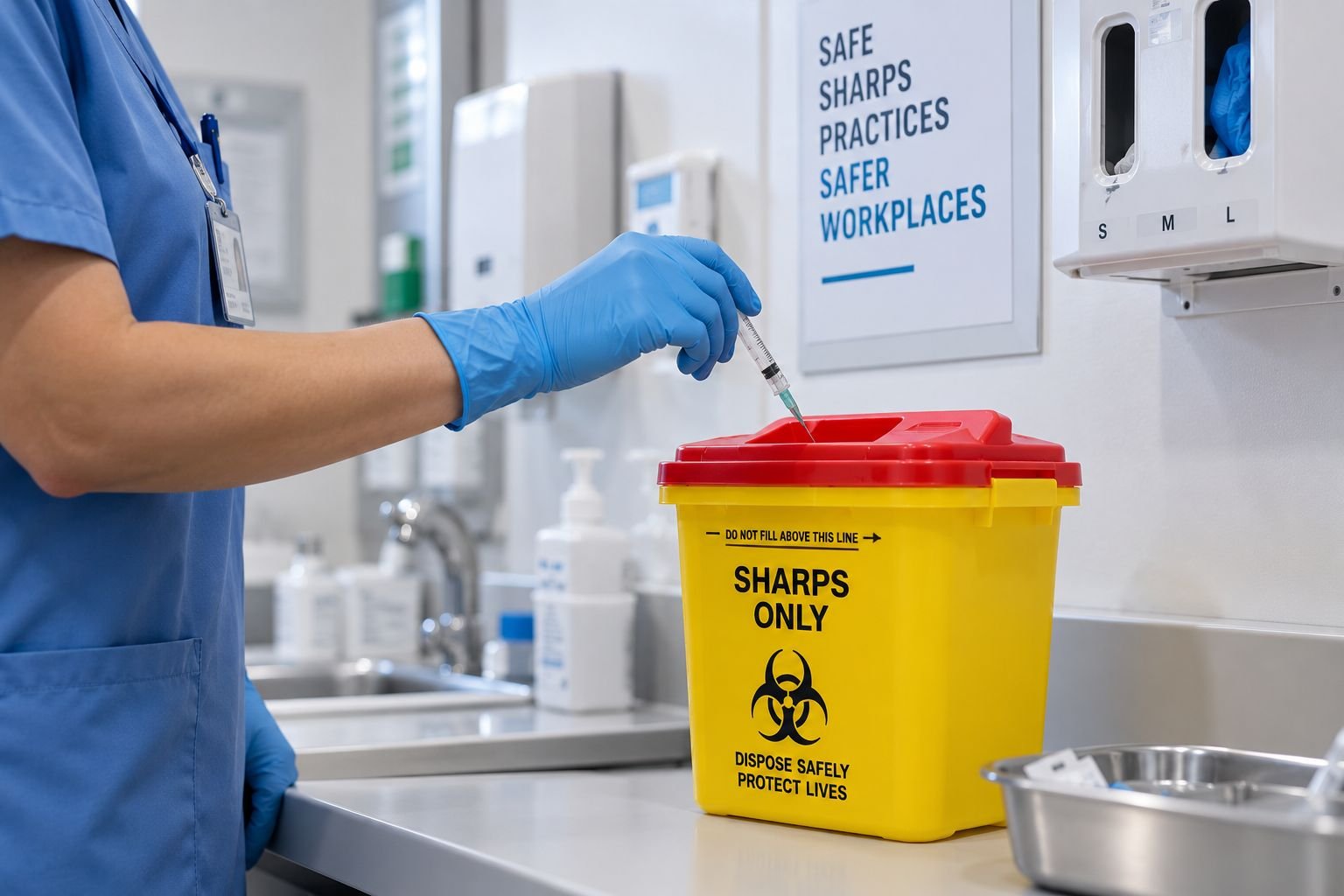
Sharps injuries cluster around a small number of recurring situations rather than happening randomly. Recapping a used needle by hand is one of the most common causes and should be eliminated as a practice entirely, since it requires the worker to guide a sharp point back toward their own hand. Passing a sharp instrument hand to hand during a procedure, rather than using a neutral zone on a tray, is another frequent cause. Overfilled sharps containers, where a worker pushes an item into a container that is already past its fill line, account for a disproportionate share of injuries relative to how briefly that action takes.
Engineering Controls That Reduce Risk
Safety-Engineered Devices
Needles and sharps with a built-in safety mechanism, such as a retractable needle or a shielding sleeve that activates after use, substantially reduce the chance of an accidental injury compared to conventional devices. Where budget allows, prioritising safety-engineered devices for higher-risk procedures such as venepuncture and injections has a measurable impact on injury rates.
Sharps Disposal Placement
A sharps container that is not within arm’s reach of the point of use gets misused, because a worker holding a used sharp will look for the nearest available option rather than walk across the room. Container placement should be assessed at every point of use, not just centrally in each room.
Personal Protective Equipment for Sharps Handling
Gloves
Standard disposable latex or nitrile gloves provide a barrier against blood and body fluid contact but are not puncture resistant and do not prevent a needlestick injury itself. Their role is contamination control, not sharps injury prevention, and this distinction should be clear in training so gloves are not mistaken for a sharps safety control.
Eye and Face Protection
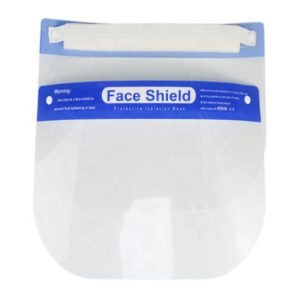
Procedures with splash risk, such as drawing blood or handling body fluids in a laboratory, warrant a face shield in addition to gloves, protecting against mucous membrane exposure that gloves alone do not address.
Coveralls and Gowning
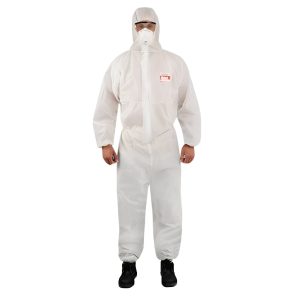
For higher-risk procedures or outbreak response situations, a disposable coverall paired with disposable shoe covers reduces the chance of contamination transfer beyond the immediate work area, which matters for both worker safety and facility infection control.
What to Do Immediately After a Sharps Injury
A clear, rehearsed response protocol reduces both the medical risk and the anxiety that follows a needlestick injury. The wound should be washed immediately with soap and water, without scrubbing aggressively or applying pressure to force bleeding, since neither action has been shown to reduce infection risk and both can cause additional tissue damage. The injury should be reported to a supervisor and occupational health immediately, not at the end of a shift, because post-exposure prophylaxis for bloodborne pathogens is most effective when started as soon as possible after exposure. The source patient, where known, should be assessed for bloodborne pathogen status following the facility’s clinical protocol.
Training That Actually Changes Behaviour
One-time induction training on sharps safety tends to fade in practice once a worker becomes comfortable with routine procedures. Facilities that maintain lower sharps injury rates tend to combine initial training with periodic refreshers, visible reminders at the point of use, and a genuinely non-punitive reporting culture, since workers who fear blame for an injury are less likely to report it, which then prevents the facility from identifying and fixing the underlying cause.
UAE Regulatory Context
Healthcare facility licensing and infection control standards in the UAE are overseen by the health regulatory authority relevant to each emirate, including the Dubai Health Authority, the Department of Health Abu Dhabi, and the Ministry of Health and Prevention for facilities in the northern emirates, alongside MOHRE’s general occupational safety and health obligations that apply to all UAE employers. These bodies require infection control protocols, including sharps management, as part of facility licensing and periodic inspection, though specific numeric injury reporting thresholds vary by facility type and should be confirmed directly with the relevant authority for your facility category.
AAA Safe Dubai supplies gloves, face protection, and disposable coveralls suited to healthcare and laboratory settings. Contact our technical team for guidance on PPE selection for your specific clinical environment.
Frequently Asked Questions
No. Recapping by hand should be eliminated as a practice, since it is one of the leading causes of needlestick injury. If a needle absolutely must be recapped for a specific clinical reason, a one-handed scoop technique using a device designed for this purpose should be used instead.
Sharps containers should be replaced well before reaching full capacity, typically at the fill line marked on the container, usually around three quarters full. Forcing additional items into an overfilled container is a common cause of injury.
Wash the wound with soap and water without aggressive scrubbing, report the injury to a supervisor and occupational health immediately, and follow the facility’s post-exposure protocol without delay, since timing affects the effectiveness of any prophylactic treatment.
No. Gloves reduce contamination from blood and body fluid contact but do not stop a needle from penetrating the glove and skin. Sharps injury prevention relies on safe handling practice and engineered safety devices, not gloves alone.
The underlying infection control and sharps management principles apply across facility types, though how they are implemented may scale with facility size and resources. Specific licensing requirements should be confirmed with the relevant health authority for the facility’s emirate and category.
Disclaimer
This article provides general information on sharps safety practices and does not replace facility-specific infection control protocols or clinical guidance. For authoritative healthcare facility requirements, refer to the Ministry of Health and Prevention and the relevant emirate health authority. Always follow your facility’s post-exposure protocol and consult occupational health immediately following any sharps injury.