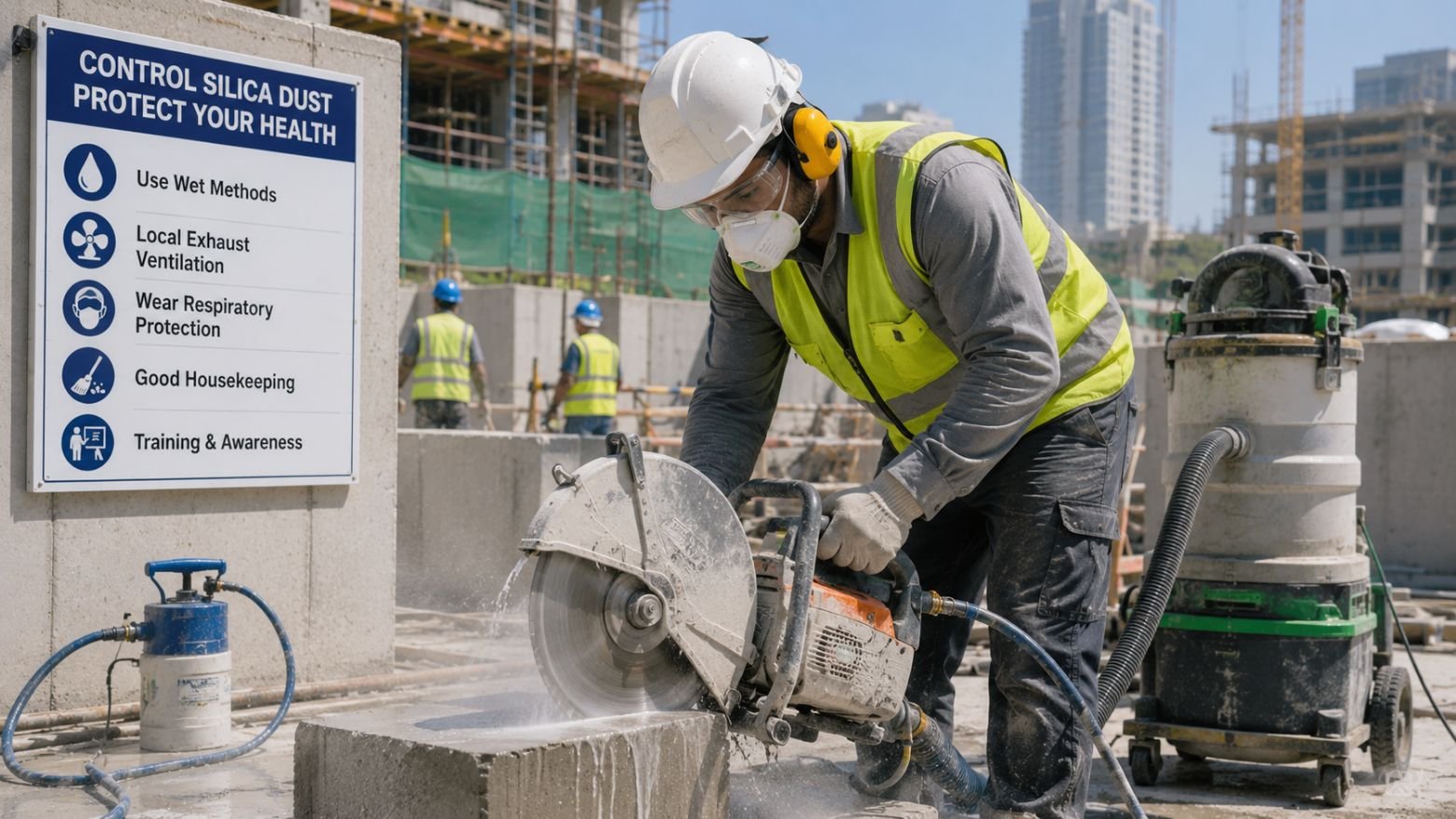
Cutting, grinding, and drilling concrete, block, and stone are routine activities on almost every UAE construction site, and every one of them can release respirable crystalline silica, dust particles small enough to bypass the body’s natural filtering and lodge deep in the lungs. Long-term exposure causes silicosis, an irreversible lung disease, and is also linked to lung cancer and kidney disease. None of this is new information to most site HSE teams. What varies widely is how consistently control measures are actually applied task by task.
What Generates Silica Dust on a Construction Site
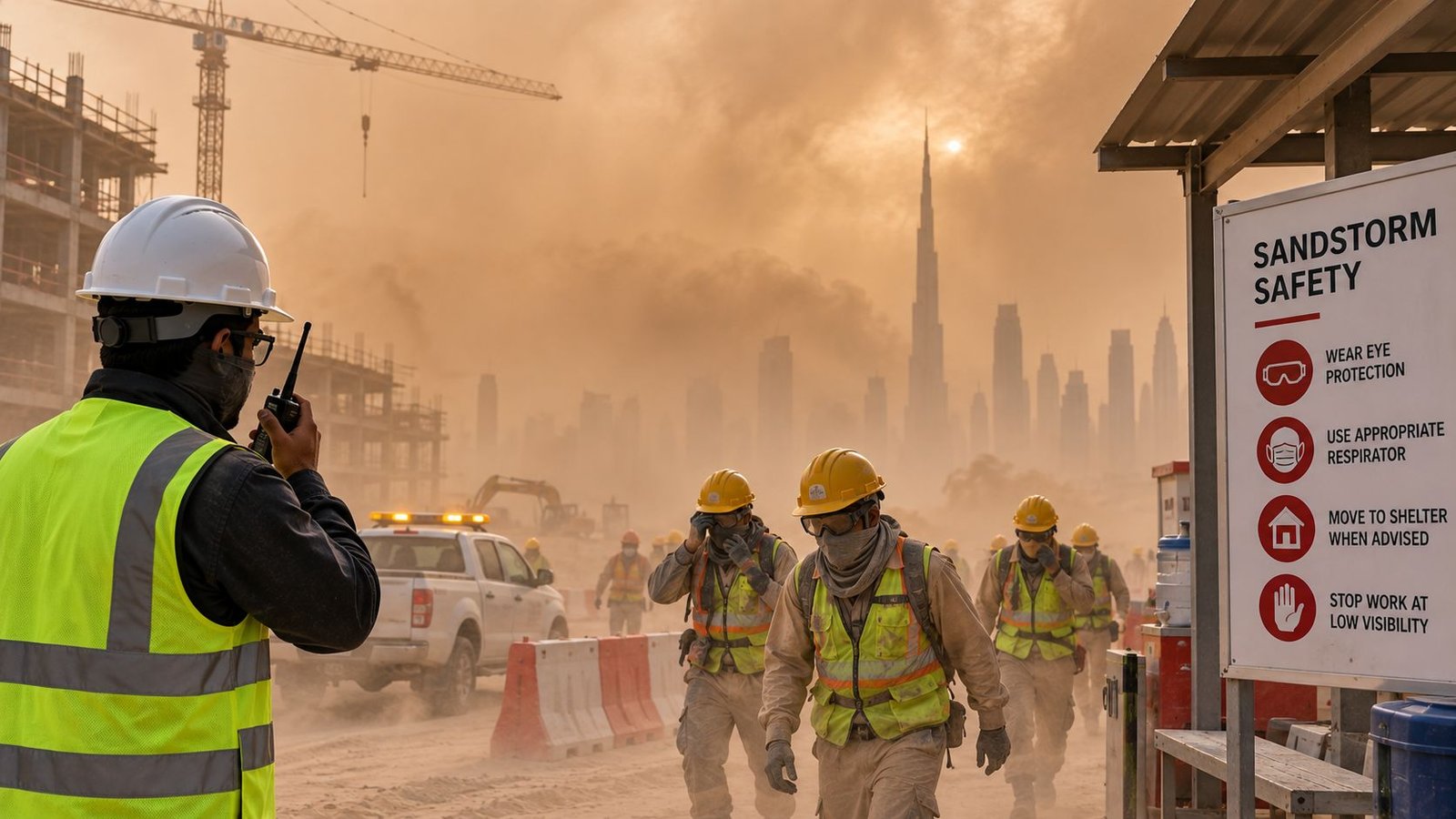
Silica dust is released whenever silica-containing material such as concrete, mortar, brick, block, tile, or natural stone is cut, ground, drilled, or crushed. Dry cutting produces the highest concentrations because there is nothing suppressing the fine particulate as it becomes airborne. Tasks that generate the most concern include dry cutting of concrete or masonry with an angle grinder, jackhammering, and drilling into concrete or stone without dust extraction fitted to the tool.
Engineering Controls Come Before PPE
The correct order of control is to eliminate or reduce dust generation at the source first, and treat respiratory protection as the last line of defence rather than the primary control. This sequence matters because respirators depend entirely on correct fit and consistent use, while engineering controls work continuously without relying on individual worker behaviour.
Wet Cutting and Wet Suppression
Adding water at the point of cutting is one of the most effective and lowest cost controls available, since it binds dust particles before they become airborne rather than trying to capture them afterward. Most cutting tools used on UAE sites can be fitted with a water feed attachment, and this should be treated as standard practice for any dry material cutting task rather than an optional extra.
On-Tool Dust Extraction
Where wet cutting is not practical, a shroud attached to the cutting or grinding tool connected to a HEPA-filtered vacuum extraction system captures dust close to the source. This is particularly relevant for indoor cutting tasks where water use is impractical.
General Site Ventilation
For enclosed or partially enclosed work areas, a portable industrial blower fan helps clear residual dust from the general work area after cutting tasks are complete, reducing the concentration that remains airborne for workers moving through the space afterward.
Respiratory Protection Selection
When engineering controls cannot fully eliminate exposure, the respirator selected needs to match the task’s dust concentration and duration, not simply be whatever is available on site that day.
Disposable Filtering Facepiece Respirators
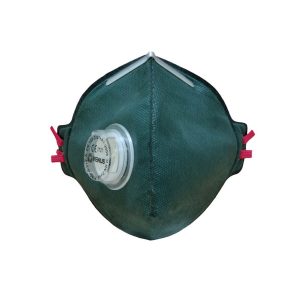
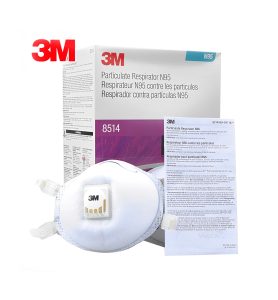
For lower exposure tasks, an FFP3-rated disposable respirator or an N95-rated particulate respirator provides filtration suited to fine particulate, provided the mask is correctly fitted against the face with no gaps around the seal.
Half and Full Facepiece Reusable Respirators
For higher exposure tasks such as sustained dry cutting or confined space work, a half facepiece reusable respirator fitted with P100-rated particulate filters offers a higher assigned protection factor and a more reliable seal than disposable masks, particularly for workers who wear the respirator for extended periods across a shift.
Fit Testing Matters More Than Filter Rating
A respirator with the correct filter rating still fails to protect the wearer if it does not seal against the face. Facial hair, an incorrect size, or a damaged seal all reduce effective protection regardless of the filter class fitted. Fit testing before first use, and periodically afterward, should be standard practice on any UAE site with sustained silica exposure tasks.
Exposure Benchmarks Used by UAE Sites
A separate UAE-specific numeric exposure limit for respirable crystalline silica is not published in a single accessible standard, which means most UAE contractors and their HSE consultants benchmark against internationally recognised limits when setting internal control thresholds. A commonly referenced figure is the OSHA permissible exposure limit of 50 micrograms per cubic metre as an eight hour time weighted average, with an action level of 25 micrograms per cubic metre that triggers additional monitoring and controls. Using an internationally recognised benchmark inside a documented risk assessment is standard practice where a specific local numeric limit has not been separately published.
Housekeeping and Site Practices
Dry Sweeping Should Be Avoided
Sweeping dry silica dust with a standard broom simply redistributes fine particulate back into the air rather than removing it. Wet sweeping or HEPA-filtered vacuum cleanup should replace dry sweeping wherever silica dust has settled on surfaces.
Segregating Dust-Generating Tasks
Where possible, cutting and grinding tasks should be scheduled or located away from other workers not directly involved in the task, reducing incidental exposure for the wider site team.
Worker Training and Awareness
Workers performing cutting, drilling, or grinding tasks need to understand why wet suppression and extraction are used, not just follow the instruction without context, since a worker who understands the hazard is more likely to maintain the control consistently rather than skip it under time pressure. Training should cover correct respirator fit checking, recognising when a filter needs replacement, and reporting damaged extraction equipment rather than continuing to work without it.
AAA Safe Dubai supplies respiratory protective equipment and site ventilation solutions suited to construction dust control. Contact our technical team for guidance on matching respirator class to your specific cutting and drilling tasks.
Frequently Asked Questions
Dry cutting produces the highest concentrations, but any process that generates fine particulate from silica-containing material, including some grinding and drilling tasks, carries risk. Wet suppression significantly reduces but does not always fully eliminate exposure.
These are filtration standards from different regulatory systems, US NIOSH for N95 and European EN 149 for FFP ratings, each denoting a minimum filtration efficiency against particulate. FFP3 and N100 grades offer higher filtration than FFP2 or N95 and are generally preferred for sustained silica dust tasks.
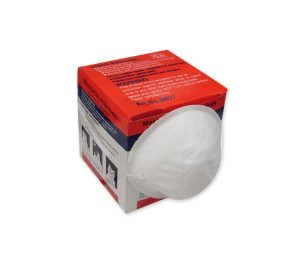
A basic nuisance dust mask without a certified filtration rating does not provide adequate protection against respirable crystalline silica. Only masks with a recognised rating such as N95, FFP2, FFP3, or equivalent should be used for this task.
Replacement frequency depends on dust concentration and how heavily the filter has been loaded during use, indicated by increased breathing resistance. Manufacturer guidance for the specific filter should be followed rather than a fixed universal interval.
Wet suppression substantially reduces airborne dust but does not guarantee zero exposure, particularly in enclosed spaces or where water flow is inconsistent. A risk assessment should confirm whether respiratory protection is still required alongside wet methods for a given task.
Yes. Barriers, floor tape, mirrors, and warning lights are all retrofit solutions that do not require structural changes, which is why most UAE facilities improve traffic safety in phases rather than a single redesign.
Disclaimer
This article provides general information on silica dust control and does not replace a qualified occupational hygienist’s exposure assessment or legal advice. For broader workplace safety obligations, refer to the Abu Dhabi Public Health Centre and Dubai Municipality. Always consult a qualified HSE professional to assess exposure levels specific to your site and tasks.