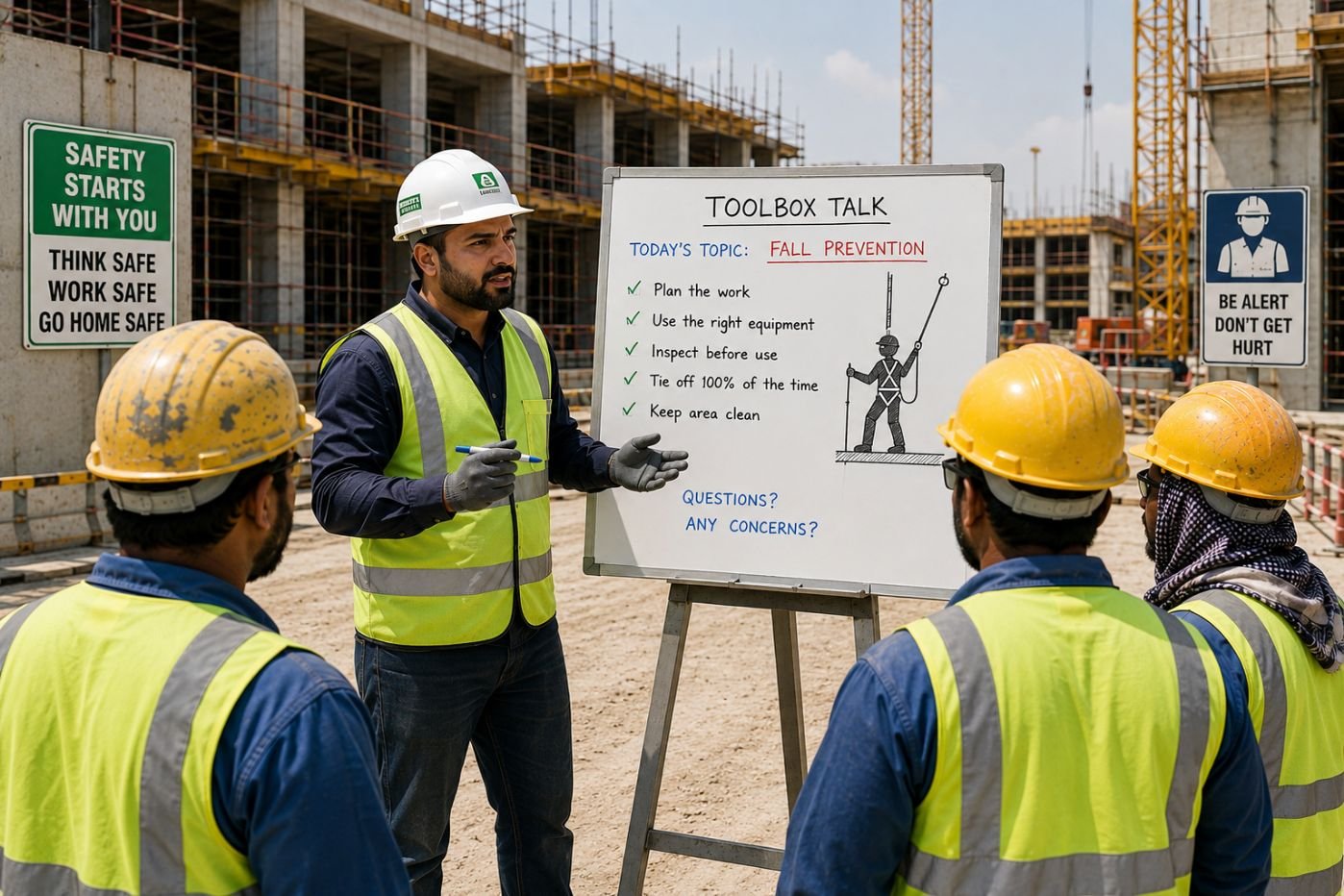
Safety toolbox talks work when they are short, specific and delivered on the ground where the hazard sits. They fail when they become a five-minute reading from a printed sheet followed by a signature.
Supervisors across the UAE run out of topics by week three. This list gives ten talks, each with a structure, a physical demonstration and a closing question that tests understanding rather than attendance.
How to Run a Toolbox Talk That Holds Attention
Keep it to ten minutes
Attention drops sharply after that. One topic, one message, one action.
Deliver it at the work front
Standing beside the hazard beats a briefing room. Workers connect the message to the location.
Bring a prop
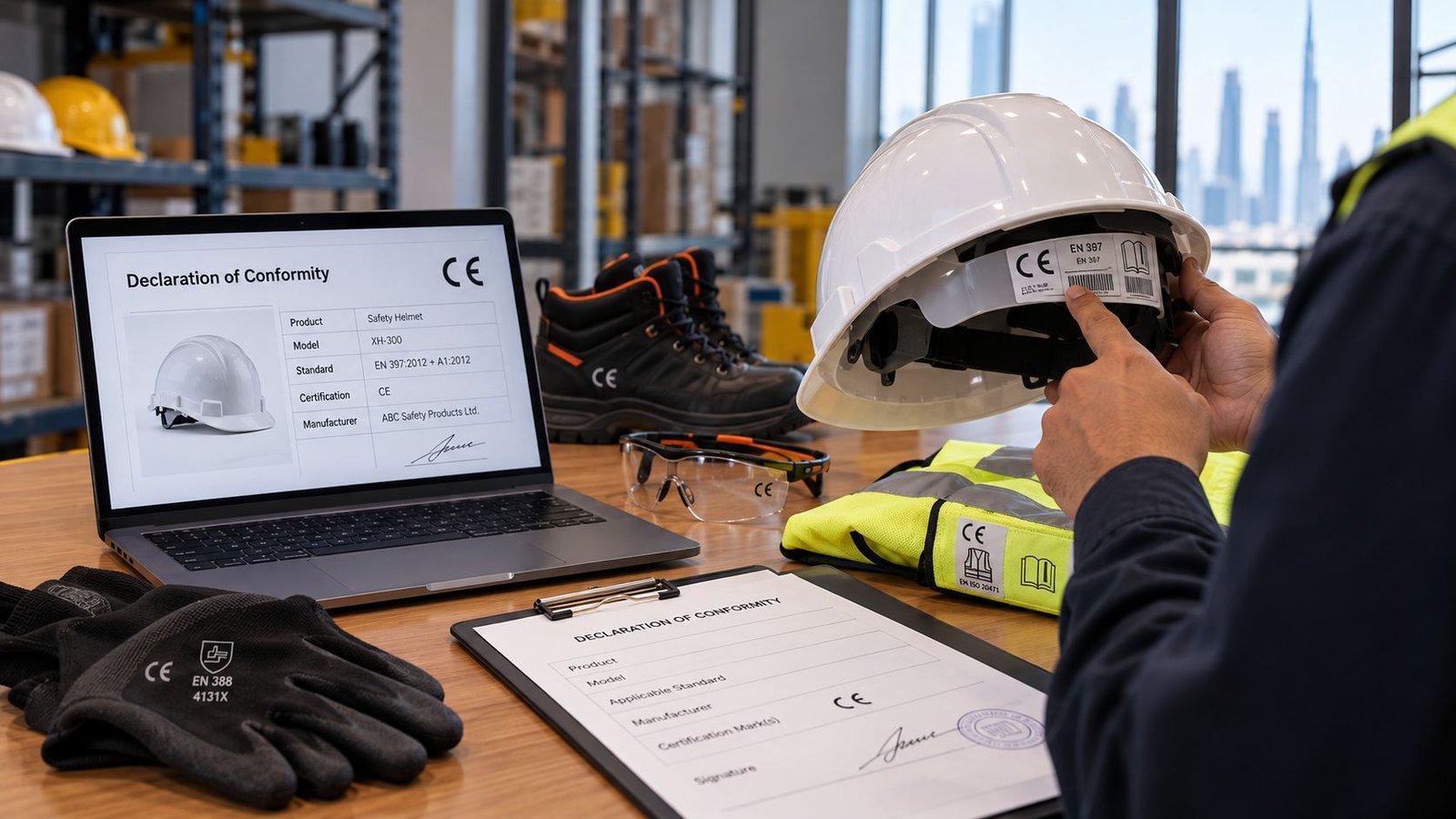
A cracked helmet, a worn glove, a frayed lanyard. Physical objects hold attention that speech does not.
Ask before you tell
Open with a question. What could go wrong here today. Answers reveal what the crew already knows and what they do not.
Close with a question, not a signature
Ask two workers to state the key point back. If they cannot, repeat the topic tomorrow.
Deliver in the languages spoken
UAE crews commonly span several languages. A talk delivered only in English reaches only English speakers.
Talk 1. What Your Helmet Is Actually Protecting You From
- Message: Head protection works once. A helmet that has taken an impact is finished even if it looks fine.
- Demonstration: Bring a helmet with a hairline crack in the shell. Point out how invisible it is from a metre away. Show the suspension harness and explain that it does the shock absorption, not the shell alone.
- Discussion: Ask what happens to a helmet left on a dashboard in UAE summer sun. Sustained heat and UV degrade the shell material over a season.
- Closing question: What would make you take a helmet out of service.
Talk 2. Dropped Objects and the People Below
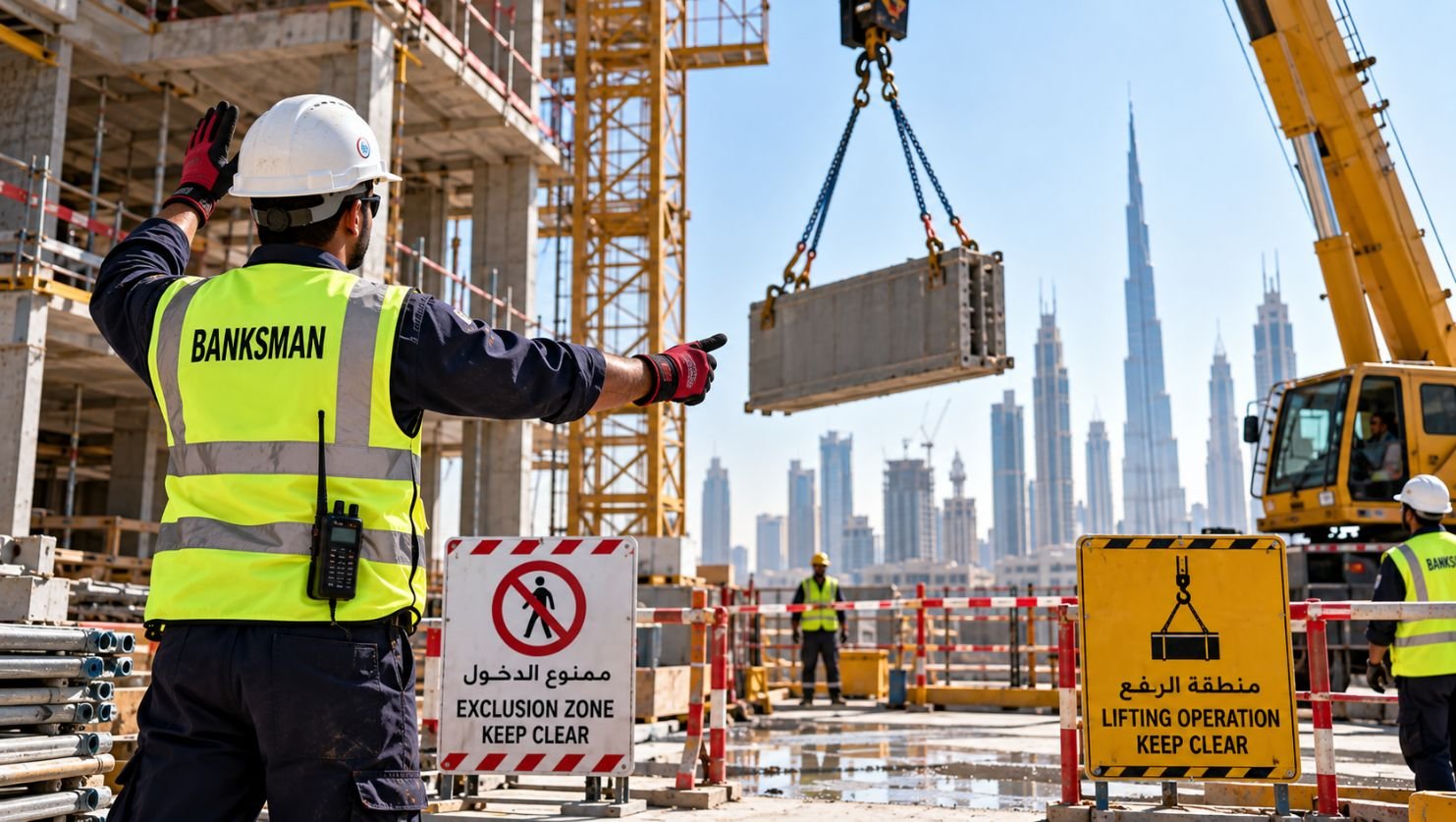
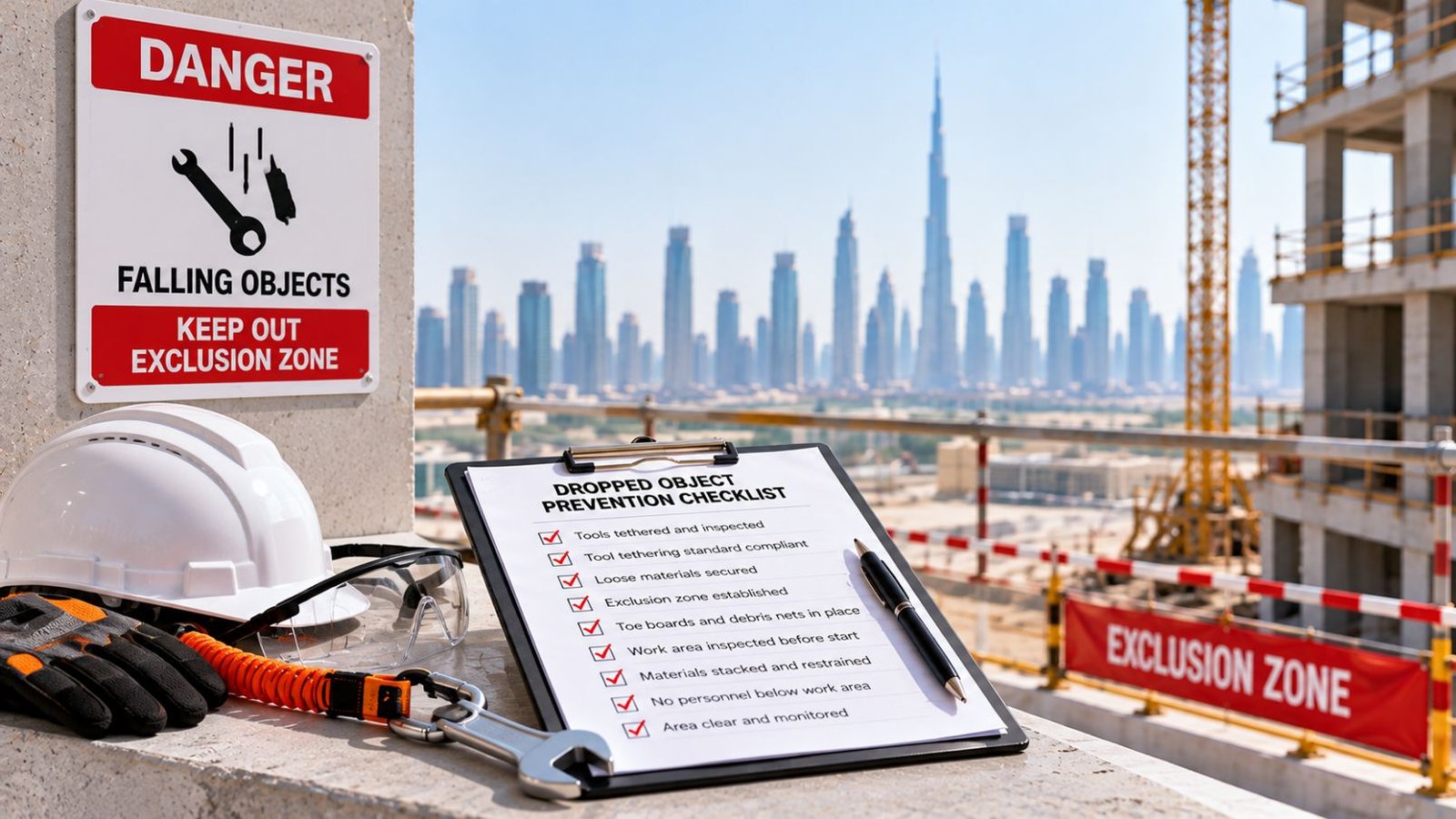
- Message: A small tool falling from height carries lethal energy. Exclusion zones and tool restraint are the controls.
- Demonstration: Show a tool lanyard and demonstrate attaching it. Show how quickly it clips.
- Discussion: Ask where on this site someone could be struck by a falling object today. Walk to the location.
- Closing question: Who is responsible for setting the exclusion zone below overhead work.
Talk 3. Reading a Harness Before You Trust It
- Message: Fall arrest equipment must be inspected before every use, not only at monthly checks.
- Demonstration: Pass a harness around the group. Point out the webbing, stitching, D-ring and buckles. Show a deployed shock absorber if one is available and explain that the system has done its job and is now scrap.
- Discussion: Ask what UAE conditions do to webbing. Sun exposure, sand abrasion and salt air all degrade it faster than a temperate climate would.
- Closing question: Name three things that take a harness out of service. Equipment options across the fall protection range cover harnesses, lanyards and anchor devices.
Talk 4. Hearing Damage Is Permanent
- Message: Noise-induced hearing loss builds silently and never reverses.
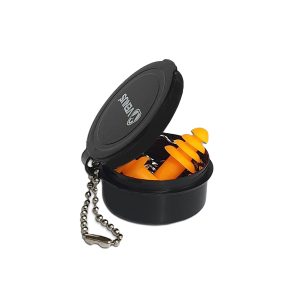
- Demonstration: Show earplugs and earmuffs side by side. Demonstrate correct earplug insertion, since incorrectly fitted plugs deliver a fraction of their rated protection.
- Discussion: Ask the crew to name the noisiest task on site. Ask who wears protection during it and who does not.
- Closing question: What is the first sign that noise is damaging your hearing. Ringing after the shift is the usual answer. The hearing protection range covers plug and muff options for different exposure levels.
Talk 5. Choosing the Right Glove for the Job
- Message: One glove does not cover every task. Cut protection, chemical resistance and grip are different properties.
- Demonstration: Lay out four glove types. Ask the crew to match each to a task performed on site this week.
- Discussion: Ask what happens when a glove is too large. Grip strength drops and the wearer compensates with awkward posture.
- Closing question: Which glove do you use for handling sheet metal, and why not this one.
Talk 6. Heat Is a Hazard, Not Just Discomfort
- Message: Heat illness escalates from cramps to exhaustion to heat stroke, which can kill.
- Demonstration: Show the water station and the shaded rest point. Confirm both are stocked and available.
- Discussion: Ask the crew to describe how a colleague behaves in early heat exhaustion. Confusion and irritability come before collapse.
- Closing question: Who do you tell if a workmate stops sweating and seems confused. Full detail sits in our heat stress prevention guide for outdoor workers.
Talk 7. Housekeeping Is Not Cleaning
- Message: Material in walkways causes trips, blocks escape routes and hides other hazards.
- Demonstration: Walk the crew along a route and stop at each obstruction. Ask who put it there and where it should go.
- Discussion: Ask what happens to the emergency route if this pallet stays here overnight.
- Closing question: What is your zone, and what does clear look like at the end of shift.
Talk 8. Lockout Tagout in Plain Terms
- Message: No lock, no work. Every person working on a machine applies their own lock.
- Demonstration: Show a padlock, a hasp and a tag. Demonstrate multiple locks on one hasp and explain that the machine stays isolated until the last lock comes off.
- Discussion: Ask why a supervisor locking on behalf of the crew is unsafe. Because the worker inside the machine has no personal control over the isolation.
- Closing question: What do you do if you find a machine with a lock and tag on it. Detailed procedure sits in our step by step lockout tagout guide.
Talk 9. Reporting Near Misses Without Fear
- Message: Reporting a near miss protects the next person. It is not an admission of fault.
- Demonstration: Show the reporting box and the form. Fill one in as a group using a real event from last week.
- Discussion: Ask what stopped anyone reporting something recently. Listen without responding defensively.
- Closing question: What happened to the last near miss you reported. If nobody can answer, the closing-the-loop process needs fixing.
Talk 10. First Aid and Who Does What
- Message: In the first two minutes after an injury, the crew acts, not the medic.
- Demonstration: Open the first aid kit and show what is inside. Point out anything missing or expired.
- Discussion: Ask who the trained first aiders are on this shift and where they are working today.
- Closing question: Where is the nearest eyewash station, and how long do you flush for.
Building a Rolling Talk Schedule
Ten talks fill two working weeks. A functioning programme needs a rolling cycle.
| WEEK PATTERN | FOCUS | SOURCE OF TOPIC |
|---|---|---|
| Week 1 | Personal protective equipment | Inspection findings |
| Week 2 | Task-specific hazards | This week’s work programme |
| Week 3 | Emergency procedures | Drill findings |
| Week 4 | Site-specific events | Near misses and incidents from the month |
Draw topics from your own data
The strongest toolbox talks come from last week’s near miss log. Crews pay attention when the event happened here.
Rotate the presenter
Supervisors delivering every talk becomes background noise. Rotate delivery among charge hands and experienced workers.
Follow the season
Ask two workers to state the key point back. If they cannot, repeat the topic tomorrow.
Deliver in the languages spoken
Heat topics from May through September. Rain and wind topics through the winter months. Ramadan schedule and fatigue topics when relevant.
Match talks to the trade on site
A steel erection crew needs different talks from a fit-out crew. Sector-specific selections across construction safety equipment categories help build a relevant topic bank.
| TOOLBOX TALK ELEMENT | TIME | PURPOSE |
|---|---|---|
| Opening question | 1 minute | Surface what the crew knows |
| Core message | 3 minutes | One point, stated plainly |
| Demonstration | 3 minutes | Physical object or location |
| Discussion | 2 minutes | Crew input and site specifics |
| Closing question | 1 minute | Verify understanding |
AAA Safe Team supplies personal protective equipment, first aid provision, signage and site safety materials across Dubai, Abu Dhabi, Sharjah and the wider UAE. Supervisors sourcing demonstration items and replacement stock can browse the full product range or contact our specialists for a site supply plan.
Frequently Asked Questions
Around ten minutes. Attention drops sharply beyond that, and a single clear message delivered briefly outperforms a long session covering several topics.
Daily delivery works well on active sites. Where daily is impractical, weekly with a written record is a workable minimum, supplemented by task-specific briefings before high-risk work.
Supervisors usually lead, but rotating delivery among charge hands and experienced workers keeps the format fresh and builds ownership across the crew.
Delivery at the work front, a physical demonstration, a single clear message, crew discussion and a closing question that verifies understanding rather than attendance.
Yes. Record the topic, date, presenter and attendees. Note the closing question responses too, since attendance alone does not evidence understanding.
Deliver in the languages spoken on site, use physical demonstration heavily since objects cross language barriers, and confirm understanding by asking workers to state the message back.
The site’s own near miss log, incident findings, inspection results and the week’s work programme. Topics drawn from local events hold attention far better than generic material.
No. Toolbox talks reinforce and refresh. They do not replace competency-based training required for specific tasks such as confined space entry, working at height or plant operation.
Disclaimer
This article provides general guidance on safety toolbox talks for workplaces in the UAE. It is not legal, regulatory or training accreditation advice, and toolbox talks do not replace formal competency-based training required for high-risk activities.
Training requirements vary by Emirate, by sector and by task. Regulations change over time. Confirm current obligations with the relevant authority.
Consult a qualified health and safety professional when designing a site training programme.