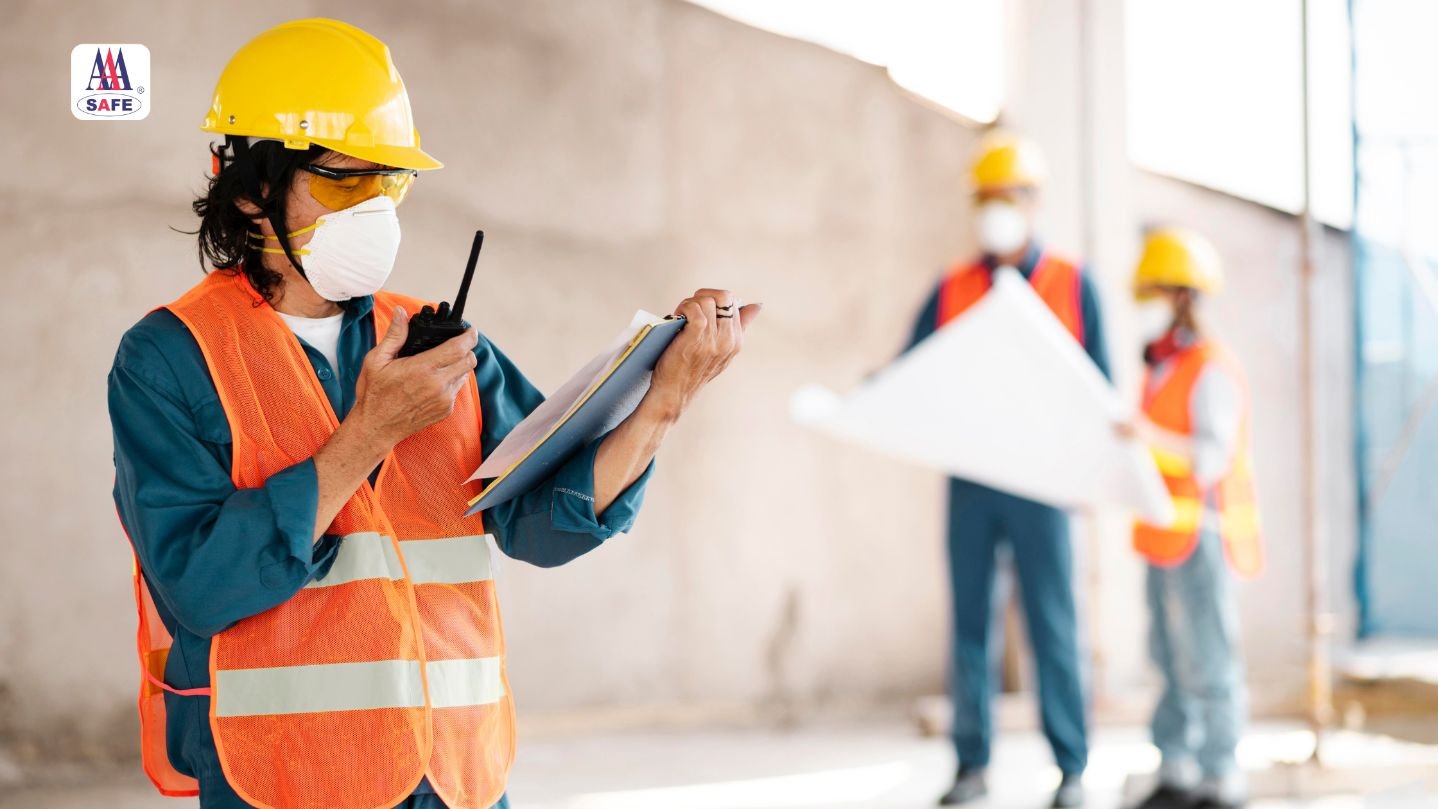
You know that moment when a construction worker makes a dangerous decision, and you realize the site supervisor was nowhere to be found? That’s when understanding supervisor safety duties becomes more than just a job description – it becomes the difference between everyone going home safely or someone never making it home at all.
I’ve worked with construction sites across the UAE for years, and honestly, the projects that treat supervision like a paperwork exercise are the ones dealing with preventable accidents. Construction safety management isn’t about walking around with a clipboard looking important – it’s about creating a culture where safety is non-negotiable and workers trust that someone is actually watching out for them.
Look, construction work will always carry inherent risks. But what separates professional operations from liability nightmares is having supervisors who understand that their primary job is keeping people alive. The UAE’s extreme heat combined with complex multi-story projects creates unique demands that require supervisors to be constantly vigilant about worker protection.
This guide walks you through everything involved in fulfilling supervisor safety duties, specifically tailored to UAE construction environments where temperatures exceed 50°C and regulatory requirements demand comprehensive safety management.
Understanding UAE Construction Safety Legal Framework
Construction supervisor responsibilities begin with understanding the regulatory framework that governs operations and determines what supervisors are legally required to do.
UAE Federal Safety Legislation
The UAE Federal Decree Law No. 33 of 2021 establishes the foundation for workplace safety across all industries. Under Article 13, employers must provide appropriate safety measures and protective equipment based on workplace hazards. Site supervisors are specifically responsible for ensuring these requirements are implemented at ground level.
This federal law establishes that supervisors have legal accountability for safety violations occurring under their watch. Failure to fulfill these duties can result in personal liability in addition to company penalties.
Dubai Municipality Construction Regulations
Dubai Municipality’s construction safety regulations specify detailed requirements for construction site management. These regulations establish minimum safety standards for scaffolding, excavation, fall protection, and equipment operation that supervisors must enforce daily.
The regulations require designated safety officers on sites with more than 50 workers, but supervisors maintain responsibility for immediate safety oversight regardless of facility size. Construction safety oversight includes coordinating with safety officers while maintaining direct control over work activities.
Abu Dhabi OSHAD Requirements
Abu Dhabi’s Occupational Safety and Health Administration (OSHAD) establishes comprehensive safety management systems for construction projects. OSHAD Framework requirements mandate that supervisors receive specific safety training and maintain documentation of all safety activities.
OSHAD’s risk assessment requirements place direct responsibility on supervisors to identify hazards, implement controls, and verify effectiveness before work begins. This systematic approach requires supervisors to actively manage safety rather than simply react to incidents.
SIRA Contractor License Requirements
The Dubai Safety and Security Authority (SIRA) mandates safety training for construction site supervisors. SIRA’s contractor licensing system requires proof of supervisor competency in safety management as part of company licensing.
Supervisors must complete SIRA-approved safety training programs covering hazard identification, emergency response, and regulatory compliance. These training requirements recognize that effective safety management depends on supervisors having proper knowledge and skills.
Need expert guidance on implementing comprehensive safety management systems for UAE construction?
AAA Safe Dubai specializes in helping construction companies across Dubai, Abu Dhabi, and Sharjah develop supervisor training programs that meet regulatory requirements while addressing extreme heat challenges and multilingual workforce needs.
Core Daily Safety Responsibilities of Construction Site Supervisors
Supervisor safety duties encompass multiple daily activities that directly impact worker protection and project safety performance.
Morning Safety Briefings and Toolbox Talks
Supervisors must conduct daily safety briefings before work begins. These toolbox talks typically last 10-15 minutes and cover the day’s specific hazards, required safety equipment, and emergency procedures.
Effective toolbox talk components include review of day’s planned activities and associated hazards, weather conditions and heat stress precautions, required personal protective equipment for each task, emergency contact information and evacuation procedures, questions and concerns from workers, and documentation of attendance and topics covered.
Toolbox talks create opportunities for workers to raise safety concerns before problems develop. Supervisors who skip these briefings lose critical chances to prevent incidents before work begins.
Site Inspection and Hazard Identification
Supervisors must conduct thorough site inspections at the start of each shift and periodically throughout the day. These inspections identify new hazards, verify existing controls remain effective, and ensure workers are following safety procedures.
Daily inspection checklist items include scaffolding integrity and proper assembly, fall protection systems properly installed and used, equipment guards in place and functioning, electrical systems properly grounded and protected, excavation shoring and trench protection adequate, fire extinguishers accessible and serviced, first aid equipment stocked and accessible, and emergency exits and pathways clear.
Documentation of inspections provides evidence that supervisors fulfilled their duties and identified problems requiring correction.
Personal Protective Equipment Enforcement
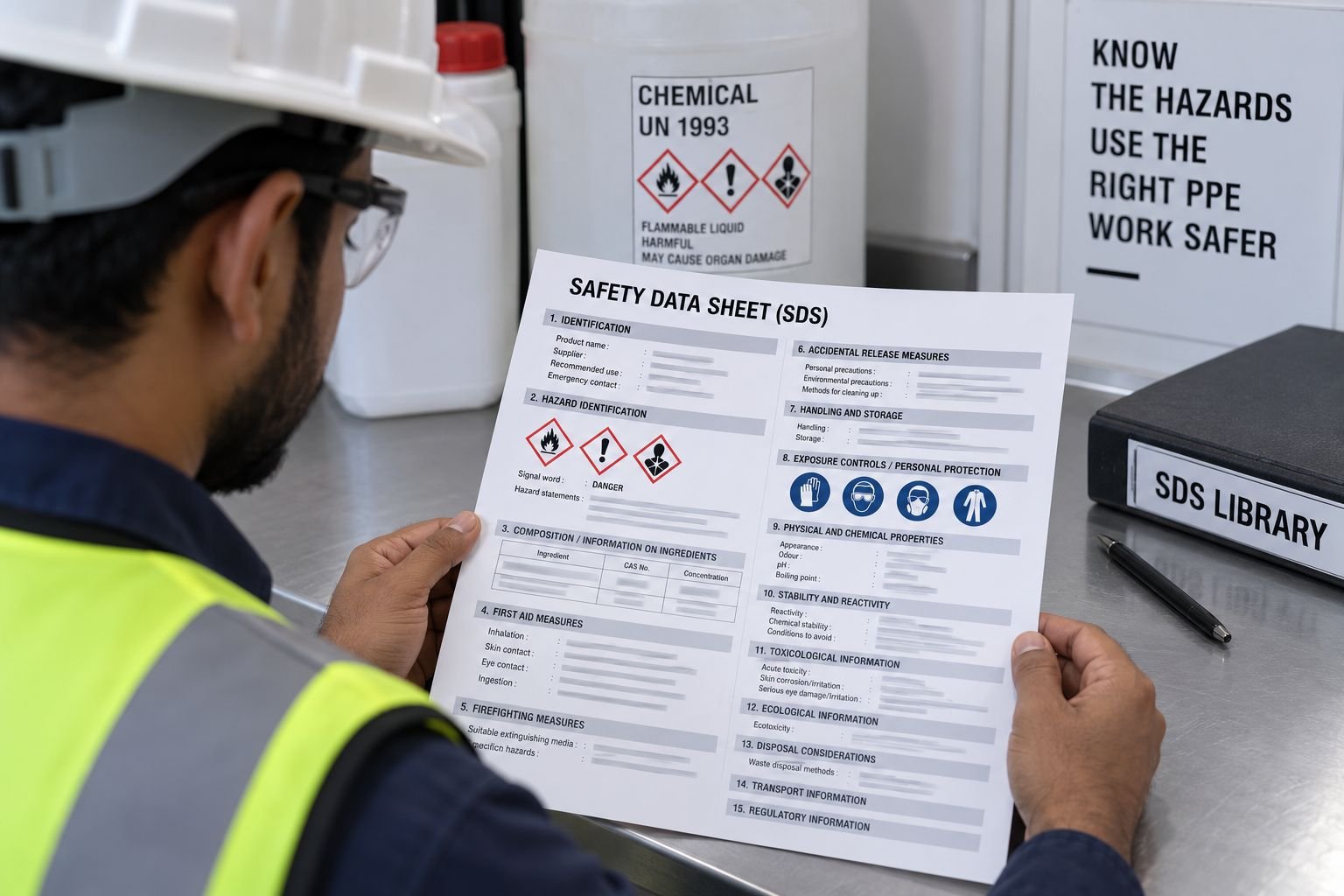
Supervisors must verify that all workers wear appropriate PPE for their tasks. This includes conducting visual checks throughout the day and stopping work when PPE violations occur.
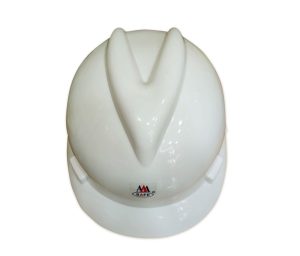
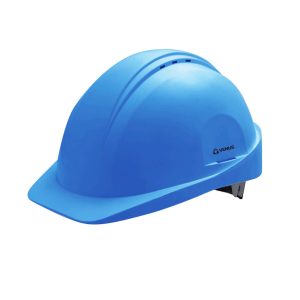
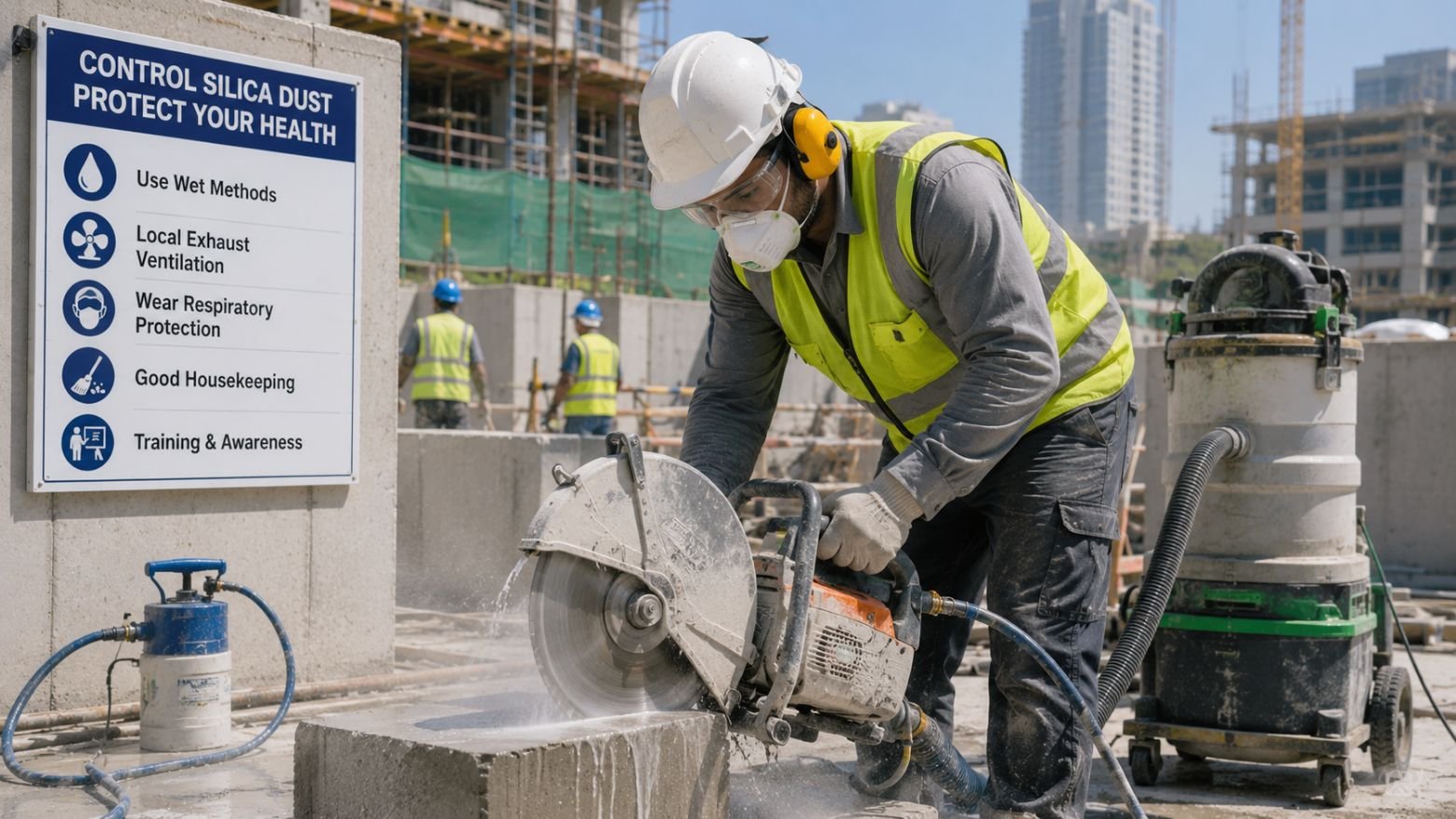
PPE enforcement includes verifying hard hats worn properly in all required areas, ensuring safety glasses used during grinding, cutting, and similar operations, confirming fall protection harnesses worn and properly connected, checking respirators worn during dust-generating activities, verifying high-visibility vests worn in vehicle traffic areas, and ensuring safety shoes with proper protection worn by all workers.
Workers often remove PPE due to discomfort in UAE heat. Supervisors must balance comfort concerns with safety requirements, providing cooling breaks while maintaining protection standards during actual work.
Work Permit Authorization and Monitoring
Supervisors review and authorize work permits for high-risk activities. Construction safety oversight includes verifying that all safety requirements specified in permits are in place before work begins.
Work permit categories requiring supervisor authorization include hot work (welding, cutting, grinding), confined space entry, work at height above 2 meters, excavation and trenching, electrical work on energized systems, crane and lifting operations, and demolition activities.
Supervisors must physically verify that conditions specified in permits actually exist on site. Signing permits without verification creates liability when incidents occur.
Heat Stress Monitoring and Management
UAE construction sites face extreme temperatures requiring supervisors to actively manage heat stress risks. Safety management duties include monitoring weather conditions and implementing mandatory cooling protocols.
Heat stress management duties include checking temperatures at start of shift and hourly during peak heat, implementing mandatory 15-minute cooling breaks every 90 minutes when temperatures exceed 45°C, verifying adequate drinking water available at multiple locations, ensuring shaded rest areas accessible within 200 meters of all work locations, monitoring workers for heat stress symptoms, modifying work schedules during extreme heat periods, and documenting heat stress prevention measures.
Heat-related incidents remain among the most common construction injuries in UAE. Supervisors who fail to enforce heat stress protocols face both regulatory penalties and moral responsibility when workers suffer heat illness.
Equipment Safety and Maintenance Oversight
Construction supervisor responsibilities include ensuring all equipment operates safely and receives proper maintenance.
Daily Equipment Inspections
Supervisors must verify that equipment operators complete pre-use inspections before operating any machinery. These inspections identify potential failures before they cause incidents.
Equipment requiring daily inspection includes cranes and lifting equipment, forklifts and material handling equipment, concrete pumps and mixers, scaffolding and access equipment, power tools and hand tools, fall protection equipment, and electrical distribution systems.
Supervisors review inspection documentation and verify that identified problems are corrected before equipment returns to service. Safety oversight includes removing unsafe equipment from service until repairs are completed.
Operator Competency Verification
Supervisors ensure only qualified, licensed operators use equipment requiring special training or certification. This includes verifying that operator licenses remain current and operators demonstrate actual competency.
Operator verification requirements include valid UAE operator license for equipment type, current medical fitness certification, demonstration of safe operation procedures, knowledge of equipment limitations, understanding of site-specific hazards, and ability to perform emergency shutdown.
Allowing unqualified operators creates immediate liability. Supervisors must verify qualifications rather than accepting verbal claims of competency.
Load and Lifting Safety Management
Supervisors must review and approve all lifting operations, verifying that lifting plans account for load weight, center of gravity, environmental conditions, and clearance requirements.
Lifting operation supervision duties include calculating maximum lifting capacity considering boom angle and radius, verifying ground conditions adequate for crane stabilization, establishing exclusion zones preventing worker access under suspended loads, confirming proper rigging and load attachment, checking weather conditions within safe operating limits, ensuring qualified signal person directs operations, and stopping operations if unsafe conditions develop.
Lifting incidents cause some of the most severe construction injuries. Supervisors must personally verify lifting safety rather than delegating this critical responsibility.
Supervisor Daily Safety Checklist
| Responsibility Category | Morning | During Shift | End of Day | Documentation Required |
|---|---|---|---|---|
| Toolbox Talk | ✅ Required | As needed | – | Attendance log, topics covered |
| Site Inspection | ✅ Required | Every 2–3 hours | Final check | Inspection report, photos |
| PPE Verification | ✅ Required | Continuous | – | Violation notices |
| Work Permit Review | ✅ For day’s permits | Before each high-risk task | – | Signed permits |
| Heat Stress Monitoring | Check temperature | Hourly in peak heat | – | Temperature log, break records |
| Equipment Inspection | ✅ Before use | Before each use | – | Equipment logs |
| Incident Investigation | – | Immediately | Complete report | Incident reports, witness statements |
Emergency Response and Incident Management
Supervisor duties include preparing for emergencies and responding effectively when incidents occur.
Emergency Preparedness Planning
Supervisors must ensure emergency response plans exist for all potential incidents and that all workers understand their roles during emergencies.
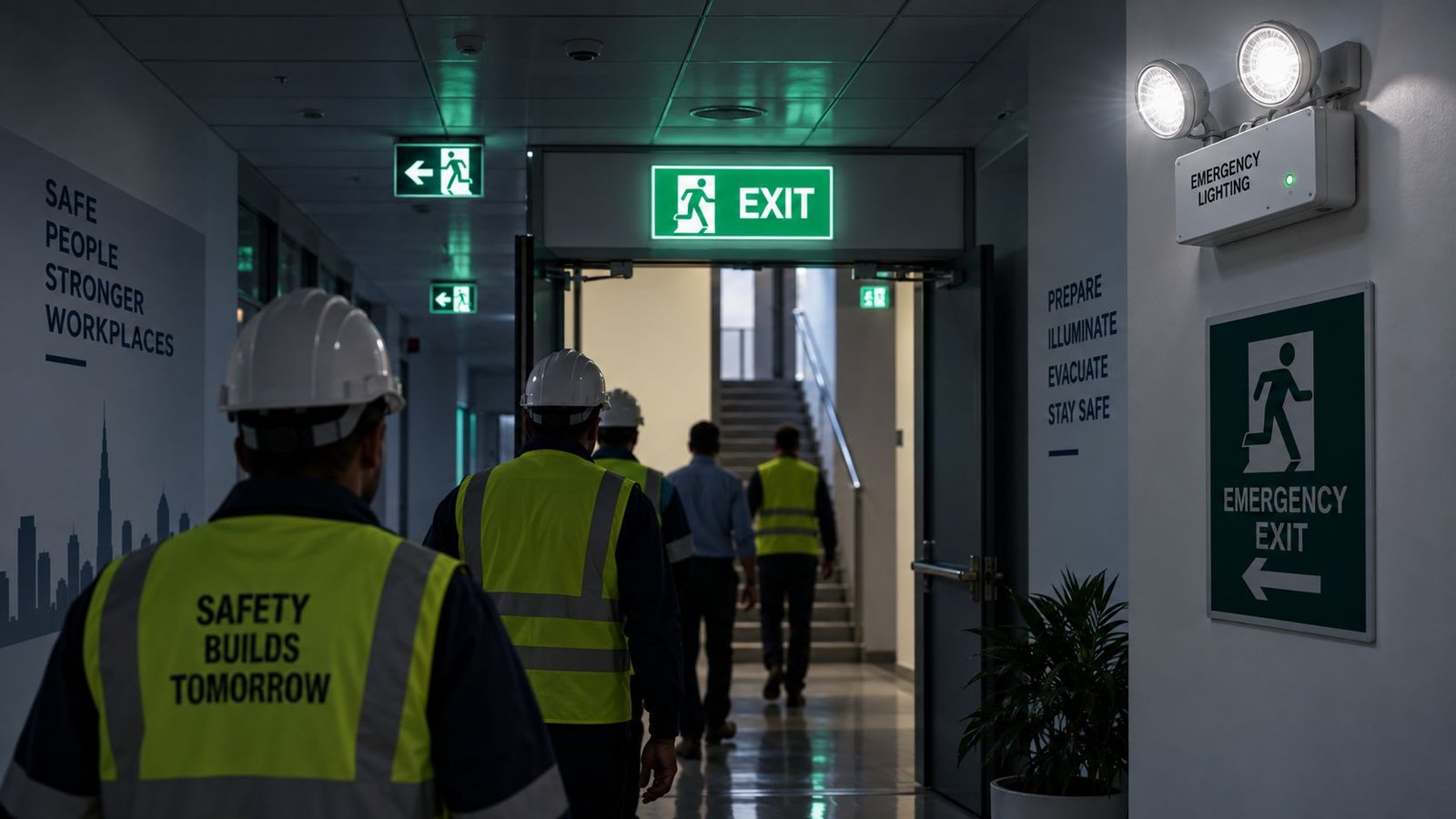
Emergency preparedness requirements include posted emergency contact numbers at multiple locations, designated assembly points known to all workers, clear evacuation routes free of obstructions, first aid kits stocked and accessible within 100 meters of all work areas, fire extinguishers located per regulatory requirements, emergency vehicle access maintained at all times, and communication systems tested and functional.
Supervisors conduct periodic emergency drills to verify that workers can execute emergency procedures quickly and safely. These drills identify problems with emergency plans before real emergencies occur.
First Response to Incidents
When incidents occur, supervisors must take immediate action to protect injured workers and prevent secondary incidents.
Immediate incident response steps include stopping work in immediate area to prevent additional injuries, calling emergency services if serious injury or fire, providing or directing first aid to injured workers, securing incident scene preventing evidence contamination, accounting for all workers ensuring no one missing, notifying project management and safety department, and controlling site access preventing unauthorized entry to incident area.
Supervisors trained in first aid can provide immediate treatment while waiting for professional medical response. This early intervention often determines incident outcomes.
Incident Investigation and Documentation
Supervisors must investigate all incidents to determine root causes and prevent recurrence. Construction safety management includes thorough documentation supporting investigation findings.
Incident investigation requirements include photographing incident scene from multiple angles before cleanup, interviewing all witnesses separately documenting statements, collecting physical evidence such as failed equipment or materials, reviewing relevant permits, inspection records, and work procedures, identifying immediate causes and underlying system failures, developing corrective actions addressing root causes, and documenting investigation findings in formal incident reports.
Incident investigations that only identify “worker error” miss the system failures that allowed errors to cause injuries. Effective supervisors identify multiple contributing factors and develop comprehensive corrective actions.
Regulatory Reporting Obligations
UAE regulations require supervisors to report serious incidents to relevant authorities within specified timeframes. Failure to report creates additional violations beyond the original incident.
Reportable incidents include fatalities (immediate notification required), serious injuries requiring hospitalization, structural collapses or failures, major fires or explosions, significant environmental releases, and near-miss incidents with high severity potential.
Supervisors coordinate with company management and safety departments to ensure proper reporting. Safety oversight includes knowing what must be reported and to whom.
Subcontractor and Visitor Safety Management
Supervisor responsibilities extend to managing safety for subcontractors and visitors entering construction sites.
Subcontractor Safety Coordination
Supervisors must verify that subcontractors working on site maintain safety standards equivalent to primary contractors. This includes reviewing subcontractor safety plans and monitoring compliance.
Subcontractor management duties include reviewing subcontractor safety plans before work authorization, verifying subcontractor workers receive site-specific safety orientation, confirming subcontractor PPE meets project standards, monitoring subcontractor work practices for safety compliance, coordinating work activities preventing conflicts between contractors, stopping subcontractor work when safety violations occur, and documenting subcontractor safety performance.
Many construction incidents involve subcontractor workers. Supervisors cannot delegate safety responsibility to subcontractors and must actively oversee all work occurring on their sites.
Site Visitor Safety Orientation
All visitors entering construction sites must receive safety orientation before access. Safety management includes ensuring visitors understand hazards and required safety measures.
Visitor orientation requirements include designated escort accompanying visitors at all times, hard hats, safety glasses, and high-visibility vests provided and worn, prohibited areas clearly identified and enforced, emergency procedures and assembly points explained, vehicle traffic patterns and pedestrian routes specified, photography and documentation restrictions explained, and visitor log documenting entry and exit times.
Visitors unfamiliar with construction hazards require closer supervision than experienced workers. Supervisors must ensure escorts maintain control over visitor movements throughout site visits.
Looking to implement comprehensive safety management training for your UAE construction supervisors?
AAA Safe Dubai offers certified programs that meet OSHAD and SIRA requirements while addressing practical challenges of multilingual workforces and extreme environmental conditions.
Documentation and Record Keeping Requirements
Construction supervisor duties include maintaining comprehensive documentation proving compliance with safety requirements.
Daily Safety Documentation
Supervisors must maintain detailed records of daily safety activities. These records provide evidence of compliance and support incident investigations when problems occur.
Required daily documentation includes toolbox talk attendance sheets and topics discussed, site inspection reports with identified hazards and corrective actions, work permit authorizations and completion confirmations, equipment inspection logs and maintenance records, temperature monitoring records and heat stress measures implemented, PPE violation notices and corrective actions taken, and near-miss incident reports and prevention measures.
Digital documentation systems help supervisors maintain records efficiently. Photographs provide powerful evidence of conditions and compliance with safety requirements.
Training and Competency Records
Supervisors must maintain current records proving all workers received required training and possess necessary qualifications.
Training documentation requirements include initial site orientation records for all workers, task-specific safety training certifications, equipment operator licenses and medical fitness certificates, confined space entry authorizations, fall protection training certificates, first aid and emergency response training records, and supervisor safety training completion records.
Missing or expired training documentation creates violations even when workers possess actual competency. Supervisors must maintain systematic tracking ensuring all training remains current.
Incident Investigation Files
Complete incident investigation files protect both workers and companies by documenting exactly what happened and what corrective actions were taken.
Incident file contents include initial incident notification and emergency response documentation, witness statements collected individually, photographs of incident scene and contributing factors, failed equipment or materials collected as evidence, investigation findings identifying root causes, corrective action plans with assigned responsibilities and completion dates, and follow-up documentation verifying corrective action effectiveness.
These files become critical evidence in workers’ compensation claims, regulatory investigations, and potential litigation. Thorough documentation protects everyone involved.
Training and Professional Development for Site Supervisors
Effective fulfillment of supervisor safety duties requires ongoing training and competency development.
Initial Supervisor Safety Training
Supervisors must complete comprehensive safety training before assuming supervisory responsibilities. This training typically ranges from AED 2,500-5,000 for initial certification programs.
Initial training components include UAE construction safety regulations and compliance requirements, hazard identification and risk assessment methods, accident investigation and root cause analysis, emergency response and first aid procedures, heat stress recognition and prevention, PPE selection and enforcement techniques, work permit systems and authorization procedures, and documentation and record keeping requirements.
Initial training duration typically spans 3-5 days of intensive instruction combining classroom learning with practical exercises.
SIRA and OSHAD Certification Programs
SIRA offers specialized training programs for construction supervisors covering Dubai-specific regulatory requirements. These programs cost AED 1,500-3,000 and provide certification recognized by Dubai authorities.
OSHAD certification for Abu Dhabi projects requires supervisors to complete specific training modules. OSHAD supervisor training costs AED 2,000-4,000 depending on program level and duration.
Annual Refresher Training
Safety management requires annual refresher training maintaining competency and updating supervisors on regulatory changes. Annual refresher programs typically cost AED 800-1,500 per supervisor.
Refresher training topics include recent regulatory changes and new compliance requirements, lessons learned from recent industry incidents, new safety technologies and best practices, updated emergency response procedures, heat stress management in extreme conditions, advanced investigation techniques, and leadership and communication skills.
Specialized Training Requirements
Supervisors overseeing specific high-risk operations require additional specialized training beyond basic safety certification.
Specialized training includes confined space supervision (AED 1,200-2,500), fall protection systems (AED 900-1,800), crane and lifting operations (AED 1,500-3,000), excavation and trenching safety (AED 800-1,500), scaffolding inspection and approval (AED 1,000-2,000), and electrical safety for non-electricians (AED 700-1,400).
Investment in comprehensive supervisor training reduces incidents, improves regulatory compliance, and demonstrates commitment to fulfilling safety management duties.
Supervisor Training Requirements and Costs
| Training Type | Duration | Cost (AED) | Validity Period | Renewal Cost (AED) |
|---|---|---|---|---|
| Initial Supervisor Safety | 3–5 days | 2,500–5,000 | 2 years | 1,500–3,000 |
| SIRA Certification | 2–3 days | 1,500–3,000 | 2 years | 800–1,500 |
| OSHAD Certification | 3–5 days | 2,000–4,000 | 3 years | 1,000–2,000 |
| Annual Refresher | 1 day | 800–1,500 | 1 year | 800–1,500 |
| First Aid and CPR | 1–2 days | 400–800 | 2 years | 300–600 |
| Confined Space | 1–2 days | 1,200–2,500 | 2 years | 600–1,200 |
| Fall Protection | 1 day | 900–1,800 | 2 years | 500–1,000 |
Training costs based on UAE market rates as of 2025
Common Supervisor Safety Failures and Prevention
Understanding typical failures in construction safety management helps prevent common problems that lead to incidents.
Inadequate Site Inspections
Many supervisors conduct cursory inspections that miss critical hazards. Effective inspections require systematic approaches covering all areas and activities.
Inspection failure prevention includes using comprehensive checklists covering all potential hazards, allowing adequate time for thorough inspections (minimum 30-45 minutes), documenting findings with photographs showing conditions, following up on identified hazards ensuring timely correction, reviewing previous inspection reports identifying recurring problems, and involving workers in inspections gaining ground-level perspective.
Supervisors who rush inspections to start work quickly often miss hazards that cause incidents later in the day.
Inconsistent PPE Enforcement
Workers quickly learn when supervisors inconsistently enforce PPE requirements. This inconsistency undermines safety culture and creates unnecessary risks.
PPE enforcement strategies include stopping work immediately when observing PPE violations, applying discipline consistently regardless of worker seniority, providing additional PPE training when violations occur repeatedly, addressing comfort concerns by providing quality PPE suitable for UAE climate, leading by example wearing required PPE at all times, and recognizing workers who consistently comply with requirements.
Workers respect supervisors who enforce safety requirements fairly and consistently. Supervisors who ignore violations lose credibility and encourage more violations.
Inadequate Work Permit Controls
Work permits only provide protection when supervisors verify that specified controls actually exist before authorizing work. Many incidents occur when work begins despite missing safety measures.
Work permit control improvements include physically inspecting conditions before signing permits, verifying all required safety equipment present and functional, confirming trained personnel assigned to high-risk tasks, checking weather and environmental conditions acceptable, ensuring emergency equipment accessible, reviewing adjacent work activities preventing conflicts, and documenting verification with photographs.
Supervisors who sign permits without verification share responsibility when incidents occur due to missing controls.
Poor Communication with Workers
Language barriers, technical terminology, and hierarchical relationships often prevent effective safety communication between supervisors and workers.
Communication improvement strategies include using simple language avoiding technical jargon, employing visual aids and demonstrations showing safe procedures, verifying understanding by having workers explain back what they heard, encouraging questions creating open communication environment, providing multilingual safety materials for diverse workforce, using interpreters when necessary ensuring clear understanding, and regular one-on-one conversations building relationships with crew members.
Effective communication enables workers to understand and comply with safety requirements rather than simply following orders they don’t understand.
Cost-Benefit Analysis of Effective Supervision
Investment in fulfilling supervisor safety duties provides substantial return through incident prevention and improved project performance.
Direct Costs of Supervisor Safety Management
Comprehensive safety supervision requires investment in training, equipment, and supervisor time devoted to safety activities.
Annual supervision costs per project include supervisor safety training and certification (AED 3,000-8,000), safety inspection equipment and tools (AED 1,500-3,000), documentation systems and software (AED 2,000-5,000), PPE enforcement and worker training (AED 5,000-12,000), heat stress prevention measures (AED 4,000-10,000), and emergency response equipment (AED 3,000-7,000).
Total annual investment ranges from AED 18,500-45,000 per supervisor.
Incident Prevention Value
Effective supervision prevents incidents that would otherwise cost substantially more than safety investments.
Typical construction incident costs include minor injury requiring first aid (AED 2,000-5,000), moderate injury requiring hospital treatment (AED 15,000-50,000), serious injury requiring surgery and rehabilitation (AED 100,000-500,000), fatality (AED 500,000-5,000,000+), regulatory fines for violations (AED 5,000-100,000 per violation), and project delays from incident investigation (AED 20,000-200,000).
A single prevented serious injury typically justifies several years of comprehensive safety supervision investment.
Productivity and Quality Benefits
Beyond direct incident prevention, effective construction safety management improves project productivity and quality.
Indirect benefits include reduced work delays from incidents and near-misses, improved worker morale and retention, enhanced company reputation attracting quality workers, lower workers’ compensation insurance premiums, reduced legal and liability expenses, improved client relationships and repeat business, and competitive advantage in contract bidding.
Return on Investment Calculation
Three-year investment scenario includes annual costs of AED 18,500-45,000 and three-year total of AED 55,500-135,000.
Prevented incident value (conservative estimate) includes 3 minor injuries prevented (AED 6,000-15,000), 1 moderate injury prevented (AED 15,000-50,000), 1 serious injury prevented (AED 100,000-500,000), regulatory violation prevention (AED 10,000-50,000), with three-year value totaling AED 131,000-615,000.
ROI calculation shows 135-350% return on investment.
Projects that invest in comprehensive supervision consistently outperform projects with minimal safety oversight. The financial case strongly supports proper fulfillment of construction supervisor safety duties.
Need cost-effective safety management solutions designed for UAE construction operations?
AAA Safe Dubai provides comprehensive supervisor training and support programs that maximize return on investment while ensuring regulatory compliance and worker protection across Dubai, Abu Dhabi, and Sharjah.
Frequently Asked Questions
Under UAE Federal Decree Law No. 33 of 2021, supervisors must ensure workplace safety measures are implemented, conduct daily inspections, verify PPE usage, authorize work permits, manage heat stress protocols, maintain safety documentation, and investigate incidents. Dubai Municipality and OSHAD regulations add specific requirements based on location.
Supervisors require initial safety training (AED 2,500-5,000) covering hazard identification, emergency response, and regulatory compliance. SIRA certification (AED 1,500-3,000) is required for Dubai projects, while OSHAD certification (AED 2,000-4,000) applies to Abu Dhabi construction. Annual refresher training (AED 800-1,500) maintains competency.
Supervisors must conduct comprehensive site inspections at shift start and periodically throughout the day, typically every 2-3 hours. Additional inspections are required after weather events, equipment failures, or incidents. Daily inspection documentation provides evidence of compliance with safety management requirements.
Required documentation includes daily toolbox talk attendance records, site inspection reports, work permit authorizations, equipment inspection logs, temperature monitoring records, PPE violation notices, training certificates, and incident investigation files. Digital systems with photographic evidence help supervisors maintain comprehensive records efficiently.
Supervisors must monitor temperatures hourly, implement mandatory 15-minute cooling breaks every 90 minutes when temperatures exceed 45°C, verify adequate drinking water availability, ensure shaded rest areas within 200 meters, watch for heat stress symptoms, modify work schedules during extreme heat, and document all prevention measures taken.
Supervisors must immediately stop work in affected areas, call emergency services for serious injuries, provide first aid, secure incident scenes, account for all workers, notify management, control site access, investigate root causes, document findings thoroughly with photographs and witness statements, develop corrective actions, and ensure proper regulatory reporting.
Yes, UAE regulations establish that supervisors have legal accountability for safety violations occurring under their supervision. Failure to fulfill construction safety duties can result in personal liability including fines, license suspensions, and potential criminal charges in cases of serious incidents or fatalities.
Yes. UAE maritime operations must comply with international maritime standards, International Labour Organization (ILO) maritime conventions, and UAE Ministry of Human Resources and Emiratisation standards. Local port authorities may impose additional requirements. Professional maritime consultants familiar with UAE regulations can specify exact compliance requirements.
Initial supervisor safety training costs AED 2,500-5,000, SIRA certification AED 1,500-3,000, OSHAD certification AED 2,000-4,000, and annual refresher training AED 800-1,500. Specialized training for confined spaces, fall protection, or lifting operations adds AED 700-2,500 per specialty. Total annual investment per supervisor typically ranges from AED 3,000-8,000.
Important Notice
This information provides general guidance on construction supervisor safety duties and should not be considered a substitute for professional safety consultation or legal advice. Construction safety requirements vary based on specific project types, locations, and local regulations.
UAE construction operations must comply with Federal Decree Law No. 33 of 2021, Dubai Municipality construction safety regulations, Abu Dhabi OSHAD requirements, and other applicable safety standards. Requirements change frequently, and supervisors must verify current compliance obligations with relevant authorities.
Safety management duties must be fulfilled by qualified professionals who have received proper training and certification. Improper safety management can result in worker injuries, regulatory violations, project delays, and potential criminal liability.
Construction environments present complex hazards including falls, struck-by incidents, electrocution, heat stress, and equipment failures that require specialized expertise. Professional safety consultation is essential for developing effective supervision programs that protect workers while maintaining project schedules.
Training requirements, costs, and regulatory standards change frequently. Information reflects general UAE market conditions and should be verified with current training providers and regulatory authorities. Certification requirements may vary based on emirate, project type, and client specifications.
For professional consultation on construction supervisor training and safety management systems designed specifically for UAE operations, contact qualified providers with demonstrated experience in construction safety and UAE regulatory compliance.
Conclusion
Understanding supervisor safety duties isn’t about memorizing regulations or checking boxes on forms – it’s about accepting that you hold people’s lives in your hands every single day they work under your supervision.
The reality is that construction supervision is demanding work in challenging conditions. UAE temperatures that exceed 50°C, combined with the complexity of coordinating multiple trades and managing tight schedules, create an environment where shortcuts become tempting. Construction safety management represents the commitment to never taking those shortcuts when lives are at stake.
I’ve learned that the best construction supervisors aren’t the ones who push the hardest for productivity or the ones who maintain the friendliest relationships with their crews. They’re the ones who understand that their primary job is making sure everyone goes home safely at the end of every shift. Proper safety oversight forms the foundation of that commitment.
The financial case for effective supervision is compelling. Yes, preventing a single serious injury saves hundreds of thousands of dirhams in medical costs, legal fees, and project delays. Yes, proper safety management improves productivity and quality. But more fundamentally, fulfilling supervisor duties is about doing what’s right – about honoring the trust that workers and their families place in you every day.
Most importantly, how you fulfill your safety management duties sends a message to your workers, your management, and your industry. It says you take safety seriously. It says you’ve accepted accountability for the people working under your direction. It says you value human life above project schedules and cost pressures.
Look, construction will always involve significant risks. You can’t eliminate every hazard when you’re building complex structures in extreme conditions. But you can control whether you fulfill your responsibilities to identify hazards, implement protections, enforce requirements, and respond effectively when problems occur. Construction safety oversight is how you prove that workers’ trust in you is well-placed.
Your workers are counting on you. Their families are counting on you. Your company is counting on you. Fulfilling supervisor safety duties is how you demonstrate that you understand what’s truly at stake every single day on your construction site.