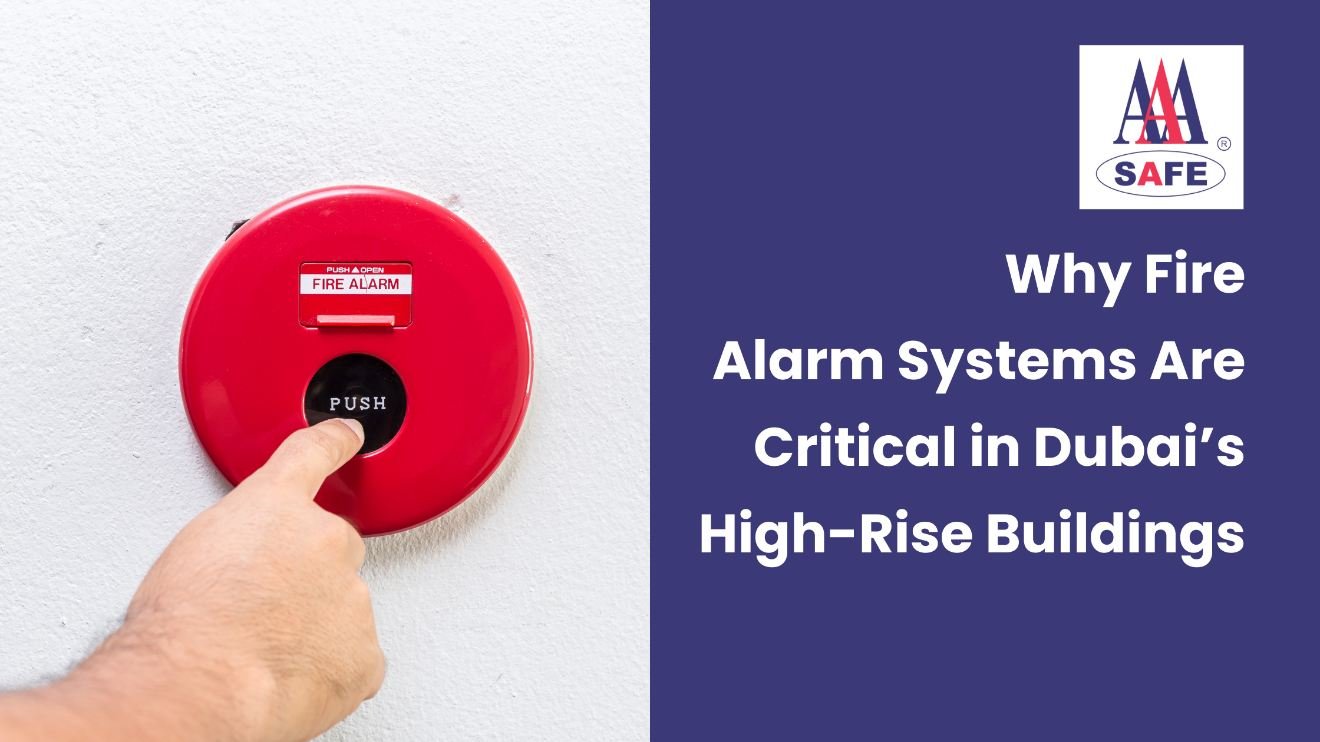
The Vertical City's Safety Challenge
Dubai’s iconic skyline, punctuated by architectural marvels like the Burj Khalifa, represents not just the emirate’s ambition and innovation, but also presents unique safety challenges. In a city where vertical living and working have become the norm, the importance of robust fire alarm systems cannot be overstated. These systems serve as the first line of defense against one of the most devastating disasters that can strike a high-rise building: fire.
The stakes in high-rise buildings are particularly high. With multiple floors, complex evacuation routes, and potentially thousands of occupants, a fire incident in a tall building can quickly escalate from a minor emergency to a catastrophic event. This reality has prompted Dubai’s authorities to implement some of the most stringent fire safety regulations in the world, with fire alarm systems at their core.
For decision-makers responsible for these towering structures—whether building owners, facility managers, or developers—understanding the critical role of fire alarm systems is not just about regulatory compliance; it’s about safeguarding lives, protecting valuable assets, and ensuring business continuity. This comprehensive guide explores why fire alarm systems are indispensable in Dubai’s high-rise buildings, the technology behind them, and the installation guidelines that ensure their effectiveness.
As we delve into this vital topic, we’ll examine the specific requirements set forth by Dubai Civil Defence, explore the various types of fire alarm systems suitable for high-rise applications, and provide actionable insights for decision-makers looking to invest in these essential safety devices. Whether you’re overseeing a new construction project or evaluating the safety systems in an existing building, this guide will equip you with the knowledge needed to make informed decisions about fire alarm systems in Dubai’s vertical landscape.
Dubai's Regulatory Framework: Understanding the Fire and Life Safety Code
Dubai’s approach to fire safety in high-rise buildings is governed by a comprehensive regulatory framework, primarily the UAE Fire and Life Safety Code of Practice. This code, developed and enforced by Dubai Civil Defence (DCD), has evolved significantly over the years, with the latest major updates in 2018 building upon the foundation established in the 2011 and 2017 editions.
Building Classification and Requirements
The UAE Fire Code classifies buildings based on height, which directly impacts the fire alarm system requirements:
- Mid-Rise Buildings: 23m to 50m in height
- High-Rise Buildings: 50m to 90m in height
- Super High-Rise Buildings: Exceeding 90m in height
This classification is crucial because as buildings get taller, the fire safety requirements become more stringent. For instance, super high-rise buildings must have additional features such as greater emergency vehicular access and dedicated fire-fighting lift lobbies.
Key Regulatory Requirements for Fire Alarm Systems
According to Dubai Civil Defence specifications, high-rise buildings (typically eight stories or more) fall under Category 4 or 5 in their classification system, requiring:
- Addressable Fire Alarm Systems: The code mandates addressable systems with minimum floor-wise zoning for high-rise buildings. These systems must be capable of identifying the exact location of a fire, enabling faster response times.
- Remote Monitoring: All fire alarm systems must be connected to Dubai Civil Defence’s 24/7/365 Remote Monitoring System (RMS), which automatically transmits alarm signals to authorities in case of emergency.
- Integration Requirements: The fire alarm system must be integrated with other building safety systems, including fire pumps, water tank level monitors, lifts, and gas detection systems.
- Open Protocol Connectivity: Systems must support open protocols such as BACnet IP, Modbus TCP, or Lonworks to ensure compatibility with the DCD monitoring system.
- Power Supply Redundancy: Fire alarm systems must have backup power supplies to ensure continuous operation during power outages.
- Voice Evacuation Systems: High-rise buildings require emergency voice evacuation systems that can provide clear instructions to occupants during an emergency.
Compliance and Enforcement
Dubai Civil Defence takes a proactive approach to enforcement, conducting regular inspections of buildings to ensure compliance with the Fire and Life Safety Code. Non-compliance can result in significant penalties, including fines and potential closure of the building until violations are rectified.
For decision-makers, understanding these regulatory requirements is the first step in ensuring that their buildings meet the necessary safety standards. It’s worth noting that the code is regularly updated to incorporate new technologies and address emerging risks, making it essential to stay informed about the latest requirements.
Types of Fire Alarm Systems for Dubai's High-Rise Buildings
When it comes to protecting high-rise buildings in Dubai, not all fire alarm systems are created equal. The complexity, scale, and unique challenges of tall buildings demand sophisticated detection and notification capabilities. Here’s a comprehensive look at the types of fire alarm systems commonly used in Dubai’s high-rises, along with their specific advantages for these vertical environments.
1. Addressable Fire Alarm Systems
ddressable systems are the gold standard for high-rise buildings in Dubai and are explicitly recommended by Dubai Civil Defence for Category 4 buildings and above.
Key Features:
- Individual identification of each device (detector, manual call point, etc.)
- Precise location information for fire or fault conditions
- Ability to program complex cause-and-effect scenarios
- Reduced false alarms through intelligent verification features
- Capability to integrate with building management systems
Advantages for High-Rises:
- Pinpoint accuracy in identifying the fire’s location, critical in buildings with multiple floors
- Phased evacuation capabilities, allowing for orderly evacuation of floors in immediate danger first
- Simplified maintenance and testing, as each device can be individually checked
- Enhanced monitoring capabilities, with detailed status information for each component
Dubai Civil Defence specifically requires addressable systems with minimum floor-wise zoning for high-rise buildings, making this type the standard choice for tall structures in the emirate.
2. Aspirating Smoke Detection (ASD) Systems
These highly sensitive systems actively draw air through a network of sampling pipes to detect smoke particles before they’re visible to the human eye.
Key Features:
- Extremely early warning detection
- Multiple sensitivity levels that can be adjusted based on the environment
- Concealed installation options for aesthetic considerations
- Effective in challenging environments with high airflow or dust
Advantages for High-Rises:
- Ideal for atriums, elevator shafts, and other high-ceiling areas common in high-rises
- Provides crucial extra time for evacuation in tall buildings
- Reduces false alarms in areas with challenging environmental conditions
- Can be integrated with addressable systems for comprehensive protection
3. Wireless Fire Alarm Systems
While less common for complete high-rise installations, wireless systems are increasingly used for retrofitting or extending existing systems.
Key Features:
- Radio frequency communication between devices
- Battery-powered components with long life
- Minimal disruption during installation
- Flexibility for reconfiguration
Advantages for High-Rises:
- Useful for heritage buildings or structures where wiring installation would be disruptive
- Can complement wired systems in areas difficult to reach with cables
- Faster installation in retrofit scenarios
- Easier to expand or modify as building usage changes
4. Networked Fire Alarm Systems
For the tallest buildings in Dubai, networked systems that connect multiple control panels are essential.
Key Features:
- Multiple panels working together as a unified system
- Distributed intelligence for redundancy
- Ability to manage thousands of devices
- Sophisticated graphical user interfaces
Advantages for High-Rises:
- Scalability for the largest super high-rise buildings
- Enhanced reliability through redundant components
- Comprehensive building-wide monitoring and control
- Support for phased or selective evacuation strategies
5. Integrated Fire and Life Safety Systems
Modern high-rises in Dubai increasingly implement fully integrated systems that combine fire alarm functions with other safety and building management systems.
Key Features:
- Integration with sprinklers, smoke control, elevators, and access control
- Centralized monitoring and control
- Automated emergency response sequences
- Data analytics for predictive maintenance
Advantages for High-Rises:
- Coordinated emergency response across all building systems
- Enhanced occupant safety through synchronized operations
- Improved efficiency in both emergency and normal operations
- Comprehensive data for post-incident analysis and system optimization
For decision-makers in Dubai, addressable systems networked across the building and integrated with other safety systems represent the most comprehensive approach for high-rise protection. These systems not only meet regulatory requirements but provide the sophisticated detection, notification, and control capabilities necessary for the unique challenges of vertical structures.
Comprehensive Installation Guidelines for High-Rise Fire Alarm Systems
Installing fire alarm systems in Dubai’s high-rise buildings requires meticulous planning, precise execution, and strict adherence to local regulations. This section provides a comprehensive guide to the installation process, from initial planning to final commissioning, with specific considerations for decision-makers overseeing these critical safety investments.
Pre-Installation Planning
1. Risk Assessment and System Design
- Building-Specific Analysis: Conduct a thorough assessment of the building’s layout, occupancy, and specific fire risks.
- Compliance Verification: Ensure the proposed system meets all requirements of the UAE Fire and Life Safety Code and Dubai Civil Defence specifications.
- Design Documentation: Develop detailed design drawings showing device locations, cable routes, and control panel positions.
- DCD Approval: Submit designs to Dubai Civil Defence for review and approval before proceeding with installation.
2. Component Selection
- Quality Standards: Select components that comply with international standards (UL, EN54) and are approved by Dubai Civil Defence.
- Environmental Considerations: Choose devices suitable for Dubai’s climate, including heat and humidity resistance.
- Future-Proofing: Select systems with expansion capabilities to accommodate future building modifications.
- Vendor Evaluation: Partner with suppliers and installers who have proven experience with high-rise installations in Dubai.
Installation Process
1. Control Panel Installation
- Location Requirements: Install the main control panel in a dedicated fire command center or near the main entrance for easy access by emergency responders.
- Environmental Protection: Ensure the control panel is installed in a clean, dry, temperature-controlled environment.
- Power Supply: Connect to dedicated electrical circuits with backup power capabilities as required by DCD.
- Network Infrastructure: Establish reliable communication networks for addressable systems and DCD remote monitoring.
2. Detection Device Placement
- Coverage Requirements: Follow specific spacing requirements based on ceiling height and area dimensions.
- Strategic Positioning: Install smoke detectors in corridors, elevator lobbies, and common areas; heat detectors in kitchens and utility rooms.
- Special Considerations:
- Install beam detectors in atriums and large open spaces
- Use specialized detection in elevator shafts and electrical rooms
- Implement aspirating detection for early warning in critical areas
3. Notification Appliance Installation
- Audibility Requirements: Ensure alarm sounders provide minimum 65 dBA at the head of beds and 75 dBA in other occupied areas.
- Visual Notification: Install strobe lights in areas where hearing-impaired individuals may be present and in high-noise environments.
- Voice Evacuation: Install speakers throughout the building for clear emergency instructions, with particular attention to stairwells and assembly areas.
4. Wiring and Infrastructure
- Cable Selection: Use fire-rated cables that maintain circuit integrity during fire conditions (typically 2-hour fire rating minimum).
- Segregation: Keep fire alarm system wiring separate from other electrical services.
- Redundant Pathways: Implement multiple communication paths for critical circuits to ensure system reliability.
- Vertical Risers: Install main system risers in protected shafts with appropriate fire stopping at floor penetrations.
Testing and Commissioning
1. Pre-Commissioning Checks
- Visual Inspection: Verify all devices are correctly installed and undamaged.
- Wiring Verification: Test all circuits for continuity, insulation resistance, and earth faults.
- Power Supply: Confirm primary and backup power sources function correctly.
2. Functional Testing
- Device Testing: Test each detection device individually to verify proper operation.
- Cause and Effect: Verify that the system responds correctly to alarm conditions according to the programmed matrix.
- Integration Testing: Confirm proper operation of interfaces with other building systems (elevators, HVAC, access control).
- Voice Evacuation: Test intelligibility of voice messages throughout the building.
3. DCD Inspection and Approval
- Witness Testing: Arrange for Dubai Civil Defence representatives to witness final testing.
- Documentation Submission: Provide complete as-built drawings, operation manuals, and test certificates.
- Remote Monitoring: Verify successful connection to the DCD monitoring center.
- Certification: Obtain final approval certificate from Dubai Civil Defence.
Maintenance Requirements
1. Routine Maintenance Schedule
- Daily Checks: Visual inspection of control panels for normal operation.
- Weekly Tests: Functional testing of at least one detection device.
- Monthly Tests: Testing of power supplies, batteries, and indicators.
- Quarterly Inspections: Comprehensive testing of a percentage of devices.
- Annual Certification: Complete system test and recertification by approved agencies.
2. Documentation and Record Keeping
- Maintenance Logs: Maintain detailed records of all tests, inspections, and maintenance activities.
- Fault Records: Document all system faults and corrective actions taken.
- Compliance Reports: Prepare regular compliance reports for Dubai Civil Defence as required.
By following these comprehensive installation guidelines, decision-makers can ensure their high-rise buildings are equipped with fire alarm systems that not only meet regulatory requirements but provide optimal protection for occupants and assets. The investment in proper installation and maintenance pays dividends in enhanced safety, regulatory compliance, and reduced liability.
The ROI of Advanced Fire Alarm Systems: Beyond Compliance
For decision-makers considering investments in fire alarm systems for high-rise buildings in Dubai, understanding the return on investment extends far beyond mere regulatory compliance. Advanced fire alarm systems represent a strategic investment that delivers value across multiple dimensions of building operations and management.
1. Life Safety and Risk Mitigation
The primary and most important benefit of advanced fire alarm systems is their ability to protect human life—a value that cannot be quantified in monetary terms.
- Early Detection Advantage: Advanced addressable systems can detect fires in their incipient stages, providing crucial extra minutes for evacuation in high-rise buildings where evacuation times are inherently longer.
- Targeted Response: Precise location information allows emergency responders to address the fire directly, potentially containing it before major damage occurs.
- Reduced Liability: Comprehensive protection significantly reduces the legal and financial exposure associated with inadequate safety measures.
2. Property Protection and Business Continuity
Beyond protecting lives, advanced fire alarm systems play a crucial role in preserving property and ensuring business operations can continue with minimal disruption.
- Minimized Damage: Early detection and rapid response can limit fire damage to a small area rather than allowing it to spread throughout the building.
- Reduced Downtime: Sophisticated systems with addressable technology can help isolate affected areas, potentially allowing other parts of the building to remain operational.
- Insurance Benefits: Many insurance providers offer premium discounts for buildings equipped with advanced fire alarm systems that exceed minimum code requirements.
3. Operational Efficiency and Cost Savings
Modern fire alarm systems offer features that contribute to more efficient building operations and reduced long-term costs.
- Maintenance Efficiency: Addressable systems provide specific information about device status, allowing maintenance teams to quickly locate and address issues without searching entire floors.
- Reduced False Alarms: Advanced systems with intelligent verification features significantly reduce false alarms, which are costly in terms of business disruption and emergency response resources.
- Integration Benefits: Systems that integrate with building management platforms enable more efficient overall building operations and energy management.
4. Enhanced Building Value and Marketability
High-quality safety systems contribute directly to a building’s market position and long-term value.
- Premium Positioning: Buildings with state-of-the-art safety systems can command higher rents and attract quality tenants who prioritize employee safety.
- Competitive Advantage: In Dubai’s competitive real estate market, superior safety features can differentiate a property from similar offerings.
- Future-Proofing: Investing in systems that exceed current requirements provides buffer against future regulatory changes and reduces the need for costly upgrades.
5. Sustainability and Corporate Responsibility
Advanced fire alarm systems align with broader sustainability and corporate responsibility objectives.
- Environmental Protection: Limiting fire damage reduces the environmental impact of fires, including air pollution and waste from damaged materials.
- Corporate Image: Demonstrating commitment to occupant safety enhances corporate reputation and aligns with ESG (Environmental, Social, and Governance) principles increasingly valued by investors and tenants.
- Community Safety: High-rise buildings with robust safety systems contribute to the overall safety and resilience of the surrounding urban environment.
Case Study: The Address Downtown Dubai Fire (2015)
While not a success story in prevention, this incident demonstrates the value of effective fire alarm systems. Despite a significant fire that spread rapidly on the exterior of this 63-story hotel and residential building, the fire alarm system functioned as designed, allowing for the complete evacuation of the building with no fatalities. The early detection and notification provided by the system were credited with saving numerous lives, despite the extensive property damage.
This incident led to significant enhancements in Dubai’s fire safety regulations, particularly regarding exterior cladding materials and fire alarm system requirements for high-rise buildings.
For decision-makers, the message is clear: investing in advanced fire alarm systems that exceed minimum requirements delivers returns that go far beyond regulatory compliance. These systems protect lives, preserve property, enhance operational efficiency, increase building value, and demonstrate corporate responsibility—all contributing to a compelling business case for prioritizing fire safety in high-rise buildings.
Unique Fire Alarm System Comparison Table for Decision-Makers
When evaluating fire alarm system options for high-rise buildings in Dubai, decision-makers need to understand the key differences between available technologies and their suitability for specific applications. This comprehensive comparison table provides a unique reference tool to assist in making informed investment decisions.
| System Feature | Conventional Systems | Addressable Systems | Aspirating Detection Systems | Wireless Systems | Networked Multi-Panel Systems |
|---|---|---|---|---|---|
| DCD Compliance for High-Rises | ❌ Not compliant for buildings >8 floors | ✅ Fully compliant with proper configuration | ✅ Compliant as supplementary detection | ⚠️ Limited compliance, typically used as supplementary | ✅ Ideal for super high-rise buildings |
| Initial Investment Cost | Low ($) | Medium-High ($$-$$$) | High ($$$) | Medium-High ($$-$$$) | Very High ($$$$) |
| Long-Term Operational Cost | High | Medium | Medium-Low | High (battery replacement) | Medium |
| Installation Complexity in Existing Buildings | Medium | High | Medium | Low | Very High |
| Precision of Fire Location | Zone level only (floor/section) | Exact device location | Exact sampling point | Exact device location | Exact device location across entire building |
| False Alarm Resistance | Low | High (intelligent verification) | Very High (multi-level detection) | Medium | High |
| Early Detection Capability | Standard | Good | Excellent (up to 2000 times more sensitive) | Good | Good |
| Scalability for Building Expansion | Poor | Good | Good | Excellent | Excellent |
| Integration with Building Systems | Limited | Extensive | Good | Good | Comprehensive |
| Maintenance Requirements | Simple but frequent | Complex but less frequent | Specialized but infrequent | Regular battery checks | Complex, requires specialized technicians |
| System Monitoring Capabilities | Basic | Advanced | Advanced with trend analysis | Advanced | Comprehensive with graphical interface |
| Evacuation Control Sophistication | Basic (all zones at once) | Advanced (phased evacuation) | N/A (detection only) | Advanced (phased evacuation) | Comprehensive (fully programmable) |
| Typical Application in Dubai High-Rises | Not recommended for high-rises | Standard for most high-rises | Critical areas, atriums, server rooms | Heritage buildings, retrofits | Super high-rise buildings (>90m) |
| DCD Remote Monitoring Compatibility | Requires additional hardware | Native support with proper interfaces | Requires integration with main system | Requires additional hardware | Native support with enterprise-level integration |
| Power Redundancy Options | Limited | Comprehensive | Comprehensive | Battery-based | Comprehensive with distributed architecture |
| System Lifespan | 10–15 years | 15–20 years | 15–20 years | 10–15 years | 15–20 years |
Key Insights for Decision-Makers:
- Regulatory Alignment: Addressable systems are the minimum standard for high-rise buildings in Dubai, with networked systems recommended for super high-rises exceeding 90 meters.
- Investment Perspective: While conventional systems have lower upfront costs, they are not compliant for high-rises and have higher long-term operational costs. Addressable systems offer the best balance of compliance, functionality, and lifecycle cost for most high-rise applications.
- Detection Strategy: Consider a hybrid approach using addressable systems as the backbone with aspirating detection in critical or challenging areas for optimal protection.
- Future-Proofing: Networked systems with open architecture provide the greatest flexibility for future expansion and integration with evolving building technologies.
- Maintenance Considerations: Factor in the availability of qualified maintenance personnel when selecting system types, particularly for more sophisticated technologies.
This comparison table serves as a starting point for system selection, but each building has unique characteristics that may influence the optimal choice. Consultation with qualified fire safety engineers and Dubai Civil Defence representatives is essential to ensure the selected system meets both regulatory requirements and the specific needs of your high-rise building.
Conclusion: Investing in Safety, Security, and Peace of Mind
In the vertical landscape of Dubai, where architectural innovation continues to push boundaries, fire alarm systems stand as the critical first line of defense against one of the most devastating threats to high-rise buildings. As we’ve explored throughout this comprehensive guide, these systems are far more than regulatory checkboxes—they are sophisticated life-safety networks that protect occupants, preserve property, and provide crucial time advantages during emergencies.
For decision-makers responsible for high-rise buildings in Dubai, the investment in advanced fire alarm systems represents a multifaceted commitment:
- A Commitment to Life Safety: First and foremost, these systems protect the lives of everyone who lives, works, or visits your building—a responsibility that transcends all other considerations.
- A Commitment to Regulatory Excellence: Dubai’s fire safety regulations are among the most progressive in the world, continuously evolving to address emerging risks and incorporate new technologies. Compliance with these standards demonstrates your dedication to operating at the highest levels of safety and responsibility.
- A Commitment to Asset Protection: Beyond human safety, these systems safeguard the substantial investments represented by high-rise properties, potentially preventing catastrophic losses and ensuring business continuity.
- A Commitment to Operational Excellence: Modern fire alarm systems contribute to more efficient building operations, reduced false alarms, and integrated safety management—all of which enhance the overall quality and value of your property.
The landscape of fire safety technology continues to evolve, with innovations in detection sensitivity, system intelligence, and integration capabilities. Forward-thinking building owners and managers will stay informed about these developments, regularly reassessing their systems against both regulatory requirements and best practices.
Remember that installation is just the beginning of the journey. Regular maintenance, testing, and occasional upgrades are essential to ensure your fire alarm system remains effective throughout the life of your building. Establishing relationships with qualified service providers and maintaining open communication with Dubai Civil Defence will help you navigate this ongoing responsibility.
In a city known for its ambition and excellence, fire safety in high-rise buildings must reflect the same commitment to outstanding performance and innovation. By investing in comprehensive fire alarm systems that meet or exceed regulatory requirements, you’re not just protecting your building—you’re contributing to the safety and resilience of Dubai’s iconic skyline for generations to come.
The true value of an advanced fire alarm system may never be fully appreciated until the moment it’s needed. But in that critical moment, the investment you’ve made could make all the difference—saving lives, minimizing damage, and providing the peace of mind that comes from knowing you’ve taken every reasonable step to protect what matters most.