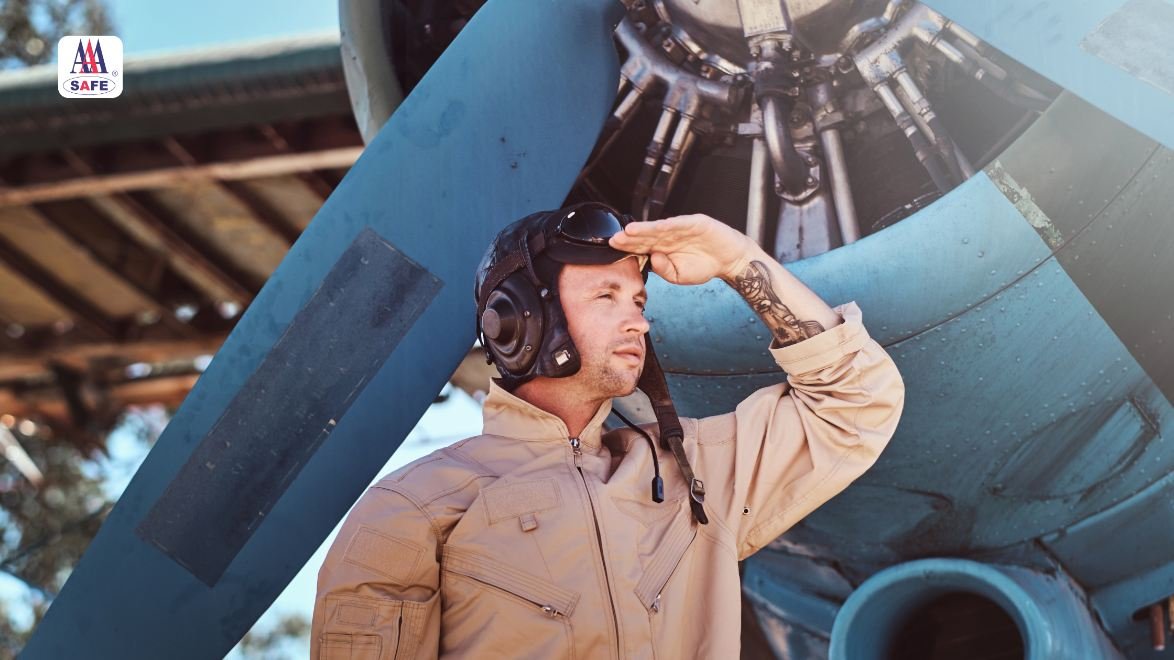
Ever wondered what safety equipment every pilot needs in the UAE when facing temperatures that hit 50°C and sandstorms that ground entire airports? You’re not alone. This question keeps many aviators up at night, especially those new to Middle Eastern operations.
Flying in the UAE presents unique challenges. The combination of extreme desert heat, sudden weather changes, and vast uninhabited areas creates scenarios where having the right gear saves lives. Understanding the safety equipment every pilot needs in the UAE starts with recognizing these environmental factors. What works in Europe or North America might leave you stranded when things go sideways here.
Let me walk you through the essential safety equipment every pilot needs in the UAE when operating in one of the world’s most challenging aviation environments.
Personal Protection Equipment for UAE Aviation
UV protection for desert flying conditions
I’ve seen pilots squinting through instrument panels because they thought regular sunglasses would cut it. Wrong move. UAE’s desert sun combined with altitude exposure creates UV levels that make a beach vacation look gentle.
The desert doesn’t play around. At cruising altitude, with reflection bouncing off sand, concrete, and glass buildings, you’re getting hammered with radiation. This impairs vision and decision-making within hours.
What actually works for pilots
- Aviation-grade sunglasses with wraparound design
- Polarized lenses with 100% UV-A/B protection
- UV-resistant flight clothing for extended exposure
- High-SPF lip balm rated for aviation use
- Flight gloves if you’re sitting window-side
Ever try reading your GPS when desert glare washes everything out? That’s how pilots make dangerous navigation mistakes during critical flight phases.
How does heat affect your performance? Studies show elevated cockpit temperatures impair decision-making and reaction times. Personal cooling vests using phase-change materials maintain comfortable body temperatures during ground operations when air conditioning struggles.
Respiratory protection during dust storms
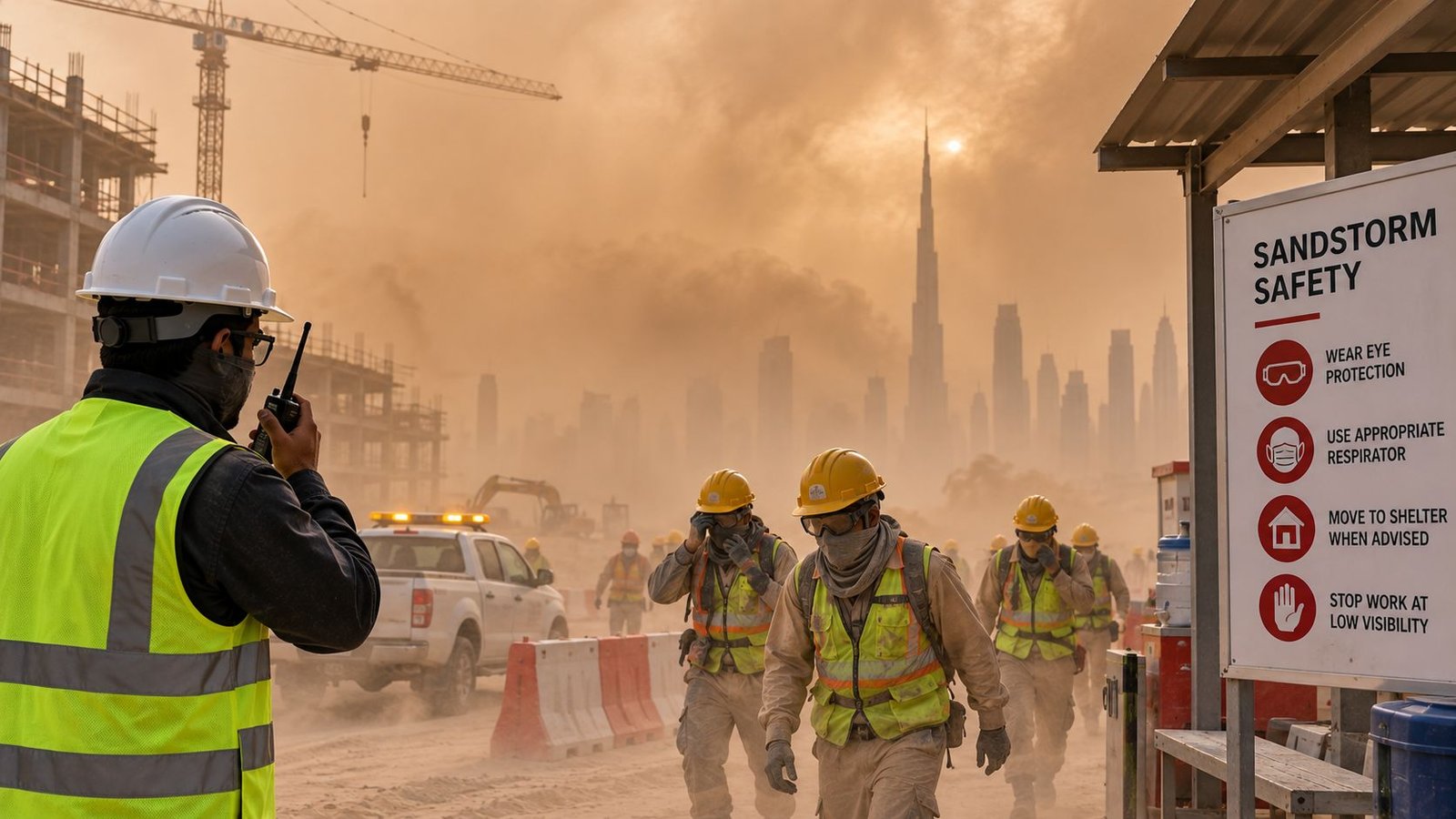
You know those dust storms that roll across the desert? They happen regularly and will mess up your entire operation if you’re unprepared.
Can regular face masks handle UAE dust? Absolutely not. Standard surgical masks provide maybe 20% protection against fine sand particles. You need N95 respirators at minimum.
Here’s what works in practice for pilots
- N95 respirators for pre-flight checks during dusty weather
- Basic dust masks for routine ground operations
- Emergency oxygen supplies rated for aviation use
What’s the most common mistake? Pilots trying to do walkarounds without proper respiratory protection. They spend the flight coughing and unable to concentrate properly.
Need expert guidance on selecting the right safety equipment every pilot needs in the UAE? AAA Safe Dubai provides specialized training and consultation services for UAE aviation compliance. They help pilots understand region-specific equipment requirements and regulatory standards.
GCAA Mandatory Equipment Requirements
Required aviation safety equipment compliance
GCAA doesn’t mess around with compliance. According to UAE Civil Aviation Regulations, pilots must ensure aircraft carry specific items appropriate to their flight operation. These GCAA requirements form the foundation of the safety equipment every pilot needs in the UAE.
Why are UAE standards stricter than many places? Look around. Desert everywhere, extreme weather conditions exist. If something goes wrong, rescue takes much longer than in populated areas.
The officially required categories include
- Fire suppression systems meeting aviation standards
- Emergency medical equipment with trauma capabilities
- Communication devices with backup power
- Navigation systems with redundancy
- Survival equipment appropriate for overflown terrain
What happens if you’re missing required equipment? GCAA inspectors don’t accept “I forgot” as an excuse. Violations ground you immediately and result in significant penalties.
Documentation requirements for legal operations
Paperwork failures can ground you faster than mechanical issues. GCAA inspectors check everything during ramp inspections.
What documentation do you actually need? Current pilot licenses, medical certificates, aircraft registration, and airworthiness certificates exist as requirements. Route-appropriate navigation charts as mandated by GCAA Basic Regulation requirements must be current.
Why is documentation so critical here? UAE serves as a major international hub with strict security and regulatory oversight. Missing or expired documents result in aircraft detention and substantial delays.
Communication Equipment for UAE Airspace
Radio systems for controlled airspace operations
Dubai International handles over 400,000 aircraft movements annually. When ATC coordinates hundreds of aircraft simultaneously and you lose communication, that creates problems for everyone in the system. Proper communication equipment represents essential safety equipment every pilot needs in the UAE
Essential communication equipment for UAE pilots
| System Type | Primary Function | UAE Importance | Regulatory Status |
|---|---|---|---|
| Dual VHF Radios | ATC communication | Critical for controlled airspace | GCAA required |
| Mode S Transponder | Traffic separation | Mandatory for UAE entry | GCAA mandated |
| Emergency Locator Transmitter | Search and rescue | Desert operations essential | Required per regulations |
| Aviation Headsets | Clear communication | Heat-resistant construction needed | Operational necessity |
What’s different about UAE communication requirements? The high traffic density and multiple language considerations make backup communication systems absolutely essential, not just recommended.
Backup communication systems
When your primary radio quits (electronics love failing in extreme heat), what’s your plan? Hope ATC figures it out? That’s not a plan.
Which backup systems actually work? Handheld VHF radios with fresh batteries work well. Satellite communication for remote routes helps. Emergency frequencies programmed and tested regularly matter. When things go wrong, they usually cascade quickly.
Why do backup systems matter more here? UAE’s mix of dense urban airspace and remote desert areas means communication failures quickly escalate. They go from inconvenient to dangerous situations fast.
Desert Survival Safety Equipment Every Pilot Needs in the UAE
Water storage requirements for UAE operations
Everyone says “bring water.” Great advice, but how much? What containers work best? Where do you store it so heat doesn’t turn plastic containers into toxic soup?
What are realistic water requirements? Minimum 2 liters per person for short flights. Store in aircraft-rated containers that won’t degrade in extreme heat. For extended flights over unpopulated areas, increase this to 4+ liters per person.
Where should you store water? Away from direct sunlight and heat sources. Secured against impact damage. Easily accessible during emergencies. Heat-resistant containers rated for aviation use are essential components of safety equipment every pilot needs in the UAE.
Emergency signaling equipment
If you end up on the ground somewhere in the Empty Quarter, how will rescuers find you? Your phone GPS won’t help when the battery dies. There’s no cell coverage for hundreds of miles.
Signaling equipment that works for rescue operations
- Signal mirrors (visible for miles in clear desert air)
- Emergency strobes with extended battery life
- Flares effective in bright daylight conditions
- ELT transmitting accurate location coordinates
Why is signaling so critical? The desert is enormous. Without proper equipment, you become nearly impossible to locate visually. Proper signaling reduces rescue time from days to hours.
What’s the most effective signaling method? Signal mirrors remain one of the most reliable options. They work without batteries. They’re visible for enormous distances in clear desert air. Heat or sand can’t damage them..
Fire Suppression Systems for Aircraft
Required fire suppression equipment
According to GCAA emergency service regulations, aircraft must be equipped with appropriate fire suppression systems. This includes portable extinguishers in crew and passenger compartments.
Why are fire requirements stricter in UAE? The hot, dry climate causes fires to spread faster and burn more intensely. Combined with potential delays in emergency response over remote areas, immediate suppression capability becomes critical.
Required fire suppression equipment for pilots
- Halon 1211 or HFC-227ea extinguishers in appropriate compartments
- Fire blankets constructed from aramid fibers for crew protection
- Protective breathing equipment with minimum 15-minute oxygen supply
What’s different about desert fire suppression? The extreme dryness means fires develop and spread much faster than in humid climates. You get one chance to suppress effectively before situations become uncontrollable.
Protective breathing equipment standards
Why is protective breathing equipment necessary? In fire or smoke situations, maintaining breathable air becomes critical for crew survival and emergency response capability.
According to GCAA regulations on emergency medical services, protective breathing equipment must provide minimum 15-minute oxygen supply. It needs full-face protection for crew members. This equipment must meet international aviation standards for emergency use.
How often should you check breathing equipment? Monthly function tests work well. Annual battery replacement keeps systems ready. Immediate replacement after any use prevents failures. Heat and humidity speed up degradation of seals and valves.
Looking to ensure your aircraft meets all GCAA fire requirements? AAA Safe Dubai offers comprehensive audits and compliance verification services. They specialize in UAE aviation operations. They ensure your equipment meets current regulatory standards.
Medical Equipment for Heat-Related Emergencies
Heat illness prevention supplies
What’s the most common pilot medical issue in UAE? Heat-related illness represents a significant concern during summer operations. Specialized medical supplies become essential for flight safety.
UAE climate medical essentials for pilots
| Medical Category | Specific Items | Application | Quantity Guidelines |
|---|---|---|---|
| Heat Injury Treatment | Cooling packs, electrolyte solutions | Heat exhaustion prevention | Multiple cooling units |
| Dehydration Management | Oral rehydration salts, IV supplies | Rapid fluid restoration | Emergency supply ratios |
| Sun Exposure Care | Burn gel, anti-inflammatory medication | UV injury treatment | Complete treatment kit |
| Respiratory Support | Inhalers, antihistamines | Dust reaction treatment | Multiple-dose supplies |
Why do standard first aid kits fall short? Most kits are designed for temperate climates. They don’t address the specific medical challenges here. Extreme heat, dehydration, and respiratory irritation from sand and dust require specialized supplies.
Medical training requirements
What medical training should pilots have? Basic first aid focusing on heat injury recognition helps. Dehydration management matters. Respiratory distress from environmental factors needs attention. This training should be refreshed annually due to the unique challenges of UAE operations.
Which medications are most important? Electrolyte replacement solutions top the list. Cooling aids help. Antihistamines for allergic reactions to desert dust matter. Burn treatment supplies for heat exposure injuries are essential.
Electronic Safety Systems for Extreme Temperatures
Aviation electronics in desert conditions
What’s challenging about UAE electronics? Modern avionics are great until they start overheating. In 70°C cockpit temperatures during ground operations, they become expensive paperweights.
Critical electronic systems pilots need
- Weather radar for sandstorm and turbulence detection
- Terrain awareness systems for urban obstacle environments
- Traffic collision avoidance for busy airspace management
- Synthetic vision systems for reduced visibility operations
How do you protect electronics from heat? Ensure adequate ventilation first. Use equipment rated for extreme temperature ranges. Have backup systems for critical functions. Electronic failures increase significantly in extreme heat.
Backup navigation systems
Why are backup systems more critical here? UAE’s harsh environment increases equipment failure rates substantially. Redundant systems become essential for continued safe operation rather than just good practice.
| Primary System | Backup Requirement | UAE Importance | Testing Schedule |
|---|---|---|---|
| Primary GPS | Secondary navigation unit | Desert navigation critical | Weekly function check |
| Main VHF Radio | Handheld backup radio | Communication in controlled airspace | Daily battery verification |
| Engine Generator | Battery backup power | Electrical system reliability | Monthly capacity test |
| Flight Displays | Standby analog instruments | Display redundancy | Pre-flight verification |
Training Requirements for Equipment Operation
UAE-specific training standards
What training ensures effective equipment use? GCAA regulations require comprehensive training on emergency equipment operation. Specific emphasis on desert survival scenarios common to UAE operations exists.
Required training components for pilots
- Emergency equipment operation under stress conditions
- Desert survival techniques that actually work in practice
- Heat stress recognition and treatment protocols
- Emergency communication procedures and frequency usage
Why does UAE require enhanced survival training? Search and rescue operations in desert environments take significantly longer than in populated areas. Properly trained pilots have substantially higher survival rates during desert emergencies.
Competency maintenance schedules
How often should training be refreshed? UAE’s unique environment and evolving technology necessitate regular updates. These go beyond standard international requirements.
Training refresh requirements for pilots
- Annual recurrent training on all emergency procedures
- Bi-annual equipment updates covering new technology
- Seasonal briefings for summer heat and winter dust storms
- Incident-based updates incorporating lessons learned
What’s the most common training deficiency? Equipment location and operation procedures account for nearly half of issues during GCAA proficiency checks, according to the UAE State Safety Programme.
Complete Survival Equipment Specifications
Water storage and purification systems
How much water storage makes sense? Beyond basic drinking requirements, consider water for equipment cooling. Medical use matters. Extended survival scenarios need planning. Heat-resistant containers prevent degradation and chemical leaching.
Water system components pilots should carry
- Primary storage of 4+ liters in aircraft-rated containers
- Purification tablets and filtration for emergency water sources
- Collection systems for dew and precipitation capture
- Distribution using multiple smaller containers for rationing
Why multiple containers? If one container fails or is lost, you don’t lose your entire water supply. Distributed storage also makes rationing easier during extended survival situations.
Shelter and protection equipment
What shelter works in desert conditions? Lightweight, reflective materials that provide sun protection while allowing air circulation work best. Traditional camping gear often fails in extreme desert heat.
Effective shelter components for pilots
- Reflective emergency blankets for sun protection
- Ventilated ground covers preventing heat transfer
- Portable shade structures for extended ground time
- Wind barriers for dust storm protection
How do you stay cool without power? Evaporative cooling techniques help. Reflective barriers work. Positioning relative to aircraft wreckage for shade matters. Understanding desert cooling principles can be life-saving.
Navigation and location equipment
Why can’t you rely on GPS alone? Solar activity affects signals. Electronic interference in urban areas disrupts service. Equipment failures happen. Backup navigation becomes essential for ground movement toward rescue.
Navigation backup systems for pilots
- Magnetic compass (unaffected by electronic failures)
- Detailed topographic maps of UAE terrain
- Sun angle navigation techniques
- Star navigation basics for night movement
What’s different about desert navigation? Landmarks are scarce. Distances are deceptive. Heat shimmer affects visibility. Traditional navigation skills become more important than in other environments.
Equipment Investment and Cost Analysis for Safety Equipment Every Pilot Needs in the UAE
Priority ranking for investments
Which equipment provides the best return? Focus on items that address UAE’s specific risks. Heat matters. Dehydration is critical. Navigation challenges exist. Extended rescue times are real.
Priority ranking for equipment investment
| Priority Level | Equipment Category | Cost Range (AED) | Impact | UAE Relevance |
|---|---|---|---|---|
| Critical | Water storage, ELT, communication | 2,000-5,000 | Life-saving | Extreme |
| High | UV protection, heat management | 1,000-3,000 | Health protection | Very high |
| Important | Medical supplies, navigation backup | 500-2,000 | Injury prevention | High |
| Recommended | Comfort items, convenience gear | 200-1,000 | Operational efficiency | Moderate |
Why prioritize this way? In survival situations, you need life-sustaining equipment first. Health protection comes second. Everything else becomes secondary to basic survival needs.
Long-term ownership costs
What are the hidden costs? Equipment replacement due to heat degradation happens faster here. Training requirements add up. Regulatory compliance costs money. Insurance considerations factor into total ownership costs.
How does UAE climate affect replacement schedules? Expect 30-50% shorter equipment life. Extreme heat causes this. UV exposure speeds degradation. Sand abrasion wears components. Budget for more frequent replacement of batteries, seals, and electronic components.
Ready to develop a comprehensive plan for the safety equipment every pilot needs in the UAE? AAA Safe Dubai specializes in helping pilots select, maintain, and manage equipment. They offer expert consultation tailored to your specific aircraft type and operational requirements in UAE conditions.
Regional Equipment Suppliers and Sources
UAE aviation equipment suppliers
Where can you get proper equipment? Several established suppliers serve UAE aviation markets. This includes specialized desert survival equipment designed for Middle Eastern conditions.
What should you look for in suppliers? GCAA certification matters most. Aviation-specific expertise helps. Local service capability is important. Understanding of UAE environmental challenges makes a difference. Generic outdoor equipment often doesn’t meet aviation standards.
Key supplier considerations for pilots
- Aviation certification compliance (TSO, ETSO markings)
- Local service and calibration capability
- UAE climate-specific equipment knowledge
- Emergency replacement part availability
Why use local suppliers? They understand UAE-specific requirements. They provide faster service. They often have experience with similar operational challenges.
Equipment certification verification
How do you verify equipment meets requirements? Look for appropriate aviation certifications first. Temperature ratings covering UAE extremes matter. Documentation proving regulatory compliance is essential.
What certifications matter? TSO (Technical Standard Order) is important. ETSO (European TSO) works too. Equivalent international standards ensure equipment meets aviation requirements rather than just general specifications.
Frequently Asked Questions
According to GCAA requirements, all aircraft must carry fire extinguishers, first aid kits, and ELTs for appropriate operations. Required documentation includes current licenses and medical certificates. Water supplies (minimum 2L per person) are strongly recommended for flights over unpopulated areas. Always consult current regulations at gcaa.gov.ae for specific requirements.
UAE’s heat and UV exposure speed up equipment breakdown. Batteries need replacement 30-40% more frequently. Life rafts require 6-monthly instead of annual inspections. Survival kit contents need regular rotation to prevent spoilage. Electronic components may fail earlier due to thermal stress. This requires more frequent testing and replacement.
Summer operations require better cooling equipment. You need increased water supplies (4+ liters per person). Heat-stress medical supplies matter more. Winter brings more frequent dust storms. These require respiratory protection. Visibility equipment helps. Protection for electronics against sand infiltration becomes critical. Both seasons demand UV protection due to intense desert sun reflection.
Some overlap exists between camping and aviation survival gear. However, aviation equipment addresses specific crash scenarios. It meets regulatory requirements. Performance standards differ from camping gear. GCAA requires aviation-certified equipment for mandatory items. Quality outdoor gear can supplement aviation supplies. It shouldn’t replace required certified equipment.
Minimum 2 liters per person works for flights under 2 hours over populated areas. Increase to 4+ liters per person for extended flights over desert regions. Consider that survival time in 45°C heat without adequate hydration can be as little as 6-12 hours. Store water in aircraft-rated containers designed for extreme temperature exposure and UV resistance.
GCAA inspectors verify equipment presence first. They check serviceability dates. Proper stowage matters. Crew familiarity with operation procedures gets tested. They commonly check fire extinguisher pressure. ELT battery dates get verified. First aid kit completeness is reviewed. Survival equipment condition gets assessed. Violations result in immediate grounding until deficiencies are corrected. Penalties range from warnings to license enforcement action.
Dual VHF radios are mandatory for UAE airspace operations. Mode S transponder capability is required. Handheld backup radios with fresh batteries provide essential redundancy. This protects against primary system failure. ELTs are required for operations over remote areas. Quality aviation headsets with heat-resistant construction are essential. Clear communication in high-traffic UAE airspace depends on them.
Look for equipment with temperature ratings covering -20°C to +85°C. UV resistance certifications matter. Sealed construction preventing sand and dust infiltration is essential. Test equipment regularly under actual operating conditions when possible. Replace items showing UV damage. Temperature warping indicates problems. Performance degradation needs attention. Maintain detailed inspection logs documenting condition and testing results.
Important Notice This guide provides general information about pilot equipment for UAE operations. Information comes from publicly available sources and industry best practices. Always consult current GCAA regulations at www.gcaa.gov.ae for official requirements. Verify equipment specifications with certified aviation specialists. They understand UAE operational requirements and regulatory compliance.
The safety equipment every pilot needs in the UAE goes far beyond basic international requirements. This stems from the region’s unique environmental challenges and operational demands. Understanding these requirements matters. Investing in appropriate equipment represents a critical component of safe aviation operations. UAE presents one of the world’s most challenging flying environments.
Success in UAE aviation requires several elements. Systematic equipment planning comes first. Regular maintenance adapted to extreme conditions matters. Comprehensive training on UAE-specific challenges is essential. Ongoing performance monitoring ensures continued effectiveness. The investment in proper safety equipment every pilot needs in the UAE provides essential protection during emergency scenarios. It ensures regulatory compliance with GCAA standards.
Ready to ensure your equipment meets UAE operational requirements?
Consult with GCAA-certified aviation specialists. They understand local regulatory requirements. They know environmental challenges. They can specify equipment appropriate for your specific aircraft type and operational profile in UAE’s demanding aviation environment.