
Last month I walked through a warehouse in Dubai Industrial City where a worker was using a safety harness with a frayed webbing strap. The damage was obvious once you looked closely, but no one had noticed because the equipment had not been properly inspected since it was issued eight months earlier. That harness would have failed under load. Someone would have been seriously injured or killed.
This is why a proper monthly PPE inspection procedure matters. Not the checkbox exercise that many companies perform to satisfy auditors, but a genuine systematic evaluation that catches equipment failures before they cause harm. I have seen too many UAE facilities where PPE inspections exist on paper but fail to identify obvious defects that put workers at risk every shift.
The difference between facilities with strong safety records and those with frequent incidents often comes down to how seriously they take equipment inspection. A monthly PPE inspection procedure that actually works requires understanding what to look for, training inspectors properly, documenting findings accurately, and acting on results promptly.
This guide provides the practical framework you need to implement effective PPE inspections across your UAE operations. We will cover inspection criteria for each equipment category, documentation requirements that satisfy MOHRE and emirate authorities, and the organizational systems that make inspections sustainable rather than burdensome.
Why Monthly PPE Inspections Are Non-Negotiable
Before examining specific procedures, you need to understand why monthly inspections represent the minimum acceptable frequency for most PPE categories.
The Reality of PPE Degradation
Personal protective equipment degrades through use, environmental exposure, and time. This degradation is often invisible until failure occurs. UV radiation weakens polymer materials in hard hats and safety glasses. Repeated flexing fatigues fall protection webbing. Chemical exposure compromises glove barrier properties. Compression damages respirator seals.
Workers rarely notice gradual degradation. A hard hat that has lost significant impact resistance looks identical to a new one. Safety glasses with microscopic stress fractures appear completely intact. Gloves with compromised chemical resistance show no visible change until a worker experiences a chemical burn.
Monthly inspections catch degradation before it reaches the failure point. This frequency balances thoroughness against operational practicality for most equipment types. Some high-risk equipment requires more frequent inspection, which we will address in the equipment-specific sections.
UAE Regulatory Requirements
UAE Federal Decree Law No. 33 of 2021 on labor relations requires employers to provide and maintain personal protective equipment. MOHRE regulations specify that PPE must be kept in good working condition, which necessitates regular inspection.
The Abu Dhabi Occupational Safety and Health System Framework under ADOSH-SF Element 1 requires employers to establish systems for PPE selection, use, and maintenance. This includes documented inspection protocols with defined frequencies.
Dubai Municipality construction safety requirements mandate PPE compliance monitoring throughout project duration. Inspectors verify that contractors maintain equipment in serviceable condition, and inspection records demonstrate compliance during regulatory audits.
Facilities in Sharjah, Ajman, and other emirates face similar requirements under their respective municipal regulations. A consistent monthly PPE inspection procedure across all locations simplifies compliance management for companies operating throughout the UAE.
The Business Case for Thorough Inspections
Beyond regulatory compliance, effective PPE inspections deliver measurable business benefits. Equipment failures that cause injuries result in workers’ compensation claims averaging AED 50,000 to AED 200,000 for serious incidents. MOHRE fines for PPE violations range from AED 5,000 to AED 50,000 per occurrence. Project delays from safety incidents can cost far more than the inspection time invested in prevention.
Proper inspections also extend equipment service life. Catching minor damage early often allows repair rather than replacement. Identifying environmental factors that accelerate degradation enables corrective action that protects entire equipment inventories.
Establishing Your Monthly PPE Inspection Procedure
An effective monthly PPE inspection procedure requires defined responsibilities, consistent scheduling, standardized criteria, and proper documentation. Here is how to build each component.
Assigning Inspection Responsibilities
Decide who will conduct inspections and ensure they have adequate training. Options include dedicated safety personnel conducting all inspections, supervisors inspecting equipment for their teams, workers inspecting their own assigned equipment with supervisor verification, or combinations of these approaches.
Each approach has advantages. Dedicated safety personnel bring expertise and consistency but may not know how equipment is actually used. Supervisors understand operational context but may lack detailed inspection knowledge. Worker self-inspection builds ownership but requires verification to ensure thoroughness.
For most UAE facilities, I recommend a layered approach. Workers conduct basic pre-use checks before each shift. Supervisors perform weekly visual inspections. Trained safety personnel or competent inspectors conduct detailed monthly inspections using standardized criteria and documentation.
Creating an Inspection Schedule
Monthly inspections should occur on consistent dates to establish routine and ensure nothing is missed. Choose dates that align with operational patterns rather than fighting against them.
Sample Monthly Inspection Schedule
| Week | Activity | Responsible Party |
|---|---|---|
| Daily | Pre-use visual check | Individual workers |
| Weekly | Supervisor spot check | Department supervisors |
| First Monday of month | Full monthly inspection | Safety personnel |
| Following 48 hours | Address findings, replace equipment | Safety/procurement |
| End of month | Documentation review | Safety manager |
Build buffer time after inspections to address findings before the next inspection cycle. Equipment identified as defective must be removed from service immediately, but replacement procurement may require several days.
For expert assistance establishing a monthly PPE inspection procedure tailored to your UAE operations, AAA Safe Dubai provides inspection program development services for facilities across Dubai, Abu Dhabi, and Sharjah.
Developing Inspection Criteria
Generic inspection checklists often miss equipment-specific failure modes. Effective criteria address the specific ways each PPE type degrades and fails.
Your inspection criteria should specify exactly what to examine on each equipment type, define clear pass/fail standards for each criterion, include measurement requirements where applicable, and reference manufacturer guidelines for equipment-specific requirements.
The following sections provide detailed criteria for major PPE categories. Adapt these to your specific equipment and operational context.
Head Protection Inspection Criteria
Hard hats and bump caps require monthly inspection for structural integrity and component condition.
Shell Inspection
Examine the entire shell surface for cracks, dents, penetrations, or deformation. Even hairline cracks compromise impact protection. Check for chalking, fading, or surface degradation indicating UV damage. Polymer shells exposed to UAE sunlight degrade faster than manufacturer ratings suggest.
Perform the flex test by holding the hard hat brim and pressing inward on opposite sides. The shell should flex slightly and return to shape. Shells that remain deformed, make cracking sounds, or feel brittle require replacement regardless of visible condition.
Check the manufacturing date stamp. Most manufacturers recommend replacement every two to five years regardless of condition. UAE environmental conditions with intense UV exposure and high temperatures typically warrant replacement at the shorter end of this range. Facilities across the UAE should factor these environmental stressors into replacement schedules.
Suspension System Inspection
| Component | Inspection Point | Fail Criteria |
|---|---|---|
| Shell exterior | Cracks, dents, penetrations | Any visible damage |
| Shell surface | UV degradation, chalking | Significant fading or texture change |
| Shell flexibility | Flex test | Deformation, cracking sounds, brittleness |
| Manufacturing date | Date stamp | Exceeds manufacturer replacement interval |
| Suspension attachment | Connection points | Loose, damaged, or missing attachments |
| Suspension webbing | Straps and bands | Fraying, cuts, loss of elasticity |
| Adjustment mechanism | Ratchet or pin-lock | Fails to adjust or hold position |
| Sweatband | Headband condition | Deterioration, contamination, odor |
Eye and Face Protection Inspection Criteria
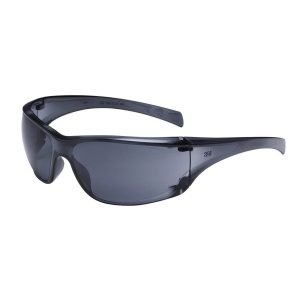
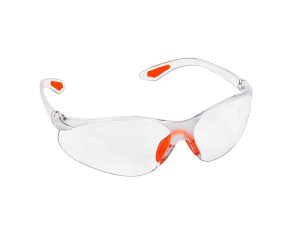
Safety glasses, goggles, and face shields require inspection for optical clarity, frame integrity, and protective capability.
Lens Inspection
Hold lenses up to light and examine for scratches, pitting, cracks, or crazing. Minor scratches reduce visual clarity but may remain serviceable. Deep scratches, pitting, or any cracks require replacement. Crazing, which appears as a network of fine lines, indicates material degradation and immediate replacement need.
Check for discoloration that affects visibility or indicates UV damage. Verify that any special coatings like anti-fog or anti-scratch remain functional. Test polarized or tinted lenses to ensure filtering properties are intact.
For prescription safety glasses, verify that lenses remain properly seated in frames and that prescription markings match the worker’s current requirements.
Frame Inspection
Examine frames for cracks, warping, or damage at stress points. Check temple arms for proper tension and secure attachment. Verify that hinges operate smoothly without excessive looseness. Inspect nose pieces for wear and proper positioning.
For goggles, examine the seal material for hardening, cracking, or compression set. Test elastic headbands for adequate tension. Verify that ventilation ports are clear and functioning.
Face shields require inspection of the mounting hardware, headgear condition, and shield attachment security. Check that shields pivot smoothly and lock in position.
Marking Verification
Confirm that ANSI Z87.1 or equivalent standard markings remain legible on frames and lenses. Missing or illegible markings may indicate counterfeit products or equipment that has exceeded its service life.
Hand Protection Inspection Criteria
Gloves vary significantly by type, and inspection criteria must match glove construction and intended hazard protection.
General Inspection for All Glove Types
Check both gloves as a pair. Examine exterior surfaces for cuts, punctures, abrasions, or material thinning. Inspect seams for separation or deterioration. Look for stiffening, hardening, or loss of flexibility that affects dexterity.
Perform the inflation test for liquid-proof gloves. Roll the cuff tightly while trapping air inside, then squeeze gently. Air escaping indicates punctures requiring replacement. For chemical-resistant gloves, this test is essential before each use in addition to monthly inspection.
Check interior surfaces for contamination, moisture damage, or liner deterioration. Contaminated glove interiors can cause skin irritation or transfer hazardous materials to workers’ hands.
Chemical-Resistant Glove Specific Criteria
Chemical-resistant gloves degrade through permeation, penetration, and material breakdown. Visual inspection cannot detect permeation, so strict adherence to manufacturer service life recommendations is essential.
Track glove exposure history. Gloves exposed to chemicals outside their rated resistance require immediate replacement. Even brief contact with incompatible chemicals can compromise protection for future use.
Check thickness at high-wear areas using calipers if available. Thinning beyond manufacturer specifications indicates replacement need even without visible damage.
Cut-Resistant Glove Specific Criteria
| Glove Type | Critical Inspection Points | Replacement Triggers |
|---|---|---|
| General purpose | Cuts, punctures, wear | Any penetration, significant thinning |
| Chemical-resistant | Inflation test, service life | Failed inflation, exceeded exposure limits |
| Cut-resistant | Fiber integrity, coating condition | Visible fiber damage, coating failure |
| Welding | Leather condition, stitching | Stiffening, cracking, seam failure |
| Insulated electrical | Inflation test, date marking | Any damage, exceeded test interval |
Fall Protection Equipment Inspection
Fall protection equipment requires the most rigorous inspection due to the catastrophic consequences of failure. Monthly inspection is the minimum frequency, with visual inspection required before each use.
Full Body Harness Inspection
Examine all webbing for fraying, cuts, abrasion, chemical damage, burns, or UV degradation. Pay particular attention to edges and areas that contact hardware. Check for pulled or broken stitching, particularly at load-bearing connection points.
Inspect all hardware including D-rings, buckles, and adjustment mechanisms. D-rings should be free of cracks, distortion, or corrosion. Buckles must engage and release properly. Tongue buckles should show no deformation of the tongue or frame.
Check labels for legibility. If manufacturer labels are illegible, the harness should be removed from service as inspection history and load ratings cannot be verified.
Verify that the harness has not been subjected to fall arrest loading. Any harness that has arrested a fall must be removed from service immediately and inspected by a competent person before potential return to service, though most manufacturers recommend replacement.
Lanyard and Lifeline Inspection
Inspect the full length of lanyards and lifelines for damage. Check webbing lanyards using the same criteria as harness webbing. Wire rope components require inspection for broken strands, kinking, corrosion, and bird-caging.
Examine snap hooks and carabiners for proper gate operation, locking mechanism function, and any deformation or corrosion. Gates should close completely and lock securely. Self-locking mechanisms must engage automatically.
For self-retracting lifelines, verify that the unit extracts and retracts smoothly. Check the housing for damage and ensure mounting hardware is secure. Test the braking mechanism per manufacturer guidelines.
Anchor Point Inspection
While not PPE in the traditional sense, anchor points are critical components of fall protection systems. Monthly inspection should verify anchor point integrity, load rating markings, and proper installation condition.
Does your facility need assistance establishing a monthly PPE inspection procedure for fall protection equipment? AAA Safe Dubai provides competent person training and fall protection inspection services throughout Dubai, Abu Dhabi, Sharjah, and across the UAE.
Respiratory Protection Inspection Criteria
Respirators require careful inspection to ensure seal integrity and filter effectiveness.
Facepiece Inspection
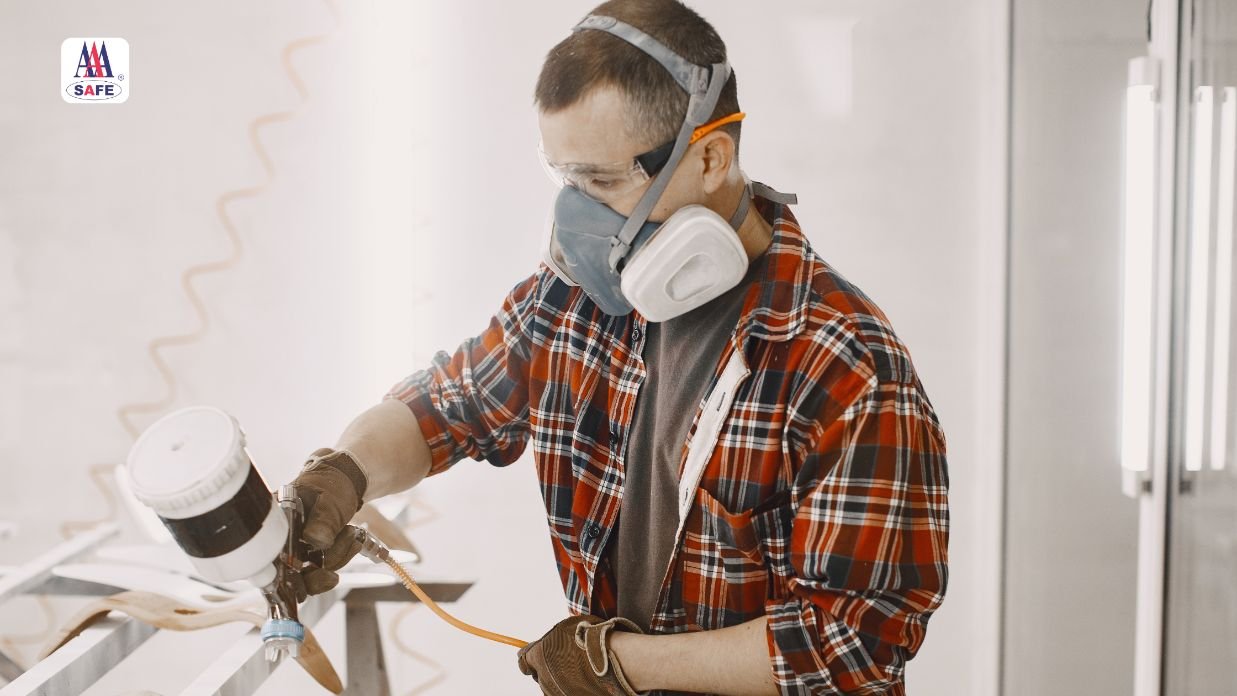
Examine the facepiece for cracks, tears, holes, or distortion. Check the sealing surface that contacts the face for any irregularities that could compromise fit. Inspect inhalation and exhalation valves for damage, debris, or improper seating.
For full-face respirators, examine the lens for cracks, crazing, or scratches that impair vision. Check the lens seal and retaining ring for secure attachment.
Test headstrap elasticity and examine for deterioration. Straps should provide adequate tension to maintain seal without excessive tightness.
Filter and Cartridge Inspection
Verify that filters and cartridges are appropriate for workplace hazards. Check expiration dates and ensure cartridges have not exceeded their service life. Examine filter media for visible contamination, damage, or moisture intrusion.
For chemical cartridges, verify that end-of-service indicators function properly if equipped. Track cartridge use time against manufacturer breakthrough time recommendations for workplace contaminant concentrations.
Respirator Function Testing
Conduct positive and negative pressure seal checks to verify facepiece integrity. For positive pressure check, cover the exhalation valve and exhale gently. The facepiece should bulge slightly without air escaping. For negative pressure check, cover filter inlets and inhale. The facepiece should collapse slightly and hold.
Powered air-purifying respirators require battery testing, airflow verification, and alarm function checks per manufacturer specifications.
Hearing Protection Inspection Criteria
Hearing protection often receives less inspection attention than other PPE categories, but degradation can significantly reduce protection levels.
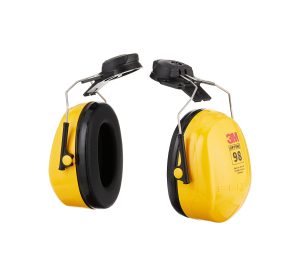
Earmuff Inspection
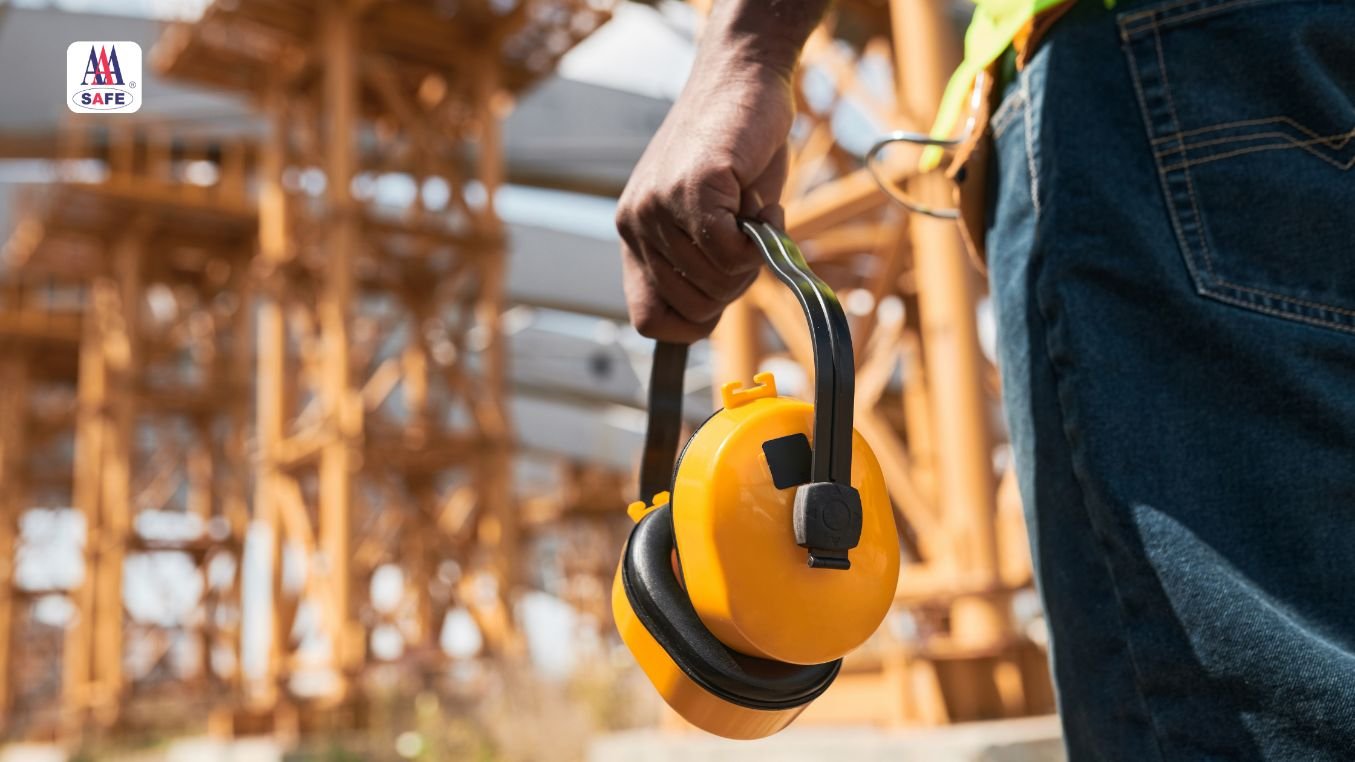
Check cushion condition for hardening, cracking, or loss of resilience. Cushions that do not return to shape after compression fail to seal properly. Examine cushion surfaces for tears or contamination that prevents proper seal against the head.
Inspect headbands for adequate tension. Bands that have lost tension do not press cushions firmly enough for proper seal. Check adjustment mechanisms for proper function.
Verify that cups are free of cracks and that internal foam is intact. Damaged foam reduces noise attenuation.
Earplug Inspection
Reusable earplugs require inspection for shape retention, surface condition, and hygiene. Plugs should return to original shape after compression. Surface damage or contamination requires replacement.
Check storage cases for contamination. Dirty storage cases recontaminate cleaned earplugs.
Disposable earplugs should be replaced daily and are not suitable for monthly inspection programs. However, verify that adequate supplies remain available and that storage conditions maintain plug integrity.
Foot Protection Inspection Criteria
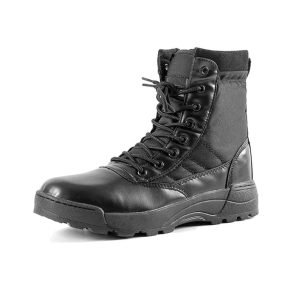
Safety footwear protects against multiple hazards and requires inspection of structural and protective components.
Upper Inspection
Examine leather or synthetic uppers for cuts, cracks, separation from soles, or excessive wear. Check stitching for integrity, particularly at high-stress areas around the toe box and heel counter.
For chemical-resistant footwear, inspect material condition and check for signs of chemical damage or degradation. Verify that all seams remain sealed.
Protective Component Inspection
Verify steel or composite toe cap integrity by examining the toe area for deformation or damage. Toe caps that have sustained impact may be compromised even without visible damage.
Check metatarsal guards for secure attachment and proper coverage. Examine puncture-resistant midsoles or plates for any breach.
For electrical hazard rated footwear, verify that the sole remains intact without cuts or holes that could compromise electrical protection.
Sole Inspection
Examine outsoles for excessive wear, especially in traction areas. Check for separation from uppers and any damage that compromises waterproofing or chemical resistance. Inspect midsoles for compression or degradation affecting cushioning and support.
Documentation Requirements
Proper documentation transforms inspections from informal checks into defensible compliance records.
Essential Documentation Elements
Every inspection record should include equipment identification with unique identifier or serial number, inspection date and inspector name, checklist of all criteria examined, pass/fail determination for each criterion, description of any defects found, action taken for failed equipment, and inspector signature.
Inspection Documentation Template
| Field | Content Required |
|---|---|
| Equipment ID | Serial number or asset tag |
| Equipment type | Specific PPE category and model |
| Assigned worker | Name and employee ID |
| Inspection date | Day, month, year |
| Inspector | Name and qualification |
| Criteria checked | List of all inspection points |
| Findings | Pass/fail for each criterion |
| Defects noted | Description of any issues |
| Action taken | Repair, replace, return to service |
| Next inspection due | Date of next scheduled inspection |
| Signatures | Inspector and supervisor |
Record Retention
UAE regulations do not specify exact retention periods for PPE inspection records. Best practice is to retain records for at least five years or the equipment service life plus two years, whichever is longer. This provides documentation for any incident investigations and demonstrates ongoing compliance.
Store records in accessible format, whether paper or electronic. Electronic systems offer advantages for tracking inspection histories, scheduling upcoming inspections, and generating compliance reports.
Tracking Equipment Through Its Lifecycle
Effective programs track each piece of equipment from procurement through disposal. This tracking should include purchase date and manufacturer information, assignment history showing which workers have used the equipment, all inspection records throughout service life, any maintenance or repairs performed, and reason and date of disposal.
This lifecycle documentation supports warranty claims, identifies equipment with recurring issues, and provides complete records for regulatory inquiries.
Training Inspectors
Inspection quality depends entirely on inspector competence. Untrained inspectors miss defects that trained eyes catch immediately.
Inspector Qualification Requirements
Inspectors should understand the hazards each PPE type protects against, how equipment provides that protection, how equipment degrades and fails, specific inspection criteria for each equipment type, proper documentation procedures, and authority to remove defective equipment from service. UAE employers in Dubai, Abu Dhabi, and other emirates should verify inspector qualifications meet regulatory expectations.
For fall protection equipment, OSHA and international standards require inspection by a “competent person” with specific training. While UAE regulations do not use this exact terminology, the principle applies. Fall protection inspectors should have formal training in fall protection systems and inspection procedures. Abu Dhabi OSHAD requirements emphasize competence verification for safety-critical tasks.
Training Content
Inspector training should include classroom instruction on inspection principles and criteria, hands-on practice with examples of defective equipment, supervised inspections with feedback, documentation practice, and periodic refresher training.
Provide inspectors with reference materials they can consult during inspections. Laminated cards with equipment-specific criteria help ensure consistent, thorough inspections.
Maintaining Inspector Competence
Schedule annual refresher training to reinforce skills and introduce any new equipment or updated criteria. Include lessons learned from any incidents involving equipment failures.
Consider third-party certification for fall protection equipment inspectors. Certified inspectors demonstrate competence and add credibility to your inspection program.
Common Inspection Failures to Avoid
Even well-intentioned inspection programs fail when they fall into common traps.
Rushing Through Inspections
Time pressure leads to superficial inspections that miss defects. Allocate adequate time for thorough inspection of each item. A complete monthly PPE inspection procedure for a single worker’s equipment should take 10 to 15 minutes, not 2 minutes.
Inspecting Dirty Equipment
Dirt and contamination hide defects. Clean equipment before inspection to enable thorough examination. This also provides opportunity to identify equipment that workers are not maintaining properly between inspections.
Failing to Act on Findings
Inspection without action is pointless. Defective equipment identified during inspection must be immediately removed from service. Replacement must be provided before workers return to tasks requiring that protection. Track time between identification and resolution.
Inconsistent Criteria Application
Different inspectors applying different standards leads to unreliable results. Standardize criteria, provide clear pass/fail definitions, and periodically audit inspection quality by having multiple inspectors examine the same equipment.
Inadequate Documentation
Incomplete records provide no compliance protection. If it is not documented, it did not happen from a regulatory perspective. Enforce complete documentation as a non-negotiable requirement.
Frequently Asked Questions
Most PPE requires visual inspection before each use and formal documented inspection at least monthly. High-risk equipment like fall protection harnesses and lifelines may require more frequent inspection based on use intensity and manufacturer requirements. Some equipment types also require periodic testing beyond visual inspection. Your monthly PPE inspection procedure should specify frequencies for each equipment category based on hazard level and manufacturer guidelines.
Inspectors should be trained in the specific inspection criteria for equipment they examine. For general PPE like hard hats, safety glasses, and gloves, trained supervisors or safety personnel can conduct inspections. Fall protection equipment inspection requires a competent person with specific training in fall protection systems. Respiratory protection inspections require understanding of respirator function and fit testing requirements.
UAE regulations require employers to maintain PPE in good working condition, which implies documented inspection records. While specific documentation formats are not mandated, best practice includes equipment identification, inspection date, inspector name, criteria examined, findings, and actions taken. Retain records for at least five years to support incident investigations and demonstrate ongoing compliance to MOHRE and emirate authorities.
Workers should conduct pre-use visual checks before each shift and report any concerns to supervisors. However, formal monthly inspections should be performed by trained inspectors who can identify defects workers might miss. Worker self-inspection builds ownership but requires verification to ensure thoroughness. A layered approach with daily worker checks, weekly supervisor reviews, and monthly formal inspections provides the most reliable protection.
Equipment that fails inspection must be immediately removed from service and either repaired, if manufacturer guidelines permit repair, or disposed of properly. Workers must receive replacement equipment before returning to tasks requiring that protection. Document the defect found, action taken, and replacement provided. Track patterns in inspection failures to identify equipment quality issues or usage practices that cause premature degradation.
Assign unique identifiers to each piece of equipment and maintain a master schedule of inspection due dates. Electronic systems simplify tracking for larger workforces. Group inspections by department or work area to make monthly inspection rounds efficient. Set reminder systems to ensure inspections occur on schedule. Track inspection completion rates and address any patterns of missed inspections.
Inspectors need training on hazards each PPE type protects against, how equipment provides protection and how it fails, specific inspection criteria for each equipment type, proper documentation procedures, and authority to remove defective equipment. Fall protection inspectors should have formal competent person training. Consider third-party certification programs for inspectors of critical life safety equipment.
Best practice is to retain records for at least five years or the equipment service life plus two years, whichever is longer. This provides documentation for incident investigations, warranty claims, and regulatory inquiries. Store records in accessible format and maintain backup copies. Electronic record systems offer advantages for long-term storage and retrieval.
Some equipment types permit repair per manufacturer guidelines. Hard hat suspensions and respirator straps may be replaceable components. However, structural damage to primary protective elements typically requires equipment replacement. Never attempt repairs not authorized by the manufacturer. When in doubt, replace rather than risk equipment failure. Document all repairs including replacement parts used.
Manufacturer guidelines provide the foundation for inspection criteria. These guidelines specify inspection frequencies, criteria, service life limits, and acceptable repair procedures. Always follow manufacturer recommendations as minimum requirements. Your monthly PPE inspection procedure should incorporate all manufacturer-specified inspection points while adding any additional criteria warranted by your specific workplace conditions.
Important Notice
This guide provides general information about PPE inspection procedures for educational purposes. It is not a substitute for professional safety consultation, manufacturer guidelines, or official regulatory requirements.
PPE inspection requirements vary based on equipment type, manufacturer specifications, workplace hazards, and applicable UAE regulations. Employers must develop inspection programs appropriate for their specific equipment and operations.
Always follow manufacturer inspection guidelines for specific equipment. Contact MOHRE, OSHAD, or relevant emirate authorities for current regulatory requirements. Consult qualified safety professionals when developing inspection programs for high-risk equipment.
This guide is informational only and does not replace professional safety consultation.
Building a Sustainable Inspection Program
A monthly PPE inspection procedure only works when it becomes embedded in organizational routine. Start by auditing your current equipment inventory. Identify all PPE in use, verify manufacturer guidelines for each type, and establish inspection criteria that meet both manufacturer requirements and UAE regulatory expectations.
Train your inspectors thoroughly before launching formal inspections. Invest in training quality upfront rather than correcting poor inspection practices later. Provide reference materials and ongoing support.
Build inspection time into work schedules rather than expecting inspections to happen in spare moments. Schedule specific inspection periods, track completion rates, and address barriers that prevent thorough inspections.
Review inspection results monthly to identify patterns. High failure rates for specific equipment may indicate quality issues, improper use, or environmental factors requiring attention. Use inspection data to drive continuous improvement.
For ongoing support implementing a monthly PPE inspection procedure that meets UAE regulatory requirements and protects your workforce, AAA Safe Dubai partners with facilities throughout Dubai, Abu Dhabi, Sharjah, and across the UAE to build sustainable safety programs.
Your workers depend on their protective equipment every shift. Make sure that equipment deserves their trust.