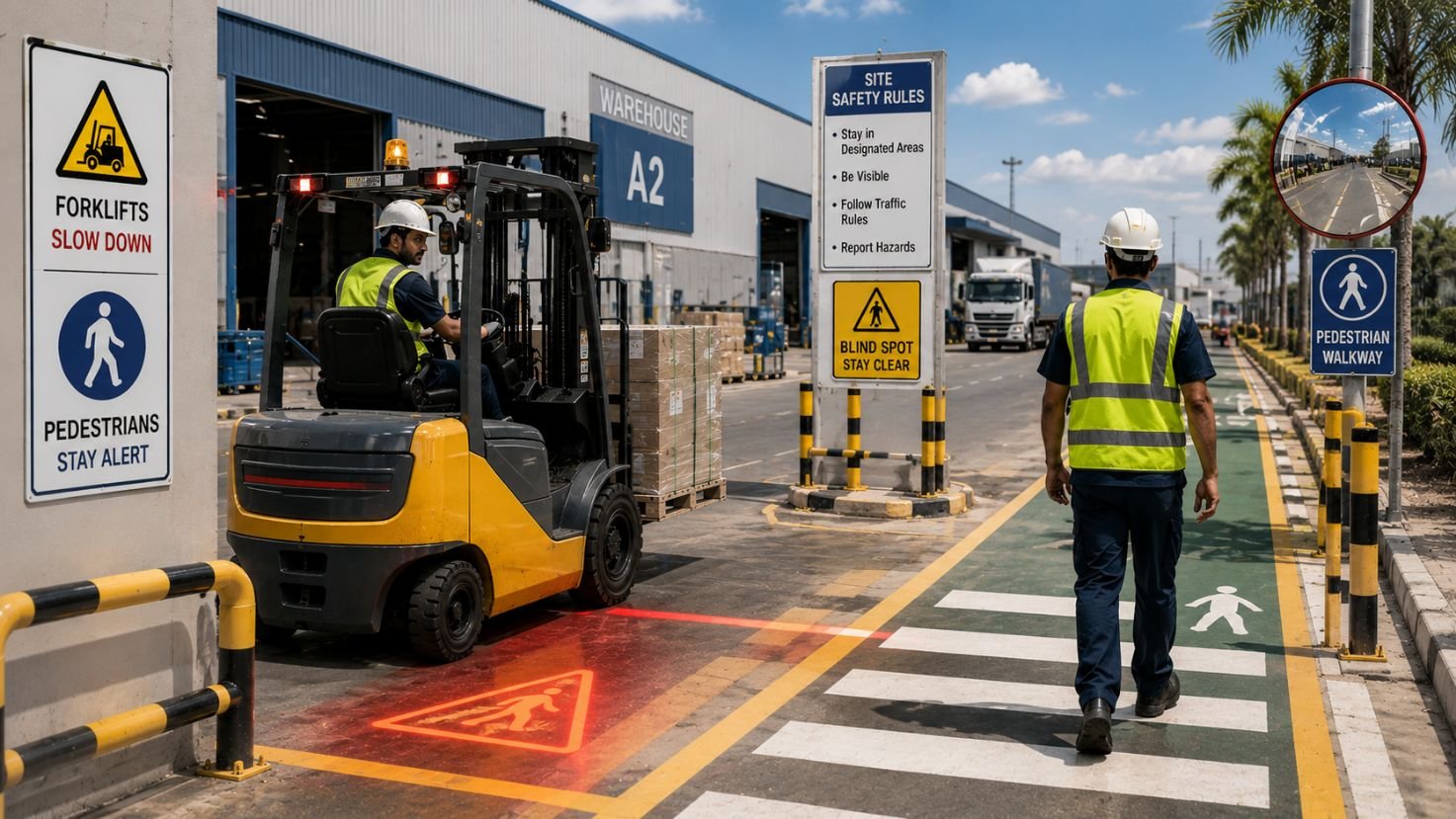
Forklift and pedestrian collisions remain one of the most common causes of serious injury inside UAE warehouses and distribution centres. Most incidents happen at blind corners, dock doors, and racking aisles where a forklift operator and a walking worker occupy the same space at the same moment. The fix is rarely a single product. It is a combination of route design, visibility, and a warning system that gives both parties enough time to react.
This matters more in the UAE than in many other markets because warehouse density has grown quickly across Dubai, Abu Dhabi, and Sharjah free zones, often inside converted or shared facilities where aisle widths and traffic patterns were not designed with mixed forklift and foot traffic in mind. Facility managers inheriting these layouts need practical, low-cost controls that work within the space they already have.
Why Forklift and Pedestrian Incidents Keep Happening
Three conditions repeat across most forklift pedestrian incidents. The first is a shared walkway with no physical or visual separation. The second is a blind corner, doorway, or racking gap where neither party can see the other until they are within a few metres. The third is noise. Warehouse floors are loud, and a reversing alarm or horn easily gets lost among conveyor noise, packing lines, and other vehicle movement.
Shared Space Without Separation
Painted lines fade fast on high traffic floors and many facilities never repaint them. A route that looked separated on the day it was marked can become a shared corridor within months.
Blind Corners and Restricted Sightlines
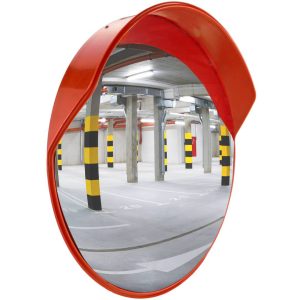
Racking, pallets, and parked equipment routinely block sightlines at junctions. A convex mirror mounted at eye height gives both the operator and any approaching pedestrian a few extra seconds of warning before they reach the junction.
Noise and Delayed Reaction
A standard forklift reversing beep is often not enough on its own. Facilities handling continuous vehicle movement benefit from adding a rotating warning beacon to the vehicle or the junction itself, since a flashing light is picked up by peripheral vision even when hearing is compromised by ambient noise.
Practical Traffic Separation for UAE Warehouses
Full segregation, meaning separate physical routes for vehicles and people with no shared crossing points, is the safest layout but is not always possible inside an existing building. Where full segregation cannot be achieved, layered controls close most of the gap.
Physical Barriers Where Space Allows
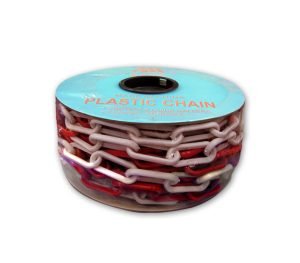
Where aisle width allows a barrier, even a low one, it removes the option for a pedestrian to step into the vehicle path without a deliberate crossing decision. An expandable barrier works well for temporary changes to a route, such as during a stock take or a maintenance job, without the cost of a fixed installation.
Floor Marking That Actually Lasts
Standard paint wears within weeks on forklift routes. Anti-slip tape rated for heavy foot and wheel traffic holds its colour and grip far longer than paint, which matters most at junctions where markings get crossed dozens of times a day.
Visual and Audible Warning at Junctions
A combination of a heavy duty revolving warning light at blind junctions and a vehicle mounted air horn gives redundancy. If one signal is missed because of noise or a sightline issue, the other still gets through.
PPE That Reduces Reaction Time
Visibility works both ways. An operator needs to see a pedestrian as early as possible, and a pedestrian in high visibility clothing is picked up by peripheral vision sooner than one in dark workwear.
High Visibility Clothing on the Warehouse Floor
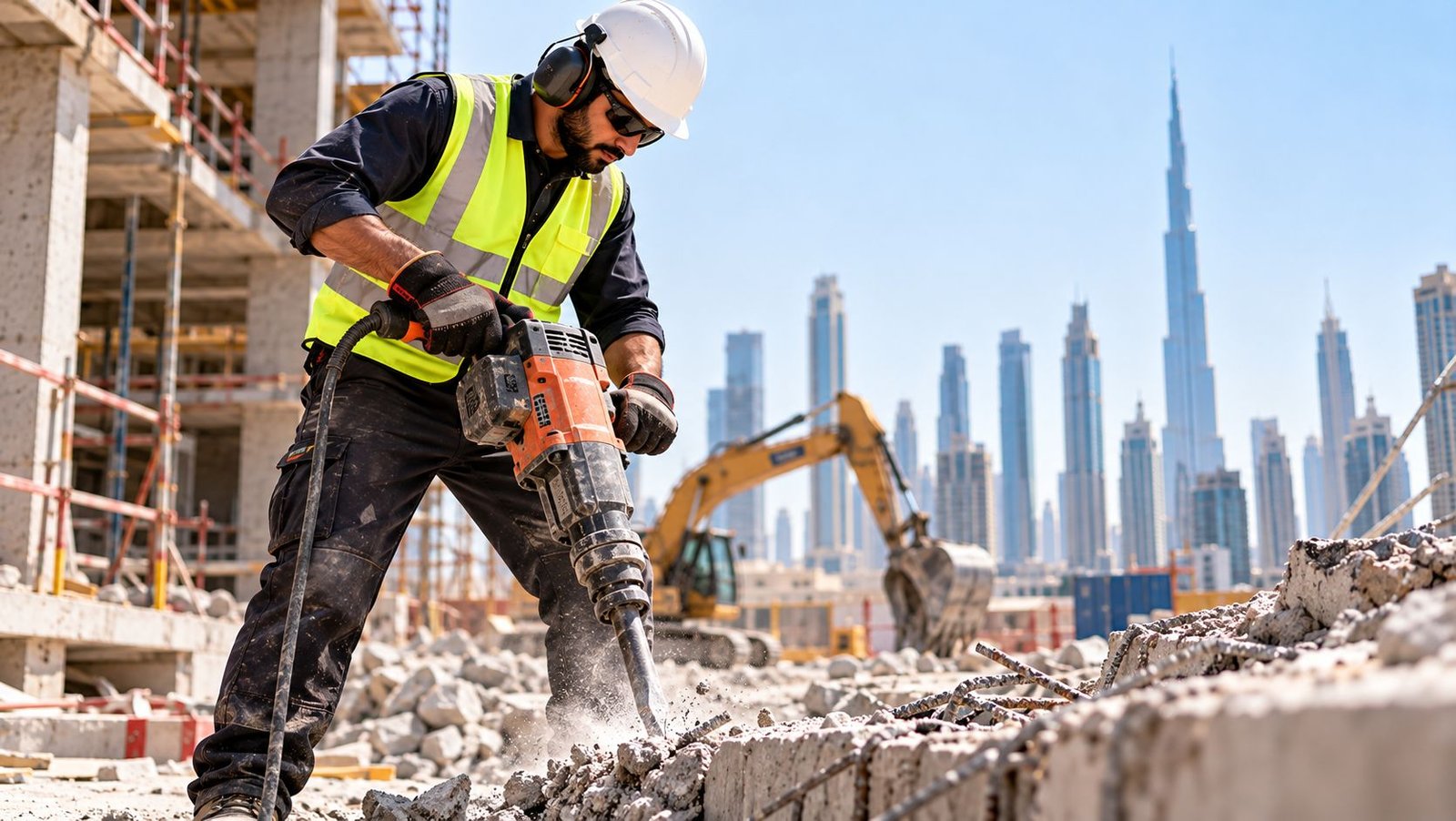
Standard requirement across most UAE logistics operations is a high visibility vest or jacket for anyone walking on an active forklift floor, regardless of role or how briefly they are on site. AAA Safe Dubai’s safety jacket range covers day and night visibility classes suited to indoor and yard use.
Footwear and Head Protection
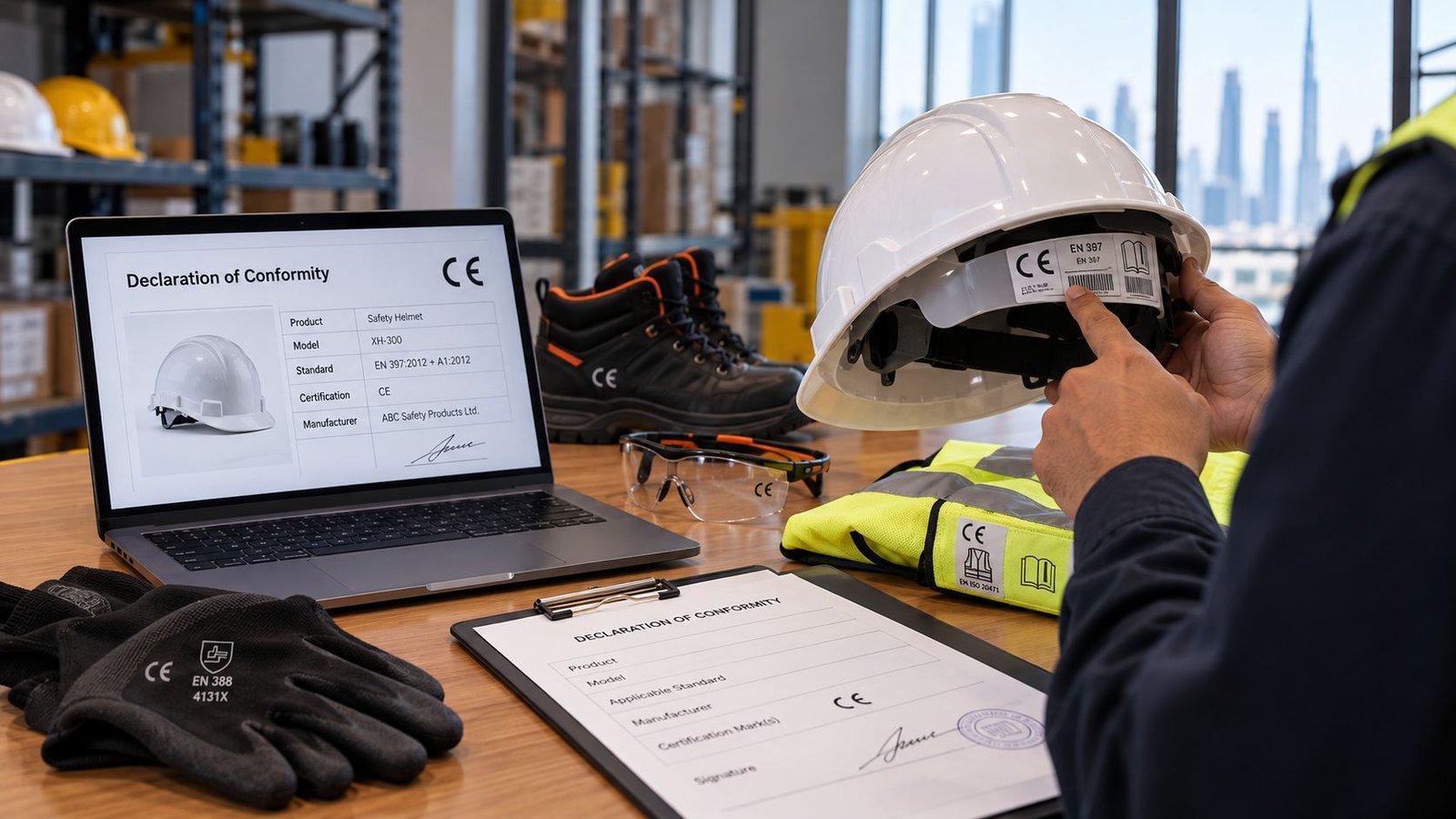
Toe injuries from forklift wheels and dropped loads are among the most common warehouse injury types. A steel toe or composite toe shoe from the safety shoes category is standard PPE on any site with vehicle movement, alongside a safety helmet in racking and loading areas where objects can fall from height.
UAE Regulatory Framework for Warehouse Traffic Safety
Federal and Emirate Level Requirements
Workplace safety in the UAE sits under a mix of federal labour law obligations enforced through MOHRE and emirate level occupational safety and health frameworks. In Abu Dhabi this runs through the OSHAD system, established under Emirate Decree No. 42 of 2009 and since developed into the current OSHAD-SF framework, which sets out registration, risk assessment, and inspection requirements for workplaces including warehouses and logistics facilities. Dubai Municipality applies its own occupational health and safety standards to commercial and industrial premises within the emirate.
What This Means for Facility Managers
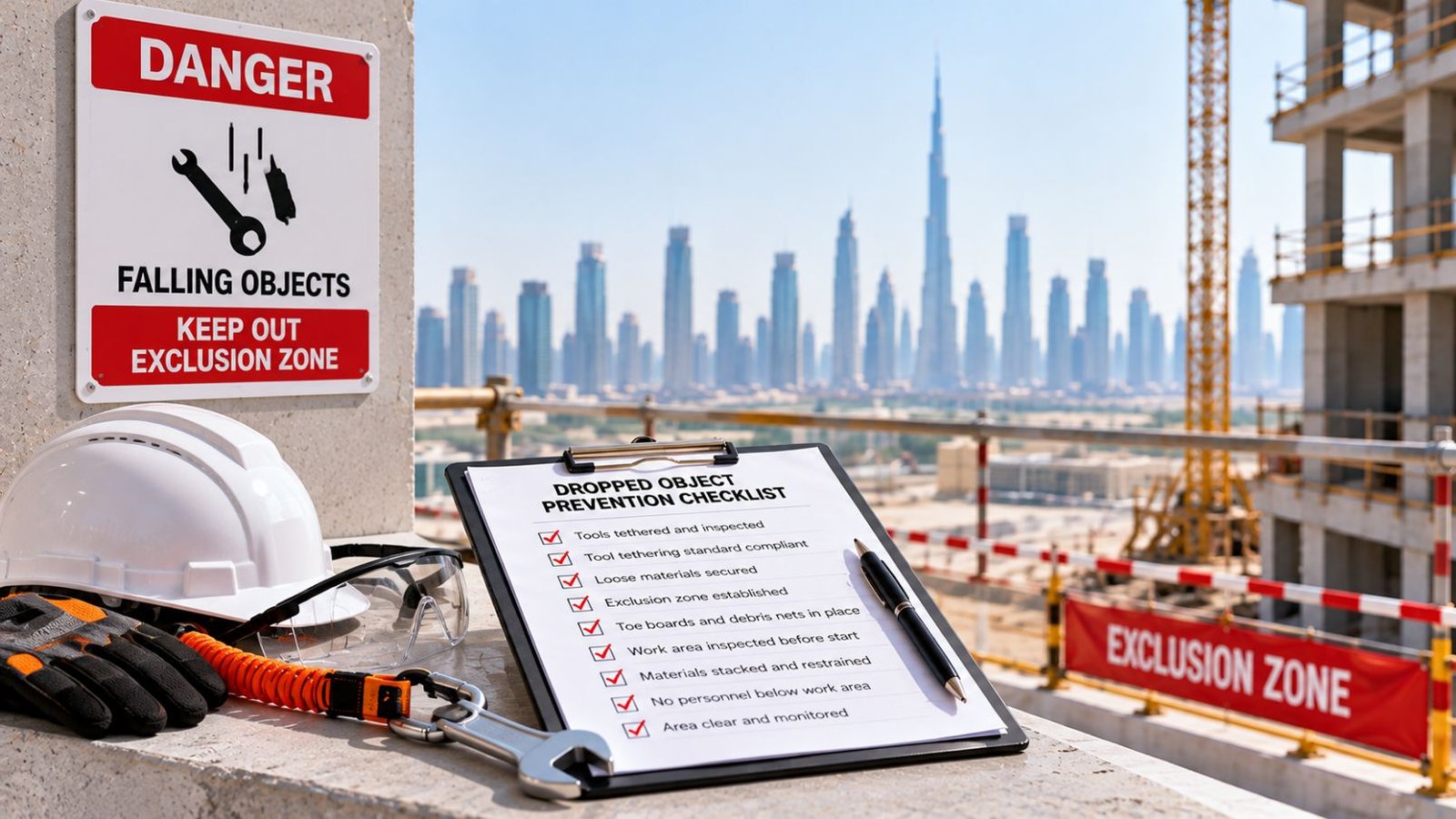
Neither framework prescribes a single forklift traffic layout. Both require a documented risk assessment covering vehicle movement, and both expect corrective action when an assessment identifies a shared traffic hazard. That documentation, plus evidence of the physical controls in place, is what an inspector or auditor will ask to see.
Training and Daily Habits
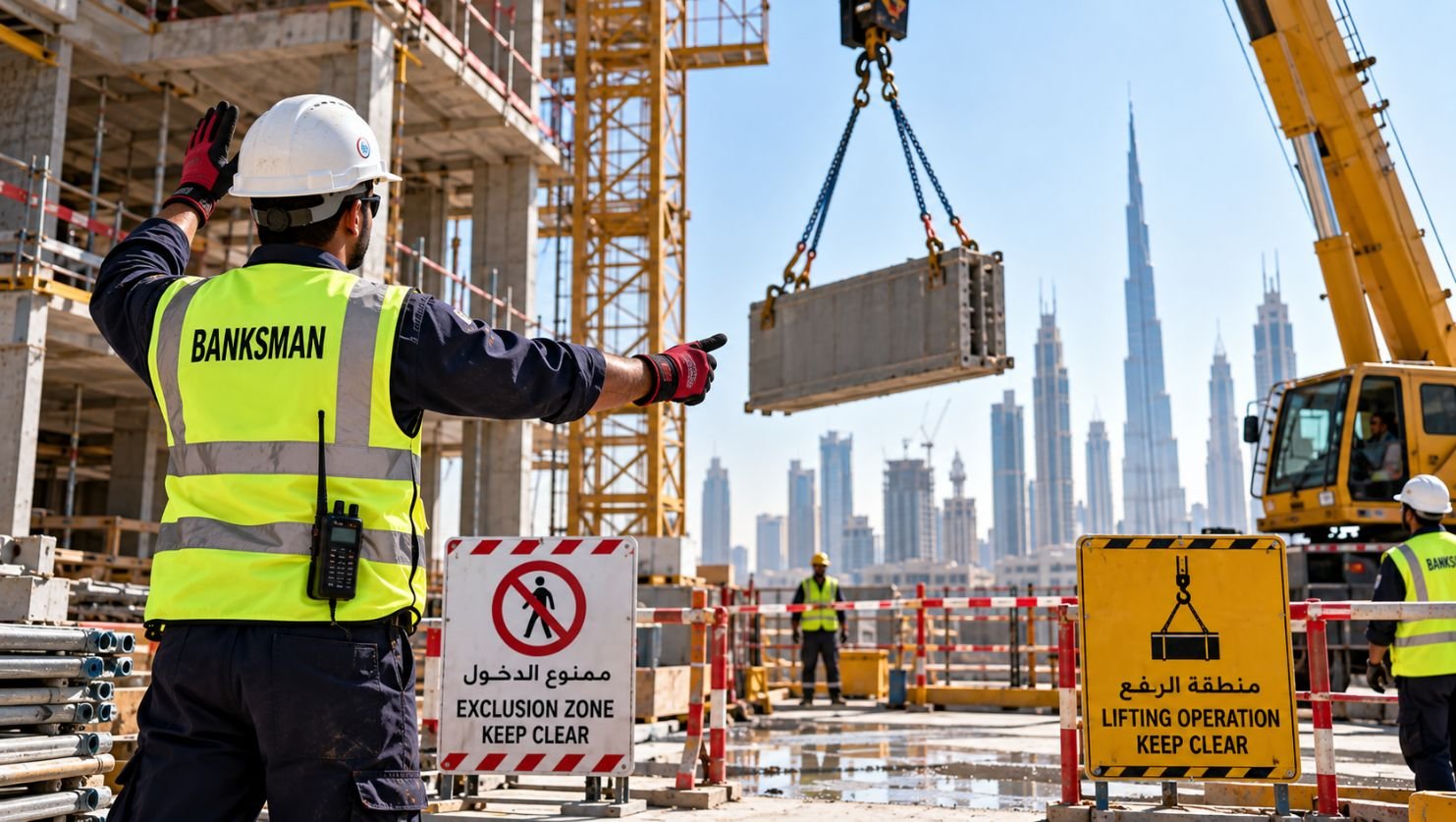
Equipment and layout only work if the people using the space follow consistent habits. Operators should sound a horn at every blind junction regardless of how familiar they are with the route, and pedestrians should be trained to make eye contact with an operator before crossing a vehicle path rather than assuming the operator has seen them. Toolbox talks covering near miss reports from the site itself, rather than generic examples, tend to change behaviour faster than annual refresher training alone.
AAA Safe Dubai provides site assessments for warehouse and logistics facilities reviewing traffic flow, blind spots, and PPE compliance. Contact our technical team for project specific recommendations on your floor layout.
Frequently Asked Questions
There is no single fixed distance set in UAE regulation. The requirement is a documented risk assessment that demonstrates the chosen separation, whether physical or marked, adequately controls the hazard for the specific traffic volume and vehicle types on site.
Any person entering an active forklift or vehicle movement area, including visitors and contractors on short duration visits, should wear high visibility clothing. Many facilities keep spare vests at the entrance for this reason.
This depends on traffic volume and the marking material used. Painted lines on high traffic forklift routes often need renewal every three to six months, while heavy duty marking tape rated for wheel traffic typically lasts considerably longer.
They are not a fixed legal requirement but are considered good practice at any junction where sightlines are restricted by racking, walls, or stored goods, particularly where a risk assessment has already flagged limited visibility.
Stop at a safe distance, make eye contact with the operator if possible, and wait for a clear signal such as a hand gesture or the vehicle coming to a stop before crossing. Never assume an operator has seen you because you can see the vehicle.
Yes. Barriers, floor tape, mirrors, and warning lights are all retrofit solutions that do not require structural changes, which is why most UAE facilities improve traffic safety in phases rather than a single redesign.
Disclaimer
This article provides general information on warehouse traffic safety practices and does not replace a professional risk assessment or legal advice. Requirements vary by emirate, facility type, and activity. For authoritative guidance, refer to the Ministry of Human Resources and Emiratisation, Dubai Municipality, and the Abu Dhabi Public Health Centre for OSHAD-SF requirements. Always consult a qualified HSE professional before finalising a site traffic plan.