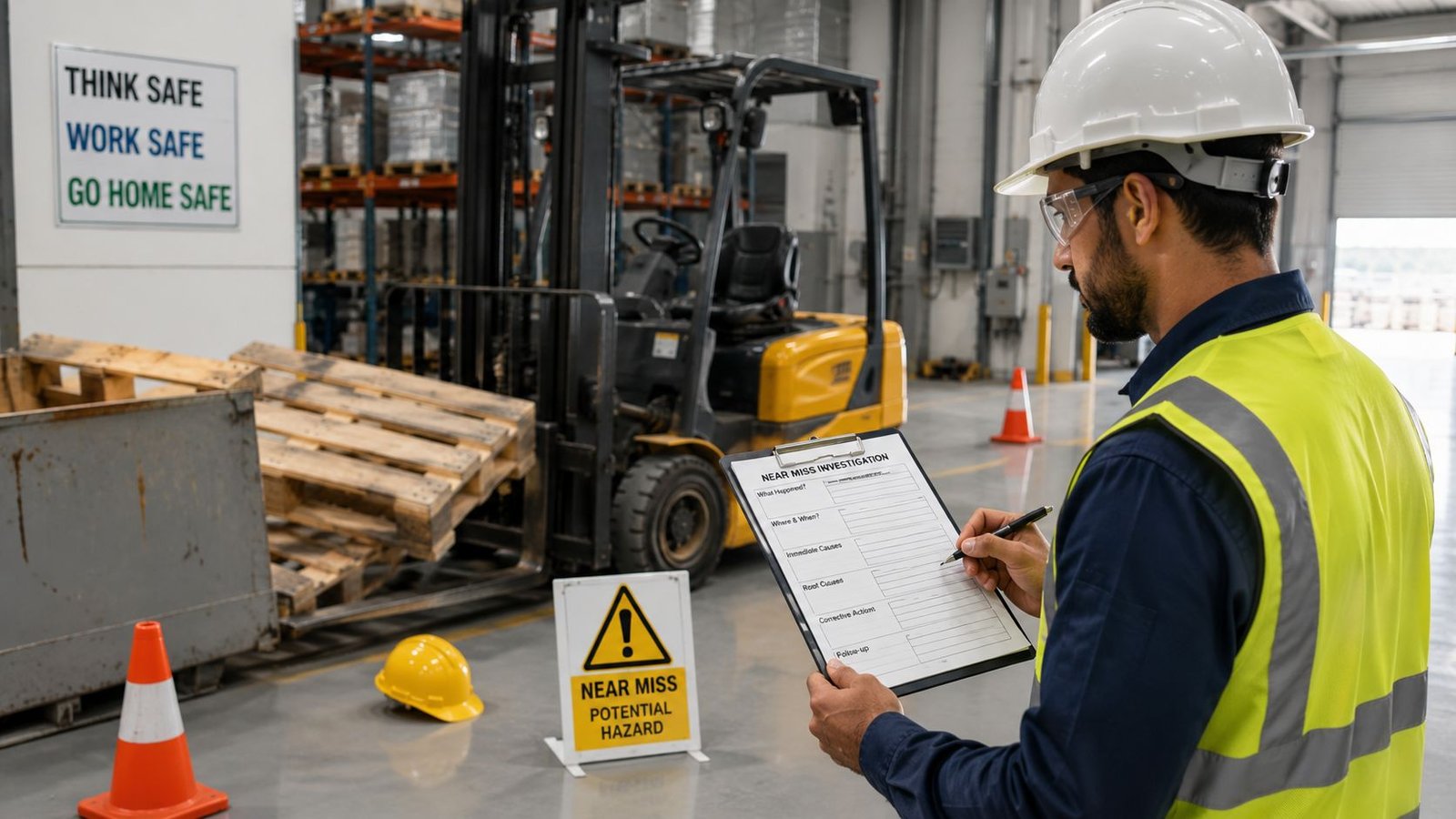
A near miss is a warning that cost nothing to receive. Something almost went wrong, no one was hurt, and the work continued. That is exactly why near misses get under-investigated across most UAE workplaces. Without an injury forcing attention, the incident competes with every other task on a supervisor’s list and often loses. Sites that consistently investigate near misses properly tend to have fewer actual injuries, because the same underlying causes that almost caused harm eventually do cause harm if left uncorrected.
Why Near Miss Investigation Gets Skipped
Three patterns explain most of the gap between how many near misses happen and how many get properly investigated. Workers under-report because they worry about blame, even in sites with a stated no-blame policy, if that policy has not been consistently demonstrated in practice. Supervisors deprioritise near miss follow-up against tasks with harder deadlines, since a near miss has no injury forcing urgency. Investigations that do happen often stop at the first plausible explanation rather than continuing to the actual root cause, because the first answer feels sufficient once something has been written down.
Evidence That Decays Fast
The value of a near miss investigation depends heavily on how quickly it starts. Some evidence is only available in the minutes and hours immediately following the event.
Physical Conditions at the Scene
Equipment position, floor condition, lighting, and any temporary obstruction should be documented before the area is cleaned up or returned to normal operation. A photograph taken immediately tells a very different story than a description written from memory an hour later.
Witness Recall
Memory of exact sequence and timing degrades quickly, particularly for a near miss where no injury occurred to anchor the memory. Statements taken within the same shift are considerably more reliable than statements taken days later.
Equipment and Environmental Data
Where relevant, equipment logs, maintenance records, or environmental conditions such as lighting levels or noise at the time should be pulled before routine data cycling or overwriting removes them.
Structuring the Investigation
Step One, Secure and Document the Scene
Before anything is moved or cleaned, photograph the area, note the exact location, and if a hazard remains present, cordon it off. Caution tape or danger tape keeps the area preserved for investigation while preventing a second incident at the same spot.
Step Two, Gather Witness Accounts Separately
Witnesses should be interviewed individually before they have a chance to align their accounts with each other, since a group discussion tends to produce a single consensus narrative rather than each person’s independent observation, and small discrepancies between accounts are often where the useful detail sits.
Step Three, Establish the Immediate and Underlying Causes
The immediate cause is what directly triggered the near miss, such as a wet floor or a missing guard. The underlying cause is why that condition existed, such as a spill response delay or a guard removed for maintenance and never replaced. Stopping at the immediate cause produces a fix that addresses this one instance without preventing recurrence elsewhere.
Step Four, Root Cause Analysis
A structured method such as the five whys, repeatedly asking why a condition existed until the answer reaches a systemic factor like a procedure, training gap, or resourcing decision, helps investigations move past surface-level explanations. This step is where most rushed investigations fall short, since it takes deliberate effort to keep asking rather than stop at the first workable answer.
Documenting the Investigation
A written record should capture what happened, the evidence gathered, the root cause identified, and the corrective action agreed, with a named owner and a completion date for that action. An inspection mirror is a simple tool that helps investigators check confined or hard-to-see areas such as under equipment or behind racking without disturbing the scene, which is useful when the hazard involves a hidden condition rather than something visible at floor level.
Corrective Actions That Actually Stick
A corrective action that depends entirely on a worker remembering to do something differently tends to fail over time. Corrective actions that change equipment, layout, or a system default are more durable than corrective actions that rely solely on renewed vigilance. Where a corrective action does require a behaviour change, pairing it with a physical reminder or a changed default, rather than a memo alone, improves the odds it holds.
Closing the Loop
An investigation that produces a recommendation but never confirms it was implemented has not actually reduced risk. A simple tracking log noting the corrective action, the owner, and a follow-up date to confirm completion closes this gap. Sharing a brief summary of what was found and fixed with the wider team, without naming individuals involved, also reinforces that near miss reporting leads to real change, which in turn encourages more reporting rather than less.
UAE Regulatory Context
Emirate level occupational safety and health frameworks, including OSHAD-SF in Abu Dhabi and Dubai Municipality’s occupational health and safety requirements, expect employers to maintain incident and near miss reporting systems as part of a functioning safety management system, alongside MOHRE’s general labour law obligations on employers to provide a safe working environment. Specific reporting formats and retention periods vary by facility type and sector, and should be confirmed with the relevant emirate authority for your site.
AAA Safe Dubai supplies barrier tape, signage, and inspection equipment that support scene preservation during a near miss investigation. Contact our technical team for guidance on equipping your site’s investigation process.
Frequently Asked Questions
As soon as practically possible after the event, ideally within the same shift, since physical evidence and witness recall both degrade quickly. A delayed investigation is still worthwhile but tends to be less precise.
Not every near miss requires the same depth of investigation. Higher potential severity near misses, meaning those that could plausibly have caused serious injury under slightly different circumstances, warrant a fuller investigation than a low-severity event, though even minor near misses benefit from being logged and reviewed for patterns over time.
The immediate cause is the direct trigger of the event, while the root cause is the underlying system or organisational factor that allowed that trigger to exist. Effective corrective action targets the root cause, not just the immediate trigger.
Consistent follow-through on reported near misses, visible corrective action, and a genuinely non-punitive response to reports build trust over time. Workers who see that reporting leads to real fixes rather than blame are more likely to keep reporting.
A supervisor or HSE representative typically leads the investigation, but involving the worker who reported the near miss and any witnesses provides the most accurate picture. For higher severity events, involving site management ensures corrective actions get the resources needed for implementation.
Disclaimer
This article provides general information on near miss investigation practices and does not replace a formal incident investigation procedure or legal advice. For broader workplace safety reporting obligations, refer to the Abu Dhabi Public Health Centre and Dubai Municipality. Always follow your organisation’s documented incident reporting procedure and consult a qualified HSE professional for serious incidents.