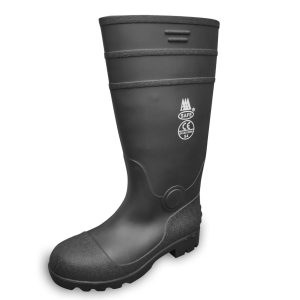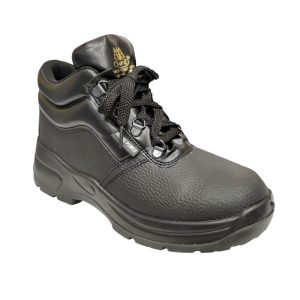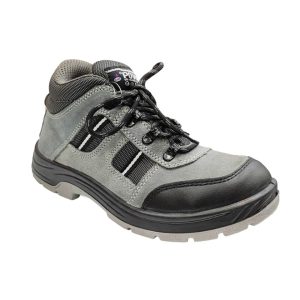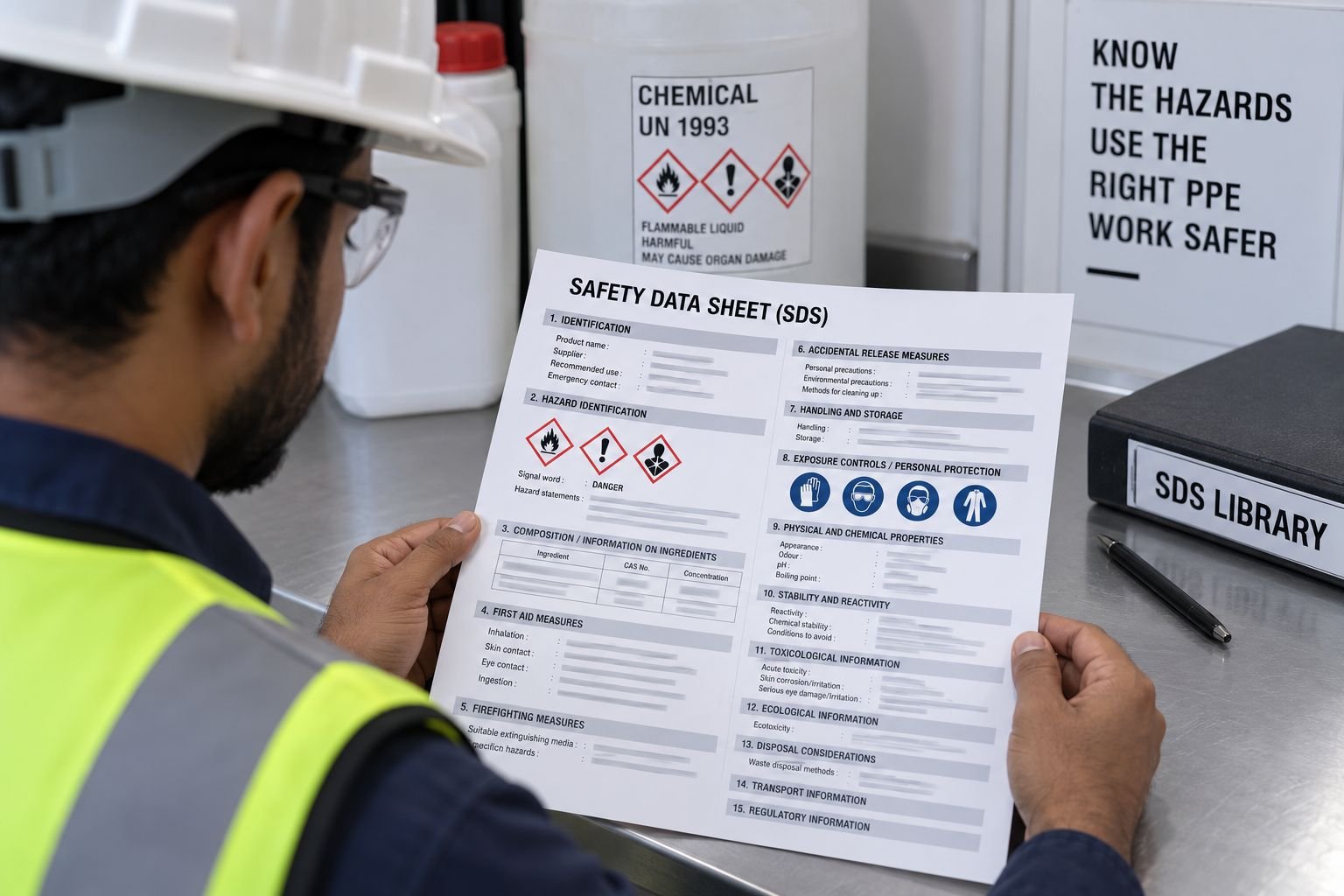
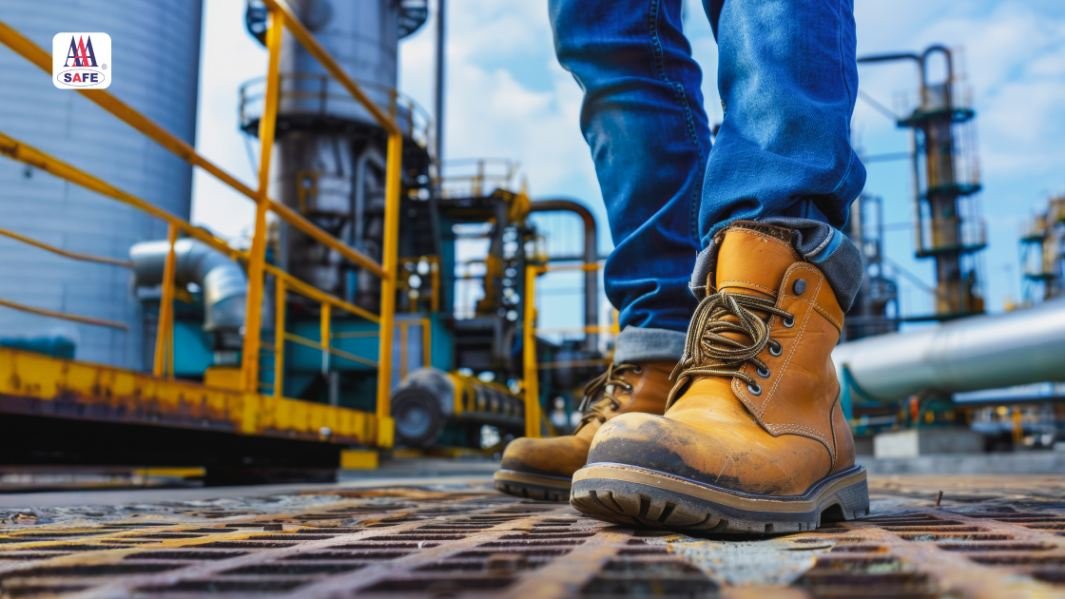
You know that moment when an oilfield worker looks down at their worn-out boots and realizes one small slip on an oil-covered platform could mean a broken foot or worse? That’s when choosing the right safety footwear for oilfield workers becomes more than just a bureaucratic requirement – it becomes the single most important decision standing between them and a life-altering injury.
I’ve worked with oilfield operations across the UAE for years, and honestly, the workers and supervisors who treat safety footwear selection like an afterthought are the ones I see limping out of emergency rooms or, in worst cases, never coming back. Choosing the right safety footwear for oilfield workers isn’t about impressing management with fancy equipment – it’s about having boots that actually protect feet when tons of metal falls or when someone slips on oil-slicked metal platforms.
Look, oilfield work creates respiratory hazards unlike any other industry. The combination of extreme heat, slippery surfaces, heavy equipment, petroleum exposure, and metal hazards means your feet face threats every single minute on the job. Choosing the right safety footwear for oilfield workers requires understanding specific hazards and matching appropriate protection to real workplace dangers.
This guide walks you through everything you need to know about selecting proper safety footwear for oilfield operations in the UAE, where ADNOC standards, extreme temperatures, and diverse operational environments create unique boot requirements.
Understanding Oilfield Hazards and Safety Standards
Choosing the right safety footwear for oilfield workers starts with understanding the specific threats that make oilfield environments uniquely dangerous for foot injuries.
Primary Oilfield Foot Hazards
Impact and crushing injuries from falling equipment, heavy pipes, and machinery represent the most common oilfield foot injury. Drill pipe sections weighing hundreds of kilograms can roll across platforms, crushing feet without warning.
Slips and falls on oil-covered surfaces create a constant threat that standard footwear cannot address. Oily platforms and wet decks require specialized slip-resistant properties preventing dangerous falls.
Puncture wounds from sharp objects including nails, rebar, broken equipment, and exposed metal edges pierce standard work boots. Puncture resistance becomes critical for preventing foot infections and tissue damage.
Chemical and petroleum exposure corrodes standard shoe materials and creates skin irritation. Petroleum products break down standard rubber and leather, requiring specifically resistant materials.
Heat stress from direct sun exposure on metal platforms exceeding 50°C in UAE conditions creates additional physiological strain that compounds other hazards.
Electrical hazards from equipment contact and static discharge require conductive or static-dissipative properties preventing dangerous electrical incidents.
International and UAE Regulatory Standards
ASTM F2413-18 represents the primary standard for oilfield safety footwear, specifying:
I/75 toe protection: Impact resistance of 75 foot-pounds preventing crushing injuries from heavy objects C/75 compression resistance: 2,500 pounds compression resistance EH (Electrical Hazard) rating: Protection against electrical hazards up to 600 volts in dry conditions Mt metatarsal protection: Optional protection for the midfoot area preventing injuries to metatarsal bones
EN ISO 20345:2022 represents the European standard with S3 or S1P classifications common in oilfield work:
S1P boots: Include puncture-resistant midsole, antistatic properties, and energy absorption S3 boots: Add penetration resistance and cleated outsoles for enhanced grip
ADNOC HSE requirements mandate specific standards for all oilfield operations in Abu Dhabi, with ADNOC-approved footwear required for all contractor and employee operations.
OSHA 29 CFR 1910.136 establishes the baseline requirement for foot protection whenever workers face foot injury hazards. Oilfield operations universally exceed OSHA thresholds requiring protective footwear.
For complete oilfield safety consulting and footwear selection support tailored to UAE ADNOC requirements, AAA Safe Dubai provides specialized solutions that meet international standards while addressing regional operational challenges.
Essential Safety Features for Oilfield Footwear
Choosing the right safety footwear for oilfield workers requires understanding which specific features address the unique hazards present in petroleum extraction and production environments.
1. Steel or Composite Toe Caps (I/75 or Better)
Toe protection represents the most critical safety feature in oilfield boots.
Steel Toe Advantages and Limitations
Steel toe caps provide maximum impact protection (I/75 or better) withstanding falling pipe sections and heavy equipment. Steel construction offers:
- Superior durability lasting entire boot lifespan
- Excellent impact absorption
- Lower cost than composite alternatives (typically AED 40-75 per pair base cost)
- Proven protection in extreme oilfield conditions
However, steel toes present limitations:
- Conduct heat and cold, making feet uncomfortable in extreme temperatures
- Add weight to boots increasing fatigue
- Can conduct electricity in some electrical hazard scenarios
- Rust if not properly coated
Composite Toe Advantages
Composite toe caps made from fiberglass or carbon fiber provide comparable protection without steel disadvantages:
- Do not conduct heat, electricity, or cold
- Lighter weight reducing foot fatigue during long shifts
- Better for electrical hazard environments
- More comfortable in extreme UAE temperatures
- Slightly higher cost (typically AED 60-95 per pair base cost)
Choosing the right safety footwear for oilfield workers typically favors composite toes in UAE operations where extreme heat reaches 50°C and electrical hazards exist.
2. Oil, Heat, and Chemical-Resistant Soles
Sole materials represent the direct interface between worker and oilfield environment, requiring specialized resistance.
Polyurethane (PU) and TPU Soles
Polyurethane soles cost AED 15-35 per pair and provide excellent oil and heat resistance:
- Resist petroleum products preventing accelerated degradation
- Maintain grip on oily surfaces through special texturing
- Withstand temperatures up to 180°C without breaking down
- Provide cushioning reducing foot fatigue
- Oil-resistant properties lasting entire boot lifespan
TPU (thermoplastic polyurethane) combinations offer enhanced performance:
- Double-density construction providing durability
- Superior grip maintenance on wet and oily surfaces
- Heat-resistant properties exceeding standard polyurethane
- Chemical resistance extending boot life significantly
Slip Resistance Standards
SRC (Slip Resistance Certified) soles meet both:
- SR (ceramic tile) slip tests
- R (steel) slip resistance
SRC rating is mandatory for oilfield operations where slippery surfaces create constant fall hazards.
High-friction texturing provides superior grip on oil-slicked metal platforms where standard soles fail.
3. Metatarsal Protection (Mt Guard)
Protection for the midfoot area addresses a critical vulnerability in oilfield work.
External Metatarsal Guards
Removable metatarsal guards cost AED 45-85 each and strap over boots providing:
- Impact protection for metatarsal bones bearing foot weight
- Protection against crush injuries from falling heavy objects
- Easy installation and removal for different work tasks
- Compatibility with existing footwear
Integrated metatarsal protection built into boot construction costs AED 25-50 more per pair but provides:
- Always-available protection without attachment procedures
- Seamless integration maintaining boot flexibility
- Extended coverage area
- Improved durability through integrated design
Why Metatarsal Protection Matters
Metatarsal bones (MT1-MT5) connect ankle to toe, bearing 50% of body weight during standing and walking. Crush injuries to metatarsals cause:
- Chronic pain affecting work capacity permanently
- Mobility limitations lasting years after initial injury
- Workers’ compensation claims averaging AED 100,000-300,000
- Potential disability requiring job reassignment
Choosing the right safety footwear for oilfield workers includes metatarsal protection as essential, not optional.
4. Ankle Support and Height Selection
Boot height directly impacts stability and ankle injury prevention.
Low-Ankle vs. High-Ankle Options
Low-ankle boots (AED 40-85 per pair) provide:
- Greater mobility for quick movements
- Lighter weight reducing fatigue
- Better breathability in extreme heat
- Sufficient protection for most oilfield tasks
High-ankle boots (AED 60-120 per pair) provide:
- Superior ankle support preventing sprains
- Additional protection against puncture wounds
- Better stability on uneven terrain
- Enhanced support during extended shifts
High-ankle boots are preferred for oilfield work where unstable surfaces and heavy loads create ankle strain.
Ankle Support Structure
Quality boots include:
- Padded ankle collars preventing pressure points
- Reinforced ankle areas resisting collapse
- Proper arch support maintaining foot alignment
- Comfortable break-in period allowing gradual adaptation
5. Puncture Resistance (Steel Midsole or Kevlar)
Puncture-resistant protection prevents serious foot injuries from sharp objects.
Steel Midsole Options
Steel midsoles cost AED 20-40 additional per boot and provide:
- Rigid protection against nails and sharp objects
- Excellent durability lasting boot lifespan
- Complete sole coverage
- Superior puncture resistance compared to alternatives
However, steel midsoles:
- Add weight increasing fatigue
- Reduce sole flexibility affecting walking comfort
- Can conduct electricity in some scenarios
Kevlar Midsole Advantages
Kevlar puncture-resistant midsoles cost AED 35-65 additional per boot and provide:
- Superior puncture resistance to steel alternatives
- Lighter weight than steel midsoles
- Flexible construction maintaining natural walking
- Non-conductive properties beneficial in electrical hazard areas
- Superior durability with extended replacement interval
Choosing the right safety footwear for oilfield workers typically favors Kevlar midsoles for modern oilfield operations.
6. Electrical Hazard (EH) or Static Dissipative (SD) Protection
Electrical protection prevents shock and spark hazards.
EH (Electrical Hazard) Rated Boots
EH-rated boots provide protection against electrical hazards up to 600 volts in dry conditions. EH protection works by:
- Using non-conductive materials preventing electrical current flow
- Creating insulated barrier between worker and electrical source
- Meeting ASTM F2413-18 EH specifications
- Providing maximum electrical protection
EH boots cost AED 30-50 more per pair than standard boots.
SD (Static Dissipative) Boots
SD-rated boots cost AED 25-45 more and provide:
- Controlled electrical conductivity preventing static buildup
- Prevention of static discharge sparking ignitable vapors
- Essential in explosive vapor environments
- Grounding of static electricity through conductive pathways
Static dissipative protection is critical in refineries and drilling operations with flammable vapor exposure.
When Each is Required
EH protection required for: direct electrical hazard exposure, high-voltage work, wet environments with electrical risk
SD protection required for: flammable vapor environments, explosive atmosphere work, refineries, chemical processing areas
7. Durability and Material Quality
Long-lasting construction protects investment while maintaining protection effectiveness.
Leather Quality Standards
Full-grain leather (most durable) provides:
- Natural oil resistance
- Water resistance
- Durability lasting 2-3 years of intensive oilfield use
- Professional appearance
- Natural flexibility improving comfort
Split leather (lower quality) provides less durability and water resistance, typically lasting 1-2 years.
Genuine leather vs. synthetic: Genuine leather provides superior durability and breathability, justifying higher cost (AED 20-40 more per pair).
Sole and Construction Quality
Double-density soles cost AED 10-20 more but last significantly longer than single-density alternatives.
Welted construction attaches soles to uppers through sewn seams allowing sole replacement without retiring boot, extending useful life by 50-100%.
Sealed construction uses adhesives preventing water infiltration and extending leather life.
Struggling to determine which safety features are essential for your specific oilfield operations? AAA Safe Dubai provides specialized footwear consultation ensuring ADNOC compliance while optimizing worker protection across Dubai, Abu Dhabi, and Sharjah oilfield operations.
Table 1: Essential Oilfield Safety Boot Features and Protective Capabilities
| Safety Feature | Protection Type | ASTM Requirement | Cost Impact (AED) | Protection Level | Duration |
|---|---|---|---|---|---|
| Steel Toe Cap | Impact protection | I/75 minimum | Base cost | High | Entire boot life |
| Composite Toe | Impact + heat reduction | I/75 minimum | +30–50 | High | Entire boot life |
| PU/TPU Sole | Oil and heat resistance | Heat resistant to 180°C | +15–35 | High | 2–3 years |
| SRC Slip Resistance | Oily surface grip | Ceramic + steel test pass | +10–20 | High | Entire boot life |
| Metatarsal Guard | Midfoot protection | Mt rating | +25–85 | High | 1–3 years |
| Steel Midsole | Puncture resistance | Penetration test pass | +20–40 | High | Entire boot life |
| Kevlar Midsole | Puncture resistance (lighter) | Penetration test pass | +35–65 | Very High | Entire boot life |
| EH Electrical | Electrical hazard protection | EH rated | +30–50 | High | 2–3 years (if dry) |
| Full-Grain Leather | Durability and comfort | EN/ASTM standard | +20–40 | High | 2–3 years |
| Welted Construction | Sole replaceable design | Construction standard | +15–25 | Medium | Extends life by 50–100% |
Costs are incremental additions to base boot cost; total boot cost approximately AED 80-200 per pair
Cost-Benefit Analysis of Proper Oilfield Boot Selection
Choosing the right safety footwear for oilfield workers provides measurable returns through injury prevention, productivity maintenance, and operational efficiency.
Investment Costs for Quality Oilfield Boots
Basic oilfield boots (ASTM I/75, oil-resistant, SRC):
- Unit cost: AED 45-75 per pair
- Lifespan: 12-18 months of intensive use
- Annual replacement cost per worker: AED 45-150
Quality oilfield boots (I/75, metatarsal protection, Kevlar midsole, EH):
- Unit cost: AED 120-200 per pair
- Lifespan: 24-36 months with proper care
- Annual replacement cost per worker: AED 40-100
Premium oilfield boots (Composite toe, Kevlar, full-grain leather, welted construction):
- Unit cost: AED 180-280 per pair
- Lifespan: 36-48 months with sole replacement capability
- Annual replacement cost per worker: AED 45-140
Bulk purchasing for larger teams (50+ workers):
- Quantity discounts: 15-25% reduction
- Cost per pair: AED 34-200 depending on quality
- Annual cost for 100-person team: AED 3,400-20,000
Costs of Oilfield Foot Injuries
Minor foot injuries (contusions, sprains):
- Emergency medical treatment: AED 2,000-5,000
- Days away from work: 3-14 days average
- Lost productivity per worker: AED 1,500-3,500
- Total cost per incident: AED 3,500-8,500
Moderate injuries (fractures, crush injuries):
- Medical treatment and imaging: AED 10,000-25,000
- Days away from work: 30-90 days average
- Permanent restrictions or job changes: Common outcome
- Workers’ compensation liability: AED 50,000-150,000
- Total cost per incident: AED 60,000-175,000
Serious injuries (amputation, permanent disability):
- Surgical treatment and rehabilitation: AED 100,000-500,000
- Permanent disability: Likely outcome
- Workers’ compensation: AED 500,000-2,000,000+
- Litigation and legal costs: AED 50,000-500,000
- Total cost per incident: AED 650,000-3,000,000+
Return on Investment Analysis
Scenario 1: 50-person oilfield crew, basic boots
- Annual boot investment: AED 2,250-7,500
- Expected injuries prevented: 1-2 minor injuries annually
- Injury cost avoidance: AED 3,500-17,000
- Annual ROI: 47-656%
Scenario 2: 100-person oilfield crew, quality boots
- Annual boot investment: AED 4,000-14,000
- Expected injuries prevented: 2-3 injuries annually
- Injury cost avoidance: AED 7,000-35,000
- Annual ROI: 50-775%
Scenario 3: 50-person crew, premium boots with complete safety program
- Annual boot investment: AED 2,250-7,000
- Expected injuries prevented: 3-4 injuries annually (program + footwear)
- Injury cost avoidance: AED 10,500-70,000
- Insurance premium reduction: AED 5,000-15,000
- Productivity improvement: AED 10,000-25,000
- Annual ROI: 186-1,856%
Choosing the right safety footwear for oilfield workers consistently provides ROI exceeding 200% annually through injury prevention alone.
Frequently Asked Questions
ASTM F2413-18 requires minimum I/75 toe protection, C/75 compression resistance, and oil-resistant soles. Additional recommendations include metatarsal protection (Mt), electrical hazard (EH) rating, and puncture-resistant midsoles. Choosing the right safety footwear for oilfield workers should exceed minimum standards.
Steel toes provide maximum durability and impact protection but conduct heat and electricity. Composite toes offer comparable protection without conducting electricity or heat, making them better for UAE extreme temperatures and electrical hazard environments. Both meet ASTM I/75 requirements, but composites are preferred in modern oilfield operations.
Metatarsal protection is essential for workers handling heavy equipment or working where heavy objects can fall. Standard metatarsal guards cost AED 45-85 and provide critical protection preventing crush injuries to midfoot bones. Choosing the right safety footwear for oilfield workers should include metatarsal protection.
Quality oilfield boots typically last 24-36 months with proper maintenance. However, immediate replacement is required if uppers show damage, soles separate, or protection features are compromised. Regular inspection ensures protection effectiveness throughout boot lifespan.
ADNOC-approved boots typically cost AED 120-200 per pair compared to AED 45-75 for generic alternatives. The premium provides assurance of regulatory compliance, tested durability in UAE extreme conditions, and access to Abu Dhabi-specific requirements. For ADNOC operations, approved boots are mandatory.
EH protection is for direct electrical hazard exposure preventing shock. SD protection is for explosive vapor environments preventing static spark. Different operations require different protections. Choosing the right safety footwear for oilfield workers requires hazard assessment to determine which is appropriate.
OSHA permits safety boots to be worn off-site, but most employers provide boots specifically for work use only. Check with your employer regarding off-site wear policies and boot ownership.
Quality boots require 1-2 weeks break-in period for comfort. Proper break-in involves wearing boots for progressively longer periods, using quality socks for moisture management, applying conditioning products to leather, and allowing natural molding to foot shape. Rushing break-in or forcing uncomfortable fit defeats protection benefits.
Safety Disclaimer
This information provides general guidance on choosing the right safety footwear for oilfield workers and should not be considered a substitute for professional safety consultation. Specific boot requirements vary based on operational hazards, ADNOC requirements, and individual worker needs.
Oilfield operations must comply with ADNOC HSE requirements, ASTM F2413-18 standards, and applicable UAE occupational safety regulations. Requirements vary significantly based on specific operations and geographic locations. Workers and employers must verify specific regulatory requirements with ADNOC and relevant authorities.
Choosing the right safety footwear for oilfield workers decisions should be informed by qualified safety professionals familiar with oilfield operations, UAE environmental conditions, and international best practices. Professional hazard assessment is essential for determining appropriate protection levels.
Equipment specifications, regulatory requirements, and pricing information change frequently. Information reflects general UAE oilfield market conditions as of 2025 and should be verified with current suppliers and authorities.
For professional consultation on oilfield footwear selections tailored to specific UAE oilfield operations, contact qualified safety providers with demonstrated experience in petroleum extraction and ADNOC regulatory compliance.
Conclusion
Choosing the right safety footwear for oilfield workers represents one of the most important safety decisions you make, whether you’re a worker protecting your own health or a supervisor responsible for team safety. The reality is that oilfield work creates foot hazards that standard work shoes simply cannot address.
The companies and workers that treat boot selection seriously aren’t the ones I see in emergency rooms dealing with crushing injuries or chronic pain from preventable accidents. They’re the ones understanding that proper footwear is non-negotiable protection, not optional luxury. Choosing the right safety footwear for oilfield workers is fundamental to operational excellence.
I’ve learned that the best oilfield operations don’t view safety boot investment as a cost to minimize. They view it as central to worker protection and operational productivity. When you give workers boots that actually protect against oilfield hazards, everything else follows naturally – fewer injuries, higher morale, better retention, improved productivity.
The financial return on investment is compelling and measurable. Yes, quality boots cost 2-3 times more than budget alternatives. Yes, annual replacement still requires ongoing investment. But a single prevented foot injury easily justifies boot investment many times over. Choosing the right safety footwear for oilfield workers almost always provides return on investment exceeding 200% annually through injury prevention alone.
AAA Safe Dubai offers complete oilfield safety solutions including proper footwear selection that meets ADNOC standards while addressing UAE’s extreme operating conditions across Dubai, Abu Dhabi, and Sharjah.
More fundamentally, choosing the right safety footwear for oilfield workers is about honoring the commitment between employer and worker. Workers trust you to give them the tools they need to work safely and return home healthy. Proper safety footwear demonstrates that commitment in tangible, protective form every single day on the job.
Your workers’ feet carry them through demanding oilfield work. Give them footwear that actually protects against real hazards. Make informed selections based on specific operational risks. Invest in quality that lasts and protects effectively. Your workers, your safety record, and your bottom line will all benefit.