Important Disclaimer: This guide is provided by AAA Safe Dubai to help food processing facility managers understand respirator selection principles. It is for informational purposes only and not a substitute for professional safety consultation. Always consult qualified industrial hygienists and verify current OSHA requirements. AAA Safe Dubai is not responsible for actions taken based on this content.
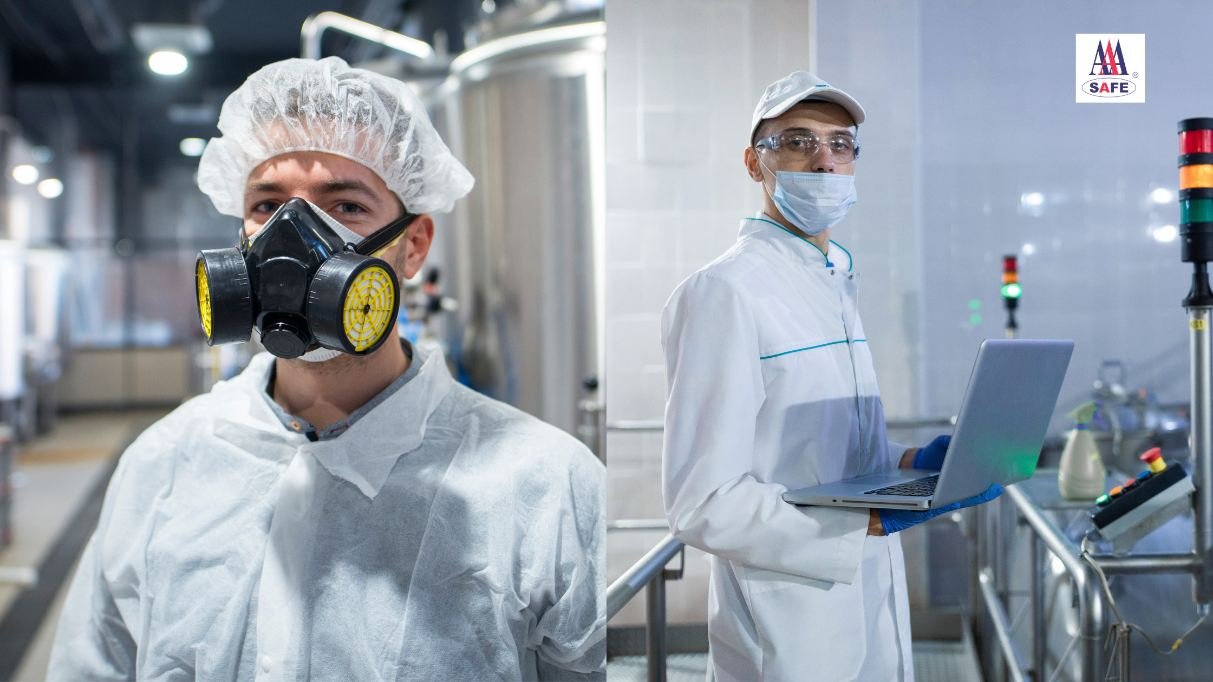
Have you ever wondered how to choose the right respirator for food processing unit when flour dust, spice particles, and chemical additives are floating through the air around your workers? Respiratory hazards in food processing can cause serious health problems including occupational asthma and other breathing disorders.
Understanding how to choose the right respirator for food processing unit represents a critical safety responsibility that directly impacts worker health and career longevity. From baker’s asthma triggered by flour dust to breathing problems caused by chemical exposure in flavoring operations, airborne hazards in food processing can cause permanent respiratory diseases.
Many food processing facilities struggle with proper respirator selection because different operations create different hazards requiring specific protection approaches. When you know how to choose the right respirator for food processing unit operations, you protect workers while maintaining compliance with safety regulations. Learning how to choose the right respirator for food processing unit also helps reduce workplace injuries and improve overall safety performance.
This guide walks through the systematic process of selecting appropriate respiratory protection for your specific food processing hazards and worker populations.
Understanding Food Processing Respiratory Hazards
Food processing generates diverse respiratory hazards that vary depending on the specific products handled and manufacturing processes used. Understanding your facility’s hazard profile becomes the foundation for proper respirator selection.
Common Respiratory Hazards in Food Processing
Different food processing operations create different types of airborne contaminants. Knowing how to choose the right respirator for food processing unit starts with identifying which hazards exist in your specific operations.
| Hazard Type | Typical Sources | Health Effects | Risk Considerations |
|---|---|---|---|
| Organic dusts | Flour, grain, spices, cocoa | Occupational asthma, allergies | High exposure potential |
| Allergens | Nuts, shellfish, dairy proteins | Allergic sensitization, asthma | Severe reactions possible |
| Mold spores | Moldy ingredients, wet storage | Respiratory infections, asthma | Biological contamination |
| Chemical additives | Enzymes, preservatives, flavorings | Irritation, sensitization | Chemical exposure risks |
| Flavoring compounds | Butter flavoring, roasted coffee | Serious lung disease potential | Critical safety concern |
| Metal dusts | Contaminated ingredients | Lung damage | Moderate exposure risk |
| Biological agents | Bacteria, viruses in raw materials | Respiratory infections | Infection potential |
Food processing hazards demand specific attention because food-related allergens can trigger allergic sensitization after brief exposures. Understanding these hazards helps determine how to choose the right respirator for food processing unit based on actual exposure risks. Proper hazard identification ensures that decisions about how to choose the right respirator for food processing unit address the specific contaminants present in your facility.
How Exposure Levels Vary Across Different Operations
Food processing exposure levels vary dramatically depending on specific tasks and operations. Some operations generate much higher airborne contamination than others, affecting how to choose the right respirator for food processing unit for different work areas.
Operations involving sieving, grinding, and packaging typically generate higher exposures than mixing and blending due to the energy involved in making particles airborne. Understanding which specific operations generate highest exposures helps prioritize respiratory protection deployment and influences how to choose the right respirator for food processing unit for different work areas.
Exposure assessment becomes critical for determining appropriate protection levels. Without proper exposure measurement, facilities cannot determine if workers need respiratory protection or what level of protection becomes necessary. Accurate exposure data guides decisions about how to choose the right respirator for food processing unit operations safely and effectively.
Respirator Selection Based on Hazard Assessment
OSHA requires employers to develop written respiratory protection programs that begin with systematic hazard assessments before any respirator selection occurs. This assessment determines what protection level becomes necessary and which respirator types work appropriately for your specific conditions.
Components of Effective Hazard Assessment
Proper hazard assessment forms the foundation for learning how to choose the right respirator for food processing unit operations effectively.
Essential hazard assessment steps include:
- Identify all airborne contaminants present in your facility
- Measure exposure levels during routine and peak operations
- Evaluate worker exposure duration and frequency
- Assess hazard characteristics including allergenicity and toxicity
- Determine if engineering controls can reduce exposures
- Document all findings in writing
- Update assessments when processes change
Without proper hazard assessment, workers may receive inappropriate respirators that provide inadequate protection or unnecessary overprotection, reducing compliance and increasing operational costs. Systematic assessment ensures that decisions about how to choose the right respirator for food processing unit match actual workplace hazards rather than assumptions.
Identifying Specific Food Processing Hazards
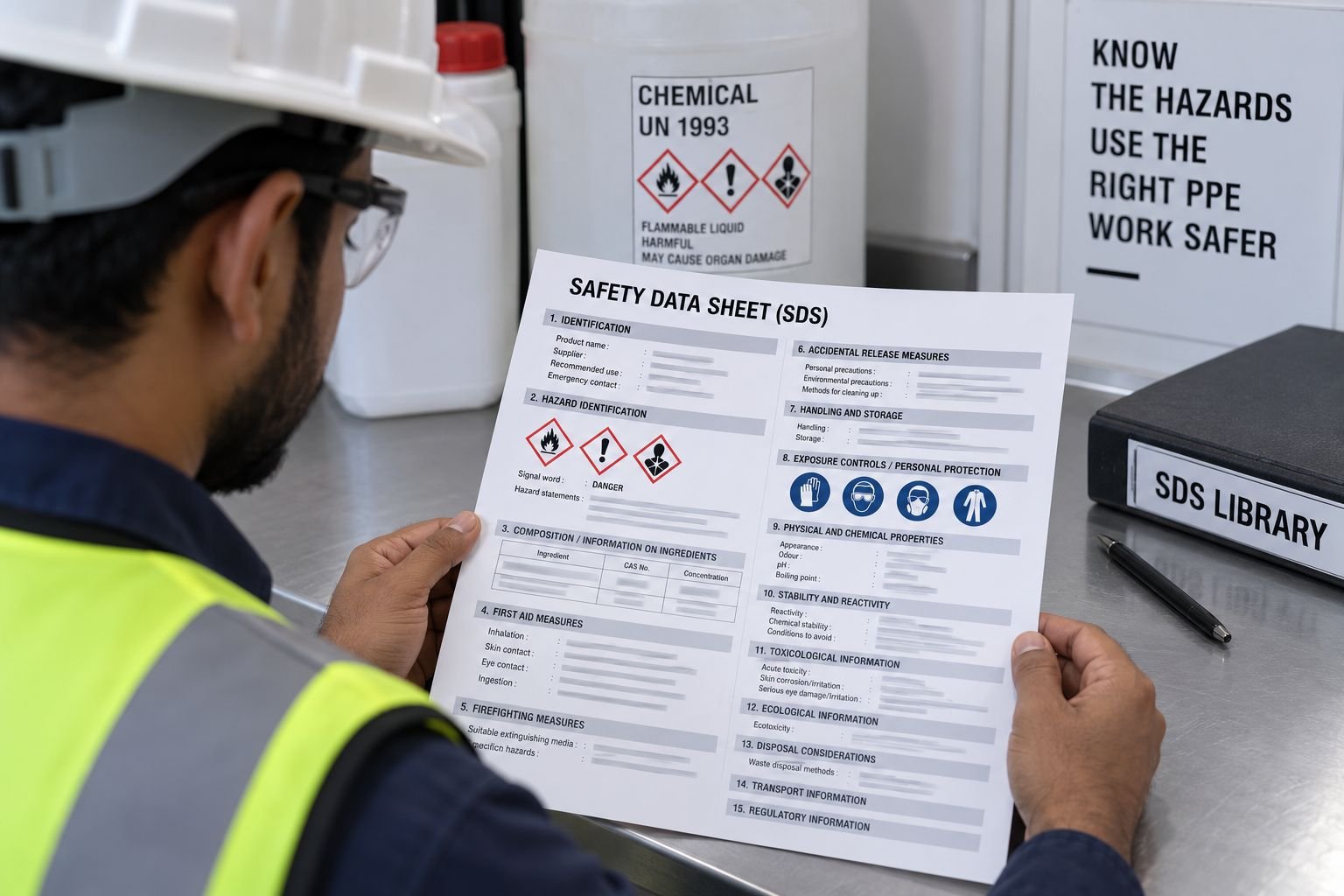
Start hazard identification by reviewing all ingredients and additives used in your facility. Check Safety Data Sheets for respiratory hazard warnings. Observe processing operations where dust or vapor concentrates visibly, and interview experienced workers about respiratory symptoms during specific tasks.
Worker interviews provide critical information because employees experience symptoms before measurable illness develops, often recognizing problem operations before formal monitoring detects issues. This information helps refine how to choose the right respirator for food processing unit based on actual worker experience. Employee feedback becomes valuable input when determining how to choose the right respirator for food processing unit for specific operations and work environments.
Respirator Types and Protection Factors
OSHA assigns Assigned Protection Factors to different respirator classes, indicating the workplace level of respiratory protection expected when employers implement effective programs. Understanding these values helps match respirator capabilities to hazard exposure levels.
Available Respirator Types for Food Processing
| Respirator Type | Protection Factor | Best Applications | Advantages | Limitations |
|---|---|---|---|---|
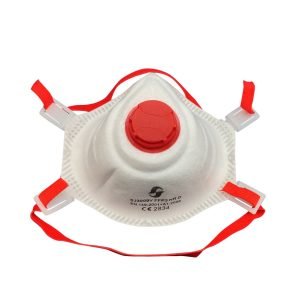
| Disposable N95 | 10 | Light to moderate dust | Convenient, disposable | Single-use, limited protection |
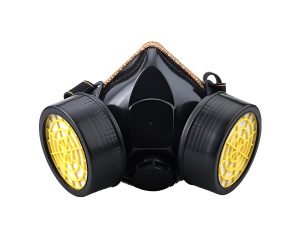
| Reusable Half-mask | 10 | General dust and particles | Reusable, economical | Requires maintenance |
| Reusable Full-face | 50 | Chemical vapors, eye protection needed | Comprehensive protection | Heavier, less comfortable |
| Powered Air Purifying | 25-1000 | High-exposure areas, comfort priority | Positive pressure, extended wear | Higher cost, training needed |
| Supplied-air | 50-2000 | Extremely high exposures | Maximum protection available | Expensive, mobility restrictions |
Determining which protection factor you need involves dividing your measured exposure concentration by the Permissible Exposure Limit. The result shows how much protection factor becomes necessary for safe operation.
Understanding how to choose the right respirator for food processing unit requires matching the protection factor to your specific exposure levels and operational requirements. Protection factor selection becomes a critical decision point when learning how to choose the right respirator for food processing unit safely and cost-effectively.
When Professional Evaluation Becomes Necessary
Complex food processing exposures sometimes involve unknown chemicals or combinations of hazards requiring expertise beyond general safety management. OSHA requirements mandate that employers develop written programs determining specific respirator types for identified hazards.
Professional evaluation ensures appropriate protection matching actual hazards rather than assumptions. Consult industrial hygienists when dealing with unknown contaminants, combination exposures, high exposure situations, volatile compounds, or potential occupational disease risks.
Medical Evaluations and Fit Testing Requirements
OSHA requires employers to provide medical evaluations by licensed healthcare professionals before workers use respirators. This evaluation determines whether workers can physically tolerate respirator use without adverse health effects.
Medical Evaluation Requirements
Medical evaluations must be conducted by physicians or licensed health care professionals. The assessment considers cardiovascular and pulmonary health, psychological factors affecting tolerability, and any medical limitations on respirator use.
Written recommendations regarding ability to use respirators must be documented, with reevaluation required when health conditions change. Workers with heart conditions, respiratory diseases, or anxiety disorders may experience complications from respirator use requiring protective work restrictions.
Fit Testing Procedures and Requirements
Fit testing verifies that a specific respirator model and size properly seals to an individual worker’s face. Without proper fit, contaminants bypass the seal, defeating the respirator’s protective purpose entirely.
According to OSHA fit testing requirements, annual fit testing is mandatory for all tight-fitting respirators. Additional testing is required when workers change respirator size, model, or manufacturer, or when facial changes occur.
Proper fit testing procedures ensure legitimate protection verification rather than paperwork compliance. Understanding these requirements helps facilities implement how to choose the right respirator for food processing unit with proper verification procedures. Effective fit testing programs ensure that decisions about how to choose the right respirator for food processing unit result in actual worker protection.
Respiratory Protection Program Development
According to OSHA Respiratory Protection Standard (29 CFR 1910.134), employers must develop written programs addressing specific elements before any respirator use occurs.
Essential Program Components
Comprehensive respiratory protection programs must include:
- Written program describing procedures and responsibilities
- Hazard assessment documentation
- Respirator selection based on identified hazards
- Medical evaluation procedures and results
- Fit testing procedures and records
- Training requirements and documentation
- Proper use, maintenance, and storage procedures
- Program evaluation and effectiveness measurement
Each component addresses specific aspects of protection. Missing elements create weaknesses where workers receive inadequate protection despite having respirators available.
Training Implementation That Changes Behavior
Effective training combines theoretical knowledge with hands-on practice to produce higher compliance and protection effectiveness than classroom instruction alone.
Training should cover why respirators are necessary, types available and their limitations, proper donning and doffing procedures with practice, user seal checks, inspection procedures, maintenance requirements, storage protocols, emergency procedures, and recognition of deteriorating performance.
Hands-on practice develops habits ensuring consistent compliance because workers who only hear about procedures often skip important steps when stressed or rushed.
Specific Hazard Guidance for Food Processing
Preventing Occupational Asthma from Flour Dust
Flour dust represents one of the most common causes of occupational asthma in food processing, affecting workers in baking, milling, and packaging operations. Baker’s asthma can develop after years of exposure and may become permanently disabling.
Prevention strategies include using low-dust flour alternatives when available, implementing engineering controls capturing dust at sources, requiring appropriate respirators during exposures, limiting exposure duration, providing medical surveillance, and removing sensitized workers from exposure areas.
Some facilities using low-dust flour have eliminated the need for respiratory protection entirely, improving worker comfort while reducing exposure risks. This demonstrates how understanding how to choose the right respirator for food processing unit includes considering alternatives to respiratory protection.
Addressing Chemical Flavoring Exposures
Food flavoring chemicals can cause serious lung diseases in exposed workers. This hazard affects workers in coffee roasting, flavoring production, and similar operations requiring special attention to exposure prevention.
Prevention approaches include identifying operations generating chemical vapors, measuring exposure levels, implementing engineering controls, using appropriate respirators for high exposure areas, providing training about health consequences, and conducting medical surveillance for early disease detection.
Chemical exposures are treated seriously because some flavoring-related lung diseases cause progressive lung failure, making prevention absolutely critical for worker safety.
Frequently Asked Questions
For flour dust exposure, N95 respirators provide protection for moderate exposures. Higher exposures require respirators with greater protection factors like half-face or full-face units with appropriate filters. The most effective approach involves using low-dust alternatives when possible. All workers must receive medical evaluation and fit testing before using any respirator. Understanding how to choose the right respirator for food processing unit helps ensure proper protection for flour dust exposures.
OSHA requires annual fit testing at minimum for all workers using tight-fitting respirators. Additional testing is required when workers change respirator size, brand, or model, and when facial changes occur including weight changes, dental work, or surgical procedures. Proper documentation is required for compliance verification. Regular fit testing ensures that guidance about how to choose the right respirator for food processing unit remains effective over time.
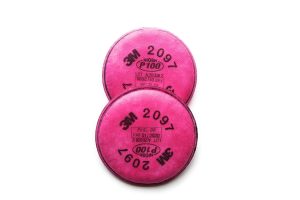
N95 respirators filter 95% of non-oil particles and work for flour dust, spice particles, and organic dusts. P100 respirators filter 99.97% of particles including oil particles, making them appropriate for higher exposure levels or more hazardous dusts. Choose based on hazard assessment and measured exposure levels.
Discomfort often indicates improper fit requiring adjustment or different size selection. Workers should remove the respirator, assess the fit, adjust straps, and try again, or select a different size or model. Never continue working in an uncomfortable respirator because poor seals eliminate protection.
Regular disposable surgical masks do not provide adequate respiratory protection for food processing dust exposure. You must use NIOSH-approved respirators like N95 or higher, with proper fit testing and medical evaluation. Surgical masks lack the seal integrity and filtration efficiency needed for occupational hazard protection.
Wearing duration depends on specific respirator type and work intensity. Disposable N95s can be worn full shift if comfortable and the seal remains intact. Reusable respirators can also be worn full shift with proper maintenance. Workers should remove respirators during breaks in non-contaminated areas.
Implementation for Dubai Food Processing Facilities
Food processing facilities in Dubai face unique challenges related to extreme heat and humidity that can affect respirator comfort and seal integrity. Understanding how to choose the right respirator for food processing unit in Dubai requires considering these environmental factors. Climate conditions influence decisions about how to choose the right respirator for food processing unit to ensure worker comfort and protection effectiveness.
High ambient temperatures may require more frequent respirator changes or selection of respirator types that provide better comfort during extended wear. Facilities should consider powered air purifying respirators for operations requiring extended respirator use in hot environments. Local climate considerations become important factors when determining how to choose the right respirator for food processing unit in Middle Eastern conditions.
At AAA Safe Dubai’s safety consultation services, we help food processing facilities develop comprehensive respiratory protection programs tailored to local operating conditions and regulatory requirements.
Regular program evaluation becomes especially important in Dubai’s climate to ensure respirator effectiveness and worker comfort throughout seasonal temperature variations.
Conclusion
Understanding how to choose the right respirator for food processing unit operations requires systematic hazard assessment, appropriate respirator selection, medical evaluation, proper fit testing, and comprehensive training. Success requires ongoing commitment to program maintenance, regular training reinforcement, and responsiveness to new hazards or process changes.
The systematic approach ensures that respiratory protection actually protects workers rather than providing false security. When facilities properly implement how to choose the right respirator for food processing unit procedures, they protect worker health while maintaining operational efficiency and regulatory compliance. Effective implementation of how to choose the right respirator for food processing unit guidelines prevents respiratory illnesses while supporting business operations.
Proper respirator selection and program implementation prevent respiratory illnesses that can affect workers throughout their careers. Investment in comprehensive respiratory protection programs protects both workers and business operations through reduced illness, improved compliance, and better worker retention. Knowledge about how to choose the right respirator for food processing unit creates safer workplaces and better business outcomes.
AAA Safe Dubai provides comprehensive safety consulting services helping food processing facilities develop effective respiratory protection programs meeting international standards while addressing local operational requirements.
Ready to implement comprehensive respiratory protection for your food processing facility?
Consult with certified industrial hygienists and safety professionals who understand food processing respiratory hazards and can help develop customized protection strategies meeting regulatory requirements while addressing your operational needs. Expert guidance on how to choose the right respirator for food processing unit ensures worker safety and regulatory compliance.