What happens when you realize that thousands of burns occur annually in the food service industry across the UAE, and workers in Dubai restaurants face significantly elevated burn risk compared to other industries? Understanding how to prevent burn injuries in restaurants becomes urgent when you recognize that these injuries devastate workers, cost businesses tens of thousands of dirhams in compensation, and are almost entirely preventable through proper systems and training.
The reality of food service is unforgiving. Between scorching summer temperatures exceeding 45°C outdoors and kitchen temperatures reaching 60°C during peak service, Dubai restaurant workers face extreme heat exposure daily. Burns from hot liquids, oils, surfaces, and steam create constant hazards. These aren’t just painful incidents that heal quickly. Burns can result in permanent scarring, psychological trauma, and loss of income that derails careers before they start.
Understanding how to prevent burn injuries in restaurants requires approaches that address equipment maintenance, worker training, proper protective equipment, and creating safety culture where hazard awareness becomes automatic. Let me walk you through prevention strategies that actually reduce burn incidents in busy Dubai restaurant environments.
Understanding Restaurant Burn Risks in Dubai Kitchens
What Makes Restaurant Burns So Common and Severe
The data paints a stark picture of food service burn hazards across UAE restaurants. Dubai Municipality food safety reports indicate that thermal burns represent one of the most frequent workplace injuries in commercial kitchens, occurring at rates significantly higher than other hospitality sectors. This elevated risk stems from the combination of extreme temperatures, time pressure, crowded workspaces, and equipment designed for high-volume operations.
Hot liquids, oils, grease, and steam from cooking operations cause most burns in Dubai restaurants. Hot cooking surfaces including stoves, grills, ovens, and warming stations create constant hazards throughout service periods. Hot food items, utensils, tools, plates, and containers present risks from kitchen to dining areas. Faulty electrical wiring and equipment spark fires and burns in aging commercial kitchen installations. Inadequately trained staff moving quickly through crowded kitchens face exponentially higher risks.
Burns happen more frequently among young and inexperienced workers because they lack hazard recognition skills. New restaurant workers don’t yet understand the specific dangers their kitchen presents, lack established safe work habits, and sometimes underestimate dangers they haven’t experienced personally. When combined with the high-pressure restaurant environment where speed is rewarded during busy lunch and dinner services, inexperienced workers face dangers that seasoned staff instinctively avoid.
Dubai’s unique challenges amplify these risks. Summer outdoor temperatures exceeding 45°C create kitchen environments reaching 55-60°C even with air conditioning. Multi-cultural workforces may face language barriers affecting safety communication. High staff turnover in Dubai’s hospitality sector means constant training of new workers. The combination of extreme heat, diverse workforce backgrounds, and rapid turnover creates perfect conditions for burn injuries unless actively prevented.
Understanding Burn Severity in Kitchen Environments
A third-degree burn can be produced from contact with 65°C (150°F) liquid for just one second. Many common kitchen items far exceed this temperature, meaning serious, life-altering burns can result from brief contact. Deep fryer oil operates at 175-190°C, grill surfaces reach 200-260°C, and oven interiors exceed 200°C during normal operation.
First-degree burns damage only the outer skin layer. They appear red, warm, and painful but typically heal within weeks. These are the most common restaurant burns, usually from brief contact with hot surfaces or splashing liquids. While painful, first-degree burns rarely require extended medical treatment or time away from work.
Second-degree burns penetrate skin and underlying layers. They create blistering, swelling, and severe pain requiring medical attention. These burns commonly occur from hot oil splashes, steam exposure, or prolonged contact with hot surfaces. Healing takes weeks to months and often leaves scarring. Workers suffering second-degree burns typically require several days to weeks off work, creating staffing challenges and workers’ compensation costs.
Third-degree burns destroy all skin layers and underlying tissue. They appear white or charred, and pain levels vary because nerve endings may be destroyed. These catastrophic burns typically result from falls into fryers, being engulfed by spilled hot liquids, or prolonged contact with extremely hot surfaces. They require hospitalization, skin grafts, cause permanent scarring, and can end careers in physically demanding food service work. The psychological trauma from severe burns often prevents workers from returning to kitchen environments.
How to Prevent Burn Injuries in Restaurants Through Hazard Identification
Taking a Methodical Approach to Identifying Burn Hazards
Learning how to prevent burn injuries in restaurants starts with understanding every burn hazard your Dubai operation creates. Generic prevention approaches miss facility-specific risks that develop from unique kitchen layouts, equipment combinations, and workflow patterns specific to your restaurant.
Start by mapping every heat source producing temperatures exceeding 65°C in your kitchen. Document where liquids, oils, or grease get heated and stored throughout your facility. Identify equipment with exposed hot surfaces that workers might accidentally contact during normal operations. Analyze workflow patterns to spot high-risk movement routes where workers carry hot items through congested areas during peak service times. Review previous incident reports to find recurring problems that your current setup creates.
Involve actual kitchen staff who work with equipment daily in your hazard assessment process. Workers can identify near-misses, difficult procedures, and high-pressure situations creating burn risks that management might not notice from their offices. The dishwasher knows which pot handles get dangerously hot during service. The line cook knows which burner flames shoot higher than others. The server knows which plates come out of the warmer too hot to carry safely to dining areas.
Dubai Municipality’s food safety inspectors expect restaurants to maintain hazard assessment documentation as part of food establishment compliance. Regular hazard reviews demonstrate your commitment to worker safety and help identify problems before they cause injuries requiring incident reporting.
Recognizing Kitchen Zones That Create the Highest Burn Risks
Certain kitchen zones consistently generate higher burn incidents than others across Dubai restaurants. Understanding these areas guides where you focus prevention efforts and resources for maximum impact.
Deep fryer stations create constant hot oil exposure at temperatures exceeding 175°C. One splash or spill can cause severe burns instantly, particularly dangerous during busy service when multiple staff work around fryers simultaneously. Stove and range areas present multiple heat sources in close proximity, increasing accidental contact likelihood. Workers reach across hot burners to access back pots, exposing arms to flames and hot surfaces during rushed service periods.
Microwave stations generate unexpected steam explosions when workers open containers too quickly without allowing pressure to release. Coffee and beverage stations operate with boiling water and steam equipment throughout service, creating burn risks for both kitchen staff and front-of-house servers. Dishwashing areas expose workers to hot water and steam equipment for extended periods, particularly problematic in Dubai’s already hot climate where additional heat exposure increases discomfort and distraction.
Hot plate and warming stations create burns when workers grab plates without protection, not realizing how hot they’ve become during extended warming periods. Outdoor grilling stations common in Dubai restaurants serving mezze and BBQ specialties create additional burn risks from open flames and extremely hot grill surfaces exceeding 250°C.
These zones require enhanced prevention because they combine high temperatures with frequent worker interaction throughout service periods. You can’t eliminate the hazards, but you can control exposure through proper procedures, equipment, and staff training specific to Dubai kitchen operations.
Preventing Hot Liquid and Oil Burns
Addressing Hot Liquid Exposure Through Smart Prevention
Hot liquids and oils account for the largest portion of restaurant burns across Dubai food service establishments. Preventing these injuries requires controlling both the liquids themselves and how workers interact with them during normal operations.
Keep areas around hot liquid containers clear of objects that could fall and splash contents onto nearby workers. A knocked-over ladle or dropped utensil can spray hot liquid across anyone nearby, causing multiple injuries from a single incident. Fill fryer baskets only halfway to prevent excessive splashing when submerging food. The bubbling and displacement when food enters hot oil can overflow baskets, sending hot oil onto workers’ hands and arms.
Never fill fryer baskets with frozen items directly from freezers. Ice crystal interactions with hot oil create violent bubbling that splashes oil unpredictably across kitchen areas. This mistake causes some of the most severe fryer burns when oil erupts over basket edges onto hands, arms, and faces of workers standing nearby.
Allow cooking oil and grease to cool overnight before handling or disposal. Trying to drain hot oil to save time causes burns when containers slip, tip over, or workers misjudge how hot the oil remains hours after cooking ends. Never leave hot oil or grease unattended during cooking operations. Unattended oil can overheat, smoke, and ignite, creating fire hazards alongside burn risks that endanger entire kitchen teams.
Use tight-fitting, properly secured lids when transporting hot liquids through kitchen areas. Designate someone each shift responsible for immediate cleanup of spills. Spilled liquids create slip hazards that cause falls while carrying hot items, often resulting in the most severe burns when workers are engulfed by contents they were transporting.
Dubai’s health and safety regulations through the Ministry of Human Resources and Emiratisation require employers to provide safe working environments, making proper hot liquid handling procedures a legal compliance issue beyond just worker protection.
Handling Hot Liquid Containers Without Getting Burned
Transporting hot liquids represents one of the highest burn risk activities in Dubai restaurants during busy service periods. Most severe burns occur when workers carry hot items, slip on contaminated floors, and spill contents on themselves or other team members nearby.
Always ask for help when moving heavy pots of hot liquid from stoves to storage or service areas. Pride and time pressure make workers attempt solo moves they can’t safely handle, particularly dangerous during lunch and dinner rushes when kitchens are most crowded. Use carts with wheels rather than carrying by hand whenever possible for moving large quantities of hot liquids. Before placing hot containers on carts, ensure the cart is sturdy and wheels move freely. A cart that suddenly stops or tips causes spills onto the worker pushing it.
Plan routes in advance, removing obstacles and clearing pathways before beginning hot liquid transport. Communicate loudly when moving hot items through crowded kitchens using clear Arabic and English warnings that all staff understand. Shouting “hot behind” or “coming through with hot” gives others time to clear paths and avoid collisions that cause spills. Never carry hot liquids while tired, distracted, or in a hurry during peak service times. These conditions guarantee the mistakes that cause burns.
The biggest mistake Dubai restaurant workers make is trying to save time by carrying multiple heavy hot items simultaneously when procedures require asking for help or using equipment. When workers feel time pressure during busy periods, safety behaviors deteriorate rapidly. Management must make it clear that taking time to move hot items safely is expected and required, not optional or negotiable during rushes.
For restaurants in high-traffic areas including Jumeirah Beach Residence, Dubai Marina, Business Bay, and DIFC where space is limited and kitchens are compact, proper hot liquid handling becomes even more critical because cramped conditions increase collision and spill risks.
Hot Surface and Steam Burn Prevention
Protecting Workers from Stove and Oven Burns
Stoves, ovens, and other hot surfaces create prevention challenges because they’re constantly in use throughout extended service periods and require continuous awareness to avoid accidental contact during rushed kitchen operations.
Turn pot handles inward and away from burner edges to prevent accidental contact during service. Never leave handles sticking out over range edges where they can be bumped by passing workers. A worker rushing past the range can knock a pot handle, sending hot contents across the kitchen onto multiple staff members. Adjust burner flames to cover only the bottom of pans, leaving handles away from flames. Flames licking up pot sides heat handles to temperatures that cause instant burns when grabbed without protection.
Avoid overcrowding range tops with multiple pots creating congestion during busy service periods. Crowded ranges force workers to reach across hot surfaces to access back pots, exposing forearms to burns from contact with pot edges or rising steam. Check hot food carefully without leaning over or putting your face near steam rising from pots. Steam rising from pots can instantly burn faces and eyes, causing injuries that require emergency medical treatment.
Slowly lift pot lids, standing to the side to allow steam to escape upward away from your face and body. Never leave hot equipment unattended during or immediately after use. Other workers might not realize equipment is still dangerously hot hours after cooking ends, particularly problematic during shift changes when new staff enter kitchen areas.
Handle positioning represents one of the most common burn causes across Dubai restaurants, easily prevented through deliberate positioning discipline. Make handle awareness automatic through consistent practice, correction, and enforcement during all service periods.
Preventing Dangerous Steam Burns
Steam presents unique dangers because it can cause severe burns instantly while being invisible to workers until they encounter it. Understanding steam hazard prevention prevents some of the most painful and severe restaurant burns requiring extended medical treatment.
Always stand to the side when lifting lids from hot containers during cooking operations. Use the lid as a shield when opening hot or boiling containers, positioning it between your body and the steam release. Never lean over pots of boiling liquids or reach over steam sources during service. Your face and eyes are particularly vulnerable to steam burns that can cause permanent scarring and vision damage.
When opening pressurized cooking equipment including pressure cookers and steam kettles, allow pressure to release fully before opening lids. Rushing this step causes violent steam releases that can cover your face and hands with superheated steam. Use long-handled tongs rather than hands when removing items from steam tables or steam equipment. Keep faces away from areas where steam is being released during normal operations.
Never attempt to clean exhaust vents or grills while they’re hot to save time during shift changes. Do all maintenance work on cold equipment during off-hours. The time saved by cleaning hot equipment isn’t worth the severe burns that result from contact with surfaces still radiating heat.
Steam causes burns instantaneously, often affecting the face and eyes if you lean over containers during opening. Prevention through disciplined positioning prevents tragic injuries that can blind workers or leave permanent facial scarring requiring extensive reconstructive surgery.
Personal Protective Equipment for Burn Prevention
Selecting Protective Equipment That Actually Works
Proper personal protective equipment provides essential layers of protection but only when workers actually wear them consistently throughout service periods. Understanding which equipment addresses which hazards ensures appropriate protection selection for your Dubai restaurant operations.
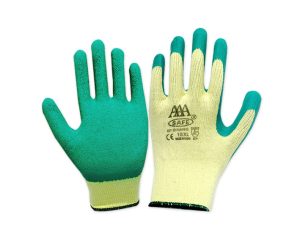
Heat-resistant gloves protect hands and wrists when handling hot items and pans during cooking operations. Replace them immediately when damaged, as compromised gloves fail without warning, causing burns workers thought they were protected against. Long oven mitts provide extended arm coverage for deep oven and fryer work common in commercial kitchens. Inspect them daily for tears, thin spots, or moisture that reduces protection effectiveness.
Heat-resistant aprons protect your torso and legs at primary cooking stations including grills, fryers, and stove areas. Launder them regularly to maintain protective properties, as contamination with grease and food residue degrades heat resistance over time. Slip-resistant shoes protect feet and ankles while preventing falls that lead to burns from spilled hot items during service rushes. Replace them when worn, as grip deteriorates over time even when shoes appear intact.
Long-sleeved chef jackets protect arms and forearms during daily kitchen work, providing basic protection against splashes and accidental surface contact. Face shields protect face and eyes during grease splashing operations including deep frying and high-temperature grilling. Keep them clean so you can see clearly while working, as dirty shields create visibility problems that cause other accidents.
Workers who occasionally wear protective equipment get injured at nearly the same rate as workers wearing nothing because injuries occur during unprotected moments when they choose not to wear equipment. Consistency matters more than having the best equipment available.
Dubai’s extreme summer heat makes protective equipment compliance challenging, as additional layers increase discomfort in already hot kitchen environments. Management must balance protection requirements with comfort considerations, selecting breathable materials and ensuring adequate kitchen cooling to maintain compliance.
Understanding Why Workers Avoid Wearing Protective Equipment
Workers often skip protective equipment, not because they’re lazy or careless, but because discomfort, poor fit, or interference with task completion makes compliance difficult during actual kitchen operations.
Mitts and gloves reduce dexterity making tasks take longer during busy service periods. Workers avoid them because they can’t feel what they’re doing, leading to dropped items and mistakes that create other hazards. Poorly fitted equipment restricts movement or causes discomfort that makes workers choose exposure over protection, particularly problematic when equipment is one-size-fits-all rather than properly sized.
Hot weather makes full-coverage clothing uncomfortable in Dubai’s climate, particularly in kitchens without adequate cooling during summer months when outdoor temperatures exceed 45°C. The additional heat burden from protective equipment becomes unbearable in poorly ventilated kitchens, leading to equipment removal despite burn risks.
Workplace culture treats equipment as optional when supervisors don’t enforce consistently across all shifts and staff levels. If management wears equipment but doesn’t require it from staff, or if some workers get away with skipping it while others are corrected, everyone begins viewing it as optional rather than mandatory. Equipment stored inconveniently requires effort to access, making workers skip it when rushed during peak service periods.
Successful Dubai restaurants involve workers in equipment selection for comfort and function before purchase. They enforce consistent expectations from management without exceptions across all staff. They store equipment conveniently where it’s needed most throughout kitchen areas. They treat safety as non-negotiable rather than optional, making it clear that equipment use is required for continued employment.
Training and Competency Development
Why General Safety Training Fails to Prevent Burns
Standard orientation training covering general kitchen safety produces minimal behavior change because it doesn’t address specific equipment, workflows, or hazards in your particular Dubai restaurant operation. Workers hear generic warnings about “being careful around hot equipment” without learning the specific situations in your kitchen that cause burns.
Provide specific equipment operation procedures with hands-on demonstration on your actual equipment. Show workers exactly how to lower fryer baskets to minimize splashing in your specific fryers. Demonstrate proper pot handle positioning on your particular ranges and burners. Practice steam release procedures on your actual pressure cookers and steam equipment. Emphasize hazard recognition unique to your facility layout and operations specific to your menu and service style.
Require practical demonstration of safe procedures rather than just verbal instruction and video viewing. Workers must show you they can safely perform tasks before doing them independently during actual service periods. Provide regular refresher training emphasizing consistency of safe practices throughout employment. Without reinforcement every few months, workers gradually develop shortcuts and complacency despite initial training quality.
Conduct incident review training following burns or near-misses that occur in your restaurant. Use actual events from your restaurant to show what went wrong and how to prevent recurrence, making training relevant to your specific operation. Provide supervisor training on enforcement and reinforcement of safety behaviors so management understands their role in maintaining compliance throughout shifts. Document all training with attendance records proving who received training and when for Dubai Municipality compliance verification.
When workers practice safe procedures under supervision, receive immediate feedback, and understand consequences of shortcuts, compliance rates exceed 90% even during busy service periods. Generic training without hands-on practice typically achieves compliance rates below 40%, providing little actual protection.
Establishing Effective Training Schedules
Regular training schedules ensure competency maintenance and provide updates when new equipment or procedures are introduced in your Dubai restaurant operations.
Provide new employee training before they work independently in the kitchen environment. They should never touch cooking equipment until they’ve been trained on it specifically by a qualified trainer familiar with your operation. Conduct refresher training every six months minimum for all staff regardless of experience level. Without reinforcement, even well-trained workers develop bad habits and shortcuts that increase burn risks.
Hold daily shift briefings focusing on specific burn prevention points before service begins. Spend two minutes at the start of each shift highlighting one burn hazard and how to prevent it, rotating through different topics weekly. Provide incident-triggered training immediately after burns or near-misses occur in your restaurant. Use the fresh memory of what happened to reinforce why proper procedures matter for everyone’s safety.
Conduct equipment-specific training when new cooking equipment is installed in your kitchen. Never assume workers can figure out new equipment safely on their own without proper instruction. Provide seasonal training with additional emphasis during busy periods including Ramadan, Eid celebrations, Dubai Food Festival, and other peak times when incidents increase due to higher volume and stress.
Regular training maintenance keeps safety awareness active among all kitchen staff. Without it, workers become complacent and forget why procedures exist, leading to shortcuts that cause injuries requiring medical treatment and incident reporting.
For Dubai restaurants with multi-cultural teams, ensure training materials are available in multiple languages including English, Arabic, Hindi, Urdu, Tagalog, and other languages your workers speak. Language barriers contribute significantly to safety failures when workers don’t fully understand procedures.
Equipment Maintenance and Hazard Control
Maintaining Equipment to Prevent Burn Incidents
Poorly maintained equipment becomes a primary burn source in Dubai restaurants. Loose handles, malfunctioning temperature controls, and damaged safety features create hazards that proper maintenance can eliminate before causing injuries.
Handles on pots, pans, and cooking vessels must be secure and properly attached. A loose handle that comes off while carrying hot items causes severe burns from spills onto workers and surrounding staff. Check electrical wiring for all cooking equipment to ensure it’s intact and properly grounded. Damaged wiring causes electrical fires and shocks that lead to burns requiring emergency medical treatment.
Verify that temperature controls function properly and are calibrated to manufacturer specifications. Malfunctioning controls that allow equipment to overheat create burn hazards workers don’t expect based on normal operation. Ensure oven and microwave doors close securely with proper seals intact. Doors that swing open unexpectedly expose workers to heat and steam during normal operations.
Inspect fryer baskets and handles to confirm they’re sound and secure without damage. A basket that breaks or a handle that detaches while full of hot oil causes catastrophic burns affecting multiple workers. Check that hot plate heating elements function properly without hot spots or dead zones. Confirm that lid hinges and seals remain intact on pressure cookers and steam equipment used in your kitchen.
Conduct daily visual inspections to catch obvious problems before they cause injuries during service periods. Professional maintenance per manufacturer specifications should occur quarterly or semi-annually depending on equipment age and usage intensity in your operation.
Dubai’s water quality and mineral content can cause scale buildup in steam and water heating equipment, requiring more frequent maintenance than in other locations. Regular descaling prevents equipment malfunction that creates burn hazards.
Improving Kitchen Design to Reduce Burn Hazards
Beyond maintaining existing equipment, thoughtful kitchen design can prevent burns before they occur. When redesigning kitchens or purchasing new equipment for your Dubai restaurant, let burn prevention guide your decisions for long-term safety benefits.
Provide adequate workspace preventing overcrowding and congestion during peak service periods. Cramped kitchens force workers into contact with hot surfaces and increase collision risks while carrying hot items through tight spaces. Create clear pathways for movement separate from hot equipment zones. Workers shouldn’t have to squeeze past fryers and ranges while carrying loads during busy service.
Position microwaves at safe heights to prevent spills when removing hot items. Microwaves placed too high require workers to lift hot containers above their heads, increasing spill likelihood onto faces and upper bodies. Install fryer splash screens for all frying operations. These simple barriers prevent most oil splash burns that occur during normal frying operations.
Use non-slip flooring in areas where spills frequently occur including around fryers, dishwashing stations, and beverage preparation areas. Textured surfaces maintain grip even when wet or greasy, preventing falls that cause the most severe burns. Install hot liquid disposal systems with direct transfer rather than requiring workers to manually drain and carry hot oil across kitchen areas. Provide equipment with automatic shut-off functions when unused, reducing forgotten-equipment burns after service ends.
Apply heat-resistant surfaces in high-traffic areas where accidental contact with walls or counters occurs frequently during rushed service periods. Well-designed kitchens make safe work the path of least resistance, reducing incidents even among less experienced workers during their training periods.
For restaurants in Dubai’s popular dining districts including City Walk, La Mer, The Beach at JBR, and Dubai Marina Walk where space is limited and rent is high, kitchen design becomes particularly important because efficient layouts must balance productivity with safety in compact spaces.
Spill and Floor Management
Understanding How Falls Cause Severe Burn Injuries
Falls involving hot items represent one of the most severe burn injury categories across Dubai restaurants. When workers slip and fall carrying hot liquids, the burns from being engulfed by spilled contents are often catastrophic and widespread, requiring hospitalization.
Clean up spills immediately with appropriate grease-cutting agents suitable for commercial kitchen use. Oil and grease spills that aren’t properly cleaned leave residue that remains slippery even after appearing clean, creating ongoing hazards throughout service. Use non-slip matting in high-slip-hazard areas near fryers and dishwashing stations where water and oil constantly hit floors during operations.
Apply grit or texture coatings to floors in cooking areas during kitchen renovations or new construction. Smooth floors become dangerously slippery with even minor contamination from food, grease, or water. Require slip-resistant, closed-toe shoes with proper grip for all kitchen staff without exceptions. Cheap shoes with worn treads provide no protection against slips on contaminated surfaces.
Never allow workers to walk quickly on wet or greasy floors during any service period. Rushing guarantees falls that can cause severe injuries when workers carry hot items. Ensure lighting is adequate to see spills and hazards throughout kitchen areas. Dim kitchens hide slip hazards until workers step in them, particularly dangerous during early morning prep or late-night cleanup. Assign someone each shift responsible for floor inspection and maintenance throughout service periods. Without clear responsibility, floor hazards persist because everyone assumes someone else will handle them.
Use wet floor signs when cleaning or after spills occur in kitchen areas. These simple warnings prevent other workers from walking through hazardous areas before floors dry completely, particularly important during shift changes when new staff enter kitchen areas unfamiliar with recent spills.
Poor floor conditions trigger falls while carrying hot items. Falls often cause the most severe burns because workers are engulfed by contents of large containers they were transporting, resulting in injuries covering large body surface areas requiring skin grafts.
Establishing Spill Response Procedures That Work
Spill management prevents both immediate slip hazards and long-term floor degradation that creates chronic fall risks in Dubai restaurant kitchens.
Immediately announce when spills occur through clear communication in languages all staff understand. Silent spills that workers discover too late while walking create falls carrying hot items onto themselves and nearby team members. Verbal warnings give everyone awareness to avoid the area during cleanup.
Close off affected areas to prevent other workers passing through before cleanup completes. Use barriers or have someone stand guard if necessary during busy service periods when traffic through kitchen areas is constant. Use appropriate mop and grease-cutting agents for immediate cleanup rather than water alone. Water alone doesn’t remove oil and grease, leaving invisible slippery residue.
Allow floors to dry completely before reopening areas to normal traffic flow. Damp floors remain slippery and dangerous even when appearing clean. Document spills to identify chronic problem areas in your kitchen layout. If the same spot spills repeatedly, your layout or procedures need adjustment to prevent recurrence.
Assess whether spills indicated equipment malfunction needing attention from maintenance staff. Recurring spills from the same equipment suggest underlying problems requiring repair or replacement. Immediate communication prevents incidents through awareness before cleanup completes during busy service periods.
Dubai’s high humidity levels, particularly during summer months, can extend floor drying times, requiring longer closure of affected areas compared to drier climates. Factor this into your spill response procedures.
First Aid Response and Medical Treatment
Providing Appropriate First Aid for Burn Injuries
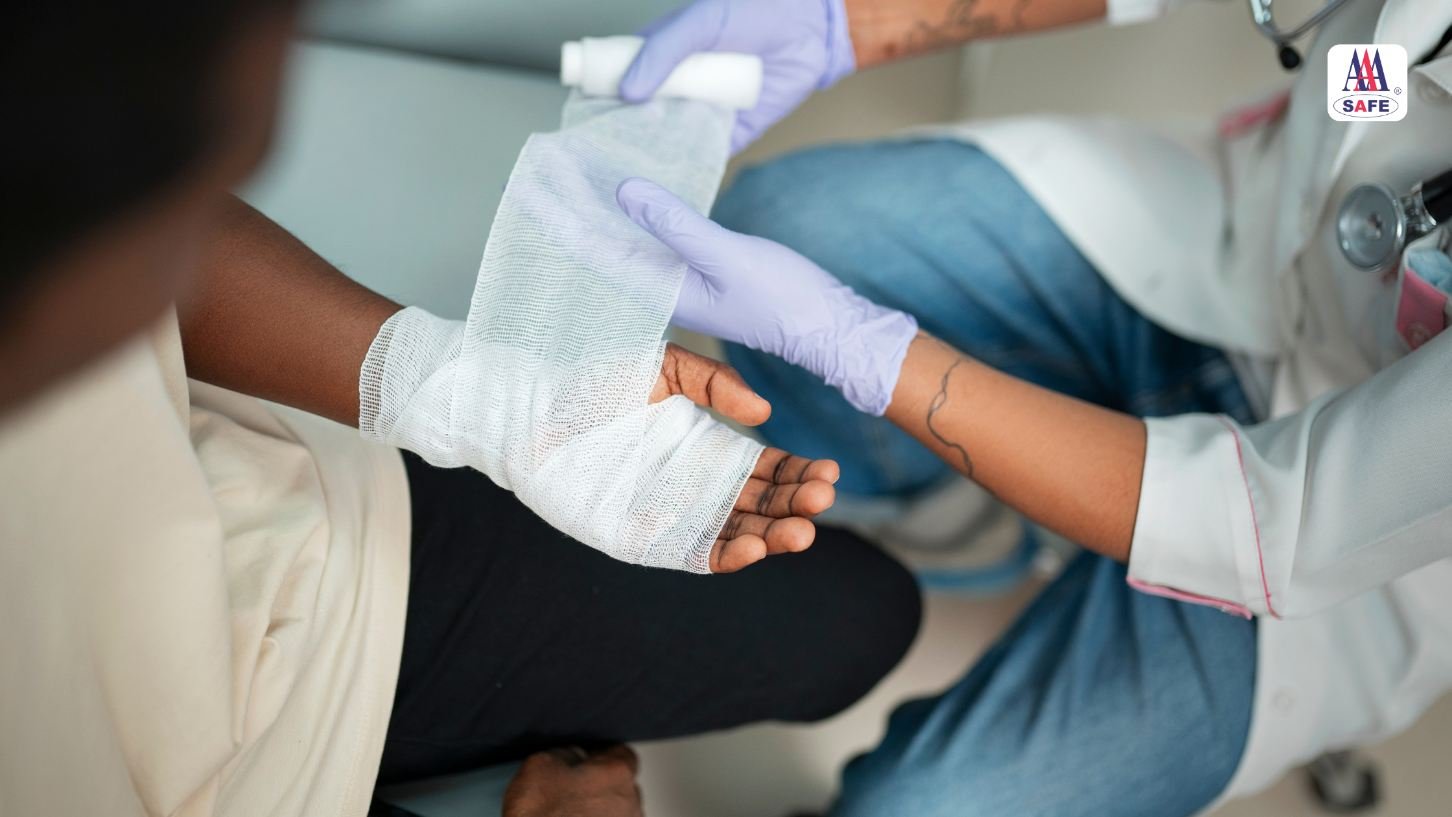
When burns occur despite prevention efforts, immediate first aid determines injury severity and long-term outcomes. Incorrect first aid can worsen burns and increase scarring and complications requiring extended medical treatment.
Stop the burning process immediately by removing the person from the heat source or applying cool water to affected areas. Remove any clothing or jewelry near the burned area before swelling begins, as swelling can trap items causing additional injury. Cool the burn with cool or lukewarm running water for 20 minutes minimum. This step is critical for limiting burn depth and reducing pain levels.
Never use ice or iced water as this causes additional tissue damage beyond the original burn. Loosely cover the burn with clean gauze or clean cloth to prevent infection during transport to medical care. Raise the burned area above heart level if possible to reduce swelling and improve comfort. Administer over-the-counter pain reliever like ibuprofen or paracetamol for pain management while awaiting medical care.
Seek medical attention for any burn larger than 7-8 centimeters in diameter regardless of degree. Seek immediate emergency care for third-degree burns showing white or charred appearance. Get professional help for burns on faces, hands, feet, or genitals regardless of size, as these areas require specialized treatment for proper healing.
Don’t apply butter, ointments, or other home remedies despite traditional beliefs. These trap heat and worsen burns rather than helping. Don’t break blisters, as this increases infection risk significantly. Don’t delay getting medical attention for severe burns. Early treatment prevents complications from shock and infection that can become life-threatening.
For Dubai residents, emergency medical care is available through:
- Dubai Corporation for Ambulance Services: 998 or 999
- Rashid Hospital Emergency: +971 4 219 2000
- Dubai Hospital Emergency: +971 4 219 5000
- Private hospital emergency departments throughout the city
Maintaining First Aid Readiness in Your Restaurant
Having someone available on every shift trained in burn first aid prevents inappropriate responses that worsen injuries. First aid training also teaches staff to recognize when professional medical attention is required rather than attempting to treat serious burns themselves.
Designate trained staff members for each shift with current first aid certification. Training should cover immediate response protocols specific to burns, shock management, and when to call emergency services. Stock first aid kits properly and keep them readily accessible in kitchen areas where burns are most likely to occur. Establish clear procedures for calling emergency services so there’s no confusion during actual emergencies when seconds matter.
Create documentation procedures for incident reporting required by Dubai Municipality and the Ministry of Human Resources and Emiratisation. Record what happened, when, who was involved, what first aid was provided, and what medical care was sought. This documentation protects both the injured worker and the restaurant from liability issues.
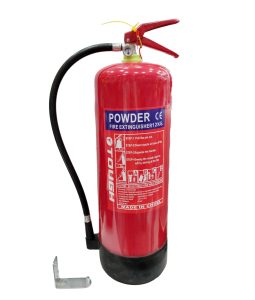
Ensure all staff know the location of first aid equipment, emergency exits, fire extinguishers, and emergency shut-off switches for gas and electricity. Post emergency contact numbers prominently in kitchen areas including emergency services, hospital emergency departments, and management contact information.
When burns occur, appropriate immediate treatment reduces scarring, prevents infection, and can prevent severe complications from shock that can become life-threatening. The difference between proper and improper first aid can determine whether a burn heals in weeks or requires months of treatment including skin grafts and reconstructive surgery.
For serious burns requiring hospitalization, workers’ compensation through UAE labor law Article 91 provides coverage for medical treatment and time off work. Ensure proper documentation supports workers’ compensation claims.
Frequently Asked Questions
Burns from hot liquids including soups, sauces, and boiling water account for approximately 50% of restaurant burns across Dubai food service establishments. Hot surfaces including stoves, grills, and ovens cause 30% of incidents. Hot items including dishes, utensils, and food containers cause the remaining 20%. Young and inexperienced workers suffer burns from all these sources at elevated rates due to lack of experience and reduced hazard awareness. Prevention strategies must address all three primary sources through protection equipment, comprehensive training, and equipment maintenance programs.
Provide thorough training before young workers begin independent work, emphasizing specific equipment hazards in your particular restaurant. Assign experienced workers as mentors during initial shifts so new workers have someone to ask questions without fear of judgment. Enforce equipment use policies consistently rather than making them optional during any service period.
Create positive safety culture where asking for help is rewarded, not punished or ridiculed. Many young workers get burned because they’re afraid to admit they don’t know how to do something safely. Reduce work shift lengths during extremely busy periods to minimize fatigue-related mistakes that cause burns and other injuries.
Maintain training records with dates, topics covered, and attendees for all safety training sessions. Document equipment maintenance with inspection dates and actions taken by qualified technicians. Create incident reports for all burns, even minor ones, as required by Dubai Municipality. File required injury reports with the Ministry of Human Resources and Emiratisation for serious injuries requiring medical treatment or time off work.
Maintain safety policies in writing and show evidence of communication to staff in languages they understand. Keep records of safety meetings and equipment checks conducted regularly. This documentation proves you took reasonable steps to prevent injuries, which protects you if legal issues or workers’ compensation claims arise.
Burns requiring hospitalization, even for observation, must be reported to the Ministry of Human Resources and Emiratisation within 24 hours of occurrence. Burns resulting in more than one lost workday require reporting through proper channels. Burns causing permanent scarring or disfigurement should be reported following UAE labor law requirements. Check current requirements with the Ministry of Human Resources and Emiratisation for specific reporting thresholds and procedures, as requirements are updated periodically.
For grease burns, immediately remove the person from the heat source and cool the burn with cool or lukewarm water for at least 20 minutes to stop the burning process. Remove any clothing not stuck to the skin to prevent continued burning. Never use ice as it causes additional tissue damage beyond the original burn.
Loosely cover with clean gauze after cooling the burn adequately. Seek medical attention for any burn larger than 7-8 centimeters or showing signs of deep tissue damage including white or charred appearance. Never apply cooking oil or butter despite traditional beliefs. These remedies trap heat and worsen the burn rather than providing any benefit.
Yes, maintaining hot drink temperatures under 80°C (175°F) where possible reduces burn severity if spilled on customers or workers. Beverages at excessive temperatures serve no functional purpose and increase injury risks unnecessarily without improving taste or quality. Some Dubai restaurants have implemented maximum beverage temperatures as standard policy after burn incidents, particularly those serving families with children.
Involve workers in equipment selection so they choose options that are comfortable and functional in hot conditions. Workers are more likely to wear equipment they helped select rather than equipment imposed without their input. Enforce expectations consistently from all supervisors without exceptions across all shifts. If one supervisor allows equipment skipping, everyone will skip it during that shift.
Store equipment conveniently to reduce effort required to access it throughout service periods. Equipment locked in distant storage rooms won’t get used during busy service. Create safety culture where management demonstrates commitment through their own safety behaviors consistently. Recognize and reward safety compliance publicly rather than only punishing violations privately.
Ensure adequate kitchen cooling to reduce heat burden from protective equipment. Workers will remove equipment if the combined heat becomes unbearable during service periods.
Immediately provide first aid as outlined in your procedures, ensuring proper cooling and covering of affected areas. Assess whether medical attention is required based on burn size and severity using established guidelines. Document the incident including cause, time, involved personnel, and prevention measures that failed to protect the worker.
Report to the Ministry of Human Resources and Emiratisation if required based on injury severity and time off work needed. Review the incident with your safety team to determine how to prevent recurrence through procedure changes, equipment modifications, or additional training. Communicate findings to all workers emphasizing lessons learned from the incident. Don’t just discipline the injured worker without examining system failures. Use the incident to improve your safety systems for everyone’s benefit.
Conclusion: Creating Burn-Safe Restaurant Operations in Dubai
Burns devastate workers, disrupt operations, and cost thousands in compensation and lost productivity. The reality is most restaurant burns are preventable through proper systems, training, and consistent enforcement. You now have the knowledge to eliminate most burn injuries from your Dubai restaurant.
Start by identifying specific hazards in your operation rather than applying generic solutions. Map every heat source, analyze workflow patterns, and involve actual kitchen staff in spotting risks management might miss. Your line cooks know which procedures are difficult or dangerous during rushed service periods.
Focus prevention on the three main burn sources: hot liquids and oils, hot surfaces and steam, and equipment failures. Control hot liquid handling through proper container selection, clear transport routes, and mandatory help requests for heavy loads. Address hot surface risks through handle positioning discipline, steam release procedures, and protective equipment that workers actually wear. Maintain equipment religiously to prevent malfunctions that create unexpected hazards.
Train workers on your specific equipment and procedures, not generic safety concepts. Require hands-on demonstration before independent work. Provide refresher training every six months because even experienced workers develop risky shortcuts without reinforcement. Make training relevant to your actual operation, equipment, and menu.
Enforce protective equipment use consistently across all shifts and staff levels. If supervisors make exceptions or management doesn’t follow their own rules, nobody will comply when it matters during busy service periods. Store equipment conveniently where it’s needed and ensure adequate kitchen cooling in Dubai’s extreme climate.
Maintain floors aggressively because falls while carrying hot items cause the most severe burns. Clean spills immediately with proper grease-cutting agents. Use slip-resistant flooring and require proper footwear without exceptions. Assign floor inspection responsibility to specific workers each shift rather than assuming everyone will handle it.
Prepare for burns despite your best prevention through trained first aid responders on every shift, properly stocked first aid kits, and clear emergency response procedures. Know when medical attention is required and how to document incidents for Dubai Municipality and Ministry of Human Resources and Emiratisation compliance.
The difference between restaurants with frequent burns and those operating safely isn’t luck or expensive equipment. It’s management commitment to creating safety culture where procedures are enforced consistently, equipment is maintained properly, and workers feel empowered to speak up about hazards without fear.
Every burn that occurs in your restaurant teaches something about system failures that need correction. Use incidents to improve rather than just disciplining injured workers. When you address root causes instead of blaming individuals, your entire operation becomes safer for everyone.
Burns will test your commitment to worker safety. Will you enforce equipment use during the busiest Ramadan iftar rush when everyone is tired and hot? Will you stop service to clean spills rather than letting workers hurry past them? Will you delay service to properly train new staff rather than throwing them into positions without preparation?
Your answers to these questions determine whether you’re serious about preventing burns or just going through motions to avoid liability. Workers recognize the difference immediately and adjust their behaviors accordingly.
Dubai’s competitive restaurant market and high staff turnover make safety systems even more critical. You can’t rely on experienced workers who instinctively avoid hazards because your team constantly changes. Your systems, procedures, and training must protect even inexperienced workers on their first shifts.
Start implementing these prevention strategies today rather than waiting for the next burn to force action. Review your current hazards, assess your training programs, inspect your equipment, and observe actual worker behaviors during service periods. The gaps between what should happen and what actually happens reveal where burns will occur next.
Protection isn’t complicated or expensive. It requires attention, consistency, and unwillingness to accept burns as inevitable costs of restaurant operations. When you commit to prevention, train thoroughly, maintain equipment properly, and enforce procedures consistently, burns become rare exceptions rather than regular occurrences.
Your workers trust you to create safe environments where they can earn income without life-altering injuries. That trust requires you to do the difficult work of maintaining safety culture even during your busiest, most stressful service periods. When you honor that trust through real prevention efforts rather than empty policies, everyone benefits through reduced injuries, lower insurance costs, better morale, and improved retention in Dubai’s competitive hospitality market.
The question isn’t whether you can afford to implement burn prevention in your Dubai restaurant. The question is whether you can afford not to when the alternative is workers suffering permanent scarring, psychological trauma, and career-ending injuries that were entirely preventable through proper systems and supervision.